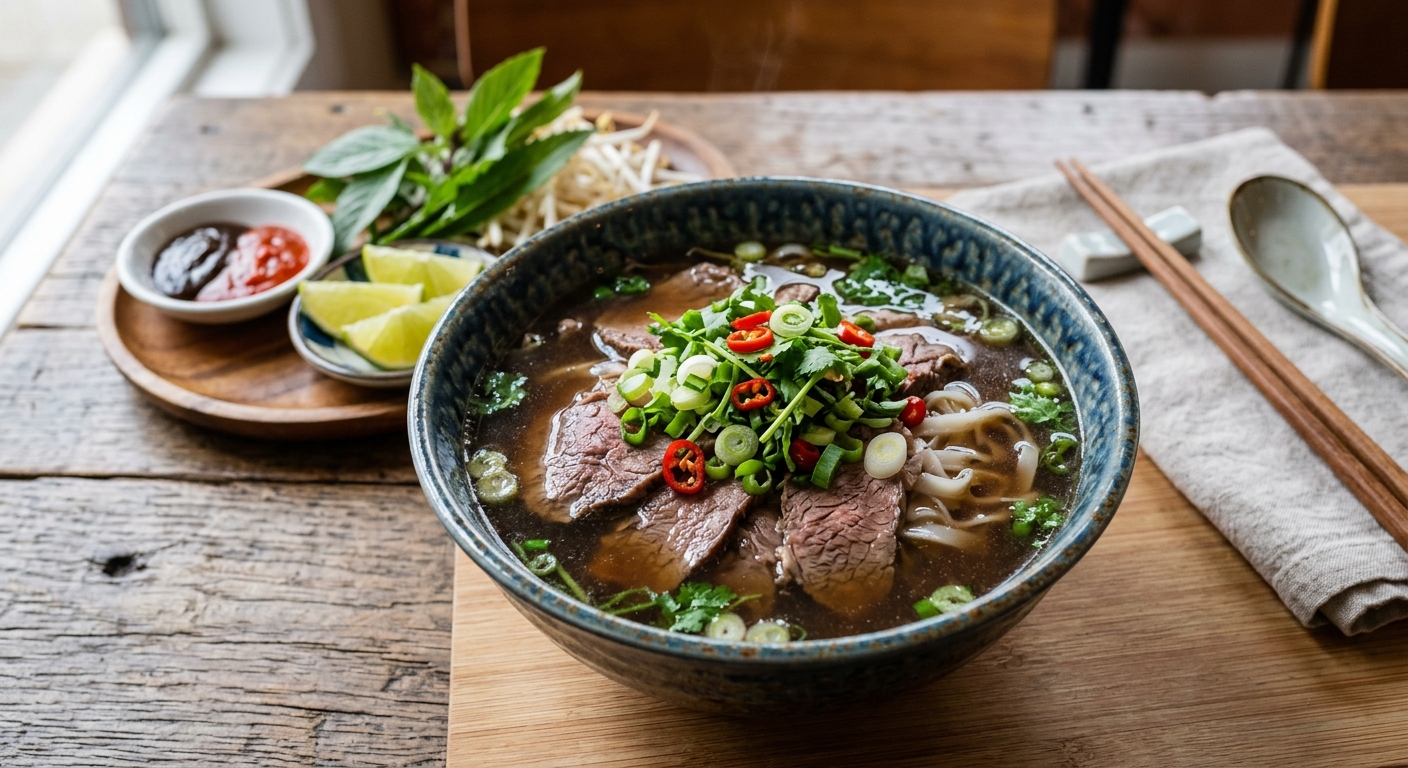
Pho is one of the most nutritionally sophisticated dishes in the world, and it has been quietly delivering therapeutic nutrition for centuries before the word ‘functional food’ existed. At its core is the bone broth, a liquid extracted from marrow bones and knuckles over many hours, releasing collagen peptides, glycosaminoglycans, calcium, phosphorus, magnesium, and zinc into a fragrant, mineral-dense stock. When you sip that broth, you are delivering the raw materials your body uses to build and repair cartilage, tendons, ligaments, and bone matrix.
What elevates this recipe beyond a standard bone broth is the traditional Vietnamese spice bloom: whole star anise, cinnamon bark, cloves, black cardamom, and coriander seeds charred alongside ginger and onion until the volatile oils are fully expressed. This technique, called nuong, creates the unmistakable pho character while adding a spectrum of polyphenols, including anethole from star anise and cinnamaldehyde from cinnamon, both of which have documented anti-inflammatory properties. Fresh garnishes of bean sprouts, Thai basil, lime, and chili add a final layer of vitamin C, quercetin, and live enzymes that would not survive the broth-making process.
Each serving of this pho provides over 18 grams of protein, meaningful amounts of iron, zinc, phosphorus, and B vitamins, and a collagen peptide content estimated at 6 to 10 grams per 350 ml of bone broth. Whether you are managing joint discomfort, supporting post-exercise connective tissue recovery, or simply want a restorative meal that tastes extraordinary, this recipe is calibrated to deliver on every front.
4
servings
Ingredients
- 1200 gmixed beef bones (knuckle, marrow, and oxtail), cut by butcher
- 400 gbeef brisket or flank, whole piece
- 200 gdried flat rice noodles (banh pho, 3mm wide)
- 1 largeyellow onion, halved
- 80 gfresh ginger, halved lengthwise
- 4 wholestar anise
- 1 stickcinnamon bark (cassia, approx. 7cm)
- 4 wholecloves
- 1 wholeblack cardamom pod, lightly crushed
- 1 tspcoriander seeds
- 30 mlfish sauce, plus more to taste
- 1 tbspcoconut sugar or palm sugar
- 2 litrescold water, plus extra for blanching
- 150 gbean sprouts, rinsed
- 30 gfresh Thai basil sprigs
- 20 gfresh culantro (ngo gai) or coriander leaves
- 2 wholelimes, cut into wedges
- 2 wholefresh red bird’s eye chillies, sliced
- 4 wholespring onions, thinly sliced
- —Colima Sea SaltMicroplastic Free Salt and white pepper to taste
- —Hoisin sauce and sriracha for serving (optional)
Instructions
Click on an item below to shop for the recommended items for this recipe on Amazon.
As an Amazon Associate, we earn from qualifying purchases.
- Place the beef bones in a large stockpot and cover with cold water. Bring to a vigorous boil over high heat and cook for 10 minutes. The water will turn grey and foamy as impurities are released. Drain, discard the water, and rinse each bone thoroughly under cold running water. Clean the pot as well. This blanching step is essential for a clear, clean-tasting broth.
- While the bones blanch, char the aromatics. Place your oven rack in the highest position and set the oven to the broil setting, or use the open flame of a gas burner with tongs. Char the halved onion and ginger cut-side down until deeply blackened in patches, about 5 to 7 minutes per side under a broiler or 3 to 4 minutes over a direct flame. This step develops complex Maillard-reaction compounds and drives off the raw, sulfurous notes from the onion. Set aside.
- Toast the whole spices in a dry skillet over medium heat, stirring constantly, until fragrant and lightly smoking, about 2 to 3 minutes. Immediately transfer to a spice bag or cheesecloth bundle tied with kitchen twine to prevent loose spices from clouding the broth.
- Return the cleaned bones to the stockpot along with the whole brisket piece. Add 2 litres of cold water and bring to a boil. Skim off any remaining foam aggressively for the first 10 to 15 minutes using a fine-mesh ladle. Once the broth runs mostly clear, reduce the heat to the lowest possible setting. The surface should show only the occasional lazy bubble.
- Add the charred onion, charred ginger, and the spice bag to the pot. Do not stir. Simmer uncovered for 1.5 to 2 hours, then carefully remove the brisket. It should be just cooked through and tender but still sliceable. Wrap it in foil and refrigerate until serving time. Continue simmering the bones for a further 2 to 3 hours.
- After the full simmer, add the fish sauce and coconut sugar. Taste and adjust seasoning with additional fish sauce, salt, or a pinch of sugar. The broth should taste deeply savory, slightly sweet, and warmly spiced with a pronounced star anise note. Strain the broth through a fine-mesh sieve lined with muslin cloth, discarding bones, spent aromatics, and the spice bag. Skim any surface fat with a ladle or let the broth cool briefly and lift the solidified fat cap.
- To serve, soak the rice noodles in cold water for 20 minutes, then cook in a separate pot of boiling unsalted water for 2 to 3 minutes until just tender with slight resistance. Drain and divide among four deep pre-warmed bowls. Slice the chilled brisket thinly against the grain and lay slices over the noodles. Ladle very hot broth directly over the meat, which will gently cook any remaining pink. Top with spring onions, and serve immediately with the garnish plate of bean sprouts, Thai basil, culantro, lime wedges, and chillies alongside hoisin and sriracha.
- Blanch the bones first on the stovetop as this step cannot be replicated in a slow cooker and is non-negotiable for clean broth. Place bones in a saucepan, cover with cold water, boil hard for 10 minutes, drain, and rinse bones and pot thoroughly under cold water. Transfer the clean bones to the slow cooker insert.
- Char the onion and ginger using a kitchen torch, directly over a gas burner with tongs, or under your oven broiler until the cut surfaces are blackened in patches, 5 to 7 minutes. Add the charred aromatics directly to the slow cooker on top of the bones. Add the whole brisket piece as well.
- Toast the coriander seeds, cloves, star anise, cinnamon, and black cardamom in a dry pan over medium heat until fragrant, about 2 minutes. Bundle them into a muslin spice bag, tie securely, and nestle it into the slow cooker. Add 2 litres of cold water. The slow cooker should be filled no more than three-quarters full. Do not add the fish sauce or sugar yet, as long cooking can make fish sauce taste bitter.
- Set the slow cooker to Low and cook for 4 hours. At the 4-hour mark, carefully lift out the brisket using tongs. It will be fully cooked and very tender. Slice it thickly, allow to cool, wrap in foil, and refrigerate. Continue cooking the broth on Low for a further 6 to 8 hours, for a total bone extraction time of 10 to 12 hours.
- When cooking is complete, turn off the slow cooker and allow the broth to cool slightly. Add the fish sauce and coconut sugar, stir gently, and taste. Strain the broth through a fine-mesh sieve lined with muslin into a large bowl or pot, pressing gently on the solids. Skim the fat from the surface, or refrigerate the broth and lift the solidified fat cap the next day for a perfectly defatted stock. At this stage, the broth can be refrigerated for 5 days or frozen for 3 months.
- To serve, reheat the strained broth in a saucepan over medium-high heat to a rolling boil. Soak rice noodles in cold water for 20 minutes, then cook in boiling water for 2 to 3 minutes, drain, and divide among pre-warmed bowls. Slice the chilled brisket very thinly against the grain. Arrange noodles and brisket in each bowl and ladle the very hot broth over the top. Finish with spring onions and serve with the full garnish plate.
- Blanch the bones using the saute function on your Instant Pot or in a separate stockpot on the stovetop. For Instant Pot: add bones and enough cold water to cover, select Saute on High, and once boiling hard, cook for 8 minutes. Cancel, drain through a colander in the sink, and rinse the bones and the inner pot thoroughly. This step prevents the pressure cooker valve from clogging with foam.
- While the bones drain, char the onion and ginger under your oven broiler or over a gas flame until the cut surfaces are deeply blackened in spots, about 5 to 7 minutes. Toast the whole spices in a dry pan for 2 minutes until fragrant, then bundle into a muslin spice bag. Return the cleaned bones and brisket to the Instant Pot inner pot.
- Add the charred onion, charred ginger, and spice bag to the pot. Add 1.7 litres of cold water. Do not exceed the MAX fill line on your Instant Pot. Do not add fish sauce before pressure cooking. Seal the lid, ensure the pressure valve is set to Sealing, select Pressure Cook on High, and set the timer for 90 minutes.
- When the 90-minute cycle completes, allow a 20-minute natural pressure release, then carefully quick-release any remaining pressure. Open the lid and remove the brisket with tongs. It will be very tender. Allow it to cool, then refrigerate for slicing later. Reseal the lid, pressure cook the bones on High for a further 60 minutes, then natural-release fully (about 20 minutes).
- Open the pot and season the broth with fish sauce and coconut sugar. Taste carefully and adjust. Strain through a fine-mesh sieve lined with two layers of muslin into a large saucepan, pressing gently on the solids. The broth may appear slightly cloudy initially; skim the surface fat and bring to a boil before serving to improve both clarity and flavor. For maximum clarity, allow the broth to cool and settle, then ladle the clear portion off the sediment.
- Cook the rice noodles separately in boiling water for 2 to 3 minutes after a 20-minute cold soak. Drain and divide among pre-warmed bowls. Slice the refrigerated brisket thinly against the grain. Arrange noodles and brisket in the bowls, then ladle the boiling-hot broth over the meat to finish cooking it and warm everything through. Garnish with spring onions and serve with the fresh herb and condiment plate.
- Preheat the oven to 230C (450F) with a rack in the centre position. Arrange the blanched and rinsed bones in a single layer in a large heavy roasting pan. Roast at 230C for 25 to 30 minutes, turning once, until the bones are deeply browned on all sides. Nestle the halved onion and ginger cut-side down in the pan for the last 15 minutes of this initial roast so they char naturally in the bone fat. This simultaneous charring integrates the aromatic compounds directly into the rendering bone fat.
- Transfer the roasted bones, browned onion, and ginger to a large 6-litre (or bigger) Dutch oven or oven-safe stockpot. Pour a splash of hot water into the roasting pan and scrape up all the browned bits with a wooden spoon; add these drippings to the Dutch oven as they carry significant flavor and gelatin. Add the brisket, the toasted spice bag (toast spices in a dry pan first as described in the stovetop method), and 2 litres of cold water.
- Reduce the oven temperature to 150C (300F). Bring the Dutch oven to a simmer on the stovetop over medium heat, skimming any foam that rises. Once simmering, cover the Dutch oven with its lid left slightly ajar by about 2 cm to allow some evaporation and cover tightly. Transfer to the 150C oven.
- After 2 hours in the oven, open the Dutch oven and carefully remove the brisket. At 150C, it will be fully cooked through but still sliceable. Lift it out with tongs, allow to cool, wrap in foil, and refrigerate. Return the lid, slightly ajar again, and continue the oven braise for a further 3 to 4 hours. The low, even heat of the oven means the broth never boils turbulently, resulting in a beautifully clear golden broth.
- Remove the Dutch oven from the oven. Add fish sauce and coconut sugar, stir, and taste for seasoning. Strain through a fine-mesh sieve lined with muslin, pressing lightly on the solids. This oven-method broth should be a striking amber-gold and notably clearer than pressure cooker broth. Skim surface fat or refrigerate and lift the solidified fat cap. Reheat the strained broth to a boil before serving.
- Prepare noodles in boiling water for 2 to 3 minutes after soaking, drain, and distribute among pre-warmed bowls. Thinly slice the chilled brisket against the grain. Assemble each bowl with noodles, sliced brisket, and ladle the boiling broth over the top. Finish with spring onions and bring the garnish plate to the table with Thai basil, culantro, bean sprouts, lime wedges, chillies, hoisin, and sriracha.
Nutrition Breakdown
Per 1 serving (makes 4)
Vitamins & Minerals
% Daily Value based on a 2,000 calorie diet (FDA reference)
🧬 Essential Amino Acids
% of recommended daily intake (RDA) per serving
🛡 Antioxidant Profile
The Nutrition Science
The central nutritional mechanism of bone broth pho is collagen hydrolysis. When collagen-dense connective tissues such as knuckle cartilage, periosteum, and marrow-adjacent fascia are exposed to hot water over extended time, the triple-helix collagen structure (primarily Type I and Type II) unwinds into individual alpha chains and further breaks down into smaller collagen peptides and free amino acids, especially glycine, proline, and hydroxyproline. Clinical research published in journals including the British Journal of Sports Medicine and Amino Acids has shown that ingesting hydrolyzed collagen peptides stimulates fibroblast activity and chondrocyte collagen synthesis, meaning the peptides act as signaling molecules that upregulate the body’s own collagen production in cartilage and tendons. A minimum effective dose in several trials was 5 to 10 grams of collagen peptides, which a well-made bone broth in this recipe realistically delivers per serving.
The zinc content deserves particular attention in the context of joint health. Zinc is a cofactor for over 300 enzymes including matrix metalloproteinases (MMPs), which remodel the extracellular matrix of cartilage. It is also essential for the activity of superoxide dismutase (SOD), the body’s primary intracellular antioxidant enzyme. Beef knuckle and marrow bones are among the most bioavailable dietary sources of zinc, providing heme-adjacent zinc that is absorbed at roughly twice the rate of plant-source zinc. The vitamin B12 in this recipe, provided entirely by the beef brisket and bone marrow, is critical for myelin sheath maintenance and red blood cell formation. A single serving of this pho delivers 133% of the daily value, making it a meaningful contribution for anyone at risk of B12 insufficiency.
The charring process applied to the onion and ginger, known in Vietnamese as nuong, is not merely aesthetic. Heating allium compounds in onion above 150C catalyzes a cascade of Maillard reactions and Strecker degradations that transform pungent sulfur volatiles (propanethial S-oxide) into sweet, savory bis(2-propenyl) disulfides and furanones. These compounds contribute to the characteristic sweetness and depth of great pho broth that cannot be replicated with raw aromatics. Similarly, dry-toasting the whole spices volatilizes the monoterpene compounds locked in the seed coats, allowing them to dissolve into the aqueous broth far more efficiently than untoasted spices would, delivering a measurably higher concentration of bioactive phenolics into each bowl.
Pro Tips
- Ask your butcher specifically for knuckle bones and marrow bones in a 2:1 ratio. Knuckle bones are rich in cartilage and provide the collagen and gelatin that gives the broth body, while marrow bones add richness and fat-soluble vitamins. Oxtail adds both collagen and deep beefy flavor.
- Never let the finished broth boil after straining. A rolling boil emulsifies the fat back into the broth and permanently clouds it. Keep it at a steady simmer and ladle it gently into bowls for the clearest result.
- The broth is ready to use immediately but improves dramatically after 24 hours in the refrigerator. Chill the strained broth overnight, lift off the solid fat cap in one clean layer, then reheat. The flavor will be more concentrated, rounded, and clean-tasting than freshly made broth.



Love seeing bone broth getting this kind of thoughtful treatment, Melanie! I’m curious though: are you noticing the benefits more from the collagen itself, or could some of it be the glycine’s role in collagen synthesis and even reducing exercise-induced inflammation? I ask because collagen is mostly just amino acids until your gut breaks it down, and glycine in particular seems to be doing a lot of the heavy lifting for runners I’ve talked to. The pho angle is brilliant too, because those spices like star anise and cinnamon bring their own polyphenol payloads that might be working synergistically with the amino acids. Have you experimented with adding turmeric or g
okay this is SO up my alley because i’ve been using bone broth as my recovery protocol for the past couple years and honestly the collagen and glycine are game changers for joint repair, especially when you’re logging serious mileage. the flavor profile in pho is actually perfect for post-run meals too – that warm, savory umami hits different when youre refueling and the gelatin from the broth helps with satiety without being heavy on the stomach. definitely want to try this version because homemade broth makes such a difference versus store-bought, and i love recipes that do double duty as both comfort food and functional medicine!
oh my gosh YES this is exactly what ive been trying to do but homemade pho feels intimidating, so thank you for making it feel doable! quick question though – is this kid friendly or does the licorice-y flavor from the star anise throw picky eaters off? my youngest rejected “regular” pho at a restaurant but i’m wondering if homemade might taste different enough that i could sneak in all those joint supporting minerals without a fight lol. also the collagen + glycine combo has me hyped because i’ve been worried about my kids’ gut health after antibiotics last year!