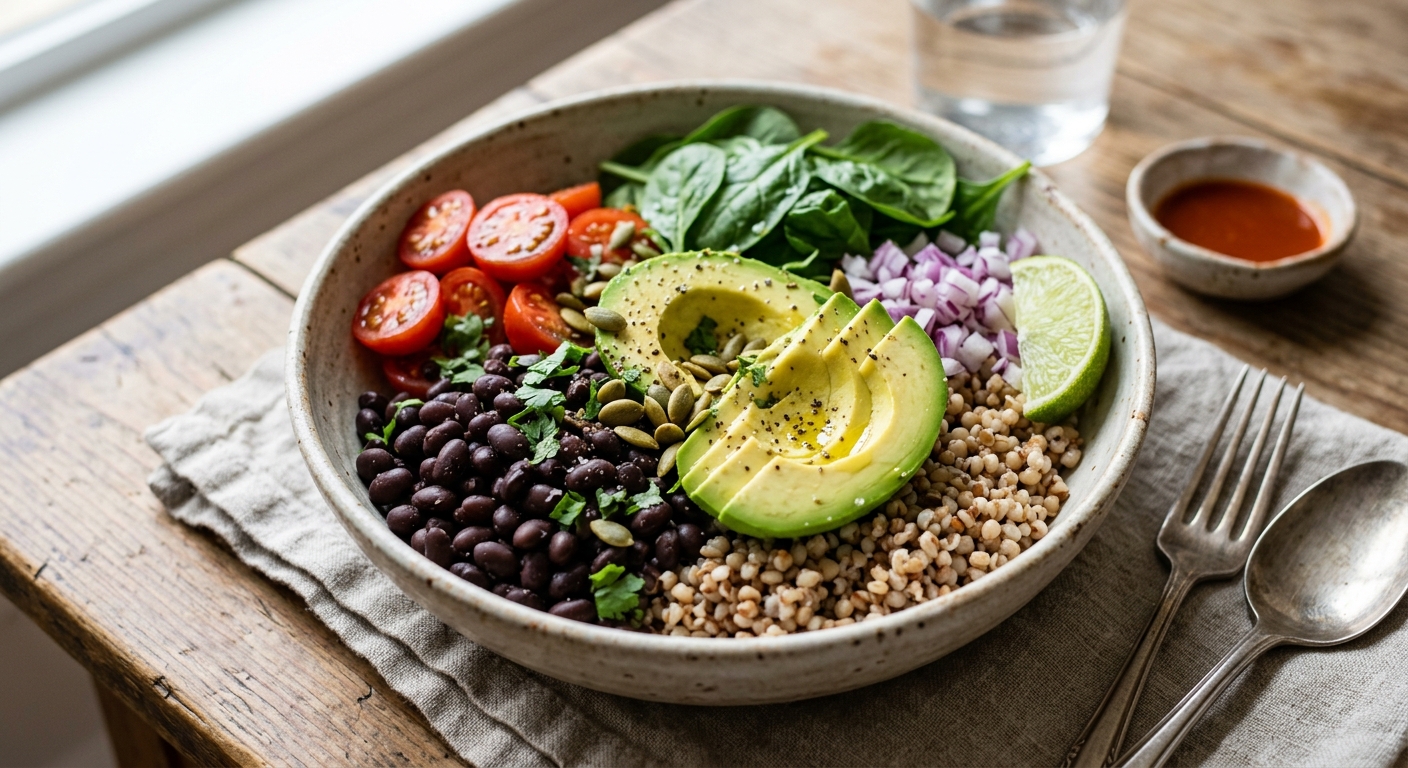
Sorghum is one of the oldest cultivated grains on the planet, yet it remains stubbornly underappreciated in modern kitchens. Unlike quinoa or farro, whole-grain sorghum holds its pleasantly chewy texture through long cooking, making it ideal for grain bowls where you want substance and bite. Paired with matte-black beans simmered with cumin and smoked paprika, then crowned with sliced avocado and a punchy lime dressing, this bowl transforms ancient-grain cooking into something genuinely craveable.
From a mineral standpoint, this recipe is a precision instrument. Sorghum brings exceptional magnesium, phosphorus, and iron to the table, while black beans double down on iron and folate and add a second wave of plant-based protein. Avocado contributes potassium that rivals a banana, plus the monounsaturated fats that dramatically increase the absorption of fat-soluble nutrients present in every other component. Together, the three core ingredients create a synergistic mineral matrix that covers a remarkable breadth of your daily requirements in one bowl.
The dish is naturally gluten-free, dairy-free, and easily made vegan, which means it fits a wide range of dietary needs without any substitution gymnastics. Whether you cook the sorghum low-and-slow in a slow cooker while you work, blast it in a pressure cooker on a weeknight, or toast it first on the stovetop for extra nuttiness, the result is a deeply nourishing meal that feels like restaurant-quality comfort food and performs like a targeted nutritional supplement.
4
servings
Ingredients
- 280 gwhole-grain sorghum, rinsed and drained
- 800 gcooked black beans (two 400g cans, drained and rinsed)
- 2 largeripe avocados, halved, pitted, and sliced
- 200 gcherry tomatoes, halved
- 60 gbaby spinach
- 1 mediumred onion, finely diced
- 3 clovesgarlic, minced
- 3 tbspextra-virgin olive oil, divided
- 2 tbspfresh lime juice (about 2 limes)
- 1 tspground cumin
- 1 tspsmoked paprika
- 0.5 tspground coriander
- 0.25 tspcayenne pepper
- 900 mllow-sodium vegetable broth
- 15 gfresh cilantro, roughly chopped
- 30 gpepitas (raw pumpkin seeds)
- —Colima Sea SaltMicroplastic Free Salt and black pepper to taste
- —Lime wedges to serve
Instructions
Click on an item below to shop for the recommended items for this recipe on Amazon.
As an Amazon Associate, we earn from qualifying purchases.
- Heat a large, heavy-bottomed saucepan or Dutch oven over medium heat. Add the rinsed sorghum (no oil) and toast dry, stirring frequently, for 3 to 4 minutes until the grains smell nutty and a few begin to pop lightly. This step is unique to stovetop and significantly deepens the grain’s flavour profile.
- Pour in the vegetable broth and add a generous pinch of salt. Bring to a rolling boil over high heat, then reduce the heat to low, cover tightly, and simmer for 50 to 55 minutes. Check at the 45-minute mark: the sorghum is done when the grains are tender with a pleasant chew and the broth is absorbed. If liquid remains, uncover and cook for a further 5 minutes. Remove from heat and let steam, covered, for 5 minutes, then fluff with a fork.
- While the sorghum cooks, prepare the spiced black beans. Warm 1 tablespoon of olive oil in a medium skillet over medium heat. Add the diced red onion and cook, stirring occasionally, for 6 to 7 minutes until softened and translucent. Add the minced garlic, cumin, smoked paprika, ground coriander, and cayenne, and stir for 90 seconds until the spices are fragrant and coating the onion.
- Add the drained black beans to the skillet along with 3 tablespoons of water. Stir to combine and cook over medium-low heat for 5 minutes, gently mashing about one-quarter of the beans against the side of the pan to create a creamy, cohesive texture that clings to the sorghum. Season with salt and pepper, then remove from heat.
- Whisk together the remaining 2 tablespoons of olive oil, lime juice, and a pinch of salt in a small bowl to form the dressing. Divide the warm sorghum among four bowls. Top each with a portion of spiced black beans, sliced avocado, cherry tomatoes, and baby spinach. Drizzle with lime dressing, scatter over pepitas and fresh cilantro, and serve with lime wedges.
- Combine the rinsed sorghum, drained black beans, diced red onion, minced garlic, cumin, smoked paprika, ground coriander, cayenne, and 1 tablespoon of olive oil directly in the slow cooker insert. Stir well to coat the grains and beans evenly with the spices. This single-vessel approach allows the sorghum to absorb the smoky spice flavour throughout the entire cook, which is different from the stovetop method where spices are added only to the beans.
- Pour in the vegetable broth and stir once more. The liquid should just cover the sorghum and beans. Add an extra 60ml of water if needed. Season with salt and pepper, then place the lid firmly on the slow cooker.
- Cook on Low for 6 to 7 hours. Resist the urge to lift the lid during the first 5 hours, as this releases steam and can cause uneven cooking. At the 6-hour mark, check the sorghum: the grains should be tender and most of the broth absorbed, with a slightly porridge-like consistency. If the mixture looks soupy, leave the lid slightly ajar for the final 20 to 30 minutes. If the sorghum is tender but you prefer a drier texture, stir in the baby spinach directly at this stage and let the residual heat wilt it.
- Turn off the slow cooker and stir the mixture gently. The beans will have partially broken down, creating a natural creaminess that binds the sorghum. Taste and adjust seasoning. Stir in half the cilantro.
- Whisk together the remaining 2 tablespoons of olive oil and lime juice in a small bowl. Spoon the warm sorghum and bean mixture into bowls. Arrange sliced avocado and cherry tomatoes on top. Add fresh baby spinach if not already wilted in. Drizzle with lime dressing, top with pepitas and remaining cilantro, and serve with lime wedges.
- Select the Saute function on your Instant Pot or electric pressure cooker and set to Medium heat. Once hot, add 1 tablespoon of olive oil. Add the diced red onion and cook, stirring, for 4 to 5 minutes until softened. Add the minced garlic, cumin, smoked paprika, ground coriander, and cayenne, and stir for 60 seconds until fragrant. Press Cancel to turn off the Saute function.
- Add the rinsed sorghum and drained black beans to the pot. Pour in the vegetable broth and stir to combine, scraping up any spice bits from the bottom to prevent a burn warning. The liquid level should sit at least 2cm above the sorghum-bean mixture. Season with salt and pepper.
- Secure the lid and set the pressure valve to Sealing. Select Manual or Pressure Cook on High Pressure and set the timer to 25 minutes. The pot will take approximately 10 minutes to come up to pressure before the countdown begins.
- When the cook time is complete, allow the pressure to release naturally for 15 minutes. Do not perform a quick release. After 15 minutes of natural release, carefully switch the valve to Venting to release any remaining pressure. Open the lid away from you. If the mixture looks very wet, select Saute on Low and stir for 2 to 3 minutes to evaporate excess liquid. Stir in the baby spinach and let it wilt for 1 minute.
- Whisk together the remaining 2 tablespoons of olive oil and lime juice in a small bowl. Divide the sorghum and bean mixture among four bowls. Top with sliced avocado and cherry tomatoes, then drizzle with lime dressing. Finish with pepitas, fresh cilantro, and lime wedges.
- Preheat your oven to 180C (350F) with a rack positioned in the lower-middle position. Place a Dutch oven or heavy oven-safe casserole over medium heat on the stovetop. Add 1 tablespoon of olive oil and saute the diced red onion for 5 minutes until softened. Add the garlic, cumin, smoked paprika, ground coriander, and cayenne, stirring for 60 seconds until fragrant. Remove from heat.
- Add the rinsed sorghum and drained black beans to the Dutch oven and stir to coat everything in the spice-onion base. Pour in the vegetable broth and season generously with salt and pepper. The liquid should reach about 2cm above the sorghum and beans. Bring to a gentle simmer on the stovetop, then cover the Dutch oven with its lid and carefully transfer to the preheated oven.
- Bake covered for 60 minutes without opening the lid. At 60 minutes, remove the lid and check the sorghum: the grains should be tender and most of the broth absorbed. If the sorghum still has a hard centre, replace the lid and continue baking for a further 15 minutes. If the top has dried out too quickly, add a splash of hot water before returning the lid.
- Once the sorghum is fully cooked, remove the Dutch oven from the oven and scatter the baby spinach over the top. Replace the lid and leave for 3 minutes off heat; the residual steam will wilt the spinach perfectly without cooking it further. Fluff the mixture gently with a fork, folding the wilted spinach through.
- Whisk together the remaining 2 tablespoons of olive oil and lime juice in a small bowl. Spoon the oven-baked sorghum into four bowls. Top generously with sliced avocado and cherry tomatoes, then drizzle the lime dressing over everything. Scatter pepitas and fresh cilantro on top and serve with lime wedges. The oven method produces the driest, most individual grain texture of all the methods, ideal if you prefer a true pilaf-style bowl.
Nutrition Breakdown
Per 1 serving (makes 4)
Vitamins & Minerals
% Daily Value based on a 2,000 calorie diet (FDA reference)
🧬 Essential Amino Acids
% of recommended daily intake (RDA) per serving
🛡 Antioxidant Profile
The Nutrition Science
The central nutritional story of this bowl is mineral bioavailability, and it is more nuanced than a simple label read suggests. Sorghum and black beans both contain phytic acid, an anti-nutrient that binds minerals like iron, zinc, and magnesium in the digestive tract. However, two components of this recipe actively counteract that effect: the vitamin C delivered by fresh lime juice and cherry tomatoes enhances non-haem iron absorption by reducing ferric iron to its more absorbable ferrous form, while the monounsaturated fats in avocado improve the uptake of fat-soluble phytonutrients including carotenoids. Rinsing canned black beans and using whole sorghum rather than pearled also reduces but does not eliminate phytate load, making the net mineral absorption meaningfully higher than many comparable legume dishes.
Sorghum’s glycaemic response is one of its most scientifically interesting properties. Multiple human intervention studies have demonstrated that whole-grain sorghum produces a significantly lower postprandial blood glucose and insulin response compared to wheat or white rice, even at identical carbohydrate loads. This effect is attributed to a combination of its resistant starch content, the slow digestion rate of kafirin proteins that encapsulate starch granules, and the presence of condensed tannins in the bran layer, which inhibit alpha-amylase and reduce starch hydrolysis in the small intestine. This glycaemic advantage is largely preserved across all four cooking methods, provided the sorghum retains its intact grain structure.
The combination of sorghum and black beans creates a complementary amino acid profile worth examining. Sorghum, like most cereals, is relatively low in lysine but provides good levels of methionine and cysteine. Black beans are the mirror image: lysine-rich but limited in sulphur-containing amino acids. Together in this bowl, they approach the complete essential amino acid profile of a single high-quality protein source without the saturated fat or environmental footprint of animal proteins. Avocado adds a modest but meaningful contribution of all nine essential amino acids and is one of the few fruits to provide appreciable leucine, which is the primary trigger for muscle protein synthesis.
Pro Tips
- For faster weeknight prep, cook a large batch of sorghum on Sunday: it keeps refrigerated for up to 5 days and freezes well for 3 months. Simply reheat with a splash of broth and assemble the fresh bowl components to order.
- Slice the avocado immediately before serving and toss lightly in lime juice to prevent oxidation. Avocado browns within 20 to 30 minutes once cut, so do not pre-slice if you are meal-prepping.
- To maximise iron absorption from this bowl, avoid serving it alongside coffee or black tea, as the polyphenols in both beverages significantly inhibit non-haem iron uptake. Wait at least one hour after the meal before drinking either.
- Pepitas are a nutritional powerhouse in their own right: 30g delivers approximately 85mg of magnesium, nearly doubling the bowl’s magnesium contribution. Toast them dry in a skillet for 2 to 3 minutes for a more intense flavour.
- If you cannot find whole-grain sorghum, white sorghum grits or semi-pearled sorghum work in all four methods with cook times reduced by 15 to 20 minutes, though the fiber and mineral content will be modestly lower.



Zack, absolutely! I’ve seen this play out in practice with patients on magnesium-depleting diuretics or those struggling with iron absorption from their medications. The synergy you’re describing is real: sorghum’s mineral profile plus the vitamin C from lime and the fat from avocado literally transforms how efficiently your body can actually use these minerals, which is where so many mineral-heavy foods fall short. I started recommending sorghum bowls specifically to clients on certain antihypertensives that interfere with magnesium status, and the improvement in their lab work was honestly striking compared to just telling them to “eat more greens.”
sorghum is criminally underrated for mineral density. that magnesium + iron combo hits different than rice, and the fact that youre pairing it with black beans and avocado means youve basically maxed out the bioavailability stack – the vitamin c from lime literally enhances iron absorption while the fat from avocado helps with fat soluble nutrient uptake. ive been recommending this exact combo to clients dealing with energy crashes because the sustained mineral profile keeps cortisol way more stable than simple carbs. whats your take on soaking the sorghum first – does that calculator account for phytic acid reduction?
ok so ive been sprouting black beans for like two months now and the difference in how my kids will actually eat them is wild, plus the phytic acid reduction makes such a difference for mineral absorption right?? ive never worked with sorghum though – does it sprout well or do you typically just cook it whole? im dying to add it to our rotation because my oldest has been dragging on focus lately and honestly after learning how much magnesium impacts concentration i’m obsessed with finding new sources, so this mineral stack sounds like exactly what we need to test out. also curious if you soak the sorghum before cooking to reduce any antinutrients, or does the whole grain keep its integrity better if