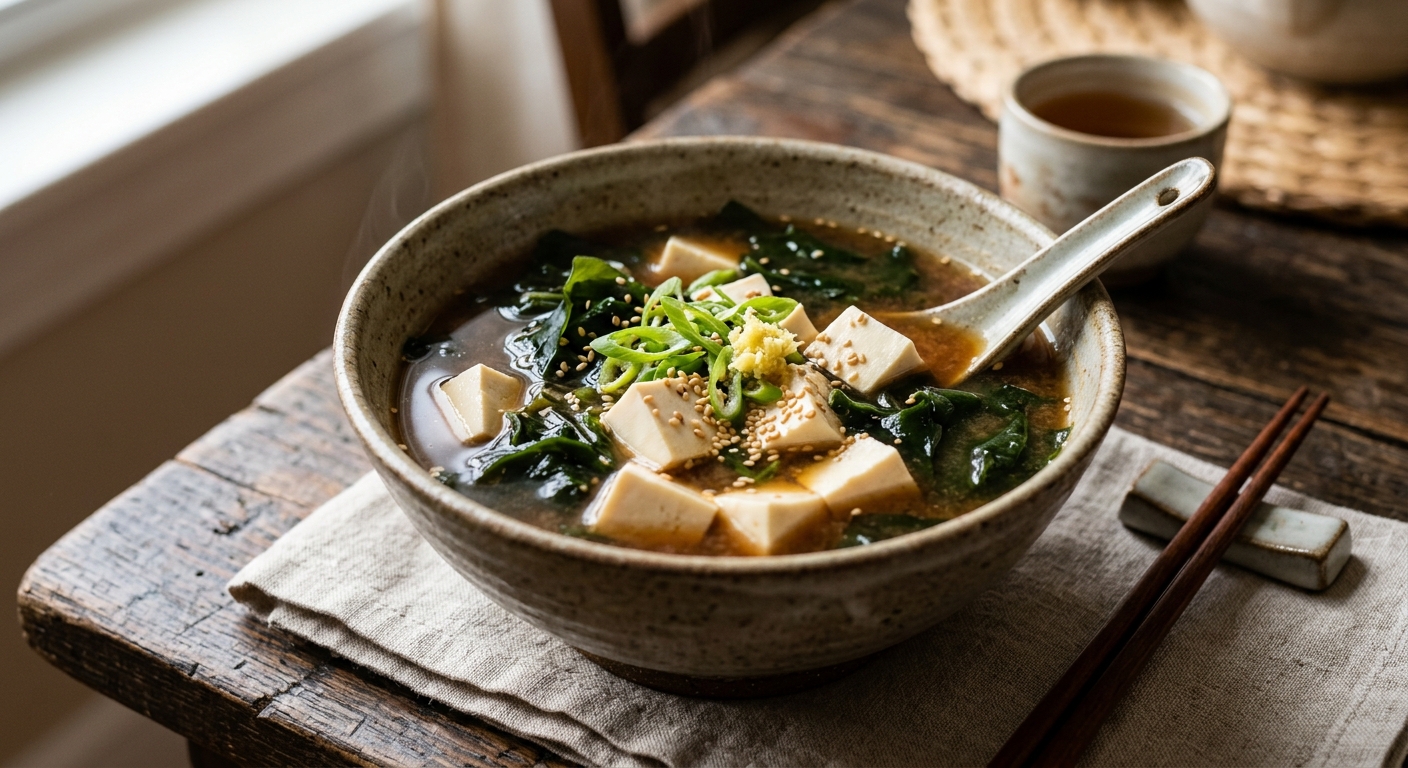
Miso soup is one of the oldest functional foods on the planet. Served at Japanese breakfast tables for over a thousand years, it was never just comfort food. It was medicine in a bowl. The combination of fermented miso paste, mineral-dense wakame seaweed, and protein-rich tofu creates a nutritional matrix that modern science is only beginning to fully appreciate. Each ingredient plays a precise biological role, and together they form a broth that is genuinely difficult to match for micronutrient density per calorie.
Wakame (Undaria pinnatifida) is the quiet star of this recipe. Just five grams of dried wakame, once rehydrated, delivers a meaningful percentage of your daily iodine, manganese, and calcium needs. Iodine is critical for thyroid hormone synthesis, and most people on Western diets fall short of the 150 mcg daily target. Wakame addresses that gap elegantly, without supplements or fortified foods. The miso paste adds a second wave of minerals, including copper and zinc, alongside live probiotic cultures that support gut barrier function. Silken tofu rounds out the bowl with complete plant protein and bone-supporting calcium and magnesium.
What makes this recipe stand apart on Calibrated Cuisine is the precision. The ingredient quantities here are not guesswork. They are calculated to deliver specific nutrient targets per serving while keeping the flavor clean, restrained, and deeply satisfying. Miso soup is one of those rare dishes where nutritional integrity and culinary elegance are not in tension. They are exactly the same thing.
4
servings
Ingredients
- 1000 mldashi stock (kombu and bonito, or kombu-only for vegan), at room temperature
- 70 gwhite shiro miso paste
- 300 gsilken tofu, cut into 1.5 cm cubes
- 12 gdried wakame seaweed
- 3 stalksgreen onions (scallions), thinly sliced on the bias
- 1 tsplow-sodium soy sauce (or tamari for gluten-free)
- 1 tsptoasted sesame oil
- 5 gfresh ginger, peeled and grated
- —Colima Sea SaltMicroplastic Free Salt to taste (use sparingly, miso is already salty)
Instructions
Click on an item below to shop for the recommended items for this recipe on Amazon.
As an Amazon Associate, we earn from qualifying purchases.
- Rehydrate the dried wakame: place it in a small bowl, cover with cold water, and soak for 8 to 10 minutes. It will expand significantly, roughly five to six times its dry volume. Once rehydrated, drain thoroughly, squeeze out excess water with your hands, and roughly chop any large pieces into 4 cm sections. Set aside.
- Pour the dashi stock into a medium saucepan or Dutch oven over medium heat. Add the grated ginger and bring the stock to a gentle simmer, about 8 to 10 minutes. Do not allow it to reach a rolling boil, which would begin to degrade the delicate glutamate compounds responsible for umami depth.
- Reduce the heat to low. Add the silken tofu cubes by lowering them in gently with a spoon rather than dropping them, as silken tofu breaks apart easily. Allow the tofu to warm through in the broth for 2 to 3 minutes without stirring aggressively.
- Ladle approximately 60 ml of the hot (but not boiling) broth into a small bowl. Add the miso paste to this ladle of broth and whisk vigorously with chopsticks or a small whisk until the miso is fully dissolved with no lumps. This tempering step prevents miso from clumping when added to the pot.
- Slide the dissolved miso mixture back into the saucepan, stirring gently to distribute evenly. Add the rehydrated wakame, soy sauce, and sesame oil. Taste and adjust salt if needed. Keep the heat on the lowest setting and serve immediately into warmed bowls, garnished generously with sliced scallions.
- If making dashi from scratch, place the kombu (and bonito flakes if using) directly in the slow cooker insert with the 1000 ml of cold water. Add the grated ginger. This cold-start infusion method extracts maximum glutamates from the kombu without the bitterness that can come from high heat. If using premade dashi stock, add it directly to the insert along with the ginger.
- Rehydrate the dried wakame in cold water for 8 to 10 minutes while the slow cooker heats up. Drain, squeeze out excess moisture, chop any large pieces, and set aside in the refrigerator until needed. Do not add wakame at the start as the extended cook time would make it overly soft and leach its minerals excessively into the broth without texture benefit.
- Set the slow cooker to Low. If using whole kombu and bonito, cook for 3 to 4 hours to develop a rich, deeply savory broth. The low temperature preserves the delicate inosinic and glutamic acid compounds that define proper dashi. If using premade dashi, a 2-hour Low setting is sufficient to marry the ginger and warm everything through.
- Remove and discard the kombu and strain out bonito flakes if used. Add the silken tofu cubes directly to the hot broth in the slow cooker insert. Cover and let the residual heat warm the tofu for 10 minutes on the Keep Warm setting.
- Turn off the slow cooker. Ladle about 60 ml of the hot broth into a bowl, whisk in the miso paste until fully dissolved, then stir it back into the slow cooker along with the rehydrated wakame, soy sauce, and sesame oil. The residual heat will warm everything without cooking the miso. Serve within 15 minutes, ladling into warmed bowls and topping with fresh scallions.
- Place the kombu (if making dashi from scratch) and grated ginger into the Instant Pot inner pot with 1000 ml of cold water. If using premade dashi stock, add it directly with the ginger. Do not add miso, wakame, or tofu at this stage as these ingredients are too delicate for pressure cooking.
- Seal the lid, set the valve to Sealing, and cook on Manual High Pressure for 4 minutes. The pressure environment extracts intense umami from the kombu in a fraction of the time required on the stovetop, producing a dashi with exceptional mineral density. Once the cook time ends, perform a quick release by carefully turning the valve to Venting.
- While pressure is building, rehydrate the dried wakame in a bowl of cold water for 8 to 10 minutes. Drain, squeeze dry, and chop large pieces to 4 cm. Set aside.
- Open the lid and remove kombu. Switch the Instant Pot to the Saute function on its lowest setting (Saute Less). Add the silken tofu cubes carefully, using a spoon to lower them into the broth. Allow them to warm for 2 minutes. Cancel the Saute function to stop active heating.
- Temper the miso paste: ladle 60 ml of the hot broth into a small bowl, whisk in the miso paste until fully smooth, then stir the mixture back into the pot. Add the rehydrated wakame, soy sauce, and sesame oil. The residual heat from the Instant Pot insert is sufficient to bring everything to serving temperature without overcooking the miso. Garnish with scallions and serve immediately directly from the pot.
Nutrition Breakdown
Per 1 serving (makes 4)
Vitamins & Minerals
% Daily Value based on a 2,000 calorie diet (FDA reference)
🧬 Essential Amino Acids
% of recommended daily intake (RDA) per serving
🛡 Antioxidant Profile
The Nutrition Science
The nutritional synergy in this soup is not accidental. Wakame is a brown alga that bioaccumulates iodine from seawater at concentrations hundreds of times higher than terrestrial vegetables. Iodine is the limiting mineral for thyroid hormone synthesis, governing basal metabolic rate, cognitive development, and thermoregulation. Approximately one-third of the global population is at risk of insufficient iodine intake, making wakame one of the most practical dietary correctives available. Critically, the iodine in wakame is bound within the seaweed’s cellular matrix in a form that is released gradually during digestion, producing a steadier plasma iodine curve than potassium iodide supplements.
Miso paste is produced by fermenting soybeans with Aspergillus oryzae (koji) for weeks to years. This process does more than develop flavor: it converts bound phytic acid in the soy matrix into free form, dramatically increasing the bioavailability of zinc, copper, and manganese that would otherwise be chelated and excreted unabsorbed. The fermentation also generates short-chain organic acids and bioactive peptides, including GABA and peptides with documented ACE-inhibitory (blood pressure lowering) properties. Research published in the Journal of Nutritional Biochemistry has found that regular miso consumption is inversely associated with gastric cancer risk, an observation attributed to its unique antioxidant phenolic profile.
Silken tofu contributes calcium in a form that is comparable in bioavailability to dairy-derived calcium when the tofu is set with calcium sulfate, which most commercially available silken tofu is. The isoflavones in tofu, particularly genistein, have been shown in meta-analyses to modestly improve bone mineral density in postmenopausal women and to reduce LDL oxidation in men. Combined with the vitamin K from wakame, which activates osteocalcin to anchor calcium into bone matrix, this soup provides a coherent, multi-pathway approach to skeletal mineral support in a single 118-calorie bowl.
Pro Tips
- Never let miso soup boil after the paste has been added. Temperatures above 60 degrees Celsius rapidly denature the Lactobacillus and Aspergillus-derived enzymes in miso and degrade its volatile aromatic compounds, flattening the flavor and eliminating its probiotic benefit.
- Buy dried wakame rather than fresh-salted wakame if possible, as dried wakame has not been pre-soaked in brine and will deliver more of its natural mineral content to your finished soup rather than releasing it into pre-rinsing water.
- For a richer, more restaurant-authentic dashi, combine kombu cold infusion with a 70-degree Celsius hold for 30 minutes before adding bonito flakes. This two-stage approach maximizes glutamate extraction from kombu while preventing the slimy texture that develops above 80 degrees Celsius.
- Use a red or mixed (awase) miso paste instead of white shiro miso if you want a more assertive mineral flavor and a higher antioxidant content, as darker miso pastes have longer fermentation times and measurably higher polyphenol concentrations.
- Silken tofu is fragile. Rather than scooping it with a spoon, slice it in the container and slide the pieces into the broth using a flexible spatula to keep the cubes intact and visually clean in the finished bowl.



This is such a thoughtful post, and I love that you’re highlighting wakame specifically because it’s such a gentle, bioavailable source of iodine compared to supplement forms. One thing I always mention in my thyroid groups is that while this soup is amazing for iodine, pairing it with selenium and zinc rich foods (maybe some pumpkin seeds on the side or a small fish component in the dashi) really helps your body actually utilize that iodine efficiently. The fermented miso is a bonus too, since gut health directly impacts mineral absorption. Have you found that people in your audience have had any issues with cooking method affecting the iodine content, or does the gentle heat of soup preparation actually
This is a solid recipe, but I’m curious how you’re thinking about the protein angle here – silken tofu gives you maybe 8-10g per serving, which is below the leucine threshold we need for muscle protein synthesis in older adults, right around 2.7g of leucine. I’ve started pairing my miso soup with a side of grilled fish or adding an egg to bump the leucine content, since the iodine and minerals here are great but won’t do much good if we’re losing muscle mass. Do you have thoughts on protein-pairing strategies for traditionally light Japanese soups like this?
This is such a clean breakdown of why sea vegetables deserve way more attention in functional nutrition conversations, especially since so many people don’t realize they’re getting their iodine from just this one bowl instead of relying on iodized salt. I’ve been incorporating more wakame and other seaweeds into my practice, and clients are always surprised how much their energy shifts when their micronutrient absorption actually improves, you know? Would love to see you explore how this pairs with other nutrient-dense ingredients from different food traditions, because I think there’s real power in showing how ancestral foods across cultures all recognized these sea vegetables as medicine.