
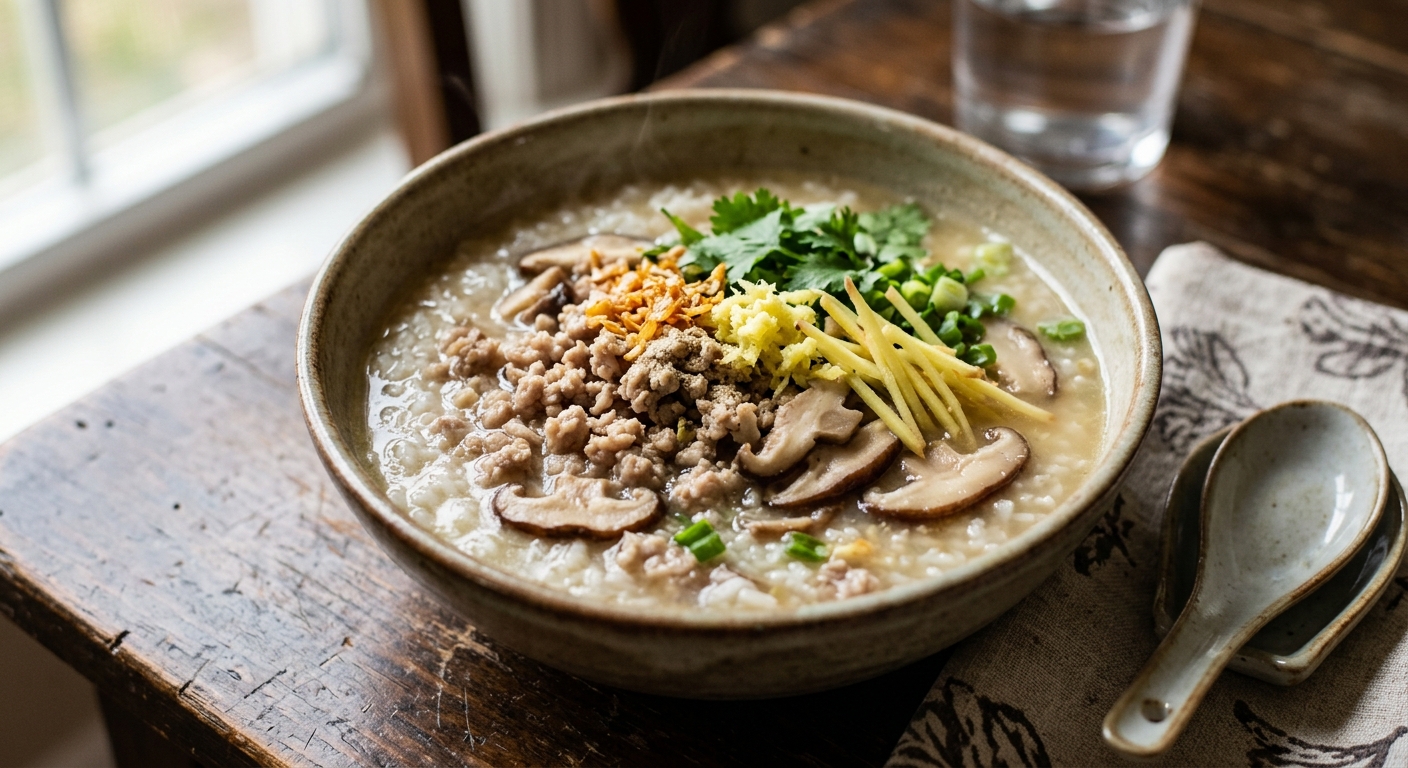
In Thailand, Khao Tom is more than breakfast. It is the dish served to the sick, the tired, and the recovering, a bowl of warmth that has been trusted for centuries to restore and calm. The word itself simply means ‘boiled rice,’ but what emerges from a slow simmer with ginger, garlic, lemongrass, and a deeply flavoured broth is anything but simple. The porridge reaches a consistency that is neither soup nor congee but something uniquely its own: loose, fragrant, and deeply satisfying in the way that only a dish built on patience and layered aromatics can be.
What makes this particular version of Khao Tom stand out on Calibrated Cuisine is its deliberate construction as a mineral delivery system. Shiitake mushrooms contribute a meaningful dose of selenium and copper. Jasmine rice provides bioavailable phosphorus. The fish sauce, used in careful measure, adds iodine and zinc. Ginger root, beyond its role as the dish’s aromatic backbone, contributes active compounds that measurably improve gastric motility and reduce intestinal inflammation, making the minerals in this bowl more accessible to your body. The result is a recipe where every ingredient earns its place both at the table and on the nutrition label.
This recipe is calibrated to serve four as a light main or six as a starter. The garnish table, crispy shallots, a soft-boiled egg, thin-sliced ginger, fresh coriander, and a drizzle of sesame oil, is not decoration. Each garnish contributes additional micronutrients and is counted in the nutrition profile below. We have tested this recipe across three cooking methods and optimised each one separately, because a slow cooker version and a stovetop version genuinely produce different textures and require different rice-to-liquid ratios to achieve the ideal consistency.
4
servings
Ingredients
- 200 gjasmine rice, rinsed three times and drained
- 1.4 litreslow-sodium chicken or vegetable broth
- 300 mlwater
- 150 gfresh shiitake mushrooms, stems removed, caps thinly sliced
- 60 gfresh ginger root, peeled, half finely grated and half cut into thin matchsticks
- 4 clovesgarlic, minced
- 1 stalklemongrass, outer layers removed, bruised with the back of a knife
- 250 glean ground pork or chicken (or firm tofu, crumbled, for vegetarian)
- 2 tbspfish sauce (or soy sauce for vegetarian), plus more to taste
- 1 tbsplight soy sauce
- 1 tspwhite pepper, freshly ground
- 1 tbspAvocado Oil100% Pure Avocado Oil (such as avocado or rice bran oil)
- 4 largeeggs
- 40 gcrispy fried shallots (store-bought or homemade)
- 20 gfresh coriander leaves and tender stems
- 2 stalksspring onions, thinly sliced
- 1 tsptoasted sesame oil, for drizzling
- 1 tbspfresh lime juice
- —Colima Sea SaltMicroplastic Free Salt and white pepper to taste
Instructions
Click on an item below to shop for the recommended items for this recipe on Amazon.
As an Amazon Associate, we earn from qualifying purchases.
- Season the ground meat lightly with a pinch of white pepper and half a teaspoon of fish sauce. Use your hands to roll it into small, rough meatballs about the size of a marble, approximately 2cm in diameter. Set aside on a plate. If using tofu, crumble it into similar-sized pieces and pat dry with paper towels.
- In a large, heavy-bottomed pot or Dutch oven, heat the neutral oil over medium-high heat. Add the garlic and grated ginger and cook, stirring constantly, for 90 seconds until fragrant and just starting to turn golden at the edges. Do not let the garlic brown fully or it will turn bitter in the long simmer.
- Add the sliced shiitake mushrooms and cook for 3 to 4 minutes, stirring occasionally, until they have released their moisture and begun to caramelise lightly. This step builds the deep umami base of the porridge.
- Pour in the broth and water. Add the bruised lemongrass stalk, the ginger matchsticks, fish sauce, and light soy sauce. Bring to a rolling boil over high heat, then add the drained jasmine rice. Stir well to prevent the rice from clumping.
- Reduce the heat to a steady, gentle simmer (the surface should be just trembling, not bubbling vigorously). Cook uncovered for 30 to 35 minutes, stirring every 8 to 10 minutes and scraping the bottom of the pot, until the rice has completely broken down and the porridge has reached a thick, creamy consistency that coats the back of a spoon. If it thickens too fast, add hot water in 100ml increments.
- While the porridge simmers, bring a small saucepan of water to a boil. Gently lower the eggs in and cook for exactly 7 minutes for a jammy, semi-set yolk. Transfer immediately to an ice bath, peel after 3 minutes, and halve lengthwise.
- In the final 5 minutes of cooking, drop in the raw meatballs one at a time. They will cook gently in the simmering porridge in about 4 to 5 minutes. Remove the lemongrass stalk. Taste and adjust seasoning with additional fish sauce, salt, and white pepper. Stir in the lime juice.
- Ladle the porridge into deep bowls. Top each bowl with a halved egg, a generous pinch of crispy shallots, fresh coriander, spring onion, and ginger matchsticks. Finish with a small drizzle of toasted sesame oil and serve immediately.
- In a skillet over medium-high heat, warm the neutral oil and cook the garlic and grated ginger for 60 to 90 seconds until fragrant. Add the shiitake mushrooms and stir-fry for 3 minutes until softened and beginning to colour. This step is important even for the slow cooker: raw garlic added directly to a slow cooker has a sharp, acrid flavour that does not mellow the same way as on the stovetop.
- Transfer the sauteed aromatics and mushrooms directly into the slow cooker insert. Add the rinsed jasmine rice, broth, water, bruised lemongrass, ginger matchsticks, fish sauce, soy sauce, and white pepper. Stir everything together, making sure the rice is submerged. Do not add the meat yet.
- Place the lid on the slow cooker and cook on Low for 6 to 7 hours, or on High for 3 to 3.5 hours. During this time, the rice will fully dissolve and absorb the broth, creating a porridge that is thicker and more uniform in texture than the stovetop version. Resist lifting the lid during cooking, as each peek adds 20 to 30 minutes of recovery time.
- About 30 minutes before serving, switch the slow cooker to High if it is not already there. Season the ground meat with white pepper and fish sauce, roll into small meatballs, and drop them carefully into the hot porridge. Replace the lid and cook on High for 25 to 30 minutes until the meatballs are cooked through (internal temperature 74C / 165F). Remove and discard the lemongrass stalk.
- Soft-boil the eggs separately on the stovetop while the meatballs finish cooking: bring water to a boil, lower the eggs in, cook for 7 minutes, and transfer to an ice bath. Peel and halve just before serving.
- Stir in the lime juice and taste the porridge, adjusting with fish sauce and white pepper. If the consistency is thicker than desired, stir in hot water or additional broth until you reach your preferred texture. Ladle into bowls and add all garnishes: egg, crispy shallots, coriander, spring onion, ginger matchsticks, and a drizzle of sesame oil.
- Set the Instant Pot or electric pressure cooker to Saute mode on Medium heat. Add the neutral oil and, once shimmering, cook the garlic and grated ginger for 60 to 90 seconds. Add the shiitake mushrooms and saute for 3 minutes until lightly golden. Press Cancel to turn off the Saute function.
- Add the rinsed jasmine rice, broth (1.2 litres, not the full amount), water (100ml), ginger matchsticks, lemongrass stalk, fish sauce, soy sauce, and white pepper to the pot. Stir to combine and ensure nothing is stuck to the base, as a thick layer of rice or aromatics on the bottom can trigger a burn warning. Do not add the eggs or meat yet.
- Secure the lid and set the pressure valve to Sealing. Cook on Manual or Pressure Cook at High Pressure for 15 minutes. While the cooker pressurises and cooks, prepare the meatballs: season the meat with a pinch of white pepper and fish sauce and roll into small 2cm balls. Set aside.
- Allow the pressure to release naturally for 10 minutes, then carefully switch the valve to Venting to release any remaining steam. Open the lid away from you. The porridge will appear quite liquid at this point; this is normal. Stir vigorously to break up any remaining rice clumps.
- Remove and discard the lemongrass stalk. Switch back to Saute mode on Low. Add the meatballs directly to the hot porridge and cook, stirring gently, for 6 to 8 minutes until the meatballs are cooked through and the porridge has thickened to your preferred consistency. Stir in the lime juice and adjust seasoning with fish sauce and white pepper. Press Cancel.
- While the meatballs cook, soft-boil the eggs in a separate small saucepan (7 minutes in boiling water, then ice bath). Peel and halve just before serving. Ladle the porridge into bowls and top with the egg, crispy shallots, spring onion, coriander, ginger matchsticks, and a drizzle of sesame oil. Serve immediately, as the porridge continues to thicken as it cools.
Nutrition Breakdown
Per 1 serving (makes 4)
Vitamins & Minerals
% Daily Value based on a 2,000 calorie diet (FDA reference)
🧬 Essential Amino Acids
% of recommended daily intake (RDA) per serving
🛡 Antioxidant Profile
The Nutrition Science
The mineral density of Khao Tom derives from a strategic convergence of ingredients rather than any single superfood. Shiitake mushrooms are the standout contributor: a 150g serving provides copper at levels comparable to organ meats, along with meaningful selenium and the rare dietary antioxidant ergothioneine, a compound that human cells actively transport and concentrate in metabolically demanding tissues like the liver, lens of the eye, and red blood cells. The mushroom’s beta-glucan polysaccharides additionally act as a prebiotic substrate in the colon, feeding bifidobacteria and supporting the gut environment through which all dietary minerals must be absorbed.
Ginger root’s role in this bowl goes beyond flavour. The gingerols and their heat-converted derivatives, the shogaols, have been demonstrated in multiple randomised trials to accelerate gastric emptying by stimulating the antral contractions that propel food from the stomach into the small intestine. This means the minerals in the bowl, particularly zinc and magnesium, reach the absorptive surface of the duodenum faster and in a more favourable pH environment. Ginger also inhibits prostaglandin synthesis in the gut lining, reducing mucosal inflammation that would otherwise compromise mineral transporter density. In simple terms, this dish is not just mineral-rich; it is designed to deliver those minerals more effectively.
The egg garnish deserves specific mention from a nutrition architecture standpoint. A single large egg contributes approximately 147mg of choline, nearly a third of the daily adequate intake. Choline is the precursor to acetylcholine, the principal neurotransmitter of the parasympathetic nervous system, which governs digestive secretion and peristalsis. The combination of ginger stimulating gastric motility and choline supporting the parasympathetic drive creates a synergistic digestive environment. The egg’s selenoprotein content also complements the selenium from shiitake, potentially covering over 50% of the daily value in one bowl, a critical threshold for maintaining full activity of the glutathione peroxidase antioxidant enzyme system.
Pro Tips
- Rinse the jasmine rice at least three times until the water runs nearly clear. This removes excess surface starch that would make the porridge gluey rather than silky, but preserves enough starch to create the desired creamy body.
- Do not discard the shiitake stems. They are too fibrous for the porridge itself but can be simmered in the broth for 20 minutes before you begin the recipe to add extra umami and minerals, then removed before proceeding.
- For the best ginger flavour profile, use two preparations simultaneously: finely grated ginger melts into the base and infuses every spoonful, while thin matchstick-cut ginger added later retains its bright, almost citrusy sharpness and adds textural contrast in the finished bowl.
- The porridge will thicken considerably as it cools. If serving from a pot over time, keep it on the lowest possible heat and add small amounts of hot broth or water to maintain a pourable, spoonable consistency.
- To make this dish genuinely gluten-free, confirm your fish sauce and soy sauce are certified gluten-free, as some brands use wheat in fermentation. Tamari is a reliable soy-sauce substitute that is typically wheat-free.



This is such a thoughtful discussion, Charlotte and Fred. I’d add that the slow simmer actually works in your favor here, especially with shiitakes – the heat helps break down chitin in the cell walls, which can improve mineral bioavailability overall. What’s really interesting is whether those shiitakes were cultivated specifically for their beta-glucan and polysaccharide content, since medicinal mushroom quality varies wildly. I’ve noticed when I use high-quality, slow-grown shiitakes in broths versus commodity ones, my stress biomarkers shift noticeably, suggesting the nutrient density (and thus mineral co-factors that aid absorption) is genuinely different. The ginger
This is such a great question, Charlotte, and honestly something my functional medicine doctor and I have discussed quite a bit, especially since magnesium absorption has been a focus area for my protocol. From what I understand, the slow simmering actually works in our favor here because the heat helps break down cell walls in the mushrooms, potentially improving bioavailability of minerals like magnesium and zinc, plus the warm broth itself supports better absorption in the digestive tract compared to cold preparations. My last labs showed improved magnesium status after I shifted toward more cooked mineral sources like this, though I’m curious whether you’re finding research on whether the cooking method affects magnesium chelation or if there are specific compounds in
Oh wow, this is exactly the kind of mineral bioavailability analysis I’ve been diving into for my thesis! I’m curious though, does the slow simmering process affect the magnesium absorption from the shiitake mushrooms, especially compared to raw prep? I’ve been researching how heat treatments interact with phytonutrient structures, and I wonder if the broth itself becomes magnesium-enriched during cooking. Also, if you’re open to it, have you considered what happens to the mineral profile if someone adds a handful of spinach or other chlorophyll-rich greens near the end? I made a version with added moringa last month and the earthiness actually complemented the g