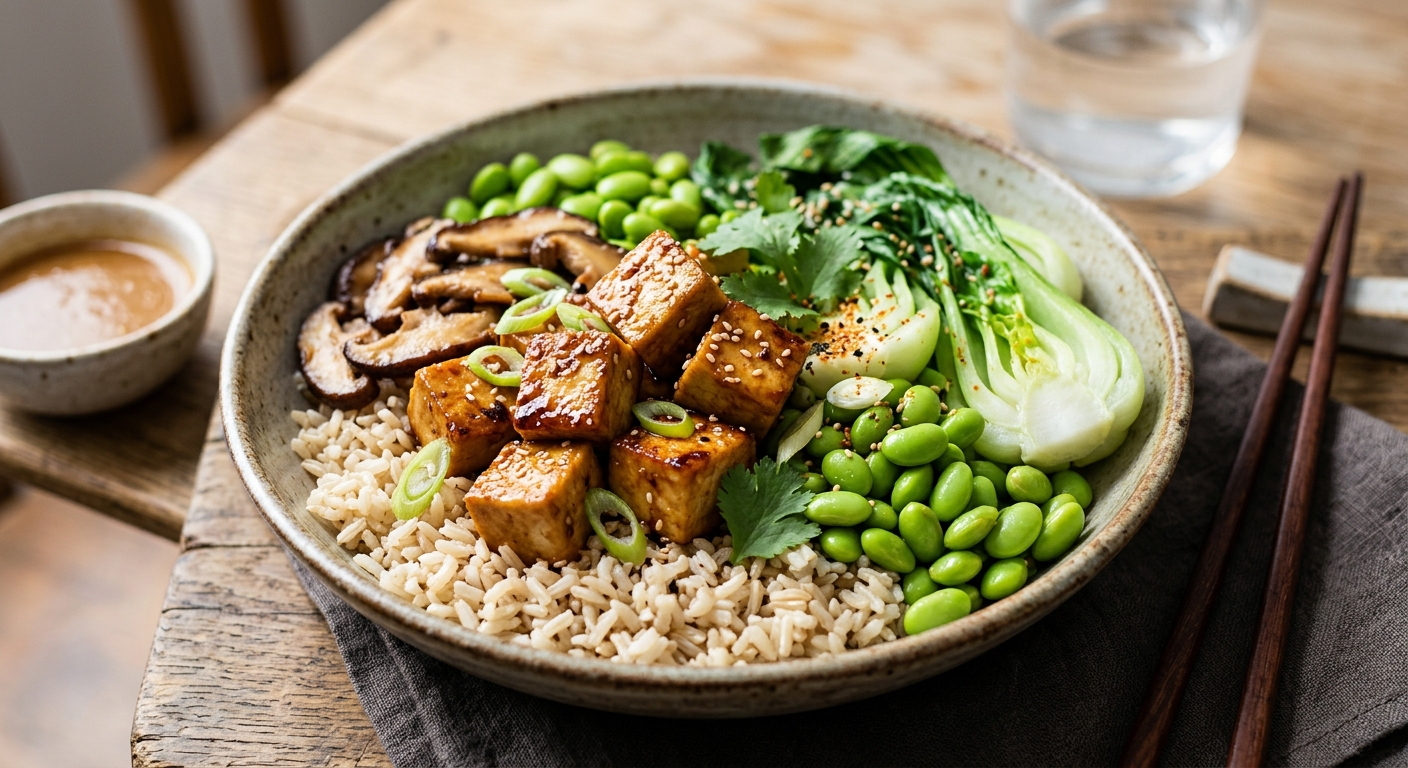
Bone health rarely gets the culinary attention it deserves. Most people associate it with a glass of milk and call it a day, but the science of skeletal strength is far richer and more delicious than that. This Brown Rice and Miso-Glazed Tofu Bowl was engineered from the ingredient list upward, drawing on the most current dietary reference intakes to deliver calcium, magnesium, phosphorus, vitamin K, and manganese in a single, craveable meal. Every component earns its place nutritionally and culinarily.
The star of the bowl is firm tofu marinated in a lacto-fermented white miso glaze. Miso contributes vitamin K2 in its menaquinone-7 (MK-7) form, which research published in Osteoporosis International identifies as the most bioavailable dietary K2 form for activating osteocalcin, the protein that anchors calcium into bone matrix. Tofu made with calcium sulfate coagulant provides highly bioavailable calcium, while its isoflavones (genistein and daidzein) have been shown in multiple meta-analyses to inhibit osteoclast activity, meaning they slow the rate at which bone is broken down. Paired with brown rice for manganese and magnesium, edamame for additional isoflavones and lysine, and bok choy for calcium and vitamin C, this bowl operates as a coherent nutritional system.
Beyond the science, this is simply a great bowl of food. The miso glaze caramelizes into sticky, salty-sweet edges on the tofu. The brown rice is chewy and nutty. The sesame oil and rice vinegar dressing ties every element together with brightness and depth. Whether you cook it on the stovetop for maximum texture control, in a slow cooker for a hands-off weekday version, under pressure for a 30-minute weeknight dinner, or in the oven for the deepest caramelization on the tofu, the result is a bowl that makes bone health genuinely exciting.
4
servings
Ingredients
- 360 glong-grain brown rice, rinsed
- 400 gextra-firm tofu, pressed for at least 30 minutes and cut into 2cm cubes
- 200 gshelled edamame, fresh or frozen
- 300 gbaby bok choy, halved lengthwise
- 150 gshiitake mushrooms, stems removed, caps sliced 5mm thick
- 2 tbspwhite (shiro) miso paste
- 1 tbspred miso paste
- 2 tbsplow-sodium tamari
- 1 tbsppure maple syrup
- 1 tbspunseasoned rice vinegar
- 1 tsptoasted sesame oil
- 2 tspfresh ginger, finely grated
- 2 clovesgarlic, minced
- 840 mllow-sodium vegetable broth (for cooking rice)
- 2 tbspAvocado Oil100% Pure Avocado Oil (such as avocado or sunflower oil)
- 1 tbspsesame seeds (white or mixed), for garnish
- 2 stalksscallions, thinly sliced, for garnish
- 1 sheetnori (dried seaweed), cut into thin strips, for garnish
- —Colima Sea SaltMicroplastic Free Salt and white pepper to taste
Instructions
Click on an item below to shop for the recommended items for this recipe on Amazon.
As an Amazon Associate, we earn from qualifying purchases.
- Whisk together the white miso, red miso, tamari, maple syrup, rice vinegar, sesame oil, grated ginger, and minced garlic in a medium bowl until completely smooth. Add the pressed tofu cubes and toss gently to coat. Let marinate at room temperature for at least 15 minutes while you prepare everything else.
- Combine the rinsed brown rice and vegetable broth in a medium heavy-bottomed saucepan. Bring to a vigorous boil over high heat, then stir once, reduce heat to the lowest possible setting, and cover tightly with a lid. Cook undisturbed for 40 to 45 minutes until all the liquid is absorbed. Remove from heat and let steam, still covered, for 10 minutes. Fluff with a fork and season lightly with salt.
- While the rice cooks, heat 1 tablespoon of neutral oil in a large non-stick or cast iron skillet over medium-high heat until shimmering. Use a slotted spoon to lift the tofu from the marinade, reserving the marinade. Arrange the tofu cubes in a single layer without crowding (work in two batches if needed). Cook undisturbed for 3 to 4 minutes until deeply golden on the bottom, then turn each cube and cook for another 3 minutes on the second side. Pour in the reserved marinade and let it bubble and reduce for 1 to 2 minutes, stirring to coat each cube until glossy and sticky. Transfer the glazed tofu to a plate.
- Without wiping the skillet, add the remaining tablespoon of oil over medium-high heat. Add the sliced shiitake mushrooms in a single layer and cook without stirring for 3 minutes until golden and beginning to crisp at the edges. Season with a pinch of salt and white pepper, then toss and cook for 1 minute more. Push the mushrooms to the side of the pan.
- Add the bok choy to the skillet cut-side down. Press down gently with a spatula and cook for 2 minutes until lightly charred on the cut face. Add 2 tablespoons of water to the pan, cover immediately with a lid or foil, and steam for 90 seconds until the stems are just tender but still bright green. Meanwhile, bring a small saucepan of water to a boil, add the edamame, and cook for 3 to 4 minutes (2 minutes if already thawed). Drain.
- Divide the brown rice among four wide bowls. Arrange the miso-glazed tofu, mushrooms, bok choy, and edamame over the rice. Garnish with sesame seeds, scallions, and nori strips. Serve immediately.
- Press the tofu for at least 30 minutes, then cut into larger 3cm cubes (bigger pieces hold up better in the slow cooker). Whisk together both misos, tamari, maple syrup, rice vinegar, sesame oil, ginger, and garlic with 60ml of water to loosen the glaze into a pourable sauce. Place the tofu cubes in the slow cooker insert and pour the miso sauce over them, turning gently to coat.
- Rinse the brown rice and add it directly to the slow cooker alongside the tofu. Pour in the vegetable broth. Stir very gently just once to distribute the liquid, being careful not to break the tofu. The rice and tofu will cook together, with the rice absorbing the broth and the tofu absorbing the surrounding flavors.
- Cook on High for 2.5 to 3 hours or on Low for 5.5 to 6 hours. Check at the minimum time: the rice should have absorbed almost all the liquid and be tender but not mushy. If there is still significant liquid, remove the lid and cook on High for an additional 20 to 30 minutes. Avoid stirring during cooking, which can break the tofu.
- About 15 minutes before serving, heat a large skillet over high heat with 2 tablespoons of neutral oil. Sear the shiitake mushrooms for 3 to 4 minutes until golden. Add the bok choy cut-side down, press briefly, then add a splash of water, cover, and steam for 90 seconds. In a separate small saucepan, boil the edamame for 3 to 4 minutes and drain.
- Spoon the rice and braised miso tofu into four bowls, being gentle with the tofu. Arrange the mushrooms, bok choy, and edamame on the side. Finish with sesame seeds, scallions, and nori strips. The slow-cooked tofu will be silkier and more infused with flavor than the seared version, making this an excellent make-ahead option.
- Press the tofu and cut into 3cm cubes. Whisk together both misos, tamari, maple syrup, rice vinegar, sesame oil, ginger, and garlic in a bowl until smooth. Toss the tofu cubes in the miso marinade and let sit for 10 minutes while the pot heats up.
- Add the rinsed brown rice and vegetable broth to the pressure cooker insert. Stir briefly. Arrange the marinated tofu cubes over the top of the rice in a single layer, pouring any remaining marinade over everything. Do not stir once the tofu is placed, as keeping it on top prevents it from breaking apart and allows it to steam rather than simmer.
- Secure the lid and set the valve to Sealing. Cook on Manual High Pressure for 22 minutes. When the cycle ends, allow a full natural pressure release for 10 minutes, then carefully quick-release any remaining pressure by turning the valve to Venting. Open the lid away from you to avoid steam.
- The rice should be fully cooked and the tofu will be tender and deeply seasoned. Use a wide spatula to carefully transfer the tofu pieces to a foil-lined baking sheet. Brush with a little extra tamari mixed with a drop of maple syrup. Broil on high for 3 to 4 minutes until the edges are caramelized and slightly sticky. This step is optional but highly recommended for texture contrast.
- While the tofu broils, use the Saute function on the Instant Pot (or a separate skillet) to quickly cook the shiitake mushrooms in the neutral oil for 3 to 4 minutes. Add the bok choy, splash in 2 tablespoons of water, cover, and steam for 90 seconds. Cook edamame in boiling water for 3 minutes and drain.
- Fluff the rice in the pot with a fork, adjusting seasoning with salt and white pepper. Divide into bowls, top with the broiled tofu, mushrooms, bok choy, and edamame. Finish with sesame seeds, scallions, and nori strips.
- Preheat your oven to 200 degrees C (400 degrees F) with two racks: one in the center and one in the upper third. Whisk both misos, tamari, maple syrup, rice vinegar, sesame oil, ginger, and garlic into a smooth glaze. Pour two-thirds of the glaze over the tofu cubes in a bowl and toss to coat thoroughly. Reserve the remaining third of the glaze. Spread the tofu on one parchment-lined baking sheet in a single layer with space between pieces.
- On a second parchment-lined baking sheet, toss the sliced shiitake mushrooms with 1 tablespoon of neutral oil and a pinch of salt. Arrange in a single layer. Toss the bok choy halves with the remaining tablespoon of neutral oil, a pinch of salt, and white pepper. Set aside on a plate (bok choy goes in later).
- For the oven pilaf rice, bring the vegetable broth to a boil in a small saucepan or kettle. In a Dutch oven or oven-safe pot with a tight lid, heat a drizzle of neutral oil over medium heat on the stovetop. Add the rinsed brown rice and stir for 1 to 2 minutes until the grains smell faintly nutty and look slightly translucent at the edges. Pour in the boiling broth, stir once, season lightly with salt, and cover tightly with the lid or foil. Transfer to the center oven rack.
- Simultaneously, place the tofu baking sheet on the upper rack. Roast tofu for 15 minutes, then flip each cube, brush with the reserved glaze, and roast for another 8 to 10 minutes until the edges are deeply caramelized and the glaze is tacky and slightly charred in spots. The rice will cook alongside for a total of 45 minutes; do not open the Dutch oven during this time.
- After the tofu is done, add the mushroom sheet to the upper rack and the bok choy halves cut-side up to the same sheet. Roast for 10 to 12 minutes until the mushrooms are golden and edges are crisp and the bok choy stems are tender. Meanwhile, boil the edamame on the stovetop for 3 to 4 minutes and drain.
- Remove the Dutch oven from the oven, uncover, and let the rice steam for 5 minutes before fluffing with a fork. Divide rice among four bowls. Layer the caramelized tofu, roasted mushrooms, bok choy, and edamame over the rice. Garnish with sesame seeds, scallions, and nori strips. The oven version has the most textural contrast and deepest umami of all four methods.
Nutrition Breakdown
Per 1 serving (makes 4)
Vitamins & Minerals
% Daily Value based on a 2,000 calorie diet (FDA reference)
🧬 Essential Amino Acids
% of recommended daily intake (RDA) per serving
🛡 Antioxidant Profile
The Nutrition Science
The architecture of this bowl reflects a precise understanding of bone mineralization biochemistry. Calcium is the most abundant mineral in bone, but dietary calcium alone is insufficient without the cofactors that govern its deposition. Vitamin K2 in MK-7 form, supplied here by the miso glaze, carboxylates osteocalcin, a protein produced by osteoblasts that physically binds calcium ions into hydroxyapatite crystals within the bone matrix. Without adequate K2, osteocalcin remains undercarboxylated and calcium circulates in the bloodstream rather than integrating into bone tissue. Studies using MK-7 supplementation have demonstrated measurable improvements in vertebral bone strength within 3 years of consistent intake, and fermented soy foods like miso are among the richest dietary sources of this specific menaquinone form.
Magnesium plays an equally critical but often overlooked role. Roughly 60% of the body’s magnesium is stored in bone, where it occupies surface sites on hydroxyapatite crystals and influences their size and rigidity. Low magnesium status correlates strongly with reduced bone mineral density and elevated fracture risk in epidemiological studies. Brown rice contributes approximately 84mg of magnesium per cooked cup, while edamame and tofu each add meaningful amounts, making this bowl one of the more magnesium-dense plant-based meals achievable within typical caloric limits. Manganese, provided in impressive amounts by brown rice and shiitake mushrooms, is a cofactor for glycosyltransferases, enzymes that synthesize the proteoglycan matrix in which bone minerals are anchored.
The soy isoflavones genistein and daidzein present in both tofu and edamame interact with estrogen receptor beta (ER-beta) on osteoblasts and osteoclasts. Meta-analyses including over 10,000 postmenopausal women consistently show that soy isoflavone intake of 40 to 80mg per day (this bowl provides approximately 35 to 45mg) is associated with significantly reduced bone resorption markers and modest but statistically significant improvements in lumbar spine bone mineral density. This effect is most pronounced in individuals whose gut microbiome can convert daidzein to equol, a more potent estrogen-receptor ligand, highlighting how personalized nutrition and microbiome health intersect with skeletal outcomes.
Pro Tips
- Press your tofu for a full hour if time allows. The drier the tofu, the more miso glaze it absorbs during marination and the more aggressively it caramelizes during cooking, whether in a pan or the oven.
- Use calcium-set tofu (the label will read ‘calcium sulfate’ in the ingredients) rather than nigari-set varieties. Calcium sulfate coagulated tofu contains up to 350mg of calcium per 100g, nearly three times more than nigari-set tofu, which makes a material difference to the bone-health nutrient profile of this dish.
- Do not skip the nori garnish. A single sheet of dried seaweed contributes a small but meaningful dose of vitamin K2 in MK-4 form as well as iodine and magnesium, turning what looks like a garnish into a genuine nutritional contributor.
omg the miso component has me SO excited – i’ve been experimenting with using miso in my fermentation brines and the umami depth it adds is incredible, plus the fact that traditional miso is already fermented means youre getting those beneficial lactobacillus cultures with every bite! honestly this bowl sounds like the perfect base for adding some of my homemade fermented veggies on the side too, the live probiotics + all those bone-supporting minerals together is basically a gut and skeletal system dream team. definitely making this soon!
Kirsten, I absolutely love your thinking here! I’ve been teaching my home ec classes for years about how fermented foods enhance mineral absorption, and pairing that miso base with your own fermented veggie brines is such a smart move, especially since the lactobacillus actually helps your body utilize all that calcium and magnesium more efficiently. I’m definitely incorporating this exact bowl into my next class session and asking students to bring their own fermented toppings, because honestly, you’ve just created the perfect teaching moment about how traditional food prep methods align with what modern nutrition science is telling us.
love that youre diving into the fermentation angle – miso is legit amazing stuff. just curious though, whats the net carb count looking like on this bowl with the brown rice? i know brown rice gets a lot of hype for being “healthier” but those carbs can add up quick, and honestly once i switched to cauliflower rice or just upped the veggies and tofu, my blood sugar stabilized way more. the miso, edamame, and sesame are all fantastic micronutrient sources though, no question there.