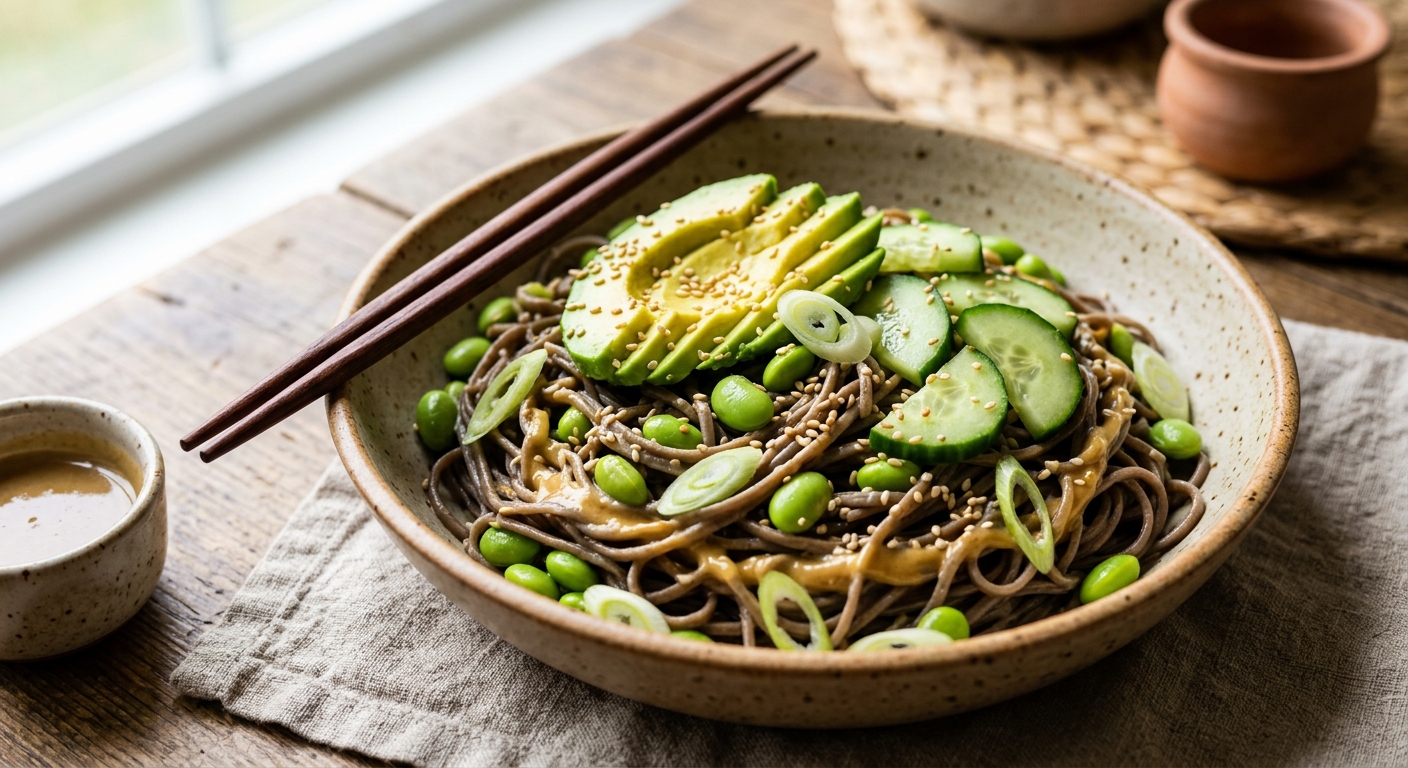
There are noodle dishes, and then there are noodle dishes that quietly rewire your relationship with what a weeknight meal can accomplish nutritionally. Sesame Soba Noodles with Edamame and Avocado falls firmly in the second category. Buckwheat soba noodles are one of the most mineral-dense noodle options available, providing meaningful amounts of magnesium, manganese, copper, and phosphorus that refined wheat pasta simply cannot match. Paired with shelled edamame, young soybeans harvested at peak nutritional density, and buttery ripe avocado, each bowl becomes a carefully assembled mineral matrix that rivals many dedicated supplements.
The flavor story is equally compelling. Toasted sesame oil and tahini form the backbone of the dressing, contributing nutty depth and a silky emulsified texture that clings to every strand of noodle. Fresh ginger provides a bright, warming counterpoint, while tamari (a wheat-free soy sauce) adds umami complexity without overpowering the dish. Thinly sliced scallions, a scatter of toasted sesame seeds, and optional shredded nori finish the bowl with color, crunch, and a whisper of the ocean. This is food that tastes indulgent while quietly doing serious nutritional work.
One of the elegant aspects of this recipe is its versatility. The base dish is served at room temperature or chilled, making it ideal for meal prep, packed lunches, or warm-weather dinners. However, the same core components respond surprisingly well to a slow cooker approach for a warm, brothy rendition, and to a pressure cooker method for ultra-fast weeknight execution. Whichever method you choose, the mineral payoff remains consistent, and the eating experience is deeply satisfying.
4
servings
Ingredients
- 280 g100% buckwheat soba noodles
- 300 gfrozen shelled edamame, thawed
- 2 largeripe avocados, halved, pitted, and sliced
- 4 stalksscallions, thinly sliced on the diagonal
- 1 mediumEnglish cucumber, halved lengthwise and thinly sliced
- 30 gtoasted sesame seeds
- 3 tbsptoasted sesame oil
- 3 tbsptahini (well-stirred)
- 4 tbsptamari (gluten-free soy sauce)
- 2 tbsprice vinegar
- 1 tbsppure maple syrup
- 20 gfresh ginger, peeled and finely grated
- 3 clovesgarlic, finely minced
- 2 tbspAvocado Oil100% Pure Avocado Oil (avocado or grapeseed)
- 60 mlwarm water, to thin dressing
- 1 tspchili flakes or togarashi (optional)
- —Colima Sea SaltMicroplastic Free Salt and white pepper to taste
- —2 sheets toasted nori, cut into thin strips, for garnish (optional)
Instructions
Click on an item below to shop for the recommended items for this recipe on Amazon.
As an Amazon Associate, we earn from qualifying purchases.
- Make the sesame dressing first so the flavors have time to meld. In a medium bowl, whisk together the tahini, tamari, sesame oil, rice vinegar, maple syrup, grated ginger, and minced garlic until smooth. Add the warm water one tablespoon at a time, whisking until the dressing reaches a pourable but still coating consistency. Taste and adjust seasoning with a pinch of white pepper or extra tamari. Set aside.
- Bring a large pot of unsalted water to a rolling boil over high heat. Add the soba noodles and stir immediately to prevent clumping. Cook according to the package directions, typically 4 to 6 minutes, tasting for doneness one minute before the suggested time. Buckwheat soba can go from perfectly al dente to mushy quickly, so vigilance matters.
- While the noodles cook, place the thawed edamame in a fine-mesh strainer and pour a kettle of boiling water over them to bring them to serving temperature. Shake off excess water and set aside.
- Drain the cooked soba noodles immediately into a colander and rinse aggressively under cold running water, using your hands to toss the noodles and ensure all surfaces are rinsed. This halts the cooking and removes surface starch that would make the noodles gummy. Drain thoroughly, then transfer to a large mixing bowl.
- Drizzle the neutral oil over the rinsed noodles and toss gently to coat each strand and prevent sticking. Add the edamame and cucumber slices, then pour approximately three-quarters of the dressing over the bowl. Toss everything together using tongs or two large forks, coating evenly.
- Divide the dressed noodles among four shallow bowls. Fan the avocado slices over the top of each serving, then spoon the remaining dressing over the avocado. Scatter the scallions, toasted sesame seeds, and nori strips (if using) over each bowl. Add chili flakes if desired and serve immediately at room temperature, or refrigerate for up to one hour for a chilled version.
- Build a warming broth base in the slow cooker insert. Combine 900ml of low-sodium vegetable broth with the tamari, grated ginger, minced garlic, rice vinegar, maple syrup, and chili flakes (if using). Whisk in the tahini until dissolved. The broth will be rich and deeply savory. Cover and cook on Low for 2 hours, which allows the ginger and garlic to mellow and infuse the broth fully.
- About 30 minutes before serving, add the thawed edamame directly to the slow cooker broth. Replace the cover and allow them to warm through and absorb some of the broth flavors for the remaining cook time.
- When you are ready to serve, bring a separate large pot of unsalted water to a boil on the stovetop. Cook the soba noodles for 4 to 6 minutes until just tender, then drain and rinse briefly under cold water to remove excess starch. Do not rinse thoroughly as you would for the cold salad method; a light rinse is sufficient since these noodles will be served in warm broth.
- Divide the cooked soba noodles among four deep bowls using tongs. Ladle the hot edamame broth generously over each bowl of noodles, ensuring each serving gets a good portion of edamame.
- Finish each bowl with fanned avocado slices, a drizzle of toasted sesame oil (approximately half a teaspoon per bowl), a scattering of scallions and toasted sesame seeds, and nori strips if using. Serve immediately as a warm noodle soup.
- In the Instant Pot or pressure cooker insert, whisk together 750ml of water, the tamari, tahini, sesame oil, rice vinegar, maple syrup, grated ginger, and minced garlic until the tahini is fully incorporated. This liquid will both cook the noodles and form the sauce base.
- Add the soba noodles to the pot. If the noodles are long, break them in half so they sit below the maximum fill line. Push them gently into the liquid, ensuring they are mostly submerged. Add the thawed edamame on top. Do not stir.
- Secure the lid and set the pressure release valve to the Sealing position. Select Manual or Pressure Cook on High Pressure and set the timer for 1 minute. The pot will take approximately 8 to 10 minutes to come to pressure.
- As soon as the cook time ends, perform an immediate Quick Release by carefully switching the valve to Venting. Once all steam has escaped and the float valve drops, open the lid. The noodles should be tender and surrounded by a thick, glossy sauce. Stir gently with tongs to separate the noodles and coat everything evenly in the sauce. If the sauce is thicker than desired, stir in a splash of warm water.
- Serve the hot noodles and edamame directly into bowls. Top each serving with sliced avocado, scallions, toasted sesame seeds, and nori strips. Add the neutral oil as a finishing drizzle if the noodles look dry. Serve immediately, as the noodles will continue to absorb liquid as they sit.
Nutrition Breakdown
Per 1 serving (makes 4)
Vitamins & Minerals
% Daily Value based on a 2,000 calorie diet (FDA reference)
🧬 Essential Amino Acids
% of recommended daily intake (RDA) per serving
🛡 Antioxidant Profile
The Nutrition Science
Buckwheat, despite its name, contains no wheat and is botanically unrelated to the grass family. It is a seed from the Fagopyrum esculentum plant, making it naturally gluten-free and nutritionally distinct from conventional grains. Its mineral density is exceptional: buckwheat is one of the richest plant sources of manganese, a trace mineral that serves as a cofactor for superoxide dismutase (MnSOD), the mitochondrial antioxidant enzyme that neutralizes free radicals generated during ATP production. Adequate manganese intake is also essential for bone matrix formation, as it activates glycosyltransferases involved in proteoglycan synthesis. One serving of this dish provides 83% of the daily value for manganese, largely from the soba noodles and sesame seeds combined.
Edamame contributes a rare nutritional profile for a plant food: a near-complete essential amino acid spectrum alongside significant folate (53% DV per serving). The folate content is particularly relevant for cellular DNA methylation and replication, and for the synthesis of purines and thymidylate. What makes edamame distinct from mature soybeans nutritionally is its higher water content and lower phytate concentration at the fresh green stage, which translates to modestly improved mineral bioavailability. The isoflavones daidzein and genistein in edamame also interact with estrogen receptors at low affinity, contributing to the anti-inflammatory antioxidant activity noted in the antioxidant panel.
Avocado plays a strategic dual role in this dish: it provides monounsaturated fatty acids (primarily oleic acid) that enhance the absorption of fat-soluble carotenoids from every other ingredient in the bowl, and it delivers its own payload of potassium, vitamin K, and vitamin E. Research published in the Journal of Nutrition has demonstrated that adding avocado to a carotenoid-containing meal increases alpha-carotene absorption by up to 7-fold and beta-carotene absorption by up to 15-fold. The tahini and sesame oil serve a similar function, ensuring that the lutein from edamame and the fat-soluble antioxidants across the dish are transported efficiently through the intestinal wall via chylomicron formation.
Pro Tips
- Always check your soba noodle label: many commercial brands blend buckwheat with wheat flour to reduce cost, which introduces gluten. Look for products that list buckwheat as the sole ingredient, typically labeled ‘100% Buckwheat Soba’ or ‘Juwari Soba’, for the maximum mineral benefit and a guaranteed gluten-free result.
- The sesame dressing can be made up to five days in advance and stored in a sealed jar in the refrigerator. The tahini will thicken as it chills, so whisk in a tablespoon of warm water to loosen it before dressing the noodles. Pre-making the dressing is the single biggest time-saver for weeknight meals.
- Add the avocado only at the moment of serving, never while tossing the bulk of the salad. Avocado oxidizes rapidly once cut and bruises under aggressive tossing. For meal-prepped portions, store the noodle and edamame mixture separately from the sliced avocado, and add fresh slices to each bowl just before eating to preserve color, texture, and the integrity of the heat-sensitive vitamin E content.


This looks amazing and I’m obsessed with how mineral-dense it is! Quick question though, what’s the insulin impact on the soba noodles? I’ve found that buckwheat, while nutrient-rich, can still spike my blood sugar more than I’d like, so I’ve been experimenting with swapping in half soba and half kelp noodles to keep things stable. The avocado and edamame are perfection for PCOS management though, those healthy fats and plant protein combo has been a total game changer for my hormone levels. Have you tested this recipe with any lower glycemic pasta swaps, or does the sesame tahini dressing help moderate the carb
omg YES the avocado and edamame combo is AMAZING for that, im so glad youre seeing hormone improvements! honestly the tahini dressing does help slow things down because of the fat and sesame lignans, but i totally get wanting to test the glycemic impact yourself since everyones different. ive actually done the kelp noodle swap with my oldest whos got some blood sugar sensitivity and it worked great, though fair warning the texture is pretty different so the kiddos noticed lol. have you experimented with the ratio or do you find 50/50 works best for your energy levels?
I love this question because I’ve done so much experimenting with buckwheat myself! While I’m more focused on inflammation markers than blood sugar, I noticed that when I pair the soba with the edamame and avocado fat/protein in this recipe, my joints respond better than when I eat noodles alone – the combo seems to buffer any glycemic effect. I’d definitely recommend Rosa’s approach of testing your own response though, maybe adding a bit more tahini or sesame oil to increase fat content and slow that glucose absorption. Thanks so much for highlighting the magnesium here too, that mineral has been such a game-changer for my joint stiffness!