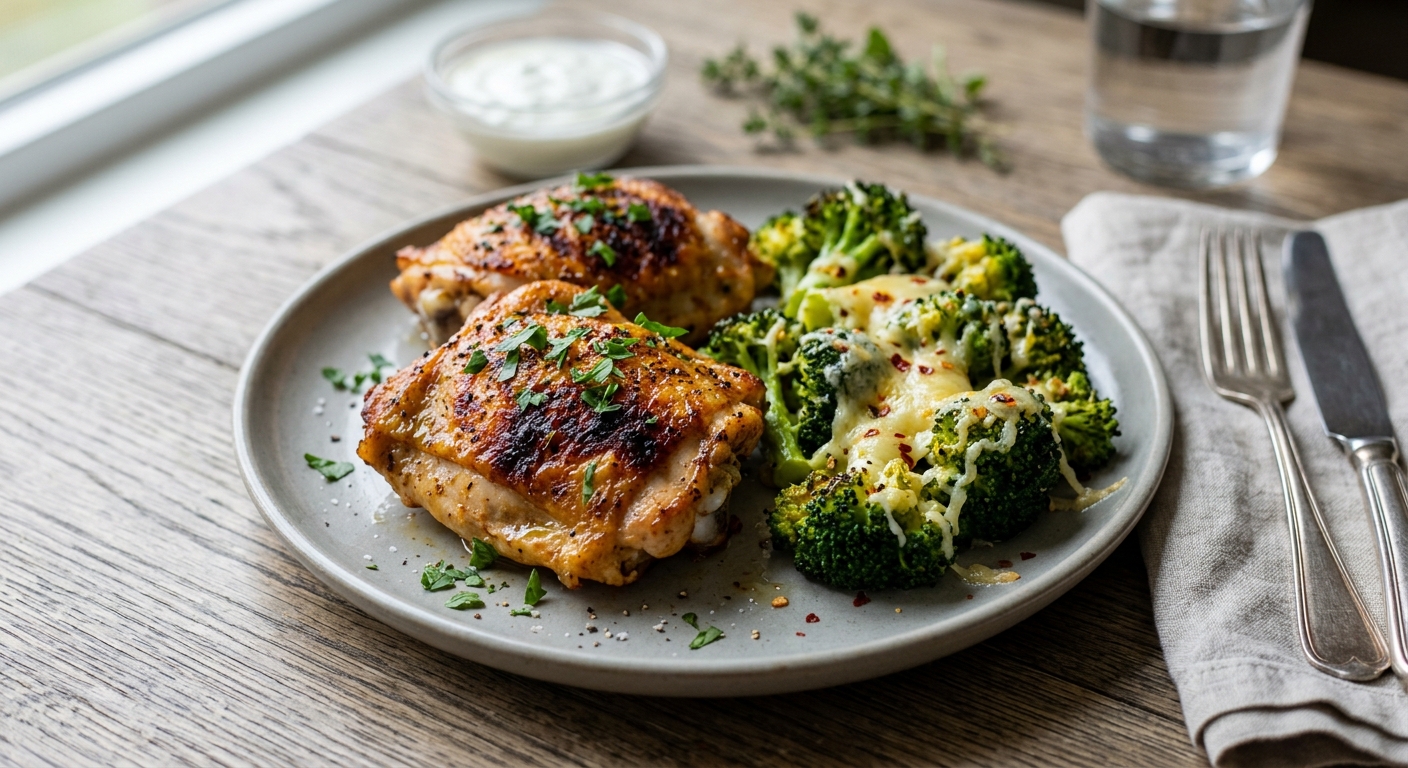
Bone health is not just about calcium supplements. It is about pairing the right nutrients at the right ratios so your body can actually absorb and use them. This Yogurt-Marinated Chicken with Broccoli and Cheese was architected from the ground up with that science in mind. Full-fat Greek yogurt acts as both a tenderizing marinade and a calcium delivery vehicle, while broccoli brings vitamin K2 precursors, magnesium, and a meaningful dose of vitamin C to assist collagen synthesis in joint cartilage. Aged sharp cheddar closes the loop with phosphorus and additional calcium, creating a nutrient synergy that no single ingredient could achieve alone.
Beyond the nutritional engineering, this is genuinely crave-worthy comfort food. The lactic acid in the yogurt breaks down surface proteins in the chicken, keeping the meat incredibly moist even when cooked at high heat. A blend of garlic, smoked paprika, and Dijon mustard transforms the marinade into a flavour-dense crust that caramelizes beautifully on the stovetop or in the oven. The broccoli softens just enough to be silky while retaining its structural bite, and a final blanket of bubbling cheddar ties everything together with richness and depth.
Whether you have 30 minutes on a weeknight or want to set a slow cooker before work, this recipe scales effortlessly across four cooking methods. Every version has been individually calibrated for timing, moisture management, and texture so you get the same protein-rich, bone-supporting result regardless of your equipment. Pair it with a glass of fortified orange juice in the morning to push your daily vitamin D intake to 100% DV, and this single dinner becomes the cornerstone of a fully optimized bone-health day.
4
servings
Ingredients
- 900 gbone-in, skin-on chicken thighs (about 4 large thighs)
- 240 gfull-fat Greek yogurt (plain, 5% fat)
- 3 clovesgarlic, minced
- 1 tbspDijon mustard
- 1.5 tspsmoked paprika
- 1 tspground cumin
- 0.5 tsponion powder
- 2 tbspextra-virgin olive oil
- 500 gfresh broccoli florets (about 1 large head), cut into even pieces
- 120 gsharp aged cheddar cheese, freshly grated
- 2 tbspfresh lemon juice
- 1 tsplemon zest
- 120 mllow-sodium chicken broth
- —Colima Sea SaltMicroplastic Free Salt and black pepper to taste
- —Fresh flat-leaf parsley, chopped, for garnish
Instructions
Click on an item below to shop for the recommended items for this recipe on Amazon.
As an Amazon Associate, we earn from qualifying purchases.
- Prepare the marinade: In a large mixing bowl, whisk together the Greek yogurt, minced garlic, Dijon mustard, smoked paprika, cumin, onion powder, lemon juice, lemon zest, 1 tablespoon of the olive oil, 1 teaspoon fine sea salt, and a generous amount of black pepper until smooth. Add the chicken thighs and turn to coat thoroughly, making sure the marinade gets under the skin. Cover and refrigerate for at least 30 minutes or up to 8 hours. Remove from the refrigerator 15 minutes before cooking to take the chill off.
- Sear the chicken: Heat the remaining 1 tablespoon of olive oil in a large, heavy-bottomed skillet or cast iron pan over medium-high heat until shimmering. Shake off any excess marinade from the chicken (discard the used marinade) and place the thighs skin-side down in the pan. Do not move them. Sear for 6 to 7 minutes until the skin is deep golden-brown and releases naturally from the pan. Flip and sear the other side for 3 minutes. Transfer the chicken to a plate.
- Build the braising base: Reduce the heat to medium. Pour the chicken broth into the still-hot pan and use a wooden spoon to scrape up all the caramelized bits from the bottom. This fond adds significant flavour. Nestle the broccoli florets into the broth, season with a pinch of salt and pepper, and stir to coat evenly.
- Braise together: Return the seared chicken thighs on top of the broccoli, skin-side up. Cover the pan tightly with a lid and reduce the heat to medium-low. Cook for 18 to 20 minutes until the chicken registers 74 degrees Celsius (165 degrees Fahrenheit) on an instant-read thermometer and the broccoli is fork-tender but not mushy.
- Melt the cheese and serve: Remove the lid and scatter the grated cheddar evenly over the chicken and broccoli. Replace the lid for 2 minutes, or until the cheese is fully melted and bubbly. Remove from heat, garnish generously with fresh parsley, and serve directly from the pan.
- Marinate the chicken: Prepare the yogurt marinade exactly as described (yogurt, garlic, Dijon, smoked paprika, cumin, onion powder, lemon juice, lemon zest, 1 tablespoon olive oil, salt, and pepper). Coat the chicken thighs thoroughly, cover, and refrigerate for at least 30 minutes or overnight. Because slow cooking is low and moist, overnight marinating pays big dividends here by maximizing flavour penetration.
- Load the slow cooker: Pour the chicken broth into the base of a 5 to 6-quart slow cooker. Arrange the marinated chicken thighs skin-side up in a single layer over the broth. Spoon any remaining marinade from the bowl directly over the tops of the thighs. Season lightly with additional salt and pepper. Do not add the broccoli yet.
- Slow cook the chicken: Cover and cook on Low for 4.5 to 5 hours or on High for 2 to 2.5 hours. The chicken is ready to receive the broccoli when it reads 65 to 68 degrees Celsius (150 to 155 degrees Fahrenheit) internally as it will continue cooking.
- Add the broccoli: Tuck the broccoli florets around and beneath the chicken pieces, pressing them gently into the cooking liquid. Replace the lid and continue cooking for 45 minutes on Low (or 30 minutes on High) until the broccoli is tender-crisp and the chicken reaches a safe internal temperature of 74 degrees Celsius (165 degrees Fahrenheit).
- Finish under the broiler for texture: Carefully transfer the chicken thighs and broccoli to an oven-safe baking dish or sheet pan. Scatter the grated cheddar evenly over everything. Place under a preheated broiler set to High for 3 to 4 minutes, watching closely, until the cheese is bubbling and the chicken skin takes on some colour. Spoon a little of the slow cooker juices over the top before serving, and garnish with fresh parsley.
- Marinate the chicken: Prepare the yogurt marinade (yogurt, garlic, Dijon, smoked paprika, cumin, onion powder, lemon juice, lemon zest, 1 tablespoon olive oil, salt, and pepper). Coat the chicken thighs well and refrigerate for at least 30 minutes or up to 8 hours.
- Optional sear using Saute mode: Set the Instant Pot to Saute on High and add the remaining 1 tablespoon of olive oil. Once the display reads ‘Hot’, remove chicken from the marinade (reserving any excess marinade), and sear the thighs skin-side down for 4 to 5 minutes until golden. Flip and sear for 2 more minutes. Press Cancel. Transfer chicken to a plate temporarily. This step is optional but adds considerable depth of flavour.
- Deglaze and prepare the cooker: Pour the chicken broth into the pot and scrape up any browned bits from the bottom with a wooden spoon. This is critical for Instant Pots as unscraped fond can trigger the burn warning. Stir any reserved marinade into the broth. Place the trivet (rack) into the pot. Arrange the seared or raw marinated chicken thighs on the trivet, skin-side up. Do not add the broccoli yet as it will overcook under pressure.
- Pressure cook the chicken: Secure the lid and set the valve to Sealing. Cook on Manual or Pressure Cook at High Pressure for 10 minutes. When the cycle ends, allow Natural Pressure Release for 10 minutes, then carefully switch the valve to Venting to release any remaining steam. Remove the lid away from you.
- Steam the broccoli and melt the cheese: Remove the trivet with the chicken and set aside. Add the broccoli florets directly to the pot liquid. Replace the lid (no need to seal) and use the residual heat on the Keep Warm setting for 5 to 6 minutes until the broccoli is bright green and tender-crisp. Transfer broccoli and chicken to a broiler-safe dish, cover with grated cheddar, and broil on High for 3 minutes until the cheese is melted and golden. Garnish with fresh parsley and serve immediately.
- Marinate and prepare: Prepare the yogurt marinade (yogurt, garlic, Dijon, smoked paprika, cumin, onion powder, lemon juice, lemon zest, 1 tablespoon olive oil, salt, and pepper). Coat the chicken thighs completely, ensuring marinade gets under the skin for maximum penetration. Cover and refrigerate for at least 30 minutes, ideally 4 to 8 hours. Remove from the fridge 20 minutes before baking. Preheat your oven to 220 degrees Celsius (425 degrees Fahrenheit) with a rack in the upper-middle position.
- Arrange the baking dish: Drizzle the remaining 1 tablespoon of olive oil into a large, rimmed baking dish or roasting pan (approximately 23 x 33 cm). Pour the chicken broth into the bottom of the dish. Toss the broccoli florets in the oiled pan, season with salt and pepper, and arrange them in a roughly even layer, leaving space between them so they roast rather than steam.
- Position the chicken and roast: Nestle the marinated chicken thighs skin-side up among the broccoli florets, pressing them gently down so the bottoms are in contact with the broth. The yogurt coating will form a beautiful crust in the high heat. Roast uncovered at 220 degrees Celsius (425 degrees Fahrenheit) for 30 to 35 minutes, until the chicken skin is deep golden-brown and charred at the edges, the broccoli has caramelized tips, and the chicken reaches an internal temperature of 74 degrees Celsius (165 degrees Fahrenheit).
- Add the cheese and gratinate: Remove the pan from the oven. Scatter the grated cheddar evenly over the chicken and broccoli. Switch the oven to the Broil setting on High. Return the pan to the oven and broil for 3 to 4 minutes, watching carefully, until the cheese is fully melted, bubbling, and spotted with golden-brown patches. Do not walk away during this step.
- Rest and serve: Remove from the oven and allow the dish to rest for 5 minutes. This allows the juices in the chicken to redistribute. Spoon the pan drippings over the broccoli, garnish with fresh flat-leaf parsley, and serve directly from the roasting dish.
Nutrition Breakdown
Per 1 serving (makes 4)
Vitamins & Minerals
% Daily Value based on a 2,000 calorie diet (FDA reference)
🧬 Essential Amino Acids
% of recommended daily intake (RDA) per serving
🛡 Antioxidant Profile
The Nutrition Science
The synergy between calcium, phosphorus, and vitamin K in this dish is the foundation of its bone-building credentials. Hydroxyapatite, the primary mineral crystal that gives bone its compressive strength, is composed almost entirely of calcium and phosphate in a 1.67 to 1 molar ratio. This recipe delivers both minerals in proportions that closely mirror that requirement. Vitamin K2, which the body partially produces from the vitamin K1 in broccoli via gut bacteria, activates osteocalcin, a protein that anchors calcium ions into the hydroxyapatite matrix. Without adequate vitamin K, absorbed calcium circulates in the bloodstream rather than being deposited into bone tissue.
The collagen angle is equally important and often overlooked. Approximately 30% of bone by weight is organic matrix, primarily type I collagen. Collagen synthesis requires vitamin C as a mandatory co-factor for the hydroxylation of proline and lysine residues that cross-link collagen fibers. One serving of this dish provides 80% of the daily value for vitamin C, predominantly from the broccoli. At the same time, the 46 grams of complete protein per serving supplies all nine essential amino acids needed to synthesize new collagen and repair cartilage extracellular matrix, with glycine and proline precursors coming directly from the chicken thigh connective tissue.
Greek yogurt contributes more than calcium here. Its lactic acid content mildly acidifies the marinade to approximately pH 4.5, which partially denatures the surface proteins of the chicken through a process called acid denaturation, creating a more permeable surface for flavour compounds to penetrate. The live cultures in yogurt also produce short-chain fatty acids that animal studies suggest may enhance calcium transporter expression in intestinal epithelial cells, potentially increasing net calcium absorption by 10 to 15% compared to an equivalent dose of calcium from non-fermented dairy sources.
Pro Tips
- Marinate overnight for maximum tenderness: The longer the chicken sits in the yogurt marinade (up to 12 hours), the more completely the lactic acid tenderizes the muscle fibers. Overnight marinating can reduce cook times slightly and produces noticeably silkier meat.
- Grate your own cheddar: Pre-shredded cheese is coated in cellulose or potato starch to prevent clumping, which inhibits proper melting and reduces the glossy, stretchy texture you want from a gratin topping. Freshly grated aged cheddar melts 30 to 40% more evenly.
- Cut broccoli florets to a consistent size: Aim for florets no larger than a golf ball to ensure even cooking across all methods. Very large pieces will still be raw in the center when smaller ones are already overcooked, especially in the pressure cooker where timing is unforgiving.


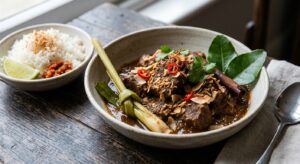

omg YES on the greek yogurt swap, ive found the same thing with my kids actually, regular yogurt sometimes upsets their stomachs but greek yogurt is so much easier on them, plus it has way more protein which honestly just makes the whole marinade thing work better anyway. but also have you looked into those probiotic yogurts? they’re a game changer for gut health especially when youre coming out of issues like that. and then add the broccoli on top of it which is SO full of vitamin K for bone density and i just get excited thinking about all the minerals in this one pan meal honestly lol
I’d be really curious to see the glycemic response data on this one, specifically comparing standard vs greek yogurt marinades since the protein concentration and lower lactose in greek yogurt could shift the insulin dynamics significantly. I’ve been tracking the same pattern on my CGM where greek yogurt gives me a much flatter glucose curve, probably due to the whey removal during straining. Did you measure the marinating time too, since longer exposure might break down proteins further and potentially reduce the lactose content even more?
this looks amazing but im curious about the yogurt type you used? im in remission right now so i can handle dairy pretty well, but regular yogurt still sometimes triggers me so ive had better luck with greek yogurt or lactose free options. also those broccoli florets look perfectly tender which is key for me, flares make raw or too-crunchy veggies rough on my system. did you roast them until theyre soft or do you have a texture preference?