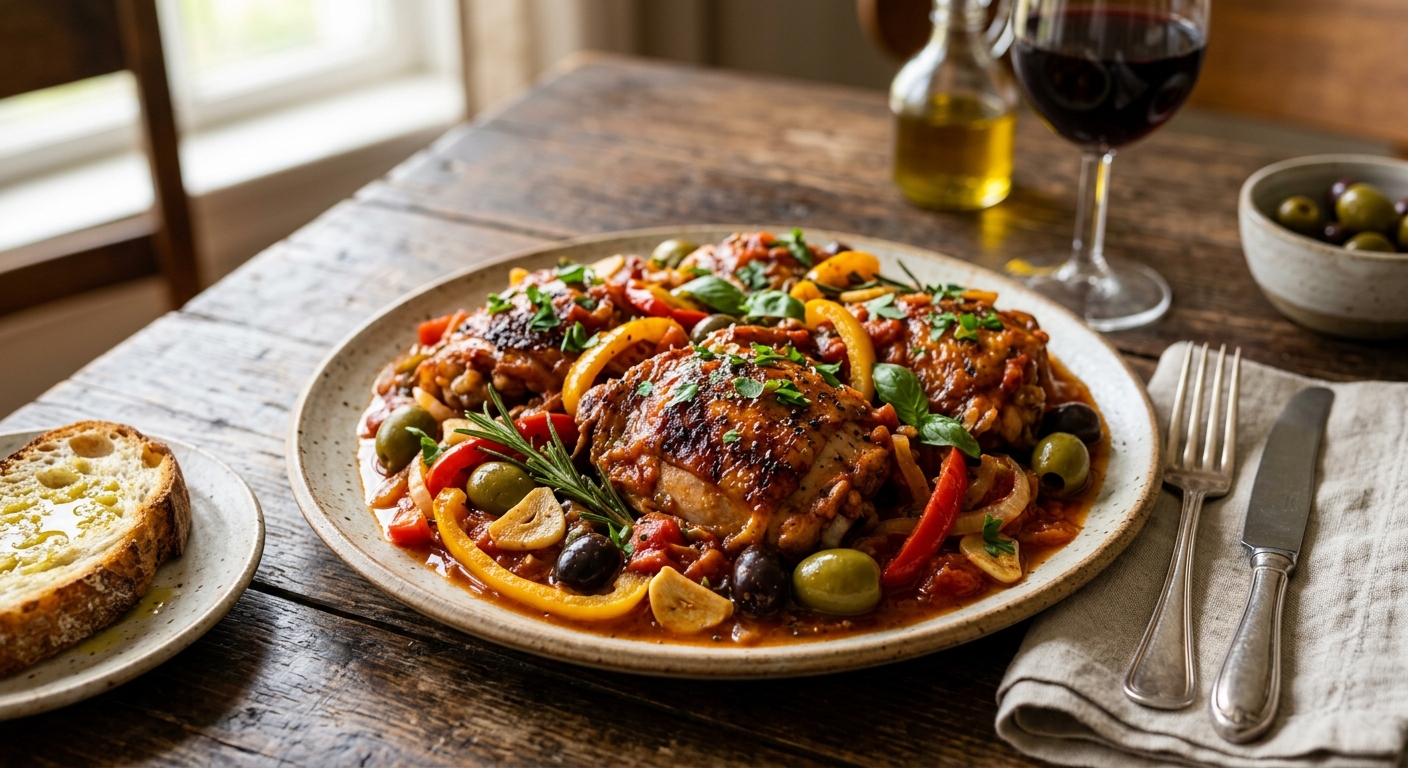
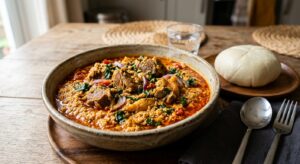
Chicken Cacciatore, literally ‘hunter’s chicken’ in Italian, is one of those timeless braises that rewards both patience and simplicity. Built on a foundation of ripe tomatoes, briny Kalamata olives, sweet bell peppers, and aromatic herbs, this is a dish where every ingredient pulls double duty: delivering bold, layered flavor while contributing meaningfully to your daily nutritional targets. We have optimized the classic recipe to maximize its anti-inflammatory credentials without sacrificing a single drop of soul.
What sets this Calibrated Cuisine version apart is the deliberate combination of ingredients chosen for their synergistic anti-inflammatory action. The lycopene in cooked tomatoes becomes dramatically more bioavailable when heated in the presence of olive oil, the oleocanthal in extra-virgin olive oil mimics the action of ibuprofen at the cellular level, and the oleuropein in Kalamata olives directly suppresses inflammatory cytokines. Together with the selenium and complete amino acid profile of bone-in chicken thighs, you are building a meal that genuinely works at the molecular level to reduce chronic low-grade inflammation.
With four flexible cooking methods, each tailored to extract the best from the technique, this recipe fits any schedule. The stovetop version builds a deeply caramelized fond for maximum depth. The slow cooker produces fall-apart, silky chicken ideal for meal prep. The pressure cooker delivers weeknight speed without compromise. And the oven method, our personal favorite, yields a gloriously concentrated sauce with lightly crisped chicken skin. All four methods are calibrated to the same nutritional profile, so you can choose based on your kitchen and your day.
4
servings
Ingredients
- 1200 gbone-in, skin-on chicken thighs (about 4 large thighs)
- 3 tbspextra-virgin olive oil, divided
- 1 largeyellow onion, thinly sliced
- 1 mediumred bell pepper, seeded and sliced into strips
- 1 mediumyellow bell pepper, seeded and sliced into strips
- 6 clovesgarlic, thinly sliced
- 120 mldry red wine (such as Chianti or Barbera)
- 800 gcanned whole San Marzano tomatoes, crushed by hand
- 120 gKalamata olives, pitted and halved
- 2 tbsptomato paste
- 2 tspfresh rosemary, finely chopped
- 2 tspfresh thyme leaves
- 1 tspdried oregano
- 1 tspred pepper flakes
- 240 mllow-sodium chicken stock
- 2 tbspfresh flat-leaf parsley, roughly chopped
- 1 tbspcapers, rinsed and drained
- —Colima Sea SaltMicroplastic Free Salt and freshly ground black pepper to taste
Instructions
Click on an item below to shop for the recommended items for this recipe on Amazon.
As an Amazon Associate, we earn from qualifying purchases.
- Pat the chicken thighs completely dry with paper towels. Season generously on both sides with fine sea salt and black pepper. Drying the surface is critical for achieving a proper Maillard crust rather than steaming.
- Heat 2 tablespoons of the olive oil in a large, heavy-bottomed Dutch oven or braiser over medium-high heat until shimmering and just beginning to smoke. Place the chicken thighs skin-side down in a single layer. Sear without moving for 6 to 8 minutes until the skin is deep golden brown and releases easily from the pan. Flip and sear the flesh side for 3 minutes. Transfer to a plate and set aside. Pour off all but 1 tablespoon of the rendered fat.
- Reduce heat to medium. Add the remaining 1 tablespoon of olive oil, then the sliced onion and bell peppers. Cook, stirring occasionally and scraping up the browned fond from the bottom of the pan, for 8 to 10 minutes until the vegetables are softened and beginning to caramelize at the edges. Add the sliced garlic, rosemary, thyme, oregano, and red pepper flakes. Cook for 1 to 2 minutes until fragrant.
- Add the tomato paste and stir it into the vegetables. Cook for 2 minutes, allowing it to darken slightly and develop a deeper, sweeter flavor. Pour in the red wine and increase heat to medium-high. Scrape vigorously to deglaze every bit of fond from the bottom of the pot. Simmer for 3 to 4 minutes until the wine has reduced by half and the raw alcohol smell has dissipated.
- Add the crushed San Marzano tomatoes and their juices, chicken stock, olives, and capers. Stir to combine. Nestle the seared chicken thighs back into the pot skin-side up, ensuring they are partially submerged in the sauce but with the skin exposed above the liquid. Bring to a boil, then reduce heat to low, cover partially with a lid left ajar, and simmer gently for 35 to 40 minutes until the chicken is cooked through and the meat near the bone registers 75 degrees C (165 degrees F) on an instant-read thermometer.
- Remove the lid for the final 10 minutes of cooking to allow the sauce to reduce and concentrate. Taste and adjust seasoning with salt and pepper. Scatter with fresh parsley before serving.
- Pat the chicken thighs dry and season with salt and pepper. Heat 2 tablespoons of olive oil in a large skillet over medium-high heat. Sear the chicken skin-side down for 6 to 8 minutes until deeply golden, then flip for 2 minutes. Transfer the seared chicken directly to the insert of a 5 to 6 quart slow cooker. Skip the skillet between steps only if time is truly critical, but note the flavor depth will be reduced.
- In the same skillet over medium heat, add the remaining 1 tablespoon olive oil. Add the onion and bell peppers and cook for 5 minutes until beginning to soften. Add the garlic, herbs, and red pepper flakes and cook for 1 minute. Stir in the tomato paste and cook for 1 minute more. Pour in the red wine and scrape up the fond, simmering for 2 minutes. This vegetable and wine base transfers all the developed flavor into the slow cooker.
- Pour the sauteed vegetable mixture over the chicken in the slow cooker. Add the crushed tomatoes, chicken stock, olives, and capers. Do not stir, as layering keeps the chicken positioned above the bottom and prevents the skin from becoming waterlogged in the liquid. The chicken skin will not crisp in a slow cooker, but the meat underneath will become exceptionally tender.
- Place the lid on the slow cooker. Cook on Low for 6 to 8 hours or on High for 3 to 4 hours. The chicken is done when it registers 75 degrees C (165 degrees F) at the bone and the meat is beginning to pull away from the bone with gentle pressure. Avoid lifting the lid during cooking, as each lift adds 15 to 20 minutes to the required time.
- Once cooking is complete, carefully transfer the chicken to a serving platter. If the sauce appears too thin, transfer the cooking liquid to a saucepan and reduce over medium-high heat for 5 to 10 minutes to your desired consistency. Spoon the concentrated sauce back over the chicken and finish with fresh parsley.
- Set your Instant Pot or electric pressure cooker to the Saute function on High. Add 2 tablespoons of olive oil and allow to heat for 1 to 2 minutes. Pat the chicken thighs dry, season with salt and pepper, and sear skin-side down in batches if needed for 5 to 6 minutes until golden. Flip for 2 minutes. Use the Pressure Cooker’s insert directly, so all fond stays in the pot. Transfer seared chicken to a plate.
- Without cancelling the Saute function, add the remaining 1 tablespoon olive oil, onion, and bell peppers to the pot. Cook for 4 minutes, stirring and scraping the fond. Add the garlic, rosemary, thyme, oregano, and red pepper flakes and cook for 1 minute. Stir in the tomato paste and cook for 1 minute until it darkens. Pour in the red wine and deglaze thoroughly, scraping every bit from the bottom. This step is essential in a pressure cooker: any stuck fond can trigger a burn warning during pressurization.
- Add the crushed tomatoes, chicken stock, olives, and capers. Stir to combine. Return the seared chicken to the pot, nestling the pieces into the sauce. The liquid level should not exceed the two-thirds fill line of your cooker. Press Cancel to end the Saute function.
- Secure the lid and set the pressure release valve to Sealing. Select Manual or Pressure Cook on High Pressure and set the timer for 15 minutes. The pot will take approximately 10 minutes to come to full pressure before the countdown begins.
- When the cook time is complete, allow natural pressure release for 10 minutes (do not touch the valve). After 10 minutes, carefully switch the valve to Venting to release any remaining pressure. Open the lid away from you. The chicken should register 75 degrees C (165 degrees F) at the bone. If the sauce is thinner than desired, switch back to Saute on Medium and simmer uncovered for 5 to 8 minutes to reduce. Finish with fresh parsley and serve.
- Preheat your oven to 180 degrees C (350 degrees F) with a rack positioned in the lower-middle position. Pat the chicken thighs completely dry and season well with salt and pepper. Heat 2 tablespoons of olive oil in an oven-safe Dutch oven or high-sided braiser over medium-high heat on the stovetop. Sear the chicken skin-side down for 7 to 8 minutes, undisturbed, until the skin is deeply golden and crisp. Flip for 2 minutes, then transfer to a plate.
- Pour off all but 1 tablespoon of fat from the Dutch oven. Reduce heat to medium and add the remaining tablespoon of olive oil. Saute the onion and bell peppers for 6 to 8 minutes until soft and lightly caramelized. Add the garlic, rosemary, thyme, oregano, and red pepper flakes and cook for 90 seconds. Add the tomato paste and stir for 2 minutes until it shifts from bright red to a deeper brick-red color.
- Deglaze with the red wine, scraping up all the fond. Allow to reduce for 3 minutes. Add the crushed San Marzano tomatoes, chicken stock, olives, and capers. Stir well and bring the sauce to a steady simmer over medium heat. Taste the sauce and adjust salt and pepper before adding the chicken, as it is easier to season the base now than after the chicken goes in.
- Nestle the seared chicken thighs into the sauce skin-side up. The skin must sit above the surface of the liquid, not submerged. This is the crucial distinction of the oven method: the exposed skin will continue to render and crisp in the oven’s dry heat while the underside of the chicken braises in the rich sauce. Transfer the Dutch oven, uncovered, to the preheated oven.
- Braise uncovered for 45 to 55 minutes, until the sauce has reduced and thickened around the chicken, the skin is deep mahogany and crisp, and an instant-read thermometer inserted near the bone reads at least 80 degrees C (175 degrees F). A slightly higher internal temperature is desirable here, as thigh meat becomes more tender as collagen converts to gelatin between 75 and 90 degrees C. Remove from the oven, rest for 5 minutes, then scatter with fresh parsley and serve directly from the Dutch oven.
Nutrition Breakdown
Per 1 serving (makes 4)
Vitamins & Minerals
% Daily Value based on a 2,000 calorie diet (FDA reference)
🧬 Essential Amino Acids
% of recommended daily intake (RDA) per serving
🛡 Antioxidant Profile
The Nutrition Science
The anti-inflammatory power of this dish operates through several distinct but complementary mechanisms. Oleocanthal, the phenolic compound responsible for the characteristic throat-sting of quality extra-virgin olive oil, has been demonstrated in peer-reviewed research to inhibit cyclooxygenase enzymes (COX-1 and COX-2) at concentrations achievable through normal dietary intake. This is the same enzymatic pathway targeted by non-steroidal anti-inflammatory drugs (NSAIDs), which is why extra-virgin olive oil is considered a cornerstone of the anti-inflammatory Mediterranean dietary pattern. Critically, cooking at moderate braising temperatures (below 160 degrees C internal sauce temperature) preserves the majority of these heat-sensitive phenols, making this dish a far more effective delivery vehicle than high-heat preparations.
The lycopene story in this recipe is equally compelling. Raw tomatoes provide lycopene, but the lycopene in cooked tomatoes undergoes a geometric isomerization from all-trans to cis-isomers, which are paradoxically more bioavailable to human intestinal cells. Furthermore, lycopene is a fat-soluble carotenoid, meaning co-ingestion with the olive oil in this recipe increases its absorption by a factor of three to five compared to fat-free preparations. At an estimated 18mg of lycopene per serving, this dish provides well above the threshold associated with clinically meaningful reductions in LDL oxidation and C-reactive protein levels in epidemiological studies.
Chicken thighs, often overlooked in favor of leaner breast meat, are actually nutritionally superior for this application. The higher fat content (predominantly monounsaturated and saturated) contributes to fat-soluble vitamin absorption, while the significantly greater connective tissue content means longer cooking times yield gelatin-rich collagen breakdown products, including hydroxyproline and glycine. These amino acids are not only joint-supportive but actively anti-inflammatory, as glycine has been shown to inhibit macrophage activation and suppress TNF-alpha production. The skin-on, bone-in preparation maximizes both flavor and the collagen contribution to the final dish.
Pro Tips
- Use the best-quality extra-virgin olive oil you can afford: the peppery, throat-catching finish is oleocanthal, and that sting is your guarantee that the anti-inflammatory phenols are present and potent. A flat, mild olive oil has likely been heat-processed and will provide far less therapeutic benefit.
- San Marzano tomatoes are worth seeking out: their lower acidity and higher dry matter content produce a naturally sweeter, less watery sauce that requires less reduction time. Look for the DOP certification on the can for authenticity.
- Do not discard the olive brine: a tablespoon stirred into the finished sauce adds an extra dose of oleuropein and polyphenols alongside a bright, briny complexity that ties all the Mediterranean flavors together.


Oh Chris, you’re absolutely right about the braising temperature and I’m so glad you brought up the canned tomato point! I’ve been making a version of this for my classes for years, and I actually switched to San Marzano canned tomatoes a few years back when I learned they have higher lycopene content than fresh ones out of season, plus the slow braise really does unlock those compounds beautifully. The chicken thighs are such a smart choice too since they hold up so well to the long cooking and add their own collagen benefits. I’m planning to feature this exact recipe at my next class but I want to dig deeper into what you were saying about lycopene bioavailability
The braising technique here is key – those low temps under 180°C preserve the polyphenol content way better than a quick sear and finish. I’d just push back slightly on one thing: if you’re using canned tomatoes, the lycopene bioavailability actually increases with the heat treatment they’ve already received, so you’re golden there, but I always finish my batches with a splash of good olive oil off heat to maximize oleuropein absorption. The thighs themselves are criminally underrated for this application since the fat carries fat-soluble micronutrients and the collagen breaks into gelatin that supports gut barrier integrity.
Chris, you’re hitting on something I see get overlooked constantly in the clinic: that gelatin from collagen breakdown is legitimately therapeutic for leaky gut and inflammatory cascade reduction, not just comfort food nostalgia. The finish with cold olive oil is smart too, since heat does degrade some of those delicate polyphenols. One thing I’d gently push back on though, and this comes from watching too many cardiac patients: we need to be honest about the fat content in thighs, especially for someone with established atherosclerosis or familial hypercholesterolemia. The micronutrient density is real, but I’ve seen people use “the fat carries fat-soluble vitamins”
honestly nick youre bringing up something i deal with all the time in the box – the fat soluble vitamin argument gets thrown around a lot but youve got the clinical reality that matters more for certain populations. that said, ive found thighs work amazing for my post-WOD crew specifically *because* the fat slows gastric emptying and keeps amino acids bioavailable longer, which is clutch for repair. but yeah if someones dealing with lipid issues that calculus totally changes, and breast might actually be the move there even if its not as satiating. the collagen breakdown piece though, thats what gets me excited about braising – youre getting that therapeutic gelatin *plus* the
Chris is spot on about the braising temp, and Sue’s point about San Marzano canned tomatoes is solid from a practical standpoint. What I’d add from the ICU side: I’ve seen too many patients where the “complete protein” framing gave them false confidence to ignore portion control, especially with chicken thighs which are calorically dense. The anti-inflammatory polyphenols here are genuinely therapeutic, but the real win is that this dish makes people *want* to eat vegetables and olive oil instead of reaching for processed alternatives, and that behavioral shift might matter more than the micronutrient math. Have either of you noticed different satiety patterns between thighs versus breast in this
yea the behavioral piece is huge, i totally get that from a coaching perspective. but honest question – are you seeing the satiety difference actually play out differently between thighs and breast? i use thighs post-WOD specifically because the fat helps with nutrient absorption and keeps people satisfied longer so theyre not snacking on junk two hours later, but i’m curious if thats placebo or if theres actual research backing that up. the anti-inflammatory compounds paired with the complete protein profile is already a win, but if the thighs also keep people fuller longer thats another reason to stick with them instead of defaulting to the leaner option.