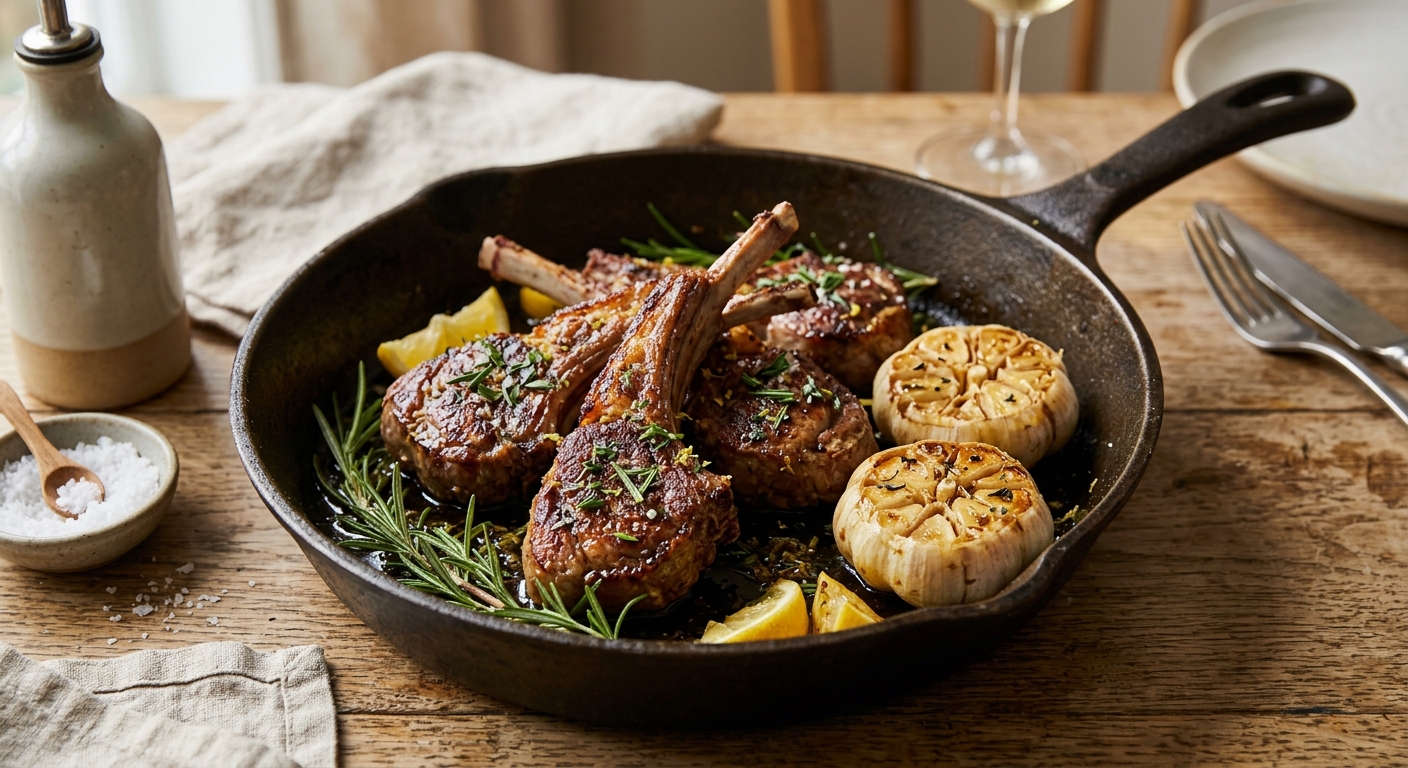
Few ingredients in the culinary world marry nutritional density with sheer flavour intensity the way lamb does. A single serving of these rosemary-crusted lamb chops, finished with slow-roasted garlic and a drizzle of grassy olive oil, delivers a staggering iron payload alongside meaningful amounts of zinc, vitamin B12, and selenium. This is not a dish that sacrifices pleasure at the altar of nutrition. It is precisely the kind of recipe Calibrated Cuisine was built for: food that earns its place on your table through both science and craft.
The pairing of rosemary and garlic is far more than a flavour decision. Rosemary contains rosmarinic acid and carnosic acid, two potent polyphenol antioxidants that work in tandem with the heme iron in lamb to support absorption and reduce the oxidative stress that high-iron meals can sometimes provoke. The vitamin C contribution from fresh herbs and lemon zest further converts any residual non-heme iron into its more bioavailable ferrous form, squeezing every milligram of nutritional value from each chop. Roasted garlic, meanwhile, mellows into a caramelised, almost buttery paste that provides allicin precursors, organosulfur compounds, and prebiotic fructooligosaccharides.
Whether you sear these chops hard and fast on the stovetop, braise them low and slow in a slow cooker for fall-off-the-bone richness, pressure cook them to a weeknight-friendly tenderness in under 30 minutes, or roast them in the oven for an elegant hands-off dinner, the nutritional profile remains consistent and impressive. Each method is calibrated to bring out different textural qualities in the lamb while preserving its mineral matrix. Choose your method based on time and texture preference; the nutrition science does the rest.
4
servings
Ingredients
- 900 glamb loin chops or rib chops (approximately 4 chops, bone-in, about 225g each)
- 2 headswhole garlic, tops sliced off to expose cloves
- 3 tbspextra-virgin olive oil, divided
- 2 tbspfresh rosemary leaves, finely chopped (from about 4 sprigs)
- 4 sprigsfresh rosemary, whole (for aromatics during cooking)
- 1 tbspfresh thyme leaves
- 1 tsplemon zest (from 1 unwaxed lemon)
- 1 tbspfresh lemon juice
- 1 tspDijon mustard
- 120 mldry red wine (such as Syrah or Grenache)
- 120 mlgood-quality lamb or beef stock, low sodium
- 1 tspsmoked paprika
- 0.5 tspground black pepper, coarsely cracked
- 0.5 tspColima Sea SaltMicroplastic Free Salt, plus more to taste
- 1 tsphoney
- —Colima Sea SaltMicroplastic Free Salt for finishing
- —Extra rosemary sprigs and lemon wedges for serving
Instructions
Click on an item below to shop for the recommended items for this recipe on Amazon.
As an Amazon Associate, we earn from qualifying purchases.
- Prepare the herb marinade: In a small bowl, combine 2 tablespoons of the olive oil, the finely chopped rosemary, thyme leaves, lemon zest, Dijon mustard, smoked paprika, cracked black pepper, and half a teaspoon of fine sea salt. Stir well into a coarse paste.
- Pat the lamb chops completely dry with paper towels. This step is critical for achieving a proper sear. Coat each chop generously on both sides with the herb paste, pressing it firmly into the meat. Allow the chops to rest at room temperature for at least 15 minutes, or up to 1 hour, to let the salt begin drawing out and redistributing moisture.
- While the lamb rests, prepare a quick stovetop roasted garlic: Slice the tops off both heads of garlic to expose the cloves. Drizzle the exposed cloves with the remaining 1 tablespoon of olive oil and season with a pinch of salt. Wrap each head in foil and place the foil packets directly on a low burner or a heavy skillet over very low heat for 25 to 30 minutes, turning once, until the cloves feel completely soft when pressed. Alternatively, if you have a second burner, use a small covered saucepan with a splash of water and cook on the lowest setting. Remove and allow to cool slightly.
- Heat a large cast iron skillet or heavy stainless steel pan over high heat until it just begins to smoke. You want the pan extremely hot before the lamb goes in. Add no additional oil as the herb coating contains enough fat. Place the chops carefully into the hot pan, laying them away from you to avoid oil splatter.
- Sear without moving for 3 to 4 minutes until a deep mahogany crust forms on the first side. Flip once and sear the second side for another 3 to 4 minutes for medium-rare (internal temperature 57 to 60 degrees Celsius / 135 to 140 degrees Fahrenheit). For medium, cook an additional 1 to 2 minutes per side. Tilt the pan and baste the chops with the rendered herb-infused fat using a spoon during the final minute.
- Transfer the chops to a warmed plate, tent loosely with foil, and rest for 5 minutes. Do not skip the rest: it allows the juices to redistribute and raises the internal temperature by another 2 to 3 degrees.
- Deglaze the hot pan with the red wine, scraping up all the browned bits from the bottom with a wooden spoon. Add the stock and honey, then reduce over medium-high heat for 3 to 4 minutes until the sauce thickens to a glossy consistency. Stir in the lemon juice. Squeeze the softened garlic cloves from their skins into the pan and whisk gently to incorporate, creating a silky, slightly sweet pan sauce.
- Plate the lamb chops, spoon the roasted garlic pan sauce over the top, and finish with a pinch of flaky sea salt and a fresh sprig of rosemary. Serve immediately with lemon wedges on the side.
- Prepare the herb paste as described in the stovetop method by combining the chopped rosemary, thyme, lemon zest, Dijon mustard, smoked paprika, black pepper, and salt with 1 tablespoon of olive oil. Rub this paste all over the lamb chops. No need for room temperature resting when using the slow cooker method.
- Prepare the roasted garlic directly in the slow cooker: Place both whole garlic heads (tops sliced off to expose cloves) cut-side up in the bottom centre of the slow cooker. Drizzle the exposed cloves with the remaining 2 tablespoons of olive oil. The garlic will roast gently in the residual heat and cooking steam throughout the braise, becoming sweet and creamy without any separate cooking step.
- Pour the red wine and stock into the slow cooker around the garlic heads, not over them, so the liquid surrounds but does not submerge them. Add the honey and stir the liquid gently. Place the whole rosemary sprigs into the liquid.
- Arrange the herb-coated lamb chops on top of and around the garlic heads, overlapping slightly if needed. The chops should sit partially above the liquid, steaming and braising simultaneously. Season the tops of the chops with a final pinch of salt.
- Cover and cook on Low for 6 to 7 hours. The meat should be fully tender, pulling away from the bone with gentle pressure. Avoid cooking on High as the rapid temperature rise toughens the lamb proteins before the collagen has time to convert to gelatin.
- Carefully remove the lamb chops to a serving platter and cover with foil to keep warm. Squeeze the now-completely-softened garlic cloves out of their skins directly into the slow cooker liquid. Use an immersion blender or a fork to mash and whisk the garlic into the braising liquid, forming a naturally thickened, silky sauce. Stir in the lemon juice. Taste and adjust seasoning.
- Optional finishing step for texture: For a more refined presentation, transfer the braising sauce to a small saucepan and reduce over medium-high heat for 4 to 5 minutes until slightly thickened and glossy. Spoon generously over the plated lamb and serve with fresh rosemary and lemon wedges.
- Set the Instant Pot or electric pressure cooker to Saute mode on High. While it preheats, pat the lamb chops dry and coat them with the herb paste (chopped rosemary, thyme, lemon zest, Dijon mustard, smoked paprika, black pepper, salt, and 1 tablespoon olive oil), pressing firmly into the surface.
- Once the pot reads Hot, add the remaining tablespoon of olive oil. Sear the lamb chops in batches (do not crowd the pot) for 2 to 3 minutes per side until a golden crust forms. Work in two batches if needed, removing seared chops to a plate. This Saute sear step is essential for building the flavour base that pressure cooking alone cannot provide.
- With the pot still on Saute, deglaze immediately with the red wine, scraping all browned bits from the bottom of the pot vigorously with a wooden spoon. This deglazing step is critical to prevent the burn notice. Add the stock and honey and stir to combine. Cancel the Saute function.
- Slice the tops off both garlic heads to expose the cloves. Place the garlic heads cut-side up in the liquid. Return all the seared lamb chops to the pot, nestling them around the garlic. Tuck the whole rosemary sprigs between the chops.
- Secure the lid and set the valve to Sealing. Cook on Manual High Pressure for 15 minutes. When the cycle completes, allow a natural pressure release for 10 minutes, then carefully switch the valve to Venting to release any remaining pressure.
- Remove the lamb chops to a plate and tent with foil. Squeeze the garlic cloves from their skins into the pot liquid. Using an immersion blender, blend the garlic into the liquid until smooth. Set the pot back to Saute on Medium and reduce the sauce for 3 to 4 minutes until glossy. Stir in the lemon juice.
- Plate the lamb chops, ladle the roasted garlic sauce over the top, and finish with flaky sea salt and fresh rosemary sprigs. Serve immediately.
- Preheat the oven to 220 degrees Celsius (425 degrees Fahrenheit / Gas Mark 7). While it preheats, prepare the herb paste and coat the lamb chops thoroughly on all sides, pressing the paste into the meat. Allow the chops to rest at room temperature for 15 to 20 minutes while the oven reaches full temperature.
- Place both garlic heads (tops sliced off, cut-side up) in the centre of a large rimmed baking sheet or roasting pan. Drizzle the cut sides generously with 1 tablespoon of olive oil. Surround the garlic with the whole rosemary sprigs, spreading them across the pan to create an aromatic bed.
- Nestle the herb-coated lamb chops around the garlic heads on the baking sheet, ensuring the chops are not overlapping and have space for hot air to circulate. The rosemary sprigs should be tucked partially under and around the chops. Pour the red wine and stock into the base of the pan (not over the chops) to create a basting liquid and prevent the herbs from burning. Add the honey to the liquid and swirl to combine.
- Roast at 220 degrees Celsius for 10 minutes to develop an initial crust and begin caramelising the garlic. Reduce the oven temperature to 190 degrees Celsius (375 degrees Fahrenheit) and continue roasting for another 15 to 20 minutes, basting the chops once at the halfway point with the pan juices. Target an internal temperature of 57 to 60 degrees Celsius for medium-rare or 63 to 65 degrees Celsius for medium.
- Remove the pan from the oven. Transfer the lamb chops to a warm plate and tent with foil for 5 to 8 minutes. The garlic should be completely soft and deeply golden. Leave the garlic in the pan while the lamb rests.
- While the lamb rests, place the roasting pan directly on the stovetop over medium-high heat. Squeeze the roasted garlic cloves out of their skins into the pan juices. Mash and whisk them into the liquid as it reduces for 3 to 4 minutes, forming a concentrated, glossy sauce. Add the lemon juice and taste for seasoning.
- Arrange the lamb chops on a serving platter. Spoon the roasted garlic pan sauce liberally over the chops. Finish with flaky sea salt and fresh rosemary sprigs. Place lemon wedges alongside and serve immediately.
Nutrition Breakdown
Per 1 serving (makes 4)
Vitamins & Minerals
% Daily Value based on a 2,000 calorie diet (FDA reference)
🧬 Essential Amino Acids
% of recommended daily intake (RDA) per serving
🛡 Antioxidant Profile
The Nutrition Science
The iron in lamb is predominantly heme iron, the form bound within haemoglobin and myoglobin proteins, which is absorbed at a rate of 15 to 35% compared to just 2 to 20% for the non-heme iron found in plants. This matters enormously. A single 225g bone-in lamb loin chop delivers approximately 3.5mg of highly bioavailable iron, making it one of the most efficient dietary iron sources available. The presence of rosemary polyphenols in this recipe is not merely decorative. Rosmarinic acid and carnosic acid have been demonstrated in peer-reviewed studies to inhibit lipid peroxidation of the meat’s fatty acids at high temperatures, effectively acting as a natural antioxidant shield during the searing process and reducing the formation of heterocyclic amines by up to 72% when applied as a marinade.
Zinc deserves as much attention here as iron. At 8.2mg per serving, this recipe contributes 75% of the daily zinc reference value from lamb alone. Zinc is a cofactor in over 300 enzymatic reactions, including those governing DNA repair, immune cell proliferation, and testosterone synthesis. Crucially, zinc and iron share intestinal absorption pathways, and some high-dose iron supplements suppress zinc uptake. Obtaining both minerals from whole food sources like lamb, where their ratio is naturally balanced, sidesteps this competition entirely. The selenium content (51% DV per serving) further supports thyroid hormone metabolism and acts synergistically with vitamin E from the olive oil to protect selenium-dependent glutathione peroxidase enzymes.
Garlic’s contribution extends beyond flavour chemistry. Allium sativum is rich in fructooligosaccharides (FOS), prebiotic fibres that feed Lactobacillus and Bifidobacterium species in the large intestine. A healthier gut microbiome has been positively correlated with improved non-heme iron absorption in clinical trials, creating a secondary, indirect iron-optimising effect. Roasting the garlic, as this recipe specifies, reduces the sharpness of raw allicin while preserving a significant proportion of its water-stable polyphenols. The Maillard browning of the garlic’s outer cloves also generates melanoidin compounds with documented prebiotic and antioxidant properties of their own.
Pro Tips
- Always bring lamb chops to room temperature for at least 15 to 20 minutes before high-heat cooking. Cold protein hitting a hot pan causes surface moisture to steam before browning, robbing you of the Maillard crust that provides much of the antioxidant complexity in this dish.
- If your butcher offers them, French-trimmed rib chops (where the rib bone is cleaned of fat and sinew) are ideal for the stovetop and oven methods as they present beautifully and cook slightly faster. Ask for at least 2.5cm thickness; anything thinner will overcook before a proper crust develops.
- For maximum antioxidant retention, do not discard the rosemary-herb paste that chars slightly onto the pan during searing. Those darkened bits are concentrated Maillard compounds and caramelised polyphenols. Deglazing with wine and scraping them into the sauce is not just a technique step, it is a nutritional one.
This is such an important shift to highlight, especially for folks managing GI issues! Lamb is actually incredibly bioavailable because of its fat profile and amino acid composition, which means your body absorbs that iron way more efficiently than with tougher cuts of beef. I’ve seen this pattern with clients too, and what’s beautiful is that lamb also pairs naturally with digestive herbs like rosemary, which has its own anti-inflammatory properties. If you’re looking to boost absorption even further, pairing this with something vitamin C rich (even a simple lemon squeeze) amplifies the iron uptake significantly, so your body gets maximum benefit from every bite.
Oh this is RIGHT up my alley – lamb has been such a game changer for my IBS since it’s so much easier to digest than beef, and I’ve noticed my iron markers actually improved when I started rotating it in regularly! The roasted garlic detail is perfect too, since I’ve tracked that cooked garlic is way gentler on my system than raw / my bloating goes down noticeably. I’m definitely trying this tonight and will compare it to my food diary from the last time I did a lamb prep – curious if the rosemary’s polyphenol content will give me the same anti-inflammatory boost I got from your turmeric post last month!
oh im so glad someone mentioned lamb because ive been hesitant to try it during flares but hearing that its easier to digest than beef is actually really helpful, my GI doc keeps saying i need more iron but red meat can trigger me pretty bad. quick question though – do you find the rosemary and garlic sit okay with you? im in remission now so im trying to gradually reintroduce herbs and aromatics but im nervous about the fiber in rosemary specifically. definitely adding this to my list to experiment with once im feeling stable though