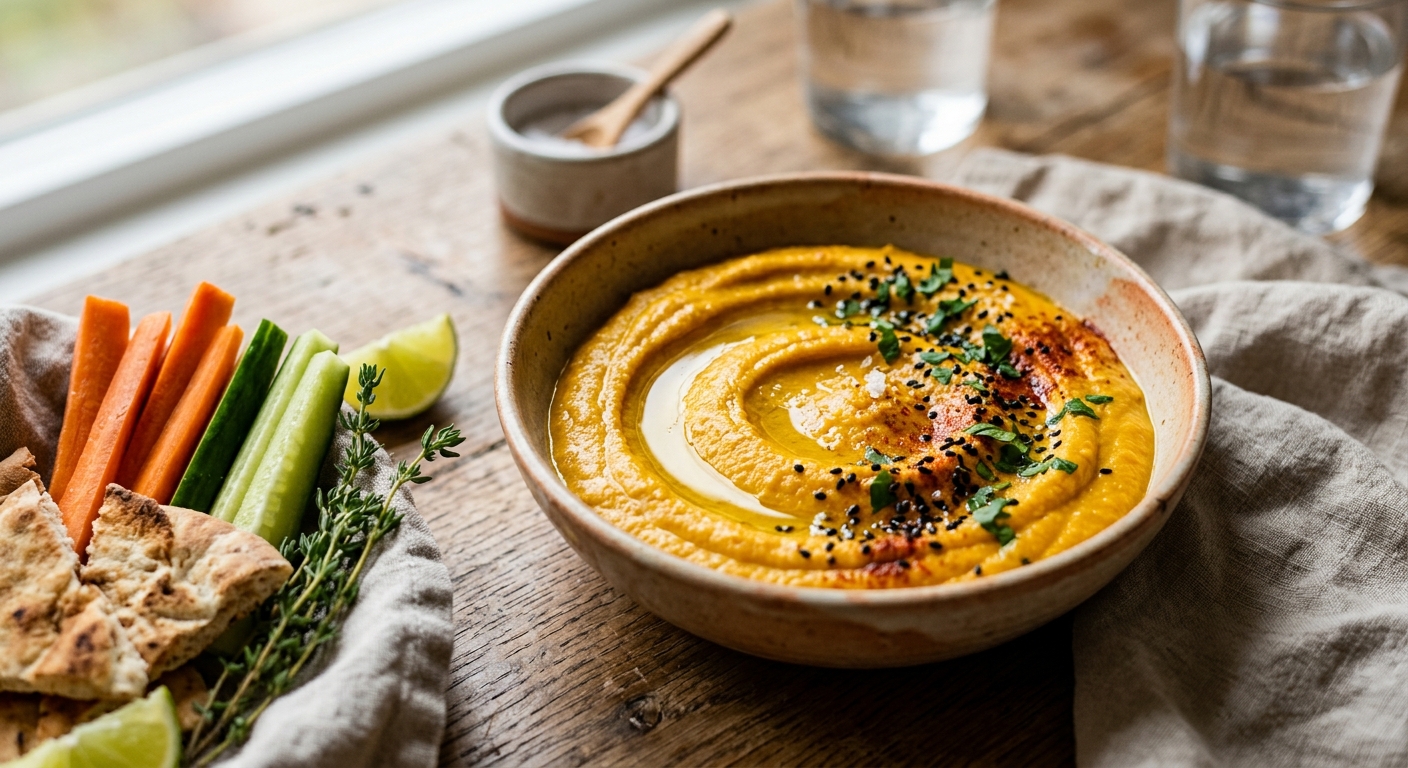
Few dips earn the label ‘anti-inflammatory’ with genuine scientific credibility, but this carrot and turmeric tahini spread does exactly that. Carrots contribute dense beta-carotene, the precursor to vitamin A that also acts as a fat-soluble antioxidant scavenging free radicals in cell membranes. Turmeric brings curcumin, arguably the most-studied plant polyphenol in modern nutritional science, with peer-reviewed evidence supporting its role in suppressing NF-kB inflammatory pathways. And tahini, ground from hulled sesame seeds, rounds the profile with healthy unsaturated fats, calcium, and sesamin, a lignan with its own anti-inflammatory and antioxidant properties.
What makes this dip special beyond its nutrient density is texture and flavour balance. Cooking the carrots until fully tender, then blending with tahini, lemon juice, garlic, and a pinch of cayenne produces a dip that is simultaneously earthy, nutty, bright, and warming. A drizzle of extra-virgin olive oil on top is not merely decorative: fat dramatically increases curcumin absorption and converts beta-carotene to vitamin A far more efficiently than a fat-free meal would. Every element of this recipe is purposefully calibrated for both pleasure and function.
Whether you are serving this as a party dip with crudites and warm pita, spreading it over grain bowls, or using it as a sauce beneath pan-seared salmon, this golden blend punches well above its weight. It can be made on the stovetop, in a slow cooker for deep caramelised sweetness, under pressure for speed, or in the oven where dry heat concentrates carrot sugars into something truly extraordinary. Choose your method based on time and flavour preference, and prepare to make this a weekly staple.
4
servings
Ingredients
- 600 gcarrots, peeled and cut into 2cm rounds
- 60 gtahini (hulled sesame paste), well stirred
- 3 tbspextra-virgin olive oil, divided
- 3 clovesgarlic, peeled and smashed
- 1.5 tspground turmeric
- 0.5 tspground cumin
- 0.25 tspground black pepper (enhances curcumin absorption)
- 0.25 tspcayenne pepper
- 2 tbspfresh lemon juice (about 1 large lemon)
- 2 tbspcold water, plus more to adjust consistency
- 1 tspColima Sea SaltMicroplastic Free Salt, plus more to taste
- —To garnish: extra olive oil drizzle, a pinch of smoked paprika, toasted sesame seeds, and fresh flat-leaf parsley
Instructions
Click on an item below to shop for the recommended items for this recipe on Amazon.
As an Amazon Associate, we earn from qualifying purchases.
- Place the carrot rounds and smashed garlic cloves into a medium saucepan. Cover with cold water by about 2cm. Add 0.5 tsp of the salt and bring to a rolling boil over high heat.
- Reduce the heat to medium and simmer, uncovered, for 18 to 22 minutes until the carrots are completely tender and yield easily when pierced with the tip of a knife. You want them fully soft, not al dente, as residual firmness will result in a grainy dip.
- Drain the carrots and garlic through a colander. Reserve approximately 3 tablespoons of the cooking liquid in a small bowl and set aside. Let the carrots and garlic steam-dry in the colander for 2 minutes to reduce excess moisture.
- Transfer the drained carrots and garlic to a high-speed blender or food processor. Add the tahini, 2 tablespoons of the olive oil, lemon juice, ground turmeric, cumin, black pepper, cayenne, and remaining salt. Blend on high for 60 seconds.
- With the blender running, add the cold water one tablespoon at a time, blending between additions, until the dip reaches your preferred consistency. It should be thick enough to hold a swoosh but loose enough to scoop. Taste and adjust salt, lemon, or cayenne. Transfer to a serving bowl, drizzle with the remaining tablespoon of olive oil, and add garnishes.
- Place the carrot rounds and smashed garlic cloves directly into the slow cooker insert. Drizzle with 1 tablespoon of the olive oil and sprinkle with 0.5 tsp of the salt. Toss to coat evenly. Do not add any water: the carrots will steam in their own juices, concentrating flavour rather than diluting it.
- Sprinkle the turmeric, cumin, black pepper, and cayenne directly over the carrots and toss once more so the spices coat the pieces. Lay a double layer of paper towels across the top of the insert before fitting the lid; this absorbs condensation and prevents waterlogged carrots.
- Cook on Low for 4 hours (or on High for 2 hours) until the carrots are meltingly tender and their edges are beginning to turn a deep golden orange. The garlic will be completely soft and sweet.
- Transfer the cooked carrots and garlic to a high-speed blender or food processor while still hot. Any caramelised juices pooled in the slow cooker insert should be scraped in as well; they carry concentrated sweetness and nutrients. Add the tahini, remaining 2 tablespoons of olive oil, lemon juice, and remaining salt.
- Blend on high for 90 seconds. Because the slow cooker method evaporates less moisture than boiling, the dip may be slightly looser. Add cold water only if needed, one tablespoon at a time, to reach your desired consistency. Taste, adjust seasoning, and serve with garnishes.
- Place the carrot rounds and smashed garlic cloves into the inner pot of your pressure cooker or Instant Pot. Add 120ml (0.5 cup) of cold water. Drizzle with 1 tablespoon of olive oil and add 0.5 tsp of the salt. Stir to combine.
- Secure the lid and set the steam release valve to the Sealing position. Select Manual (or Pressure Cook) on High Pressure and set the timer for 6 minutes. The pot will take approximately 8 minutes to come to pressure before the timer begins.
- When the cook time is complete, carefully perform a Quick Release by switching the valve to Venting. Stand back from the steam. Once all pressure is released and the float valve drops, open the lid.
- The carrots should be very tender. Using a slotted spoon, transfer the carrots and garlic to a high-speed blender or food processor, leaving most of the liquid behind. Reserve 2 tablespoons of the cooking liquid in the pot in case you need it for thinning.
- Add the tahini, remaining 2 tablespoons of olive oil, lemon juice, turmeric, cumin, black pepper, cayenne, and remaining salt to the blender. Blend on high for 60 to 90 seconds until completely smooth. Thin with reserved cooking liquid or fresh cold water as needed. Taste, adjust seasoning, and serve topped with garnishes.
- Preheat your oven to 210C (410F) with the rack in the centre position. Line a large rimmed baking sheet with parchment paper.
- In a large bowl, toss the carrot rounds and smashed garlic cloves with 2 tablespoons of the olive oil, the turmeric, cumin, black pepper, cayenne, and 0.5 tsp of the salt. Spread the carrots in a single layer on the prepared baking sheet, ensuring pieces do not overlap. Crowding the pan causes steaming rather than roasting and will prevent browning.
- Roast for 20 minutes, then flip each carrot piece using tongs or a spatula. Return to the oven and roast for a further 12 to 15 minutes until the carrots are deeply golden and tender with caramelised edges. The garlic cloves should be soft, golden, and fragrant. Watch closely in the final 5 minutes to avoid scorching.
- Remove the baking sheet from the oven and allow the carrots and garlic to cool for 5 minutes. This rest period allows residual heat to finish tenderising the centres and makes handling in the blender safer.
- Transfer the roasted carrots and garlic to a high-speed blender or food processor. Add the tahini, remaining 1 tablespoon of olive oil, lemon juice, and remaining salt. Blend on high for 60 seconds. The roasted dip will be thicker and drier than other methods. Add cold water, one tablespoon at a time, up to 4 tablespoons as needed, blending between additions until silky smooth. Taste, adjust for salt and lemon brightness, and serve in a bowl with all garnishes.
Nutrition Breakdown
Per 1 serving (makes 4)
Vitamins & Minerals
% Daily Value based on a 2,000 calorie diet (FDA reference)
🧬 Essential Amino Acids
% of recommended daily intake (RDA) per serving
🛡 Antioxidant Profile
The Nutrition Science
The nutritional synergy in this dip is by design rather than coincidence. Curcumin, the active polyphenol in turmeric, has poor bioavailability in isolation: studies show less than 1% absorption when consumed without co-factors. Black pepper contains piperine, an alkaloid that inhibits hepatic and intestinal glucuronidation, the metabolic process that rapidly conjugates and eliminates curcumin before it reaches systemic circulation. Including just 0.25 tsp of black pepper alongside turmeric has been shown in multiple human trials to increase curcumin bioavailability by up to 2,000%. The olive oil and tahini in this recipe provide the fat matrix that further dissolves curcumin, enabling micellar absorption through enterocytes.
Beta-carotene from carrots is one of the richest dietary sources of provitamin A, with 600g of raw carrots containing approximately 10 to 11mg of beta-carotene. Conversion efficiency to retinol varies with genetics and gut health, but even at conservative conversion ratios this dip delivers 720 mcg RAE of vitamin A per serving, covering 80% of the daily recommended intake. Critically, beta-carotene is a fat-soluble carotenoid and its conversion and absorption are dramatically enhanced by dietary fat: the tahini and olive oil in this recipe are not optional from a nutritional standpoint. Research published in the American Journal of Clinical Nutrition confirmed that consuming carotenoid-rich vegetables with a fat source increases absorption by three to five fold compared to fat-free preparations.
Tahini contributes a meaningful package of micronutrients often overlooked in plant-based eating: calcium at around 87mg per two tablespoons (comparable to a small portion of dairy), iron, phosphorus, and the B vitamin thiamine. The sesame lignans sesamin and sesamolin are converted by gut microbiota to enterolactone, a compound studied for its role in reducing oxidative stress markers and modulating oestrogen metabolism. Together, this dip functions not merely as a condiment but as a calibrated anti-inflammatory intervention that addresses multiple simultaneous nutritional targets.
Pro Tips
- Always stir tahini thoroughly from the bottom of the jar before measuring: the oil separates to the top during storage, and using only the top layer will result in a dry, crumbly dip lacking in proper emulsification.
- For maximum curcumin bioavailability, do not skip the black pepper. The piperine it contains is essential for absorption, and the quantity called for is not enough to make the dip taste peppery but is scientifically sufficient to meaningfully enhance curcumin uptake.
- The dip keeps well in an airtight container in the refrigerator for up to five days. The colour will deepen to a richer orange overnight as the turmeric continues to bloom. Bring to room temperature before serving and stir well, adding a splash of water if it has thickened.
This is exactly the kind of dip I’ve been looking for, honestly. I’ve been managing my MS through diet for a few years now, and vitamin A metabolism has become really important to my protocol since it supports both myelin integrity and immune regulation. The fat solubility point Veronika makes is crucial, and I’m grateful you included tahini because I need those healthy lipids to actually absorb what I’m eating. My question: do you know if roasting the carrots affects the bioavailability of the beta-carotene at all, or is heat actually beneficial here like it can be with lycopene?
This is such a smart combo, especially the tahini addition for fat solubility – beta-carotene absorption increases significantly with dietary fat, so that creamy base is doing real work beyond just texture. I’ve noticed patients on retinoid medications (like isotretinoin for acne) sometimes get overzealous with vitamin A supplementation and miss that food sources like this are actually more bioavailable and easier to regulate, plus the curcumin here has some gentle hepatoprotective properties that complement pharmaceutical metabolism. Have you tested whether roasting the carrots versus using raw affects the final curcumin stability, or does the tahini’s antioxidant content buffer it enough that cooking method doesn
Veronika nailed the fat solubility piece, and Nadia, that’s a thoughtful approach to MS management. One thing I’d flag though: tahini’s omega-6 to omega-3 ratio sits around 250:1, which is worth considering if someone’s already omega-6 heavy from seed oils elsewhere. The curcumin and beta-carotene here are genuinely anti-inflammatory, but pairing this with omega-3 sources (wild salmon, walnuts, sardines) at other meals would optimize the full picture. Still a standout recipe functionally.