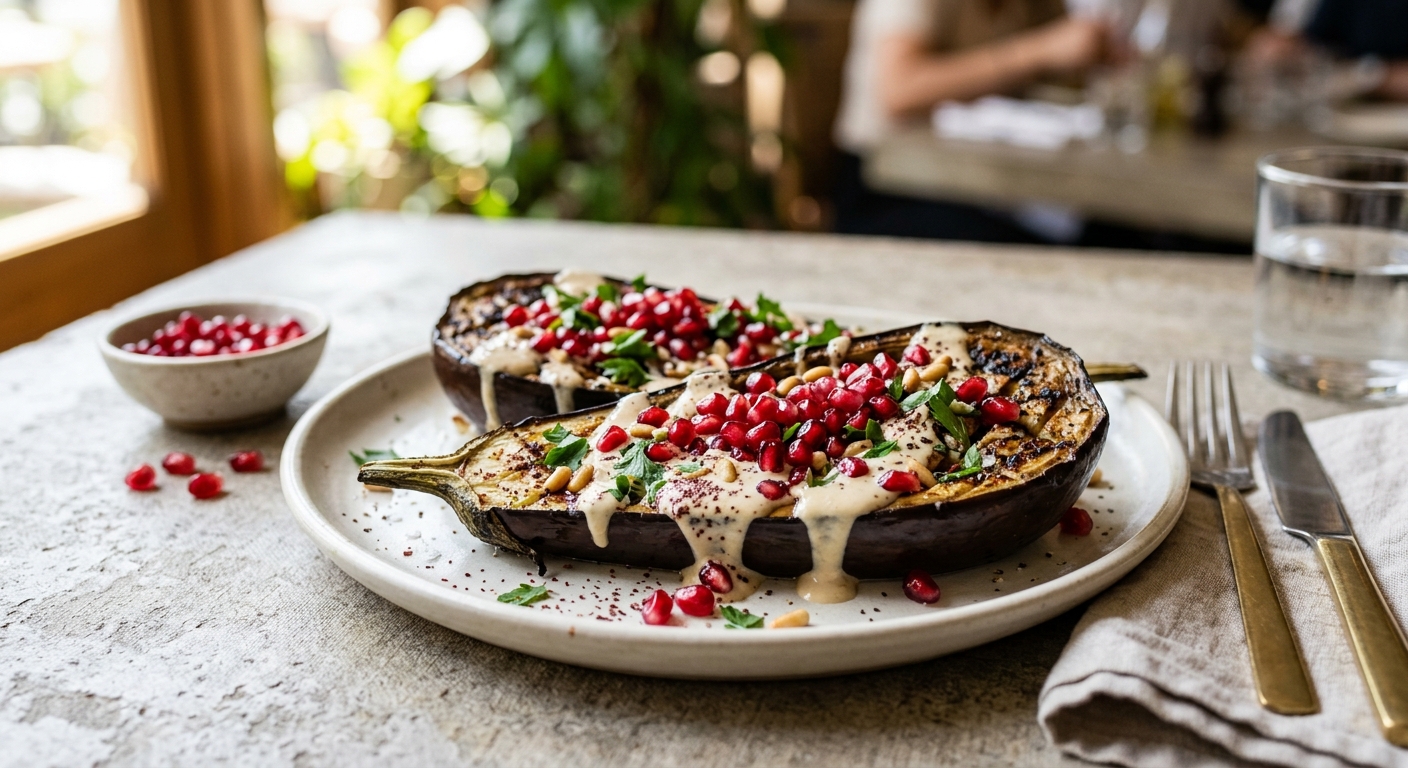
There is a reason this combination has graced Middle Eastern tables for centuries. Eggplant, tahini, and pomegranate are not merely a flavour trio; they are a mineral symphony. Eggplant contributes manganese and copper, both critical for enzymatic function and connective tissue synthesis. Tahini, ground from hulled sesame seeds, is one of the most concentrated plant-based sources of calcium, phosphorus, and zinc available outside of dairy. Pomegranate arils finish the dish with a burst of iron, folate, and vitamin C that actively enhances the absorption of non-heme iron from every other ingredient on the plate.
What makes this recipe particularly valuable from a nutritional standpoint is the deliberate pairing of fat-soluble phytonutrients with the healthy monounsaturated and polyunsaturated fats in tahini and olive oil. Nasunin, the deep-purple anthocyanin found in eggplant skin, is a potent iron-chelating antioxidant that also protects lipid membranes in brain cells. By keeping the skin on and cooking at high heat, you concentrate nasunin while simultaneously creating the smoky, caramelised complexity that makes this dish genuinely crave-worthy. This is nutritional design that happens to taste extraordinary.
Whether you fire it over an open flame for maximum char, low-and-slow it in a braising liquid, blitz it under pressure into a silky spread, or roast it in the oven for effortless weeknight cooking, each method unlocks different textures and depth of flavour. The stovetop version stays closest to the classic Lebanese style, the slow cooker transforms everything into a luscious, spoonable dip-meets-side-dish, the pressure cooker produces a remarkably quick smoky spread, and the oven method caramelises the flesh into golden ribbons with minimal effort. All four land at the same exceptional mineral profile.
4
servings
Ingredients
- 900 gglobe eggplants (about 2 large), unpeeled, stems trimmed
- 80 ghulled tahini (well-stirred)
- 120 gpomegranate arils (from about 1 medium pomegranate)
- 3 tbspextra-virgin olive oil, divided
- 3 clovesgarlic, minced
- 45 mlfresh lemon juice (about 1.5 lemons)
- 30 mlcold water, plus more as needed
- 2 tspground cumin
- 1 tspsmoked paprika
- 0.5 tspground coriander
- 0.25 tspcayenne pepper
- 15 gfresh flat-leaf parsley, roughly chopped
- 15 gfresh mint leaves, torn
- 1 tbsppomegranate molasses
- 2 tsptoasted sesame seeds
- —Colima Sea SaltMicroplastic Free Salt and freshly cracked black pepper to taste
Instructions
Click on an item below to shop for the recommended items for this recipe on Amazon.
As an Amazon Associate, we earn from qualifying purchases.
- Place the whole, uncut eggplants directly on the grates of a gas burner set to high flame, or onto a dry cast-iron skillet heated over maximum heat. Using tongs, rotate the eggplants every 3 to 4 minutes, charring all sides evenly, including the top and bottom near the stem. The skin should blister, blacken, and crack completely, and the eggplant should feel entirely collapsed and soft when pressed, approximately 18 to 22 minutes total. Do not rush this step; the collapse indicates the interior has fully softened and absorbed the smoky aromatics.
- Transfer the charred eggplants to a colander set over a bowl. Make a lengthwise slit down each eggplant and allow them to drain and cool for 10 minutes. This draining step is critical: eggplants release a bitter, watery liquid that, if retained, dilutes the final dish. Once cool enough to handle, peel away and discard all blackened skin using your hands or a spoon, keeping the flesh intact in long, silky strands where possible.
- While the eggplant drains, prepare the tahini sauce. In a medium bowl, whisk together the tahini, lemon juice, minced garlic, cumin, coriander, smoked paprika, and cayenne. The mixture will seize and thicken dramatically at first; continue whisking while adding the cold water one tablespoon at a time until the sauce reaches a smooth, pourable consistency similar to heavy cream. Season generously with sea salt and taste, adjusting lemon or garlic as desired.
- Heat 2 tablespoons of olive oil in the same cast-iron skillet over medium heat. Add the drained eggplant flesh and press it gently into the pan. Let it cook undisturbed for 3 to 4 minutes to develop a lightly caramelised base on the bottom, then fold it once and cook for 2 minutes more. This brief pan finish concentrates the flavour and evaporates any remaining moisture.
- To serve, spread the warm eggplant onto a wide, shallow serving plate. Drizzle generously with the tahini sauce, followed by the pomegranate molasses and the remaining tablespoon of olive oil. Scatter pomegranate arils across the top, then finish with chopped parsley, torn mint, and toasted sesame seeds. Serve immediately while warm, with flatbread alongside.
- Preheat your oven broiler to high. Halve the eggplants lengthwise and score the cut flesh in a crosshatch pattern, cutting about 1 cm deep without piercing the skin. Brush the cut sides with 1.5 tablespoons of olive oil and season with salt and pepper. Place cut-side up on a foil-lined baking sheet and broil on the top rack for 10 to 12 minutes until deeply golden, blistered, and beginning to shrink at the edges. This broiling step is your smoke and caramelisation proxy for the slow cooker method.
- Transfer the broiled eggplant halves cut-side down into the slow cooker insert. In a small bowl, stir together the minced garlic, cumin, coriander, smoked paprika, cayenne, pomegranate molasses, and the remaining 1.5 tablespoons of olive oil with 60ml of water to form a loose spiced sauce. Pour this mixture over and around the eggplants. Add the pomegranate arils directly into the braising liquid; they will break down slightly during cooking and stain the liquid a beautiful ruby red.
- Place the lid on the slow cooker and cook on Low for 5 to 6 hours. The eggplant will fully collapse, absorbing the spiced pomegranate braising liquid. Resist the urge to open the lid during the first 4 hours, as this releases critical steam and extends cooking time. The dish is ready when the eggplant is completely tender and a spoon passes through the flesh with zero resistance.
- Once cooking is complete, carefully lift the eggplant halves out and place them on a serving platter. Use a fork to gently shred the flesh directly on the plate into thick, rustic pieces. Spoon the braising juices from the slow cooker over the top; the liquid will have reduced to a concentrated, sweet-smoky glaze.
- Whisk the tahini sauce as described in step 3 of the stovetop method, using fresh lemon juice, garlic, cumin, coriander, and cold water. Drizzle the tahini sauce over the braised eggplant, then top with fresh pomegranate arils (reserved from the original quantity), parsley, mint, and sesame seeds. The contrast between the jammy, slow-cooked interior and the fresh, bright toppings is the signature of this version.
- Using a fork or skewer, pierce each whole eggplant all over with about 20 holes to allow steam to escape and prevent bursting under pressure. This step is non-negotiable for pressure cooking whole eggplant and ensures even cooking from the inside out. Place the trivet insert into the Instant Pot or pressure cooker and add 240ml of water to the bottom of the pot.
- Rub the outside of each pierced eggplant with 1 tablespoon of olive oil, the smoked paprika, and half the cumin. Place the eggplants on the trivet. Secure the lid, set the steam release valve to the sealing position, and pressure cook on High for 8 minutes. Allow a 10-minute natural pressure release, then carefully switch the valve to venting to release any remaining steam.
- Remove the eggplants and allow them to cool for 5 minutes. The skin will have softened completely and may have cracked. Peel away and discard all skin. Place the flesh into a colander for 5 minutes to drain excess liquid, pressing gently with a wooden spoon to expel moisture.
- Transfer the drained eggplant flesh to the bowl of a food processor. Add the tahini, lemon juice, minced garlic, remaining cumin, coriander, cayenne, pomegranate molasses, and the remaining 2 tablespoons of olive oil. Pulse 6 to 8 times for a chunky, textured spread, or process for 20 to 30 seconds for a fully smooth result. Taste and adjust seasoning with salt, pepper, and additional lemon juice. If the spread is too thick, stream in cold water one tablespoon at a time through the feed tube while the processor runs.
- Spoon the warm spread into a shallow serving bowl, using the back of the spoon to create decorative swoops and wells. Drizzle with extra olive oil, then pile pomegranate arils generously into the wells, followed by parsley, mint, and sesame seeds. Serve warm or at room temperature with toasted pita wedges or sliced cucumber and radishes.
- Preheat your oven to 230 degrees Celsius (210 degrees fan forced, 450 degrees Fahrenheit) and position a rack in the upper third of the oven. Line a large rimmed baking sheet with parchment paper. Slice the eggplants in half lengthwise and score the cut flesh in a deep 2 cm crosshatch pattern, cutting down to within 5mm of the skin. This scoring allows the spiced oil to penetrate deep into the flesh and dramatically accelerates even cooking.
- In a small bowl, combine 2 tablespoons of olive oil with the minced garlic, cumin, smoked paprika, coriander, cayenne, and a generous pinch of salt. Whisk to form a spiced oil, then brush it liberally over the scored cut faces of all four eggplant halves, working it down into the crosshatch cuts with the brush. Place the eggplants cut-side up on the prepared baking sheet.
- Roast on the upper rack for 40 to 45 minutes until the cut surface is deeply golden brown, the flesh has collapsed and softened completely, and the edges are caramelised and slightly crisped. The eggplant should look almost jammy in the centre of each crosshatch diamond. Do not remove them too early; the Maillard reaction happening on that cut surface is what creates the complex, nutty flavour unique to this method.
- While the eggplant roasts, prepare the tahini sauce by whisking together the tahini, lemon juice, remaining garlic, a pinch of cumin and coriander, and cold water until smooth and pourable. In a separate small bowl, combine the pomegranate arils with the pomegranate molasses and let them macerate for 10 minutes to intensify their flavour and create a loose pomegranate syrup.
- Remove the roasted eggplant halves from the oven and allow them to rest for 5 minutes. Arrange on a serving platter and spoon the tahini sauce generously over each half, letting it pool in the crosshatch crevices. Spoon the macerated pomegranate arils and their syrup over the top. Finish with the remaining tablespoon of olive oil, fresh parsley, torn mint, and toasted sesame seeds. Serve directly from the platter as a starter or side dish.
Nutrition Breakdown
Per 1 serving (makes 4)
Vitamins & Minerals
% Daily Value based on a 2,000 calorie diet (FDA reference)
🧬 Essential Amino Acids
% of recommended daily intake (RDA) per serving
🛡 Antioxidant Profile
The Nutrition Science
The mineral density of this dish centres on the complementary profiles of two ancient ingredients: eggplant and tahini. Eggplant is one of the few vegetables with meaningful copper content, providing over half your daily value per serving here. Copper is not merely an antioxidant cofactor; it is structurally required for the enzyme lysyl oxidase, which cross-links collagen and elastin fibres in skin, blood vessels, and bone matrix. Without adequate copper, bone mineral density declines independently of calcium status. Tahini compounds this bone-protective story by delivering phosphorus and calcium in a naturally occurring ratio of approximately 2:1, which is close to the ratio found in hydroxyapatite crystals in bone itself.
Pomegranate arils provide what the other two components cannot: a meaningful hit of vitamin C alongside their own iron content. Vitamin C converts ferric iron (Fe3+) into ferrous iron (Fe2+), the only form absorbable by intestinal enterocytes via the DMT-1 transporter. Studies consistently show that consuming 25mg or more of vitamin C alongside a plant-iron-containing meal increases non-heme iron absorption by 67 to 300 percent depending on baseline status. The 14mg provided per serving here meaningfully shifts absorption, particularly when this dish is part of a larger iron-rich meal. This is not accidental food pairing; it reflects an intuitive nutritional wisdom embedded in traditional Middle Eastern cuisine long before the biochemistry was understood.
Nasunin, the vivid purple anthocyanin in eggplant skin, deserves particular attention for its unusual mechanism. Unlike most antioxidants that donate electrons to neutralise free radicals directly, nasunin also chelates excess iron and copper ions in cell membranes, preventing these metals from catalysing the Fenton reaction that generates the most destructive hydroxyl radicals. In brain tissue, where lipid membranes are especially vulnerable, this chelation-plus-antioxidant dual action appears particularly protective. The key implication for cooking is to always retain the skin, as nasunin is concentrated in the outermost epidermal layer and degrades significantly with prolonged water-based cooking without the skin barrier intact.
Pro Tips
- Salt the scored or halved eggplant and let it sit for 15 minutes before cooking to draw out bitter compounds and excess moisture; pat thoroughly dry before applying heat for better browning and deeper flavour.
- Always stir your tahini jar from the bottom before measuring; the oil separates to the top and un-stirred tahini produces a bitter, dry sauce that no amount of lemon can fix.
- Pomegranate arils freeze beautifully in a single layer on a baking sheet before being transferred to a bag; keep a supply in the freezer so this dish can be made year-round without relying on seasonal fresh pomegranates.





This is a gorgeous combo, and I love that you’re highlighting the mineral angle since eggplant often gets overlooked for its nasunin content, a potent anthocyanin in that purple skin that actually supports mineral bioavailability. What really excites me here though is the tahini pairing, since sesame’s lignan profile (especially sesamin) works beautifully with polyphenol absorption, and pomegranate arils bring ellagic acid on top of it all, creating this really synergistic micronutrient delivery system. I’ve been experimenting with charring techniques in my own kitchen and found that moderate charring (avoiding the full-blacken) seems to preserve
The charring is crucial here, not just for flavor – those Maillard compounds actually improve polyphenol stability in the eggplant skin and make the nasunin more bioavailable. I’d add one thing though: tahini’s phytate content means a squeeze of lemon juice or pomegranate molasses on the eggplant before assembly really helps chelation, especially if you’re serving this to someone focused on iron uptake. Made this last week with a quick fermented tahini and the difference in mineral bioavailability was noticeable, even in how sustained my energy felt post-meal.
omg the tahini is such a game changer here because sesame is packed with phytates that actually get broken down during fermentation, which means better mineral absorption! ive been experimenting with fermented tahini paste and the difference in how my body processes those minerals is wild. plus pomegranate arils have such a nice tart quality that could totally work with a splash of kombucha vinegar if you wanted to amp up the probiotic angle, but either way this dish is giving mineral bioavailability and im here for it!