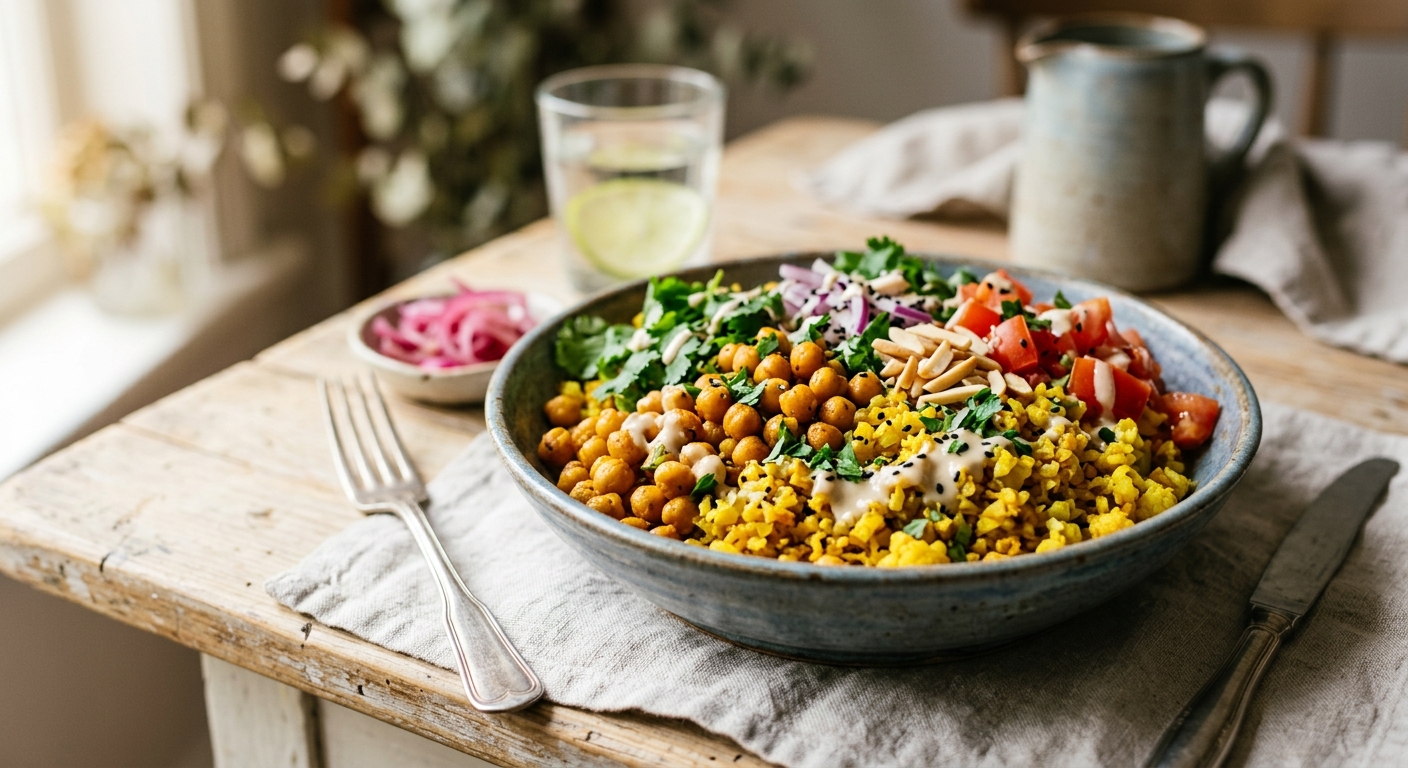
This Turmeric Cauliflower Rice Bowl with Chickpeas was engineered from the ground up to hit the most clinically relevant anti-inflammatory targets on your plate. Cauliflower provides a low-glycemic base that is rich in vitamin C, choline, and glucosinolates, while chickpeas contribute a dense package of folate, manganese, iron, and slow-digesting resistant starch. Together, they form a nutritional partnership that outperforms either ingredient alone, and the turmeric-black pepper combination is not just culinary tradition: piperine from black pepper increases curcumin bioavailability by up to 2,000%, transforming a modest spice addition into a meaningful anti-inflammatory intervention.
What sets this bowl apart from the crowded field of grain-free recipes is the precision layering of fat-soluble and water-soluble nutrients. Curcumin is fat-soluble, so the olive oil in this recipe is not optional; it is the delivery mechanism. Vitamin C from cauliflower enhances the non-heme iron absorption from chickpeas by up to threefold when consumed together, which is exactly what happens in every serving of this bowl. The tahini drizzle adds zinc, copper, and additional calcium, rounding out the mineral profile in a way that most plant-based recipes overlook entirely.
Whether you build this on the stovetop for a quick weeknight dinner, set it in the slow cooker for a deeply developed flavor, or use a pressure cooker when time is short, each method produces a distinct textural experience while preserving the core nutrient density. The oven method delivers caramelized depth and the crispiest chickpeas of the four approaches, making it the weekend showstopper version. Choose your method, follow the calibrated steps, and get one of the most nutritionally complete anti-inflammatory bowls in your weekly rotation.
4
servings
Ingredients
- 800 gcauliflower florets (roughly 1 large head), riced in a food processor
- 480 gcooked chickpeas (two 240g drained cans, or home-cooked)
- 3 tbspextra-virgin olive oil, divided
- 1 mediumyellow onion, finely diced
- 4 clovesgarlic, minced
- 2 tspground turmeric
- 1 tspground cumin
- 0.5 tspground coriander
- 0.5 tspsmoked paprika
- 0.5 tspfreshly ground black pepper (do not substitute pre-ground)
- 0.25 tspcayenne pepper (optional, for heat)
- 200 gcherry tomatoes, halved
- 60 gbaby spinach
- 30 gfresh flat-leaf parsley, roughly chopped
- 1 mediumlemon, zested and juiced
- 3 tbsptahini (well-stirred)
- 2 tbspwarm water (to thin the tahini dressing)
- 1 tsppure maple syrup or honey
- 120 mllow-sodium vegetable broth
- —Colima Sea SaltMicroplastic Free Salt and freshly ground black pepper to taste
- —Optional garnish: pomegranate seeds, toasted sesame seeds, or sliced scallions
Instructions
Click on an item below to shop for the recommended items for this recipe on Amazon.
As an Amazon Associate, we earn from qualifying purchases.
- Make the tahini dressing first so the flavors meld while you cook. In a small bowl, whisk together the tahini, lemon juice, lemon zest, maple syrup, and warm water until smooth and pourable. Season with a pinch of salt and set aside.
- Heat 1.5 tablespoons of olive oil in a large (30cm) skillet or wide saucepan over medium-high heat. Add the drained chickpeas and spread them in a single layer. Cook undisturbed for 3 to 4 minutes until the undersides are golden and beginning to blister. Toss and cook a further 2 minutes. Season with half the turmeric (1 tsp), the smoked paprika, a pinch of salt, and the cayenne if using. Stir to coat and cook 1 minute more until fragrant. Transfer the spiced chickpeas to a plate and wipe the pan if needed.
- Return the pan to medium heat and add the remaining 1.5 tablespoons of olive oil. Add the diced onion with a pinch of salt and cook, stirring occasionally, for 5 minutes until softened and translucent. Add the minced garlic, remaining turmeric, cumin, coriander, and black pepper. Stir constantly for 60 seconds until the spices bloom and become intensely fragrant.
- Add the riced cauliflower to the pan and toss thoroughly to coat every piece in the spiced oil. Pour in the vegetable broth, stir once, then cover the pan with a tight-fitting lid. Steam over medium heat for 4 minutes without lifting the lid.
- Remove the lid and increase heat to medium-high. Cook uncovered for 3 to 4 minutes, stirring occasionally, allowing excess moisture to evaporate. The cauliflower rice is ready when it is tender but still has a slight bite and the pan bottom looks dry. Taste and adjust salt.
- Remove from heat. Fold in the baby spinach and cherry tomatoes, stirring gently until the spinach wilts from the residual heat, about 90 seconds. Return the spiced chickpeas to the pan and fold through the fresh parsley.
- Divide the bowl contents between four bowls. Drizzle generously with the tahini-lemon dressing and add your chosen garnishes. Serve immediately while warm.
- Prepare the tahini dressing by whisking tahini, lemon juice, lemon zest, maple syrup, and warm water together in a small bowl. Cover and refrigerate until serving time.
- In a dry skillet over medium heat, toast the turmeric, cumin, coriander, smoked paprika, black pepper, and cayenne for 60 to 90 seconds, stirring constantly, until fragrant. This brief dry-toast intensifies the spices significantly and is especially important in the slow cooker since the long cook at low heat cannot replicate the blooming effect of hot oil. Remove from heat immediately.
- Add the riced cauliflower, drained chickpeas, diced onion, and minced garlic to the slow cooker insert. Sprinkle the toasted spice blend evenly over the top. Pour in the vegetable broth and drizzle with all 3 tablespoons of olive oil. Toss everything well using a spatula, making sure the spices are evenly distributed throughout. Season with salt.
- Place the lid on the slow cooker and cook on Low for 3 hours. Avoid opening the lid during the first 2 hours; each lid lift adds roughly 20 minutes of cook time. At the 3-hour mark, test the cauliflower for tenderness; it should be very tender and the chickpeas should have absorbed the golden broth.
- Remove the lid and stir in the cherry tomatoes and baby spinach. Replace the lid and cook on Low for a further 10 to 15 minutes until the spinach is wilted and the tomatoes have softened slightly but still hold their shape. Stir in the fresh parsley.
- Taste and adjust seasoning with salt, black pepper, and a squeeze of fresh lemon if desired. Spoon into bowls, drizzle with the chilled tahini-lemon dressing, and add garnishes. The dressing will slightly cool the bowl to a pleasant eating temperature.
- Set the Instant Pot or electric pressure cooker to the Saute function on Normal (medium) heat. Add 1.5 tablespoons of olive oil and let it heat for 1 minute. Add the diced onion and cook, stirring, for 3 minutes. Add the garlic, turmeric, cumin, coriander, smoked paprika, black pepper, and cayenne. Stir constantly for 60 seconds until fragrant and the spices begin sticking to the bottom of the pot.
- Add the drained chickpeas and stir to coat them in the spiced oil. Add the riced cauliflower and pour in the vegetable broth. Stir everything together, scraping any browned spice bits from the bottom of the pot (this prevents the burn warning). Drizzle the remaining 1.5 tablespoons of olive oil over the top and season with salt. Do not add the spinach, tomatoes, or parsley at this stage.
- Cancel the Saute function. Secure the lid and set the pressure release valve to Sealing. Select Pressure Cook (or Manual) on High Pressure and set the timer for 3 minutes. The pot will take approximately 7 to 9 minutes to come to pressure.
- As soon as the 3-minute cook time is complete, perform an immediate Quick Release by carefully turning the valve to Venting. This is critical; a Natural Release will overcook the cauliflower. Once the pin drops, open the lid away from you.
- The mixture will look slightly wet; this is expected. Switch back to the Saute function on Low and cook uncovered for 2 to 3 minutes, stirring gently, to evaporate excess liquid. Immediately fold in the cherry tomatoes, baby spinach, and fresh parsley. The residual heat from the Saute cycle will wilt the spinach in about 60 to 90 seconds. Cancel the Saute function.
- Meanwhile, whisk together the tahini, lemon juice, lemon zest, maple syrup, and warm water to make the dressing. Taste the bowl and adjust salt and lemon. Divide between four bowls, drizzle with dressing, add garnishes, and serve.
- Position two oven racks in the upper-middle and lower-middle positions. Preheat the oven to 220C (425F) convection, or 230C (450F) conventional. Line two large rimmed baking sheets with parchment paper.
- Pat the drained chickpeas thoroughly dry with paper towels; remove as much surface moisture as possible since moisture is the enemy of crispiness. In a mixing bowl, toss the chickpeas with 1.5 tablespoons of olive oil, 1 teaspoon of turmeric, the smoked paprika, half the cumin, a pinch of cayenne, and a generous pinch of salt. Spread them in a single layer on one baking sheet with space between each chickpea.
- In the same bowl, toss the riced cauliflower with the remaining 1.5 tablespoons of olive oil, the remaining turmeric, cumin, coriander, black pepper, diced onion, minced garlic, and salt. Spread the cauliflower rice mixture in an even layer across the second baking sheet, pressing it out to the edges so it has maximum surface contact with the pan.
- Place the chickpea tray on the upper rack and the cauliflower tray on the lower rack. Roast for 15 minutes, then remove both trays and toss their contents. Swap the trays between racks. Return to the oven and roast for a further 15 to 20 minutes until the cauliflower has golden, lightly charred edges and the chickpeas are deeply golden and crispy. Watch closely in the final 5 minutes.
- While the trays roast, whisk together the tahini, lemon juice, lemon zest, maple syrup, and warm water to form the dressing. Place baby spinach in a large serving bowl. When the roasted cauliflower comes out of the oven, immediately tip it over the spinach and toss; the heat will wilt the leaves naturally.
- Add the cherry tomatoes and fresh parsley to the serving bowl and toss gently. Taste and adjust seasoning. Divide into four bowls, top with the crispy oven-roasted chickpeas, drizzle with the tahini-lemon dressing, and finish with your chosen garnishes. Serve while the chickpeas are still warm and crunchy.
Nutrition Breakdown
Per 1 serving (makes 4)
Vitamins & Minerals
% Daily Value based on a 2,000 calorie diet (FDA reference)
🧬 Essential Amino Acids
% of recommended daily intake (RDA) per serving
🛡 Antioxidant Profile
The Nutrition Science
Curcumin, the principal bioactive polyphenol in turmeric, exerts its anti-inflammatory action primarily by inhibiting nuclear factor kappa B (NF-kB), a transcription factor that acts as a master switch for the genes encoding inflammatory cytokines including TNF-alpha, IL-1beta, and IL-6. This mechanism is not merely theoretical; multiple randomized controlled trials have documented reductions in CRP, a clinically used blood marker of systemic inflammation, in subjects supplementing with curcumin. The critical practical detail is bioavailability: curcumin is poorly absorbed in isolation. Piperine, the alkaloid responsible for black pepper’s pungency, inhibits intestinal glucuronidation and thus dramatically slows curcumin’s first-pass metabolism. Including even a small quantity of freshly ground black pepper in this recipe is therefore a deliberate pharmacokinetic decision, not a seasoning afterthought.
Cauliflower belongs to the Brassicaceae family and contains glucosinolates, sulfur-containing compounds that are converted by myrosinase (an enzyme released when the cauliflower cell walls are broken, as they are during ricing) into bioactive isothiocyanates including sulforaphane. Sulforaphane is one of the most potent known activators of the Nrf2 transcription pathway, which governs the expression of the body’s endogenous antioxidant and detoxification enzymes including glutathione S-transferase and NAD(P)H quinone oxidoreductase 1. Importantly, heat partially inactivates myrosinase; the stovetop and pressure cooker methods preserve more glucosinolate activity than prolonged oven roasting, so there is a genuine nutritional trade-off between the oven method’s superior texture and the gentler methods’ higher sulforaphane yield.
The iron-vitamin C pairing in this recipe is a well-established nutritional strategy. The chickpeas provide approximately 4.8mg of non-heme iron per serving, the form found in plant foods that is typically absorbed at only 2 to 8% efficiency. Vitamin C (ascorbic acid) reduces ferric iron (Fe3+) to the more soluble ferrous form (Fe2+) in the digestive tract and also chelates iron into complexes that resist binding by phytates, the iron-absorption inhibitors naturally present in legumes. The cauliflower in this bowl provides approximately 85mg of vitamin C per serving, an amount that research suggests can increase non-heme iron absorption by two to threefold, effectively transforming the chickpeas from a marginal iron source into a clinically meaningful one for people following plant-based diets.
Pro Tips
- Rice the cauliflower in a food processor in two or three short pulses only; over-processing releases too much moisture and creates a wet, dense texture. Aim for pieces roughly the size of couscous grains, not a puree.
- For the crispiest chickpeas in the oven method, dry them 30 minutes ahead of time by spreading them on a paper-towel-lined tray uncovered at room temperature; even brief air-drying makes a noticeable difference to final crunch.
- If you are making this recipe for a household member with higher iron needs (pregnant women, menstruating individuals, or vegans), avoid drinking tea or coffee within one hour of eating this bowl as tannins can significantly inhibit the iron absorption that the vitamin C in this recipe is working to enhance.
nice recipe setup. the chickpea roasting is solid for bioavailable iron and folate, but heres what id be digging into more – that tahini-lemon combo is doing real work for zinc absorption from the chickpeas, and the vitamin c from lemon actively increases non-heme iron uptake. pair that with the curcumin from turmeric enhancing inflammation markers and youre looking at a serious micronutrient synergy play. id maybe mention the black pepper too if theres any in there, since piperine boosts curcumin bioavailability by like 2000%. my clients always sleep better when they nail these mineral stacks consistently.
Oh, I’m absolutely making this for next week’s class on anti-inflammatory cooking! I’ve been roasting chickpeas for years, but I love how you’ve paired them with turmeric-spiced cauliflower rice instead of the plain versions I used to teach, because that curcumin and vitamin C combination is just brilliant for absorption. The tahini-lemon drizzle is exactly the kind of functional fat pairing that makes these nutrients bioavailable, not just present on the plate. I’m so excited to show my students how modern nutrition science validates what we’re doing with traditional spices and whole foods, and this recipe is the perfect teaching tool.
This is exactly what I’ve been looking for – the tahini-lemon drizzle is genius for absorption, and that 47% vitamin C hit is something I can actually track into my weekly protocol. I’m especially glad you highlighted the folate since my MS neurologist keeps pushing me toward better methylation support, and chickpeas are one of the few plant sources I can reliably digest. Thank you for breaking down the micronutrient specifics instead of just saying “anti-inflammatory” like it’s magic.