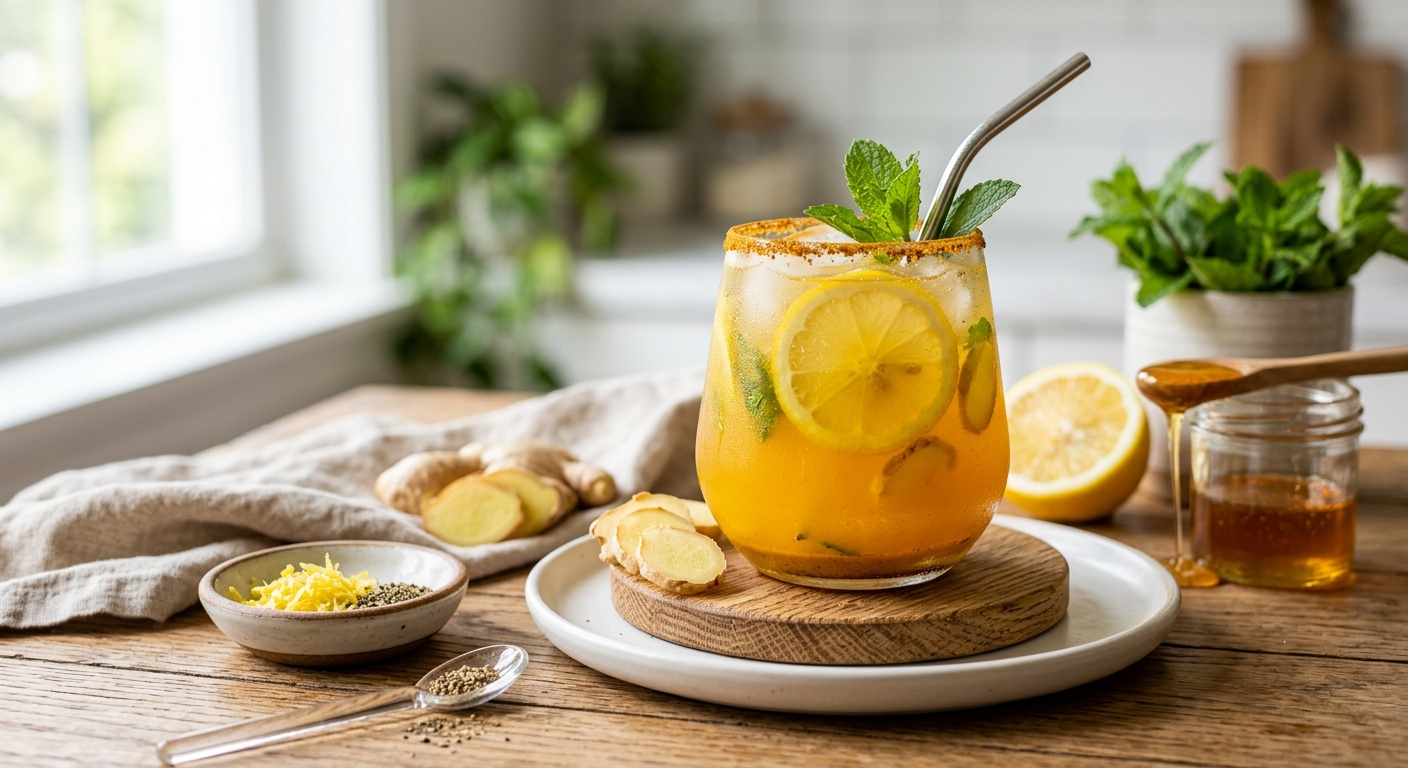
Turmeric lemonade sits at the crossroads of ancient Ayurvedic wisdom and modern nutritional science. Turmeric has been used in South Asian medicine for over 4,000 years, but it is only in the past two decades that researchers have isolated curcumin, its primary bioactive compound, and confirmed its potent anti-inflammatory and antioxidant properties. Pair that with the immune-boosting ascorbic acid in fresh lemon juice and the digestion-stimulating warmth of fresh ginger, and you have a drink that earns its place on any health-conscious table, not just as a trend, but as a genuinely functional beverage.
What elevates this recipe above a simple juice blend is the technique of gently heating the turmeric in water. Heat accelerates the release of curcuminoids from the turmeric matrix, making them more bioavailable in the finished drink. A pinch of freshly ground black pepper is non-negotiable here: piperine, the alkaloid responsible for pepper’s heat, has been shown in clinical studies to increase curcumin bioavailability by up to 2,000 percent by inhibiting rapid hepatic metabolism. The lemon juice is always added off the heat to preserve its heat-sensitive vitamin C content.
Each serving of this lemonade contributes meaningful amounts of vitamin C, manganese, potassium, and vitamin B6, along with a measurable dose of curcuminoids. It is naturally free of gluten, dairy, soy, and eggs, making it one of the most broadly inclusive recipes on Calibrated Cuisine. Served over ice in summer or warm in a mug in winter, this is a drink you can feel working.
4
servings
Ingredients
- 960 mlfiltered water
- 120 mlfresh lemon juice (about 4 large lemons)
- 10 gground turmeric (about 2 tsp heaped)
- 8 gfresh ginger root, peeled and thinly sliced
- 60 mlraw honey or pure maple syrup
- 1 tsplemon zest, finely grated
- 0.5 tspground cinnamon
- 0.25 tspfreshly ground black pepper
- 0.125 tspcayenne pepper (optional, for extra anti-inflammatory potency)
- —Ice cubes or warm water for serving
- —Lemon slices and fresh mint for garnish
Instructions
Click on an item below to shop for the recommended items for this recipe on Amazon.
As an Amazon Associate, we earn from qualifying purchases.
- Combine the filtered water, ground turmeric, sliced fresh ginger, ground cinnamon, black pepper, and cayenne (if using) in a medium saucepan. Whisk briefly to disperse the turmeric powder and prevent clumping on the pan bottom.
- Place the saucepan over medium heat. Bring the mixture to a gentle simmer, stirring occasionally. Once small bubbles appear around the edges (about 180 degrees F / 82 degrees C), reduce the heat to low and maintain a bare simmer for 8 to 10 minutes. Do not allow the mixture to reach a full boil, as excessive heat degrades ginger’s volatile oils and diminishes its flavor.
- Remove the saucepan from the heat and allow the turmeric liquid to cool for 5 minutes. Stir in the raw honey or maple syrup while the liquid is still warm (but not boiling) so it dissolves fully without destroying honey’s beneficial enzymes.
- Stir in the fresh lemon juice and lemon zest. Adding the lemon juice off the heat is critical: temperatures above 70 degrees C rapidly oxidize ascorbic acid, so this step preserves the vitamin C content of the finished drink.
- Strain the mixture through a fine-mesh sieve into a large pitcher, pressing the ginger slices gently with the back of a spoon to extract all their juice. Taste and adjust sweetness or lemon juice as desired. Serve immediately over ice, or refrigerate for up to 3 days.
- Add the filtered water, ground turmeric, sliced fresh ginger, ground cinnamon, black pepper, and cayenne (if using) directly to the slow cooker insert. Stir with a long spoon or whisk to disperse the turmeric powder evenly. Do not add honey, lemon juice, or zest at this stage.
- Set the slow cooker to Low and place the lid on. Cook for 2 hours undisturbed. The sustained low temperature (around 170 to 185 degrees F / 77 to 85 degrees C) gently extracts curcuminoids and gingerols over time, creating a richer infusion than a quick stovetop simmer without ever reaching a destructive boil.
- After 2 hours, turn the slow cooker off and remove the lid. Allow the liquid to rest uncovered for 10 to 15 minutes until it cools to below 70 degrees C (it should feel hot but not scalding when you hold your hand 5 cm above the surface).
- Add the raw honey or maple syrup and stir until fully dissolved. Then add the fresh lemon juice and lemon zest, stirring to combine. The resting period ensures the vitamin C in the lemon juice is not destroyed by residual heat.
- Strain through a fine-mesh sieve into a large pitcher or directly into a glass jar for storage. The slow cooker version will be slightly more concentrated and deeply golden. Dilute with additional cold water if a lighter flavor is preferred. Serve over ice or store refrigerated for up to 4 days.
- Pour the filtered water into the pressure cooker pot. Add the ground turmeric, sliced fresh ginger, ground cinnamon, black pepper, and cayenne (if using). Whisk vigorously to distribute the turmeric. Do not add lemon juice, lemon zest, or honey before pressurizing, as the acidity of lemon can interact with the pressure seal and the vitamin C will be destroyed under high heat.
- Secure the lid and set the pressure release valve to the Sealing position. Select Manual or Pressure Cook mode and set to High Pressure for 3 minutes. The pot will take approximately 5 to 7 minutes to come up to pressure before the cook time begins.
- Once the cook cycle is complete, perform a Quick Release by carefully turning the valve to Venting. Keep your hand and face away from the steam vent. Once all pressure has released and the float valve has dropped, open the lid.
- Allow the liquid to cool in the pot, uncovered, for 8 to 10 minutes until the temperature drops below 70 degrees C. The pressure-extracted liquid will be noticeably more vivid in color and assertive in flavor compared to stovetop or slow cooker versions.
- Stir in the raw honey or maple syrup until dissolved, then add the fresh lemon juice and lemon zest. Taste: this version may need a touch more honey to balance its intensity. Strain through a fine-mesh sieve into a pitcher. Serve over ice or refrigerate for up to 3 days.
Nutrition Breakdown
Per 1 serving (makes 4)
Vitamins & Minerals
% Daily Value based on a 2,000 calorie diet (FDA reference)
🧬 Essential Amino Acids
% of recommended daily intake (RDA) per serving
🛡 Antioxidant Profile
The Nutrition Science
The anti-inflammatory power of this lemonade centers on curcumin, the primary polyphenol in turmeric. Curcumin modulates multiple inflammatory pathways simultaneously, most notably by suppressing nuclear factor kappa B (NF-kB), a transcription factor that triggers the production of pro-inflammatory cytokines including TNF-alpha, IL-1 beta, and IL-6. Unlike non-steroidal anti-inflammatory drugs (NSAIDs), which target a single enzyme, curcumin acts as a pleiotropic modulator, meaning it intervenes at several points in the inflammatory cascade without the gastrointestinal side effects associated with long-term NSAID use.
Curcumin’s most significant limitation has historically been its poor oral bioavailability. Taken alone, it is rapidly metabolized in the liver and intestinal wall and excreted before systemic absorption can occur. This is precisely where black pepper transforms the recipe from pleasant to genuinely functional. Piperine, the pungent alkaloid in black pepper, inhibits glucuronidation in the liver and slows intestinal transit of curcumin, allowing far greater absorption into the bloodstream. A landmark 1998 study published in Planta Medica demonstrated that 20mg of piperine combined with 2g of curcumin increased curcumin bioavailability in human subjects by 2,000 percent. At the concentrations in this recipe, the effect is proportionally meaningful.
Fresh lemon juice contributes more than flavor. Its ascorbic acid (vitamin C) acts as a cofactor for collagen synthesis and a direct scavenger of hydroxyl and superoxide radicals in aqueous environments. Vitamin C also recycles oxidized vitamin E back to its active form, amplifying the total antioxidant capacity of the drink. Ginger’s gingerols, which convert to the more potent shogaols upon gentle heating, inhibit cyclooxygenase-2 (COX-2), the same enzyme targeted by ibuprofen, providing complementary anti-inflammatory action via a distinct mechanistic pathway. The gentle heat applied in all three cooking methods is deliberate: sufficient to extract and activate these compounds, but controlled enough to preserve the heat-sensitive constituents that make the lemon juice’s contribution so valuable.
Pro Tips
- Always use freshly squeezed lemon juice rather than bottled. Bottled lemon juice is pasteurized and may contain preservatives, reducing its vitamin C content by 15 to 30 percent and stripping the aromatic limonene compounds present in fresh juice.
- For maximum curcumin bioavailability, include both the black pepper and a small fat source. If you are not serving this over ice, whisk in a teaspoon of unrefined coconut oil or MCT oil before straining. Curcumin is fat-soluble, and pairing it with dietary fat further enhances absorption alongside piperine.
- The turmeric will stain cutting boards, countertops, and light-colored mugs permanently. Use stainless steel or silicone utensils and rinse your strainer immediately after use. A quick scrub with a paste of baking soda and dish soap removes fresh turmeric stains from most surfaces.




love this combo, especially for iron absorption! that lemon juice vitamin c is honestly huge for me since im managing iron-deficiency anemia, and pairing it with black pepper piperine is genius because it enhances curcumin bioavailability AND helps with iron uptake. my only question is whether youre using filtered water or tap, because ive noticed my ferritin levels respond differently depending on water quality and mineral content (calcium can really block iron absorption for me). do you have thoughts on that? definitely making this one of my go-to afternoon drinks.
oh this is such a game changer for my family! ive been making a turmeric lemonade for the kids but i was wondering about the black pepper ratio – does anyone know if theres antinutrient concerns with too much black pepper, or if its actually enhancing absorption enough to offset anything? my oldest has been way more alert on school days since we started doing this in the mornings, and honestly i think the vitamin c boost plus the anti inflammatory benefits are just hitting different than regular lemonade. plus the kids actually ask for it which feels like winning at nutrition lol
Oh Francesca, I’m so glad you’re connecting those dots! The iron piece is something I don’t see talked about enough, honestly. In Ayurveda we call turmeric a rasayana, a rejuvenative, and pairing it with vitamin C from the lemon is such a natural way to support nutrient absorption across the board. I’ve noticed with my students who deal with similar concerns that adding that black pepper really does complete the picture, not just for curcumin bioavailability but like you said, it creates this synergistic effect where your whole system works more efficiently. The warm spice is also gentler on digestion than taking things separately, which matters when you