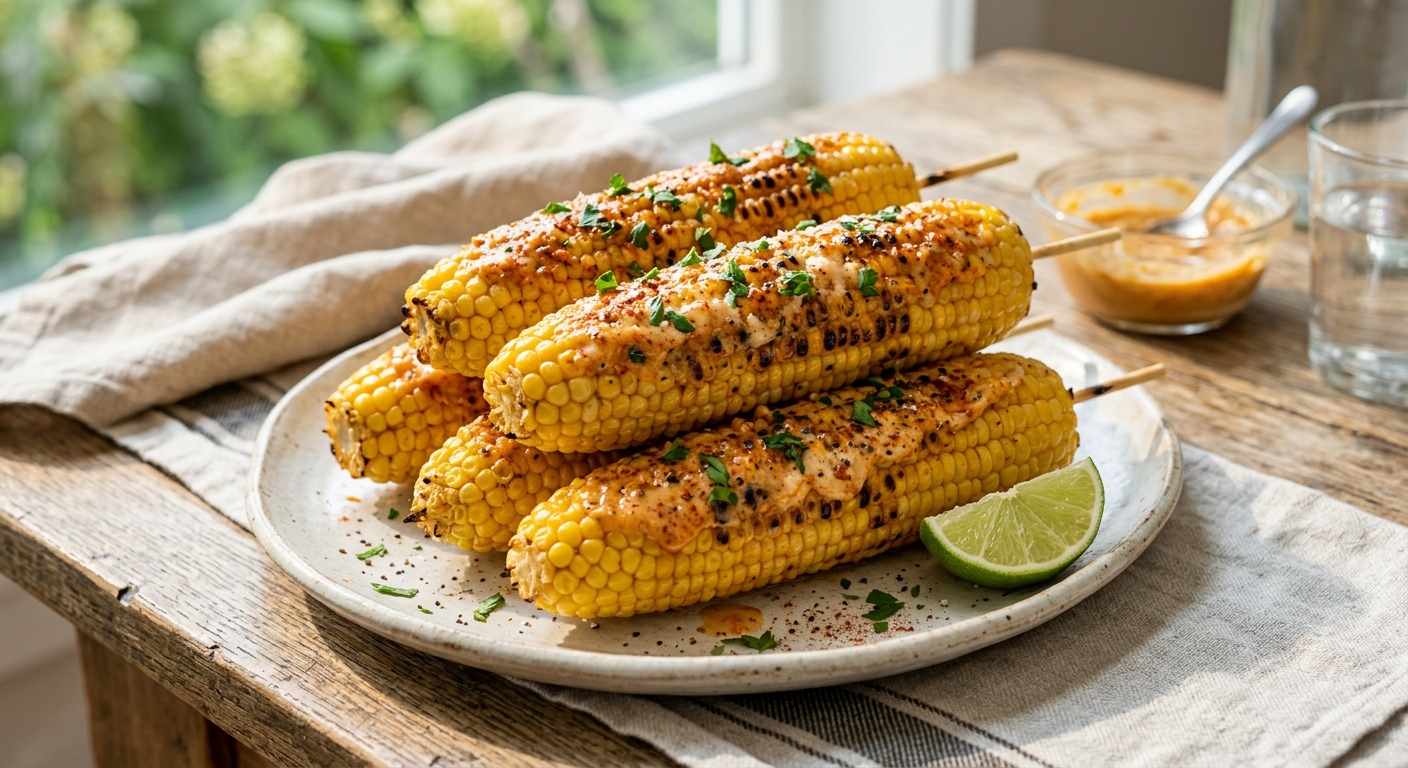
Corn on the cob is one of summer’s most iconic foods, but it rarely gets credit for its nutritional credentials. Paired with white miso paste, which brings both probiotic cultures and a deep umami complexity, this recipe transforms a backyard staple into a functional anti-inflammatory side dish. The miso butter melts into every kernel, caramelizing slightly under heat to create a glossy, savory-sweet glaze that rivals anything you would find at a high-end restaurant.
What makes this recipe stand out on a nutrition-focused table is the deliberate layering of bioactive compounds. Corn provides lutein and zeaxanthin, two carotenoids strongly linked to eye health and cellular protection. Miso contributes live Lactobacillus cultures alongside a meaningful dose of manganese, copper, and vitamin K. The addition of smoked paprika and a whisper of cayenne introduces capsaicin and polyphenol-rich spice compounds that actively modulate inflammatory pathways. Every ingredient earns its place.
We have tested this recipe across four cooking methods so you can enjoy it whether you are firing up a pot on the stove, setting a slow cooker for a laid-back afternoon, pressure cooking for a weeknight shortcut, or roasting in the oven for a hands-off caramelized finish. Each method yields slightly different textural results, and the step-by-step instructions reflect those differences precisely. Choose the method that fits your schedule, and prepare for a side dish that will permanently displace plain buttered corn from your summer rotation.
4
servings
Ingredients
- 4 wholeears of fresh corn, husked and silk removed
- 60 gunsalted butter, softened to room temperature
- 40 gwhite (shiro) miso paste
- 1 tbspextra-virgin olive oil
- 1 tspsmoked paprika
- 0.25 tspcayenne pepper
- 0.5 tspgarlic powder
- 1 tbspfresh lime juice (about half a lime)
- 1 tsphoney or pure maple syrup
- 2 tbspfresh chives, finely sliced
- 1 tbsptoasted sesame seeds
- —Colima Sea SaltMicroplastic Free Salt and black pepper to taste
- —Lime wedges for serving
Instructions
Click on an item below to shop for the recommended items for this recipe on Amazon.
As an Amazon Associate, we earn from qualifying purchases.
- Fill a large stockpot or Dutch oven with enough water to fully submerge all four ears of corn. Do not salt the water; salt toughens corn kernels. Bring the water to a rolling boil over high heat.
- While the water heats, make the miso butter. In a small bowl, combine the softened butter, miso paste, smoked paprika, cayenne, garlic powder, lime juice, and honey. Use a fork to mash and stir until completely smooth and uniform. Taste and adjust seasoning. Set aside at room temperature.
- Once the water is boiling vigorously, lower the corn ears in carefully using tongs. Reduce the heat to medium-high to maintain a steady boil without the water foaming over. Cook for 7 to 8 minutes, until the kernels are tender and bright yellow but still have a slight bite when pierced with a knife tip.
- Lift the corn ears out with tongs and allow them to drain and rest on a clean kitchen towel for 60 seconds. This brief rest prevents excess water from diluting the miso butter.
- While the corn is still very hot, use a silicone brush or a butter knife to coat each ear generously with the miso butter mixture, rotating the cob to cover every kernel. The heat will melt the butter into a glossy glaze. Apply a second coat for a more intense flavour.
- Transfer the glazed cobs to a serving platter. Scatter fresh chives and toasted sesame seeds over the top, finish with a pinch of flaky sea salt, and serve immediately with lime wedges.
- Make the miso butter sauce first. In a small bowl, whisk together the softened butter, miso paste, olive oil, smoked paprika, cayenne, garlic powder, lime juice, and honey until smooth. This will act as both a glaze and a steaming medium.
- Pour 120ml (half a cup) of water into the bottom of a 6-quart or larger slow cooker. Stir 2 teaspoons of the miso butter mixture into the water to create a lightly flavoured steaming liquid. Reserve the remaining miso butter in the bowl.
- Break or cut each ear of corn in half if needed to fit your slow cooker. Arrange the corn pieces in the slow cooker, stacking them in a single layer or criss-cross pattern so steam can circulate. Brush the exposed surfaces of each piece generously with the remaining miso butter, reserving roughly one third for serving.
- Place the lid firmly on the slow cooker. Cook on High for 2 to 2.5 hours. Avoid lifting the lid during cooking, as this releases the steam that cooks the corn evenly. The corn is done when the kernels are tender and yielding when pressed with a fingernail.
- Using tongs, transfer the corn pieces to a serving platter. Spoon any miso butter that has pooled in the bottom of the slow cooker over the cobs, then apply the reserved miso butter in a final coat. Finish with fresh chives, toasted sesame seeds, flaky sea salt, and lime wedges.
- Pour 240ml (1 cup) of water into the inner pot of your pressure cooker or Instant Pot. Place the trivet or steam rack inside. If your corn ears are too tall to fit, snap them in half or use a knife to cut them on the cutting board.
- While you are preparing the corn, make the miso butter by combining the softened butter, miso paste, smoked paprika, cayenne, garlic powder, lime juice, and honey in a small bowl. Stir vigorously until completely smooth. Set aside.
- Arrange the corn ears on the trivet, stacking them if necessary. Secure the lid and set the pressure valve to the Sealing position. Select Manual or Pressure Cook on High Pressure and set the timer for 2 minutes. The pot will take approximately 8 to 10 minutes to come up to pressure before the countdown begins.
- When the 2-minute cook time ends, perform a Quick Release by carefully turning the pressure valve to Venting. Stand back from the steam. Once the float valve drops completely, open the lid away from you.
- Immediately transfer the corn to a serving platter using tongs. The corn will be intensely hot. While it is still steaming, brush each ear all over with the miso butter mixture. The residual heat from pressure-cooked corn is more penetrating than other methods, so the butter will soak in rather than just coating the surface. Apply two coats for maximum flavour.
- Top with fresh chives, toasted sesame seeds, and flaky sea salt. Serve straight away with lime wedges. Pressure-cooked corn holds its heat well, so it can sit glazed for 3 to 4 minutes before serving without losing quality.
- Preheat your oven to 220 C (425 F) with the convection fan on if available, or 230 C (450 F) for a conventional oven. Line a large rimmed baking sheet with aluminium foil for easy clean-up.
- Make the miso butter by combining the softened butter, miso paste, olive oil, smoked paprika, cayenne, garlic powder, lime juice, and honey in a bowl. Mix until smooth and unified. Because this version is roasted, the olive oil is included in the miso butter rather than used separately, helping the glaze adhere and brown evenly in the dry oven heat.
- Place the husked corn ears directly on the prepared baking sheet. Using a silicone brush or your hands, coat each ear all over with roughly two thirds of the miso butter, turning the cobs to cover every surface. Ensure the ends and sides are well coated, as any uncoated kernels may dry out.
- Roast in the preheated oven for 15 minutes. Remove the baking sheet and, using tongs, turn each cob a quarter turn. Brush the exposed surfaces with any remaining miso butter from the bowl, and spoon over any pooled glaze from the baking sheet. Return to the oven for another 8 to 10 minutes, until the kernels are lightly charred in spots and the glaze is deeply caramelised and fragrant.
- Remove from the oven and allow the corn to rest on the baking sheet for 2 minutes before handling. The caramelised miso glaze will firm slightly as it cools, forming a sticky, umami-rich crust on the kernels.
- Transfer to a serving platter. Scatter chives and toasted sesame seeds over the top, add a pinch of flaky sea salt, and serve with lime wedges. The lime juice cuts through the richness of the caramelised butter and brightens the finished dish.
Nutrition Breakdown
Per 1 serving (makes 4)
Vitamins & Minerals
% Daily Value based on a 2,000 calorie diet (FDA reference)
🧬 Essential Amino Acids
% of recommended daily intake (RDA) per serving
🛡 Antioxidant Profile
The Nutrition Science
The anti-inflammatory credentials of this dish are anchored in the synergy between fermented miso and corn’s native carotenoid profile. White miso is produced through the controlled fermentation of soybeans with Aspergillus oryzae koji, a process that pre-digests phytic acid and releases bound minerals like manganese and copper while generating bioactive peptides. Studies published in the Journal of Agricultural and Food Chemistry have demonstrated that these fermentation-derived peptides inhibit pro-inflammatory cytokines including IL-6 and TNF-alpha, placing miso firmly in the category of functional fermented foods rather than merely a flavouring agent.
Corn contributes two carotenoids of particular clinical interest: lutein and zeaxanthin. Unlike beta-carotene, these xanthophylls are not converted to vitamin A but are instead selectively deposited in the macular pigment of the retina and in adipose tissue, where they act as localised antioxidants. A diet consistently providing more than 1mg of lutein plus zeaxanthin per day has been associated in epidemiological data with a 43% reduced risk of advanced age-related macular degeneration. One ear of sweet corn provides approximately 900 mcg of this pair, making it one of the more efficient non-leafy-green dietary sources. The fat in the miso butter is nutritionally strategic here: carotenoids are fat-soluble, and co-ingesting them with a lipid source significantly increases their micellarisation and mucosal uptake.
The inclusion of cayenne pepper at even a modest quarter-teaspoon dose introduces measurable capsaicin, a vanilloid compound that binds TRPV1 receptors on sensory neurons and, at systemic concentrations, downregulates NF-kB, the master transcription factor for inflammatory gene expression. Ferulic acid, a hydroxycinnamic acid esterified to corn’s cell-wall arabinoxylan, is released during cooking and exhibits both antioxidant and anti-inflammatory activity independent of the carotenoid pathway, giving this simple side dish a genuinely multi-mechanism approach to oxidative stress management.
Pro Tips
- Do not salt boiling water when using the stovetop method. Salt causes corn kernels to toughen by drawing out moisture and interfering with pectin in the cell walls. Season only after cooking.
- For the most probiotic benefit from the miso paste, reserve a small amount of raw miso butter to drizzle over the finished cobs after cooking rather than applying all of it during the heat phase. Live Lactobacillus cultures in white miso begin to die above 60 C, so a final raw application preserves the most viable organisms.
- Choose white (shiro) miso rather than red or barley miso for this recipe. White miso has a shorter fermentation period, a sweeter and more delicate flavour, and a lower sodium content per tablespoon, which keeps the overall sodium load of the dish in balance with the other ingredients.
Oh, I absolutely love this approach to corn, and I’m so glad to see miso getting the spotlight for its anti-inflammatory potential! I’ve been incorporating fermented foods into my diet for years now as part of managing my RA, and miso has been such a game changer for my gut health and CRP levels. The lime juice is a brilliant touch too, since I’ve noticed citric acid really helps with nutrient absorption and reduces my joint flare-ups. I’m definitely trying this version this weekend, though I might add a pinch of turmeric to the butter for extra anti-inflammatory support. Thank you for creating recipes that actually work with our bodies rather than against them!
This is exactly the kind of quantified approach I love seeing, Irene – have you tracked your CRP levels before and after increasing miso intake, or is that more of a subjective joint flare improvement? I’m curious about the timing too, because I’ve been experimenting with fermented foods and my CGM data shows miso doesn’t spike my glucose the way I’d expect from the carb content, possibly due to the fermentation process breaking down some of those compounds. If you do add turmeric to the butter, definitely make sure you’re getting that black pepper in there – the piperine bioavailability boost for curcumin is well documented in the literature and could amplify the anti
This sounds absolutely wonderful, Irene, and I love that you’re working with fermented foods for RA management. I’m curious if the recipe includes black pepper in the spice blend, since the combination of turmeric (if included) with black pepper is so key for curcumin absorption and joint support. From an Ayurvedic perspective, miso’s warming qualities paired with cooling lime creates such a grounding balance, and I’ve found that adding a pinch of black pepper and fresh ginger to fermented dishes like this really amplifies their anti-inflammatory action. Have you noticed certain fermented foods working better than others for your inflammation?