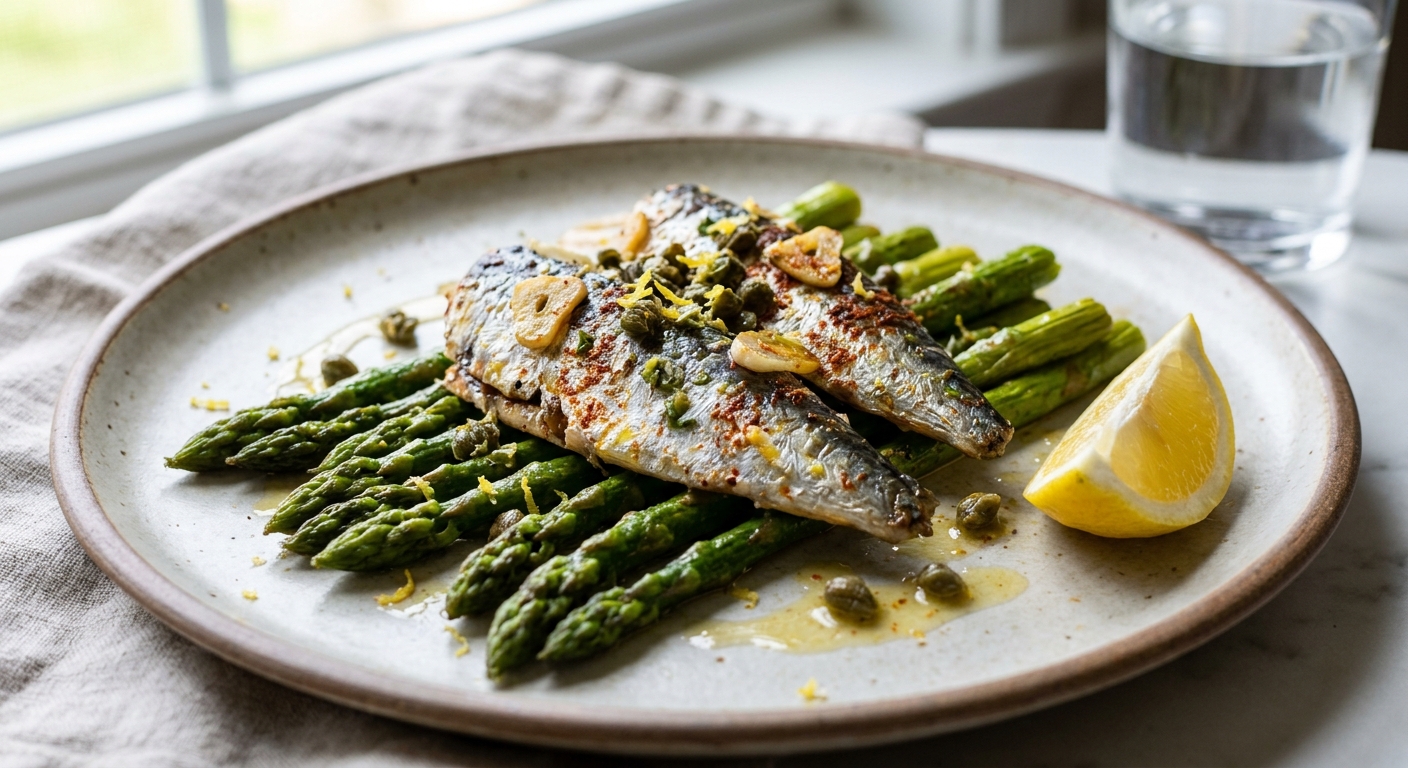
Coenzyme Q10 is one of the most critical yet underappreciated compounds in human metabolism. Found in nearly every cell in the body, CoQ10 acts as an electron carrier within the mitochondrial membrane, directly powering ATP synthesis, the chemical reaction that generates all cellular energy. Sardines rank among the top five dietary sources of CoQ10, delivering approximately 6 to 7mg per 100g of cooked fish, a figure that rivals beef heart and far outpaces chicken or most plant foods. Paired with asparagus, which contributes a meaningful 1 to 2mg of CoQ10 per 100g alongside a remarkable profile of folate, vitamin K, and chromium, this plate becomes a genuine metabolic intervention disguised as a supremely satisfying meal.
Beyond CoQ10, the nutritional architecture of this dish is carefully constructed. Sardines provide heme iron, omega-3 fatty acids (EPA and DHA), selenium, vitamin B12, and vitamin D, all in bioavailable forms that the body absorbs with exceptional efficiency. The asparagus contributes prebiotic inulin fiber that feeds beneficial gut bacteria, along with glutathione precursors that support the body’s own antioxidant recycling system. A finishing drizzle of extra-virgin olive oil, lemon zest, and capers adds polyphenols, vitamin C, and the fat-soluble uptake boost that CoQ10 specifically requires, because as a lipid-soluble molecule, CoQ10 absorption increases significantly when consumed alongside dietary fat.
This is the kind of dish that looks effortlessly elegant on a plate yet is rooted in genuine biochemical intention. Whether you are managing fatigue, supporting cardiovascular health, or simply optimising your daily nutrient density, the Sardine and Asparagus Plate belongs in your weekly rotation. Each of the three cooking methods below preserves CoQ10 and omega-3 integrity differently, with stovetop offering the fastest, most controlled approach, the oven method delivering a hands-off roast that concentrates flavour, and the pressure cooker producing fork-tender results in under 15 minutes of active cooking.
4
servings
Ingredients
- 600 gfresh sardine fillets (or 4 x 120g tins sardines in olive oil, drained)
- 500 gfresh asparagus, woody ends snapped off
- 3 tbspextra-virgin olive oil, divided
- 2 tbspcapers, rinsed and roughly chopped
- 2 clovesgarlic, thinly sliced
- 1 largelemon, zested and juiced
- 1 tspDijon mustard
- 1 tspsmoked paprika
- 0.5 tspground cumin
- 30 gflat-leaf parsley, leaves picked and roughly chopped
- 20 gsun-dried tomatoes (in oil), thinly sliced
- 0.5 tspchilli flakes (optional)
- —Colima Sea SaltMicroplastic Free Salt and cracked black pepper to taste
Instructions
Click on an item below to shop for the recommended items for this recipe on Amazon.
As an Amazon Associate, we earn from qualifying purchases.
- Pat the sardine fillets completely dry with paper towels and season both sides generously with fine sea salt, cracked black pepper, and the smoked paprika. Drying the surface is essential for a proper sear and will prevent steaming in the pan.
- Heat a large, heavy-bottomed skillet (cast iron or stainless steel) over high heat for 2 full minutes until it begins to smoke lightly. Add 1 tablespoon of olive oil, swirl to coat, then lay the sardine fillets skin-side down in a single layer. Press gently with a spatula for the first 30 seconds to prevent curling. Sear undisturbed for 3 to 4 minutes until the skin is deep golden and releases cleanly. Flip and cook a further 1 to 2 minutes. Transfer to a warm plate and tent loosely with foil.
- Reduce heat to medium-high. Add another tablespoon of olive oil to the same pan. Add the asparagus spears in a single layer and cook without stirring for 3 minutes until the undersides are blistered and bright green. Toss, add the sliced garlic and ground cumin, and continue cooking for a further 2 to 3 minutes until the asparagus is tender-crisp with charred tips. Season with salt and pepper.
- While the asparagus finishes, whisk together the remaining tablespoon of olive oil, lemon juice, lemon zest, Dijon mustard, chopped capers, and sun-dried tomatoes in a small bowl. Taste and adjust seasoning. This dressing should be bright, briny, and slightly sharp.
- Arrange the asparagus on four plates, lay the sardine fillets across the top, and spoon the caper-lemon dressing generously over everything. Scatter the chopped parsley and chilli flakes over each plate and serve immediately with crusty sourdough or white beans on the side to catch the dressing.
- Preheat your oven to 220 degrees Celsius (425 degrees Fahrenheit) with the rack in the upper-middle position. Line a large rimmed baking sheet with parchment paper. In a large bowl, toss the asparagus with 1.5 tablespoons of olive oil, the sliced garlic, ground cumin, chilli flakes, salt, and pepper until evenly coated.
- Spread the asparagus in a single layer across two-thirds of the baking sheet. Roast for 10 minutes until the spears begin to blister at the tips and soften slightly. While the asparagus roasts, pat the sardine fillets dry and rub them on both sides with the smoked paprika, a pinch of salt, and a drizzle of the remaining olive oil.
- Remove the baking sheet from the oven. Nestle the seasoned sardine fillets skin-side up in the remaining third of the pan alongside the asparagus. Scatter the sun-dried tomatoes over the asparagus. Return the pan to the oven and roast for a further 8 minutes at 220 degrees Celsius.
- Switch the oven to broil (high) for the final 2 minutes, watching closely, until the sardine skin blisters and crisps and the asparagus tips are deeply charred. This short broil elevates texture significantly without overcooking the fish.
- While the pan is in the oven, whisk together the lemon juice, lemon zest, Dijon mustard, capers, and a tablespoon of olive oil into a sharp dressing. Slide everything from the pan directly onto warmed serving plates, drizzle with the caper-lemon dressing, and finish generously with fresh parsley.
- In the insert of your slow cooker, combine 2 tablespoons of olive oil, the sliced garlic, smoked paprika, ground cumin, chilli flakes, sun-dried tomatoes, lemon zest, and half the lemon juice. Stir well to form a fragrant base oil. This flavoured oil will gently poach and infuse everything as it cooks.
- Add the asparagus spears in a single layer over the oil base, cutting them in half if necessary to fit your slow cooker insert. Season with salt and pepper. Place the drained tinned sardines gently on top of the asparagus, trying to keep the fillets as intact as possible. Spoon a little of the oil mixture over the fish.
- Cover and cook on Low for 1 hour 45 minutes to 2 hours. The asparagus should be fully tender and intensely flavoured, and the sardines will have absorbed the garlic and paprika notes throughout. Avoid lifting the lid before the 1 hour 30 minute mark to prevent heat loss.
- In the final 10 minutes, whisk together the remaining lemon juice, Dijon mustard, capers, and the remaining tablespoon of olive oil in a small bowl to make the finishing dressing. Taste for salt and acidity.
- Using a wide spatula, carefully lift the sardines and asparagus from the slow cooker onto serving plates, keeping the fillets intact. Spoon the infused cooking oil from the bottom of the insert over everything as an additional dressing, then drizzle with the caper-mustard dressing. Finish with abundant fresh parsley and cracked black pepper.
- Set your Instant Pot or electric pressure cooker to Saute on High. Add 1.5 tablespoons of olive oil and, once shimmering, add the sliced garlic, smoked paprika, and ground cumin. Stir constantly for 60 to 90 seconds until the garlic is golden and the spices are fragrant. This step builds the aromatic foundation that would otherwise be missing in a purely pressurised cook.
- Add 60ml (quarter cup) of water and the remaining lemon juice to deglaze the pot, scraping up any fond from the base. This liquid is essential for creating steam and preventing the burn warning. Add the sun-dried tomatoes and stir to combine.
- Lay the asparagus spears in the liquid in a rough layer. Season with salt and pepper. Place the sardine fillets skin-side up on top of the asparagus in a single layer, season lightly, and drizzle with the remaining olive oil. Seal the lid and set the valve to Sealing.
- Pressure cook on High for 3 minutes. Once the cycle completes, perform an immediate quick release by carefully switching the valve to Venting. Do not allow the sardines to sit on residual heat or they will overcook.
- While the pressure releases, whisk together the lemon zest, Dijon mustard, capers, and a tablespoon of olive oil in a small bowl. Open the lid, use a wide spatula to carefully transfer the sardines and asparagus to plates, and spoon the cooking liquid over everything. Drizzle with the caper dressing and finish with fresh parsley and chilli flakes.
Nutrition Breakdown
Per 1 serving (makes 4)
Vitamins & Minerals
% Daily Value based on a 2,000 calorie diet (FDA reference)
🧬 Essential Amino Acids
% of recommended daily intake (RDA) per serving
🛡 Antioxidant Profile
The Nutrition Science
Coenzyme Q10 is a fat-soluble benzoquinone compound that sits at the intersection of energy metabolism and antioxidant defence. Within the inner mitochondrial membrane, CoQ10 shuttles electrons between Complex I and Complex II to Complex III of the respiratory chain, a process that drives the proton gradient responsible for over 90% of cellular ATP production. Without adequate CoQ10, this electron transport chain slows, mitochondrial efficiency drops, and cells, particularly those in energy-demanding tissues like the heart, liver, and skeletal muscle, begin to underperform. Dietary CoQ10 from sardines, with approximately 6 to 7mg per 100g cooked weight, is among the most bioavailable sources available because it arrives pre-formed and embedded in membrane-rich tissue. The olive oil in this dish is not merely culinary: as a lipid carrier, it increases intestinal absorption of CoQ10 by facilitating incorporation into chylomicrons for lymphatic transport, the same pathway used by fat-soluble vitamins.
The omega-3 fatty acids EPA and DHA in sardines interact synergistically with CoQ10 in a way that is rarely discussed in popular nutrition. DHA is the dominant fatty acid in neuronal and cardiac cell membranes, and its incorporation into mitochondrial membranes has been shown to increase membrane fluidity and improve the efficiency of CoQ10-mediated electron transport. Meanwhile, EPA modulates the NF-kB inflammatory signalling pathway, reducing the chronic low-grade inflammation that is one of the primary drivers of mitochondrial dysfunction and metabolic decline. Together, the CoQ10 and omega-3s in this dish represent a dual-action strategy for preserving mitochondrial architecture and function.
Asparagus contributes to this recipe’s metabolic story through two underappreciated mechanisms. First, its prebiotic inulin and fructooligosaccharides selectively feed Lactobacillus and Bifidobacterium species in the colon, which produce short-chain fatty acids including butyrate. Butyrate is itself a potent signalling molecule that upregulates mitochondrial biogenesis genes, including PGC-1alpha, through histone deacetylase inhibition. Second, asparagus is one of the richest dietary sources of asparagine and glutathione precursors, supporting the regeneration of endogenous antioxidants that work in concert with the dietary CoQ10 to maintain the cell’s overall redox balance. The selenium from sardines further amplifies this by activating the glutathione peroxidase enzyme family, creating a nutritional antioxidant network that is significantly greater than the sum of its parts.
Pro Tips
- CoQ10 is heat-sensitive but survives moderate cooking temperatures well. Avoid deep-frying or prolonged high heat above 200 degrees Celsius, as this accelerates oxidation of CoQ10 and the omega-3 fatty acids simultaneously. The 220 degree Celsius oven method includes a short high-heat window that is acceptable given the brief duration.
- If using tinned sardines, choose brands packed in olive oil rather than sunflower or soy oil. The olive oil both preserves more CoQ10 during processing and provides additional polyphenols. Drain but do not rinse the sardines, as the packing oil is nutritionally valuable.
- To maximise asparagus nutrient retention regardless of cooking method, snap off and discard only the woody white base (approximately the bottom 4 to 5cm). The tips contain the highest concentration of rutin, folate, and CoQ10, so avoid trimming these even if they char slightly during cooking.
This is exactly the kind of recipe I’ve been recommending to post-MI patients for years. The CoQ10 angle is clinically significant, especially since statin users are often depleted in it, and sardines deliver that cofactor without the supplement markup. What’s brilliant here is the asparagus pairing, which adds folate and glutathione precursors that work synergistically with the omega-3s for actual endothelial function improvement, not just theoretical benefit. I’ve watched enough lipid panels improve on this eating pattern to know it’s not just marketing.
This is such a great catch about CoQ10, Irene! I’ve actually been incorporating more sardines since my Hashimoto’s diagnosis, partly for the selenium content but also because they’re one of the few fish low enough in mercury that I can eat regularly without worrying. My one question for the author: are the capers fermented or just brined? I’ve been trying to source fermented versions to support my gut health, and I’m curious if that changes the nutrient profile here. Also wondering if there’s any flexibility on the lemon-caper dressing for anyone avoiding citric acid, since I know some people with autoimmune conditions are sensitive to it?
Oh, I’m so excited to see sardines featured here! I’ve been eating them for years specifically for the omega-3s and their effect on my CRP levels, but I never fully appreciated the CoQ10 angle until now. Do you have thoughts on how the CoQ10 content holds up when the sardines are canned versus fresh? I’ve been curious whether the processing affects bioavailability. Also, I’m definitely trying this with extra virgin olive oil instead of whatever dressing you suggested, because I’ve noticed that combination really seems to amplify the anti-inflammatory response for my joints. Thank you for pairing them with asparagus too, that’s such smart synergy for nutrient density!