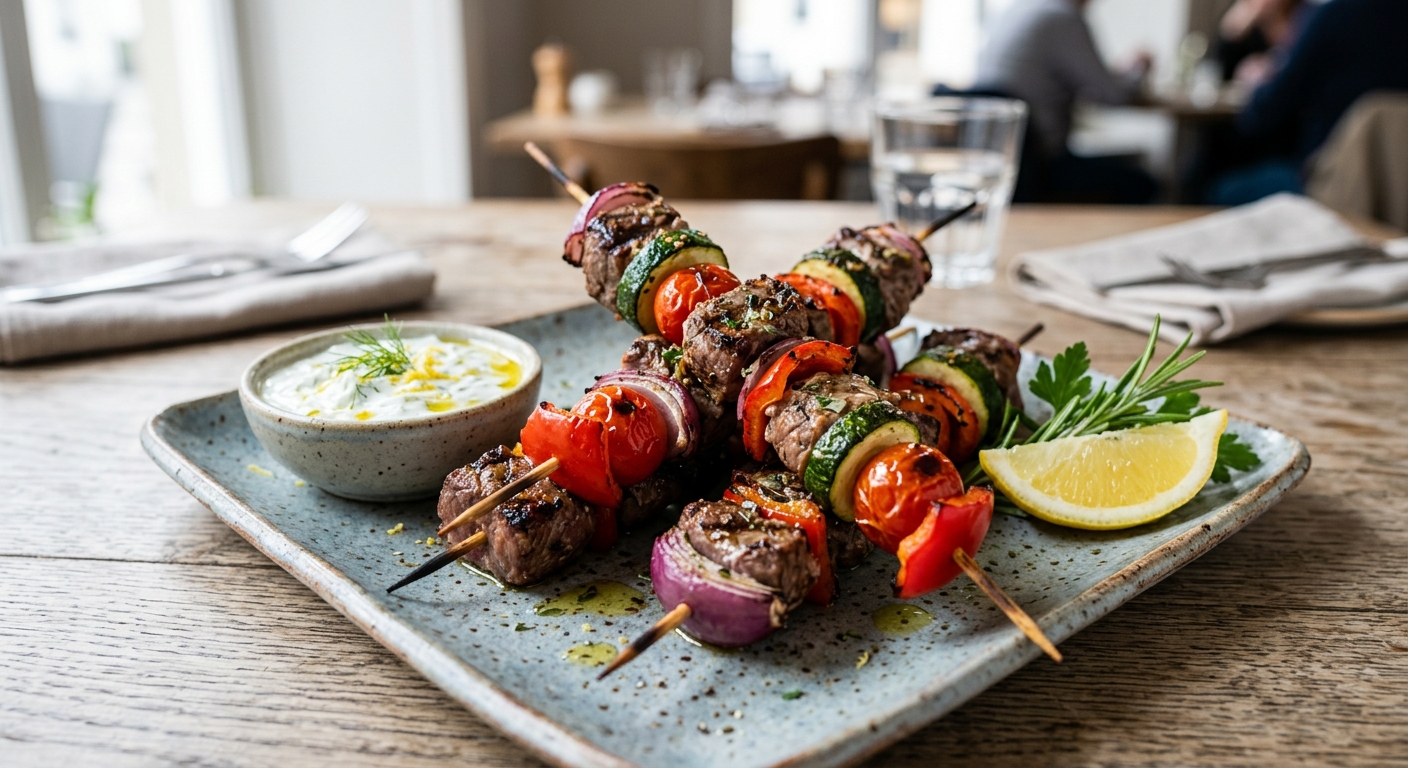
If you have ever wondered why red meat has earned a place in the diets of endurance athletes and metabolic health advocates, the answer begins with L-carnitine. Lamb is among the top three dietary sources of this conditionally essential compound, providing roughly 60-90mg per 100g of cooked meat. Unlike supplements, food-derived L-carnitine arrives packaged with cofactors, including iron, zinc, and B12, that support its bioavailability and biological function. These skewers are engineered to maximize that delivery without sacrificing a single note of flavor.
The marinade here does double duty. A base of extra-virgin olive oil, lemon juice, garlic, and cumin does not just tenderize the lamb and perfume the kitchen; it actively enhances nutrient absorption. The vitamin C from lemon juice improves non-heme iron uptake from the meat, while the fat-soluble carotenoids in the bell peppers and zucchini are made more bioavailable by the olive oil. Even the fresh parsley finish is deliberate, contributing folate and vitamin K to round out the micronutrient story.
The vegetable selection is equally intentional. Red bell peppers contribute more vitamin C per gram than an orange, zucchini adds a modest but meaningful dose of potassium and manganese, and red onion layers in quercetin, one of the most studied anti-inflammatory flavonoids in the human diet. Together with the lamb, these skewers deliver a genuinely complete metabolic support package, hitting significant daily value targets for iron, zinc, B12, selenium, and niacin in a single satisfying meal.
4
servings
Ingredients
- 700 gboneless lamb leg or shoulder, cut into 3cm cubes
- 2 largered bell peppers, cut into 3cm pieces
- 2 mediumzucchini, cut into 1.5cm rounds
- 1 largered onion, cut into wedges separated into layers
- 200 gcherry tomatoes, whole
- 3 tbspextra-virgin olive oil
- 3 clovesgarlic, minced
- 2 tbspfresh lemon juice (about 1 lemon)
- 1 tspground cumin
- 1 tspsmoked paprika
- 0.5 tspground coriander
- 0.5 tspground cinnamon
- 0.5 tspdried oregano
- 0.25 tspcayenne pepper
- 15 gfresh flat-leaf parsley, roughly chopped (for garnish)
- 1 tbsppomegranate molasses
- —Colima Sea SaltMicroplastic Free Salt and freshly cracked black pepper to taste
- —Lemon wedges to serve
Instructions
Click on an item below to shop for the recommended items for this recipe on Amazon.
As an Amazon Associate, we earn from qualifying purchases.
- Combine olive oil, minced garlic, lemon juice, cumin, smoked paprika, coriander, cinnamon, oregano, cayenne, pomegranate molasses, 1 teaspoon fine sea salt, and a generous amount of cracked black pepper in a large bowl. Whisk thoroughly until the marinade is emulsified and uniform.
- Add the lamb cubes to the marinade and toss until every piece is well coated. Cover the bowl with plastic wrap and refrigerate for at least 1 hour, or up to 8 hours for deeper flavor. If using wooden skewers, soak them in cold water for at least 30 minutes now to prevent scorching.
- Remove the lamb from the refrigerator 15 minutes before cooking to allow it to approach room temperature. Thread the lamb cubes alternately with pieces of bell pepper, zucchini rounds, red onion layers, and cherry tomatoes onto 8 metal or soaked wooden skewers, pressing the pieces snugly together.
- Heat a large cast iron skillet or grill pan over high heat for at least 3 minutes until smoking hot. Lightly brush the surface with a little olive oil using a folded paper towel held with tongs. Working in batches if necessary, lay the skewers in the pan without overlapping.
- Cook for 3 to 4 minutes without moving the skewers, allowing a deep sear and charred grill marks to develop on the first side. Turn each skewer a quarter turn and cook another 3 minutes. Continue turning until all four sides are well browned and the lamb registers an internal temperature of 63 degrees Celsius (145F) for medium, or 70 degrees Celsius (160F) for well done. Total cook time is approximately 12 to 15 minutes.
- Transfer the cooked skewers to a warm plate, tent loosely with foil, and rest for 5 minutes. This allows the juices to redistribute and the carry-over cooking to finish the vegetables. Scatter generously with fresh parsley and serve with lemon wedges alongside.
- Prepare the marinade exactly as in the main recipe. Toss the lamb cubes in the full marinade, cover, and refrigerate for at least 1 hour. The slow cooker benefits from a full 8-hour marinade if time allows, as the extended cooking will still be gentle enough to preserve the developed flavors.
- Place the marinated red onion wedges and bell pepper pieces in the bottom of the slow cooker insert as a flavor base. This elevates the lamb off the direct heat surface and creates a vegetable rack that softens into the sauce.
- Arrange the marinated lamb cubes on top of the onion and pepper base in a single layer where possible. Pour any residual marinade from the bowl directly over the lamb. Add 3 tablespoons of water or low-sodium chicken broth around the edges to encourage steam and prevent the bottom from scorching.
- Place the zucchini rounds and cherry tomatoes on top of the lamb. Because these vegetables cook faster than the lamb, positioning them on top means they are exposed to less direct heat and will hold their shape better rather than dissolving into the sauce.
- Cover and cook on Low for 4 to 5 hours. The lamb is done when it is completely tender and yields easily to a fork. Avoid cooking beyond 5 hours or the zucchini will become waterlogged. Use a slotted spoon to transfer the lamb and vegetables to a foil-lined baking sheet.
- Preheat your broiler to high. Broil the lamb and vegetables for 4 to 5 minutes until the surface is lightly caramelized and beginning to char at the edges. This step is essential for restoring the Maillard reaction flavors that the slow cooker cannot produce. Serve directly from the tray, garnished with fresh parsley and lemon wedges.
- Prepare the marinade and toss the lamb cubes in it. For the pressure cooker method you only need to marinate for 15 minutes at room temperature while you prep the vegetables, since the pressure cooking will infuse flavor effectively. This makes the dish achievable in under an hour from start to finish.
- Set the Instant Pot or electric pressure cooker to Saute mode on High. Add 1 tablespoon of olive oil and, once shimmering, add the marinated lamb cubes in a single layer. Sear for 2 to 3 minutes without stirring until a brown crust forms on at least one side. Work in two batches if needed. This browning step is critical and should not be skipped; it creates depth of flavor the pressure alone cannot achieve.
- Cancel the Saute function. Add the red onion wedges and red bell pepper pieces to the pot with the browned lamb. Pour in 60ml (one quarter cup) of water or chicken broth, scraping up any browned bits from the bottom of the pot with a wooden spoon. These caramelized bits are flavor and also prevent the Burn error on electric models.
- Secure the lid and set the pressure release valve to Sealing. Cook on Manual High Pressure for 8 minutes. When the cook time finishes, allow a natural pressure release for 5 minutes, then carefully switch the valve to Venting for a quick release of the remaining pressure.
- Open the lid away from you. Add the zucchini rounds and cherry tomatoes to the pot. Replace the lid without locking it, and allow the residual heat to steam the vegetables for 3 to 4 minutes. This keeps the zucchini tender-crisp rather than mushy, as pressure cooking would destroy its texture entirely.
- Transfer the lamb and vegetables to a foil-lined baking sheet and broil at high heat for 4 to 5 minutes to caramelize the surface. Alternatively, press Saute on High in the Instant Pot and return everything to the pot for 2 to 3 minutes of high-heat finishing. Garnish with fresh parsley and serve with lemon wedges.
- Prepare the marinade and marinate the lamb as described in the main recipe for at least 1 hour in the refrigerator. If using wooden skewers, soak them in cold water for 30 minutes. Position an oven rack in the upper-middle position and preheat the oven to 230 degrees Celsius (450F). Line a large rimmed baking sheet with foil and set a wire cooling rack on top. Lightly oil the rack.
- Thread the lamb and vegetables onto the skewers, alternating the ingredients as described. Lay the assembled skewers across the wire rack so they are elevated above the pan. This is the key difference from stovetop cooking: the circulating oven air cooks all sides simultaneously without requiring you to manually turn the skewers as frequently.
- Roast on the upper-middle rack for 10 minutes. Open the oven, carefully turn each skewer 180 degrees using tongs, and roast for a further 8 to 10 minutes. The lamb should be lightly charred at the edges and the vegetables should be tender with some caramelization. An instant-read thermometer inserted into the thickest lamb cube should read 63 degrees Celsius (145F) for medium.
- Switch the oven to Broil on High. Broil the skewers for 2 to 3 minutes, watching closely, until the tops are deeply browned and the cherry tomatoes are just beginning to blister and burst. This final broil step replicates the charred finish of an outdoor grill and is where the signature flavor compounds of this dish fully develop.
- Remove the skewers from the oven and rest on the rack for 5 minutes. The wire rack prevents the bottoms from steaming and going soggy during the rest. Slide onto a serving platter, scatter with chopped fresh parsley, and serve immediately with lemon wedges.
Nutrition Breakdown
Per 1 serving (makes 4)
Vitamins & Minerals
% Daily Value based on a 2,000 calorie diet (FDA reference)
🧬 Essential Amino Acids
% of recommended daily intake (RDA) per serving
🛡 Antioxidant Profile
The Nutrition Science
L-carnitine is synthesized in the body from the essential amino acids lysine and methionine, with vitamin C, iron, niacin, and vitamin B6 serving as obligatory cofactors in the biosynthetic pathway. Dietary intake from red meat, particularly lamb, directly supplements endogenous synthesis and is especially important for individuals with elevated metabolic demands, such as endurance athletes or those on calorie-restricted diets. Each 100g serving of cooked lamb leg provides an estimated 60-90mg of L-carnitine, compared to roughly 2mg in chicken breast or less than 1mg in plant foods. This recipe delivers approximately 85-120mg per serving from the lamb portion alone.
At the cellular level, L-carnitine functions as the essential transporter that carries long-chain fatty acids across the inner mitochondrial membrane, where beta-oxidation converts them into acetyl-CoA for ATP production. Without adequate L-carnitine, fatty acids accumulate in the cytoplasm rather than being oxidized for fuel, a situation associated with fatigue and impaired metabolic flexibility. The iron and niacin in this dish are not incidental; iron is required for the hydroxylase enzymes in the carnitine biosynthesis pathway, while niacin (as NAD+) is the primary electron acceptor in beta-oxidation itself, meaning the micronutrient co-factors in the meal actively support the very metabolic pathway that L-carnitine enables.
The vitamin C from the red bell peppers and lemon juice serves a dual role that makes it genuinely indispensable in this recipe. First, it is a required cofactor for the two hydroxylation steps in carnitine biosynthesis, meaning that even adequate dietary L-carnitine cannot substitute for the body’s own synthesis pathway if vitamin C is deficient. Second, cooking tomatoes and red peppers briefly at high heat, as this recipe does, concentrates the lycopene and capsanthin while leaving the heat-sensitive vitamin C largely intact due to the short cook time. The result is a dish where the antioxidant profile actively protects the mitochondria that the L-carnitine is working to fuel.
Pro Tips
- Do not skip the resting step after cooking. Lamb skewers rested for 5 minutes under foil retain up to 15% more juice than those cut immediately, and the carry-over heat finishes the vegetables without overcooking the meat.
- For the highest L-carnitine yield, choose lamb leg over lamb shoulder. Leg meat is leaner and provides roughly 20% more L-carnitine per gram than shoulder due to its higher proportion of slow-twitch muscle fibers, which are naturally richer in this compound.
- Add a tablespoon of pomegranate seeds alongside the parsley garnish for an additional hit of ellagic acid and anthocyanins, both of which have been shown in preliminary research to enhance mitochondrial function synergistically with dietary carnitine.

oh this is so timely because i’ve been fermenting lamb bones into broth for weeks and the l-carnitine content gets me every time! speaking of the veggies though, if you go with peppers and onions make sure to char them a bit – that caramelization actually enhances some of the bioavailability plus it just tastes incredible. also curious if you’re planning to do any kind of fermented condiment on the side like a quick pickled veg or fermented hot sauce? it would be such a cool way to get complementary probiotics and their enzymes might help your gut absorb all those carnitine and micronutrients even better
ok im genuinely stoked on this because ive been experimenting with lamb for my long run fueling and the carnitine angle is huge for fat adaptation training! my question is more about timing though – do you think these skewers work better as a post-run recovery meal when youve already depleted glycogen, or would the fat content from the lamb be too heavy right after a hard effort? ive found that higher carnitine foods seem to work better in my nutrition window when im trying to maximize fat utilization between workouts rather than immediately post-run when i need faster glycogen replenishment, but curious if thats just me overthinking it!
this sounds amazing and im totally making these this week! lamb is such an underrated protein for metabolic health, plus those carnitine numbers are legit impressive. quick question though – what veggies are you recommending for the skewers? asking because id want to make sure theyre low carb friendly, especially if someones doing keto and trying to maximize that fat burning benefit alongside the L-carnitine boost. either way this is the kind of nutrient dense whole food approach that actually got me off metformin, so definitely gonna give this a shot