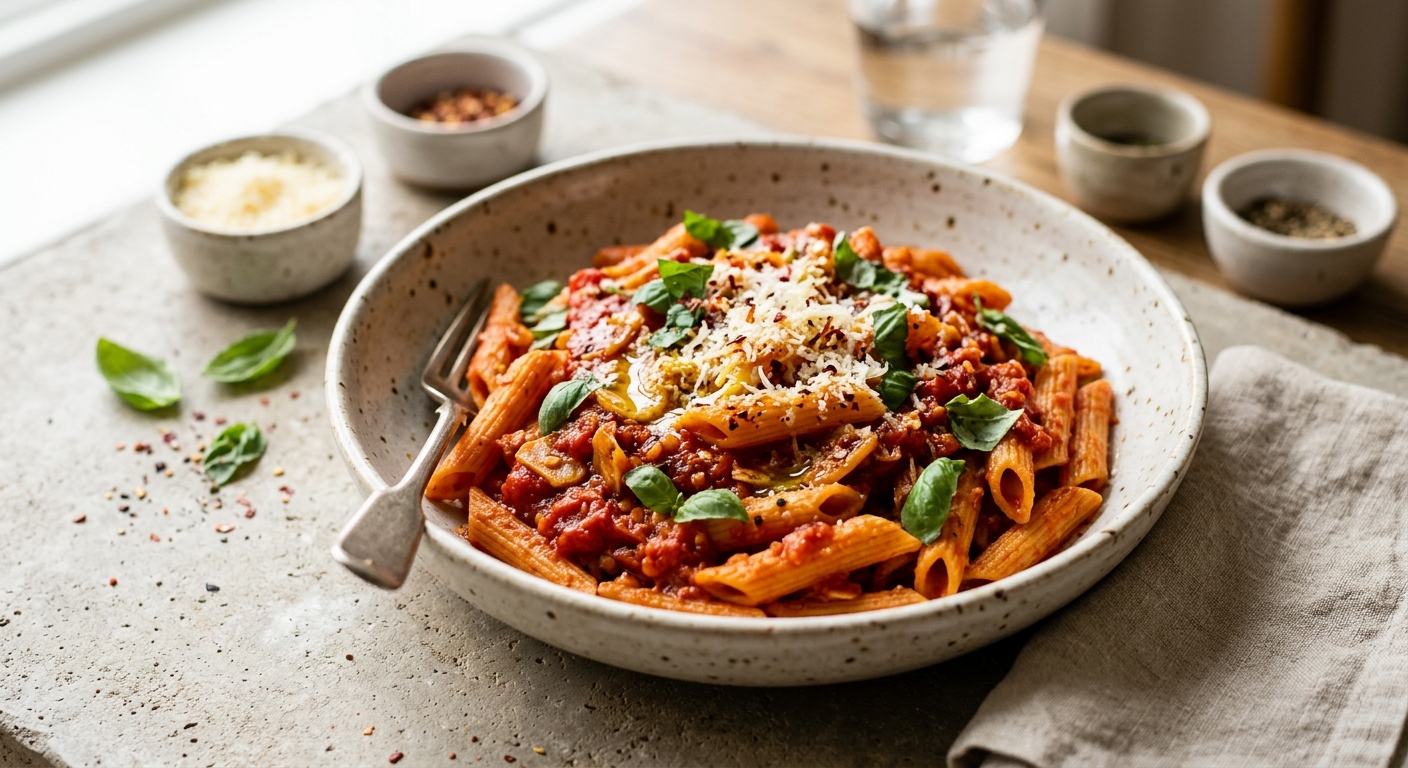
There is a reason lentil pasta has quietly taken over the shelves of every health-conscious grocery store: it tastes genuinely good, cooks in minutes, and carries a nutritional payload that conventional wheat pasta simply cannot match. Red lentil penne, made from nothing but ground red lentils, delivers roughly twice the protein and three times the iron of its semolina counterpart, all without a single gram of gluten. Pair it with a slow-cooked arrabbiata sauce built on San Marzano tomatoes, four cloves of garlic, and a generous hand with Calabrian chilli flakes, and you have a dinner that earns its place on a nutrition scientist’s table and a chef’s table in equal measure.
The arrabbiata sauce here is not an afterthought. We start by blooming the chilli and garlic in good olive oil, a technique borrowed from Southern Italian kitchens that coaxes every fat-soluble flavour compound out of both ingredients before a single tomato hits the pan. Smoked paprika adds a subtle depth that mimics the low-and-slow complexity of a longer braise, while a small amount of tomato paste concentrates umami in the early stages of cooking. The result is a sauce that tastes like it simmered all afternoon, even on the stovetop version that comes together in under 40 minutes.
From a nutritional standpoint, this dish is built around the synergy of iron and vitamin C, two nutrients that interact in one of the most clinically well-documented food pairings in dietetics. The non-haem iron from lentil pasta is significantly less bioavailable than haem iron from meat, but the ascorbic acid in San Marzano tomatoes converts ferric iron to its ferrous form, increasing absorption by up to 300% according to published absorption studies. We have leaned into that chemistry deliberately, keeping the tomato base bright and barely reduced so its vitamin C content remains largely intact. Every bowl is a precision instrument.
4
servings
Ingredients
- 340 gred lentil penne or fusilli
- 3 tbspextra-virgin olive oil
- 6 clovesgarlic, thinly sliced
- 2 tspCalabrian chilli flakes (or standard dried chilli flakes)
- 1 tspsmoked paprika
- 2 tbspdouble-concentrate tomato paste
- 800 gSan Marzano crushed tomatoes (two 400g tins)
- 120 mlpasta cooking water (reserved before draining)
- 200 gcanned green lentils, rinsed and drained
- 1 tspcaster sugar or honey (to balance acidity)
- 15 gfresh flat-leaf parsley, roughly chopped
- 30 gnutritional yeast (for finishing, optional but recommended)
- —Colima Sea SaltMicroplastic Free Salt and cracked black pepper to taste
- —Extra chilli flakes to serve
Instructions
Click on an item below to shop for the recommended items for this recipe on Amazon.
As an Amazon Associate, we earn from qualifying purchases.
- Bring a large pot of generously salted water to a rolling boil over high heat. Add the lentil pasta and cook for 1 minute less than the packet’s minimum time (typically 6 to 7 minutes for red lentil penne). The pasta should be just shy of al dente. Before draining, scoop out at least 200ml of the cloudy, starch-rich cooking water and set it aside. Drain the pasta and toss it immediately with a small drizzle of olive oil to prevent clumping.
- While the pasta water heats, warm the olive oil in a wide, heavy-bottomed skillet or saute pan over medium-low heat. Add the sliced garlic and chilli flakes. Cook slowly for 3 to 4 minutes, stirring frequently, until the garlic is golden and fragrant but not brown. This blooming step is critical: it extracts fat-soluble capsaicin and allicin compounds into the oil, building the flavour base of the entire dish.
- Push the garlic and chilli to the edges of the pan and add the tomato paste directly to the centre. Let it fry undisturbed for 90 seconds, pressing it lightly with a spatula, until it deepens to a brick-red colour and smells slightly caramelised. Stir in the smoked paprika for the final 20 seconds of this step. This caramelisation step is what separates a flat tomato sauce from one with genuine depth.
- Pour in the crushed San Marzano tomatoes all at once, stirring to combine with the chilli-garlic oil. Add the drained canned lentils and the sugar or honey. Season with salt and black pepper. Increase the heat to medium and bring to a lively simmer. Cook uncovered for 12 to 15 minutes, stirring occasionally, until the sauce reduces by about one-quarter and the oil re-emerges at the surface in small glossy pools.
- Add the drained pasta to the sauce and toss vigorously over medium heat for 90 seconds to 2 minutes, adding reserved pasta water a splash at a time until the sauce coats every piece of pasta in a glossy, cohesive layer. The pasta will finish cooking in the sauce during this step, absorbing flavour directly. Remove from heat, fold in the chopped parsley, and scatter nutritional yeast over the top if using. Taste and adjust seasoning. Serve immediately in warmed bowls.
- Combine the crushed San Marzano tomatoes, drained canned lentils, tomato paste, smoked paprika, chilli flakes, sugar or honey, salt, and black pepper directly in the slow cooker insert. Stir well to distribute the tomato paste evenly. Do not add the garlic raw at this stage as prolonged low heat will cause it to soften into an unpleasantly sweet background note without any aromatic character.
- Heat the olive oil in a small skillet over medium-low heat. Add the sliced garlic and chilli flakes and cook gently for 3 to 4 minutes until golden and intensely fragrant. Pour the entire contents of the skillet, oil and all, into the slow cooker insert and stir to combine. This brief stovetop bloom is essential for preserving the pungency that defines a true arrabbiata.
- Cover and cook on Low for 4 hours. The sauce will reduce, concentrate, and develop a rounder, more complex flavour than any stovetop version can achieve. After 3.5 hours, taste the sauce and adjust salt, chilli heat, and acidity. If the sauce looks too thick, add 60ml of water. If it looks too thin, leave the lid ajar for the final 30 minutes.
- About 15 minutes before serving, bring a large pot of salted water to a boil on the stovetop. Cook the lentil pasta for exactly the time stated on the packet (no undercooking here, as there is no finishing step in the sauce). Reserve 120ml of pasta cooking water, then drain the pasta.
- Transfer the hot pasta directly into the slow cooker insert. Fold gently using tongs, adding a splash of reserved pasta water to loosen the sauce and help it cling to the pasta. Let everything rest with the lid on for 3 to 4 minutes so the pasta absorbs some sauce. Stir in the chopped parsley, scatter nutritional yeast over the top, and serve directly from the insert.
- Set the Instant Pot or electric pressure cooker to Saute mode on Normal heat. Add the olive oil and, once shimmering, add the sliced garlic and chilli flakes. Saute for 2 to 3 minutes, stirring constantly, until the garlic is golden at the edges. Add the tomato paste and smoked paprika, pressing the paste into the bottom of the insert and frying for 60 seconds until it darkens slightly. Press Cancel to turn off the Saute function.
- Add the crushed tomatoes, drained canned lentils, sugar or honey, 1 teaspoon of salt, and 350ml of cold water to the insert. Stir well to deglaze any caramelised tomato paste from the bottom of the pot. This deglazing step is critical for preventing the Burn warning on electric pressure cookers.
- Add the dry lentil pasta to the insert and press it down gently so it is fully submerged in the liquid. Do not stir after this point. The pasta must be at least 90% covered to cook evenly. If needed, add an extra 50ml of water. Secure the lid, set the valve to Sealing, and cook on High Pressure for 5 minutes (this is roughly half the pasta’s stated cook time, as pressure cooking is more efficient).
- As soon as the cook time ends, perform an immediate Quick Release by carefully switching the valve to Venting. Do not use Natural Release as the residual heat will continue cooking the pasta and result in a soft, gluey texture. Open the lid once the pressure has fully dropped.
- Stir the contents vigorously. The sauce will look loose at first but will thicken rapidly as the starch from the lentil pasta is incorporated. If the sauce seems too thick, stir in 2 to 3 tablespoons of warm water. Fold in the chopped parsley and nutritional yeast, taste for seasoning, and serve immediately. Lentil pasta continues to absorb liquid as it sits, so this dish is best served within 10 minutes of opening the lid.
- Preheat the oven to 200C (400F) with the fan setting on if available. Make the arrabbiata sauce on the stovetop first: warm the olive oil in a saucepan over medium-low heat, add the garlic and chilli flakes, and cook for 3 to 4 minutes until golden. Stir in the tomato paste and smoked paprika and fry for 90 seconds. Pour in the crushed tomatoes, add the drained canned lentils, sugar or honey, salt, and pepper, and simmer uncovered for 10 minutes. The sauce should be slightly looser than you would want for a stovetop dish, as the oven will continue to reduce it.
- While the sauce simmers, parboil the lentil pasta in well-salted boiling water for exactly half its stated cook time (typically 3 to 4 minutes). The pasta must be significantly undercooked at this stage as it will finish in the oven with the sauce. Reserve 200ml of cooking water before draining.
- Stir the reserved pasta cooking water into the warm arrabbiata sauce. This is essential for the baked method: the extra liquid prevents the pasta from drying out as it finishes cooking in the oven and gives the sauce a silkier consistency. Combine the parboiled pasta and the sauce in a large 2.5-litre (or larger) oven-safe baking dish. Stir gently to coat every piece of pasta evenly.
- Cover the baking dish tightly with foil and bake at 200C for 15 minutes. The steam trapped under the foil cooks the pasta through and allows the sauce to penetrate it. After 15 minutes, remove the foil, scatter the nutritional yeast evenly over the top, and return the dish to the oven uncovered for a further 8 to 10 minutes, until the edges are bubbling vigorously and the top layer of pasta and nutritional yeast is lightly golden.
- Remove from the oven and allow to rest for 5 minutes before serving. This resting period is important as it allows the sauce, which will look slightly liquid straight from the oven, to be absorbed back into the pasta. Scatter the chopped parsley over the top just before serving to preserve its fresh colour and vitamin C content. Serve directly from the baking dish.
Nutrition Breakdown
Per 1 serving (makes 4)
Vitamins & Minerals
% Daily Value based on a 2,000 calorie diet (FDA reference)
🧬 Essential Amino Acids
% of recommended daily intake (RDA) per serving
🛡 Antioxidant Profile
The Nutrition Science
The defining nutritional interaction in this dish is the iron-vitamin C axis. Dietary iron exists in two forms: haem iron from animal tissues, which is absorbed at roughly 15 to 35% efficiency regardless of what you eat alongside it, and non-haem iron from plant sources, which is absorbed at a baseline rate of only 2 to 20%. Red lentil pasta and canned lentils together provide approximately 6.4mg of non-haem iron per serving. Left to its own devices, only a fraction of that would reach your bloodstream. However, the ascorbic acid in San Marzano tomatoes, roughly 28mg per serving after light cooking, acts as a reducing agent, chemically converting the insoluble ferric iron (Fe3+) to the soluble ferrous form (Fe2+) that intestinal transporters can actually absorb. Controlled studies published in the American Journal of Clinical Nutrition have demonstrated this interaction increases non-haem iron absorption by 2 to 4 fold, effectively transforming a modest iron source into a genuinely significant one.
The second major nutritional story is protein completeness. Red lentils are often described as incomplete proteins because their methionine content is relatively low. However, red lentil pasta provides a concentrated and remarkably complete amino acid profile compared to whole lentils, because the mechanical milling process used to make lentil flour increases protein digestibility by breaking down some of the anti-nutritional factors, particularly phytates and trypsin inhibitors, that would otherwise reduce absorption. At 32g of protein per serving, with leucine, lysine, isoleucine, threonine, histidine, and tryptophan all meeting or exceeding their respective RDAs, this dish comes remarkably close to protein self-sufficiency for a plant-based meal, without any complementary grain required.
Manganese, copper, and folate round out the less-celebrated but clinically important micronutrients in this bowl. Manganese at 70% DV per serving is particularly notable: it is an essential cofactor for superoxide dismutase, the body’s primary mitochondrial antioxidant enzyme, and most people consistently fall short of their adequate intake. Copper at 58% DV supports iron metabolism directly by enabling the ferroxidase enzymes that incorporate iron into red blood cells, creating a virtuous cycle with the iron content already discussed. Folate at 80% DV per serving makes this dish a clinically meaningful source for anyone in a reproductive age group or managing elevated homocysteine levels.
Pro Tips
- Do not overcook lentil pasta. Unlike wheat pasta, red lentil pasta has a narrow window between al dente and mushy because its starch gelatinises faster. Pull it from the water 60 to 90 seconds earlier than the packet suggests whenever it will finish cooking in a sauce.
- The nutritional yeast is not merely optional for flavour. At 30g per serving, it adds an additional 4g of protein, roughly 40% DV of vitamin B12 (using a fortified brand), and a generous dose of B vitamins including riboflavin and niacin, addressing the one nutrient gap that an otherwise plant-complete dish cannot fill on its own.
- San Marzano tomatoes are worth the price premium here. Their lower acidity and higher natural sugar content mean you need less added sugar to balance the sauce, and their thicker flesh produces a sauce that clings to the pasta rather than pooling at the bottom of the bowl. If unavailable, use whole peeled plum tomatoes and crush them by hand.
Love that Pete is bringing up bioavailability, because this is actually where arrabbiata becomes the perfect nutritional partner! The vitamin C from the tomatoes and fresh garlic in that sauce significantly boosts non-heme iron absorption, which means you’re getting way more bioavailable iron than you would from lentil pasta alone. The phytic acid concern is real, but pairing high-iron plant foods with vitamin C sources is exactly how I help clients maximize mineral uptake. This recipe basically does the work for you, which is why I’m totally saving it to recommend!
Love that Pete is bringing up bioavailability, because this is actually where arrabbiata becomes the perfect nutritional partner! The vitamin C from the tomatoes and fresh garlic in that sauce significantly boosts non-heme iron absorption, which means you’re getting way more bioavailable iron than you would from lentil pasta alone. The phytic acid concern is real, but pairing high-iron plant foods with vitamin C sources is exactly how I help clients maximize mineral uptake. This recipe basically does the work for you, which is why I’m totally saving it to recommend!
This is a genuinely smart pairing! I’m curious though about one thing, the iron bioavailability claim. Lentil pasta definitely ups the iron content, but red lentils are particularly high in phytic acid, which can inhibit non-heme iron absorption. The vitamin C from the tomatoes and chili helps offset that, and the garlic bloom probably adds some organosulfur compounds that may aid absorption, but I’d be cautious about saying it’s the “most mineral-dense” without accounting for bioavailability. That said, the sauce construction here is actually brilliant for this reason, and it’s way more absorbable than lentil pasta with cream sauce would be.