
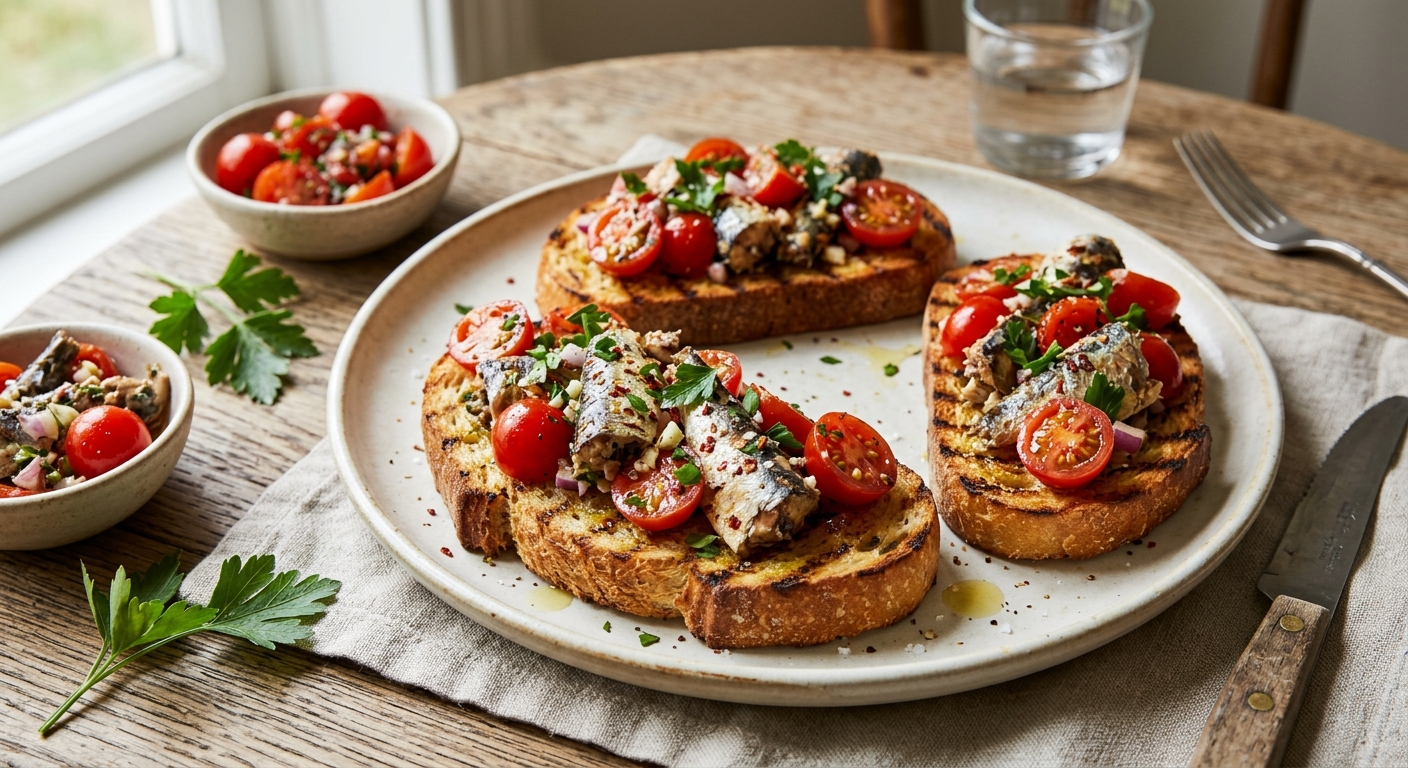
Bruschetta is one of those deceptively simple preparations that rewards good ingredients and careful technique. But this version goes far beyond the classic tomato-and-olive-oil formula. By anchoring each toast with bone-in sardines, smashed directly onto the bread to melt their tiny edible bones into the topping, we transform a light appetizer into one of the most mineral-dense snacks in the Mediterranean canon. The calcium locked inside those soft, pressure-cooked fish bones is genuinely bioavailable, meaning your body absorbs it efficiently alongside the vitamin D naturally present in sardines.
The tomato component here is not an afterthought. Slow-cooked down with garlic, a splash of red wine vinegar, and a pinch of chili flakes, the tomatoes concentrate their lycopene content dramatically, while their natural acidity brightens the rich, umami-forward sardine base. Sourdough bread, with its lower phytate content thanks to long fermentation, is specifically chosen here because it reduces the mineral-binding compounds that can inhibit calcium and iron absorption from plant and fish sources alike. Every element of this recipe is chosen with nutritional synergy in mind.
Whether you are serving this as a pre-dinner snack, a protein-forward lunch, or a crowd-pleasing appetizer at a dinner party, sardine and tomato bruschetta delivers on flavor without compromise. The recipes below give you three genuinely different production methods for the sardine-tomato topping, each suited to a different kitchen situation, from a quick stovetop blitz on a weeknight to a deeply concentrated slow cooker batch you can prepare in advance and keep warm for entertaining.
4
servings
Ingredients
- 2 cans (120g each)bone-in sardines in olive oil, drained (reserve oil)
- 400 gripe cherry tomatoes, halved
- 4 thick slicessourdough bread (approx. 80g per slice)
- 3 clovesgarlic, 2 minced and 1 halved for rubbing
- 2 tbspextra-virgin olive oil
- 1 tbspred wine vinegar
- 0.5 tspchili flakes
- 0.5 tspsmoked paprika
- 1 tspcapers, rinsed and roughly chopped
- 15 gfresh basil leaves, torn
- 1 tsplemon zest
- 1 tbsplemon juice
- —Colima Sea SaltMicroplastic Free Salt and cracked black pepper to taste
Instructions
Click on an item below to shop for the recommended items for this recipe on Amazon.
As an Amazon Associate, we earn from qualifying purchases.
- Heat a wide, heavy-bottomed skillet over medium-high heat. Add the extra-virgin olive oil plus 1 tablespoon of the reserved sardine oil. Once the oil shimmers, add the minced garlic and chili flakes and saute for 45 seconds, stirring constantly, until fragrant but not browned.
- Add the halved cherry tomatoes cut-side down in a single layer. Do not stir for the first 3 minutes, allowing the cut surfaces to blister and caramelize against the hot pan. Season with a pinch of salt, then add the smoked paprika and red wine vinegar. Stir and cook for a further 8 to 10 minutes over medium heat, pressing the tomatoes gently with a wooden spoon until they collapse into a jammy, chunky sauce.
- Reduce the heat to low. Add the drained sardines to the pan and use a fork to roughly smash them into the tomato mixture, breaking up the bones completely so they dissolve into the sauce. Stir in the capers and lemon juice. Cook for 2 minutes, taste, and adjust salt and pepper. Remove from heat and stir in the lemon zest.
- While the topping rests off the heat, heat a cast iron grill pan or separate skillet over high heat. Brush sourdough slices lightly with olive oil on both sides. Grill for 1 to 2 minutes per side until well-charred grill marks appear and the bread is crisp but not dry through to the center.
- Immediately rub the hot toasted bread with the cut face of the halved garlic clove. Spoon the warm sardine and tomato mixture generously over each toast, top with torn basil leaves, and serve immediately.
- Lightly coat the insert of a 3 to 4 quart slow cooker with the reserved sardine oil. Add the cherry tomatoes, minced garlic, chili flakes, smoked paprika, red wine vinegar, capers, and extra-virgin olive oil directly to the insert. Stir to combine. Do not add the sardines yet as they need far less time to cook.
- Place the lid on and cook on Low for 2 hours 30 minutes. The tomatoes will have completely broken down into a concentrated, sweet, deeply savory sauce. If the mixture looks watery, remove the lid for the final 30 minutes to allow steam to escape and the sauce to tighten.
- Add the drained sardines to the slow cooker and use a fork to gently fold and smash them into the tomato base, ensuring all bones are fully incorporated. Replace the lid and cook for a final 25 to 30 minutes on Low. The gentle, moist heat will make the sardines exceptionally tender. Stir in lemon juice and lemon zest, taste, and correct seasoning.
- When ready to serve, set your oven broiler to high. Arrange sourdough slices on a baking sheet. Brush tops with olive oil and place under the broiler for 2 to 3 minutes, watching carefully, until deeply golden and crisp. The broiler gives a more even, all-over toast compared to a grill pan, which suits the looser, spoonable topping from this method.
- Rub each broiled toast with the cut garlic clove while still hot. Ladle the warm sardine tomato mixture over the toasts, garnish generously with fresh basil, and serve straight from the slow cooker insert for a rustic, communal presentation.
- Select the Saute function on your Instant Pot or electric pressure cooker and set to high heat. Add the extra-virgin olive oil and 1 tablespoon of reserved sardine oil. Once hot, add the minced garlic and chili flakes and cook for 30 seconds. Add the halved cherry tomatoes, smoked paprika, red wine vinegar, and a pinch of salt. Saute for 3 minutes, stirring occasionally, just to start breaking down the tomatoes and deglaze any fond from the base.
- Cancel the Saute function. Add the drained sardines on top of the tomato mixture. Do not stir at this stage. Secure the lid, set the valve to Sealing, and cook on Manual High Pressure for 8 minutes.
- Once the cook time is complete, perform a Quick Release by carefully turning the valve to Venting. Once all steam has escaped and the pin drops, open the lid. The tomatoes will be completely broken down and the sardines fully soft. Use a fork to smash and stir everything together vigorously, dissolving the bones entirely into the sauce.
- Select Saute again, this time on medium or normal heat. Stir in the capers, lemon juice, and lemon zest. Cook uncovered for 4 to 5 minutes, stirring frequently, until the sauce reduces to a thick, spreadable consistency. Taste and adjust salt and pepper. Cancel Saute.
- Toast the sourdough slices in a toaster or under the broiler until deeply golden and very crisp. The spreadable, thicker consistency of this pressure cooker topping works especially well on bread toasted in a toaster for maximum crunch. Rub with raw garlic, pile on the sardine mixture, and finish with torn basil.
- Preheat your oven to 200C (400F) with the fan on if available. On a large rimmed baking sheet, toss the halved cherry tomatoes with the extra-virgin olive oil, 1 tablespoon of reserved sardine oil, minced garlic, chili flakes, smoked paprika, and a generous pinch of salt. Spread cut-side up in a single layer, ensuring the tomatoes are not crowded.
- Roast for 25 minutes until the tomato edges are deeply caramelized and beginning to char, and the garlic is fragrant and golden. The tomatoes should look concentrated and jammy, with the pan juices reduced to a thick, sticky glaze around them.
- Remove the baking sheet from the oven. Scatter the drained sardines over the roasted tomatoes, then use a fork to press and smash them directly into the tomato mixture on the tray, working in the capers and red wine vinegar at the same time. Return the tray to the oven for 8 to 10 minutes until the sardine mixture is lightly golden on top and everything has melded together. Stir in lemon juice and zest, then taste and adjust seasoning.
- During the final 5 minutes of the sardine roasting time, arrange the sourdough slices on a separate rack or second baking sheet. Brush with olive oil and place in the oven for 4 to 5 minutes, flipping once, until crisp and golden on both sides. This simultaneous oven toasting means everything is hot and ready at exactly the same time.
- Remove both trays from the oven. Rub the hot toasts with the cut garlic clove immediately. Use a spatula to lift and spoon the sardine and roasted tomato mixture over each slice, scraping up all the caramelized pan juices. Top with fresh torn basil and serve while the toast is still crackling.
Nutrition Breakdown
Per 1 serving (makes 4)
Vitamins & Minerals
% Daily Value based on a 2,000 calorie diet (FDA reference)
🧬 Essential Amino Acids
% of recommended daily intake (RDA) per serving
🛡 Antioxidant Profile
The Nutrition Science
The headline nutrient in this recipe is calcium, and the delivery mechanism is fascinatingly different from dairy. Canned bone-in sardines contain soft, fully edible bones that have been pressure-sterilized until they dissolve easily when smashed. A 120g can of bone-in sardines provides roughly 350 to 380mg of calcium, almost identical to a 250ml glass of whole milk, but paired here with vitamin D (also naturally present in oily fish at 4 to 6 mcg per can) that directly enhances calcium absorption in the gut. This vitamin D and calcium co-presence is one of the most efficient mineral delivery combinations in whole food nutrition.
Sourdough bread is a deliberate choice and not merely a flavor vehicle. The long fermentation process carried out by wild yeast and lactic acid bacteria substantially degrades phytic acid, the antinutrient present in wheat bran that binds to calcium, iron, and zinc and reduces their bioavailability. Studies have shown that sourdough fermentation can reduce phytate content by 40 to 90% compared to standard yeasted bread, meaning the minerals delivered by the sardines face fewer absorption barriers when eaten on sourdough rather than conventional toast.
Cooking the tomatoes, whether by blistering on a stovetop, slow-reducing in a slow cooker, or dry-roasting in an oven, concentrates lycopene and makes it significantly more bioavailable than raw tomato. Research consistently shows that lycopene bioavailability increases with heat and in the presence of fat (here provided by olive oil and the natural lipids in sardines). The red wine vinegar and lemon juice contribute acidity that further supports iron absorption by maintaining soluble iron in the ferrous form more readily taken up by intestinal cells. Every component in this dish has a scientific reason to be there.
Pro Tips
- Always buy bone-in sardines, not boneless fillets: the bones are where the calcium lives, and they become completely undetectable once properly smashed into the tomato mixture.
- Reserve the oil from the sardine cans and use it in place of some of the olive oil. It carries deep umami flavor and contains the fat-soluble vitamins already leached from the fish during canning.
- For maximum lycopene concentration in the stovetop method, resist the urge to stir the tomatoes too early. Letting them sit undisturbed cut-side down against the hot pan drives out water quickly and caramelizes the sugars, producing a richer, more antioxidant-dense sauce in a fraction of the time.
Oh, I love this! The calcium angle from those tiny bones is such a game-changer that so many people overlook. I actually recommend sardines with the bones to my plant-based clients as a reference point for how much bioavailable calcium they’re getting, especially since the acidic tomatoes help with absorption too. Have you tested whether the roasting time on those tomatoes affects the mineral bioavailability at all? I’m curious if there’s a sweet spot where you get the lycopene benefits without losing too much of the minerals to heat degradation.
This is a solid calcium play, especially that bioavailability factor Priya mentioned – the phosphorus in sardines actually supports calcium absorption rather than competing with it like some sources do. What I’m really interested in though is the complete amino acid profile here: those bone-in sardines hit all 9 essentials with a DIAAS score around 0.89, plus they’re leucine-rich, so pairing them with the sourdough creates a legitimate post-workout snack window option if timing matters for someone. Have you tested this with athletes who need the calcium but were avoiding dairy?
love this combo so much, and honestly the bone-in sardines have been a game changer for me too – especially since i had to cut way back on dairy due to mold sensitivities. one thing i’ve learned the hard way though is watching the tomato prep here, since slow roasted tomatoes can concentrate mycotoxins if theyre sitting around too long or not stored properly. i know thats kind of a niche concern but it genuinely made a difference in my symptom load when i switched to either fresh tomatoes or ones i roast and eat same day. the sardines themselves are such a solid calcium source though, totally agree on that being underrated