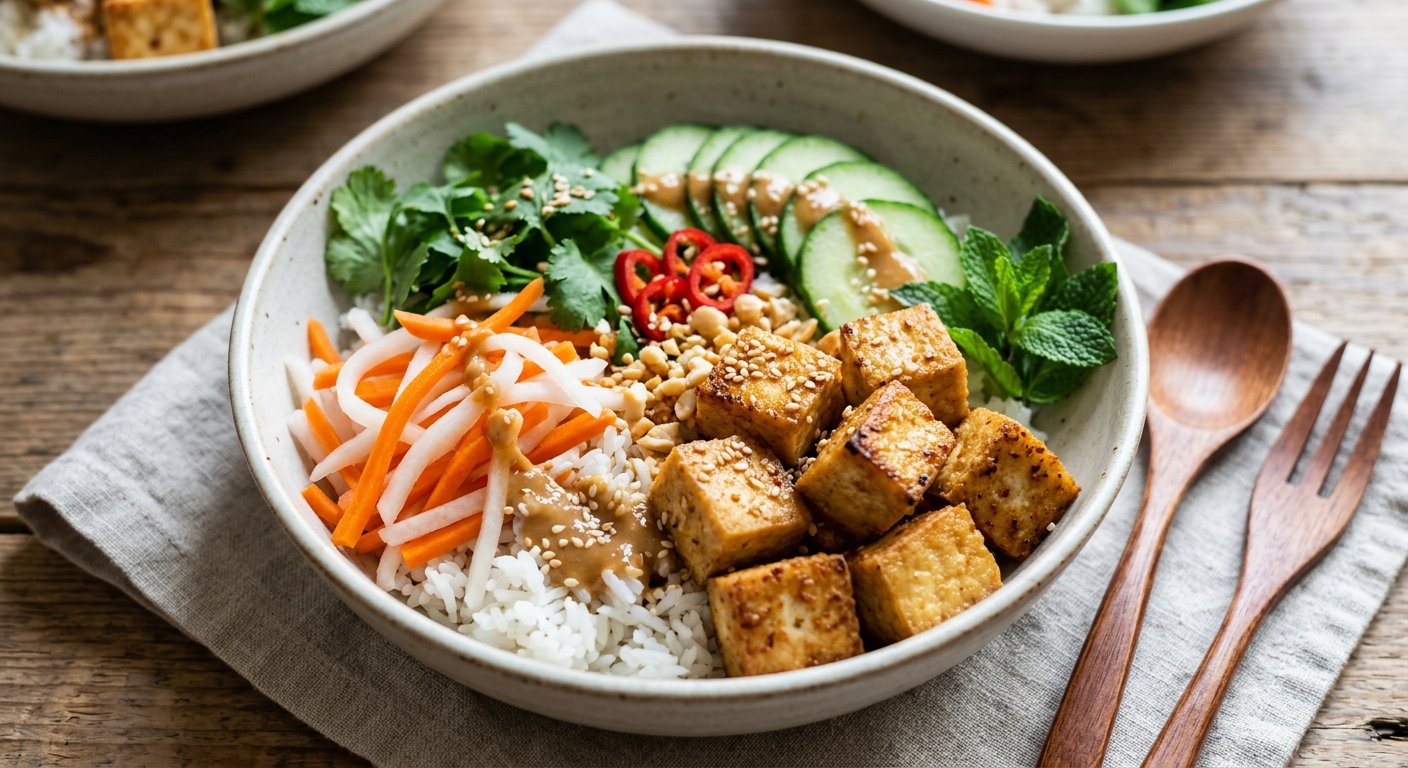
The banh mi sandwich is one of the great culinary fusions of the modern world, a collision of French baguette tradition and Vietnamese pantry brilliance. This bowl version keeps every element that makes banh mi so addictive, the tangy pickled daikon and carrot, the cool cucumber ribbons, the fresh cilantro and jalapeño, the rich umami spread, and the contrast of crispy protein against soft rice. But by swapping the bread for jasmine rice and the pork for extra-firm tofu, we create something nutritionally extraordinary: a meal precisely engineered to support bone density and joint health.
Extra-firm tofu is one of the most underrated sources of dietary calcium, particularly when made with calcium sulfate as a coagulant, which is standard for most commercial extra-firm blocks. A 200g serving contributes roughly 500mg of highly bioavailable calcium, approaching dairy levels, paired with plant-based protein containing all nine essential amino acids. The pickled vegetables in this bowl are not just garnish: the acetic acid in rice vinegar has been shown in research to modestly improve calcium absorption from plant sources. We have also layered in vitamin K2-friendly natto miso (or standard white miso as a substitute) in the dressing, a nutrient critical for directing calcium into bones rather than soft tissue.
The four cooking methods here are genuinely distinct in technique and outcome. The stovetop method gives you the crispiest, most restaurant-quality tofu crust through high-heat searing. The oven method is more hands-off and produces evenly browned, chewy-exterior tofu ideal for meal prep. The pressure cooker accelerates the pickling marinade dramatically and tenderizes the tofu in the sauce before a quick broil finish. The slow cooker creates a deeply flavored braised tofu that trades crispiness for extraordinary flavor penetration, served over rice with fresh toppings for contrast. Choose your method based on your schedule and texture preference.
4
servings
Ingredients
- 800 gextra-firm tofu (calcium sulfate set), pressed and cut into 2cm cubes
- 320 gjasmine rice, rinsed
- 200 gdaikon radish, peeled and julienned
- 200 gcarrots, peeled and julienned
- 240 mlrice vinegar (unseasoned)
- 2 tbspgranulated sugar
- 1 tspColima Sea SaltMicroplastic Free Salt (for pickling)
- 3 tbspwhite miso paste (or natto miso)
- 3 tbsplow-sodium soy sauce (tamari for gluten-free)
- 2 tbsptoasted sesame oil
- 2 tbsprice vinegar (for marinade)
- 1 tbspmaple syrup
- 4 clovesgarlic, minced
- 2 tspfresh ginger, grated
- 3 tbspAvocado Oil100% Pure Avocado Oil
- 1 tbspcornstarch
- 1 mediumEnglish cucumber, thinly sliced into ribbons with a peeler
- 4 tbspvegan mayonnaise (such as Hellmann’s Vegan)
- 1 tbspsriracha sauce (adjust to taste)
- 1 bunchfresh cilantro, roughly torn
- 2 mediumjalapeños, thinly sliced (seeds removed for less heat)
- 4 stalksgreen onions (scallions), thinly sliced
- 2 tbspsesame seeds (white or mixed), toasted
- 1 tbsplime juice, freshly squeezed
- —Colima Sea SaltMicroplastic Free Salt and white pepper to taste
Instructions
Click on an item below to shop for the recommended items for this recipe on Amazon.
As an Amazon Associate, we earn from qualifying purchases.
- Make the quick pickles first: whisk together 240ml rice vinegar, 2 tbsp sugar, and 1 tsp salt in a bowl until dissolved. Add the julienned daikon and carrots, toss well, and press them down into the liquid. Let sit at room temperature for at least 30 minutes, tossing occasionally. The vegetables are ready when they are pliable but still have a pleasant crunch.
- Cook the jasmine rice: combine rinsed rice with 480ml cold water in a medium saucepan. Bring to a boil over high heat, then reduce to the lowest possible simmer, cover tightly, and cook for 12 minutes. Remove from heat and let steam, covered, for 10 minutes. Fluff with a fork and season lightly with salt.
- While rice cooks, make the miso marinade and sriracha mayo. Whisk together the miso paste, soy sauce, sesame oil, rice vinegar (for marinade), maple syrup, garlic, and ginger in a small bowl until completely smooth. In a separate small bowl, stir together the vegan mayo and sriracha with the lime juice. Set both aside.
- Press the tofu cubes between clean kitchen towels and press firmly for 2 minutes to remove as much surface moisture as possible. Transfer to a bowl, sprinkle the cornstarch over the cubes, and toss gently until each piece is lightly coated. Season with white pepper.
- Heat a large cast-iron skillet or heavy-bottomed non-stick pan over medium-high heat for 2 minutes until very hot. Add avocado oil and swirl to coat. Add tofu cubes in a single layer, being careful not to crowd the pan. Do not move them for 3 to 4 minutes until a deep golden crust forms on the bottom. Turn each cube onto another face and repeat until all four sides are golden and crispy, about 12 to 14 minutes total.
- Reduce heat to medium-low. Pour the miso marinade over the tofu in the pan and toss quickly to coat, cooking for just 60 to 90 seconds until the marinade thickens and glazes the tofu. Remove from heat immediately to prevent burning.
- Assemble the bowls: divide the steamed rice among four bowls. Top each with glazed crispy tofu, a generous mound of drained pickled daikon and carrot, cucumber ribbons, sliced jalapeño, cilantro, and green onions. Drizzle with sriracha mayo, scatter sesame seeds over the top, and serve immediately.
- Preheat your oven to 205C (400F) with a rack in the upper-middle position. Line a large rimmed baking sheet with parchment paper and brush lightly with 1 tbsp avocado oil.
- Prepare the quick pickles: whisk rice vinegar, sugar, and salt together until dissolved. Add daikon and carrot, toss, and refrigerate while you work on the tofu. For oven meal prep, these can be made up to 5 days ahead and stored in a sealed jar in the refrigerator.
- Make the miso marinade: whisk miso, soy sauce, sesame oil, rice vinegar (marinade portion), maple syrup, garlic, and ginger together until smooth. Reserve about 3 tablespoons of this marinade in a separate small bowl for glazing at the end.
- Pat tofu cubes completely dry with paper towels. In a large bowl, toss tofu with 2 tbsp avocado oil, cornstarch, and half the miso marinade until every piece is coated. Spread in a single layer on the prepared baking sheet, making sure cubes are not touching each other.
- Bake for 20 minutes, then flip each tofu cube using tongs. Brush the reserved marinade generously over the tops of the flipped cubes. Return to the oven and bake for a further 15 to 20 minutes until the tofu is deeply golden, slightly puffed, and the edges are crisp and caramelized. For extra crispiness, switch the oven to broil for the final 2 minutes, watching closely.
- While tofu bakes, cook jasmine rice using your preferred method (stovetop absorption or rice cooker) and prepare sriracha mayo by stirring together vegan mayo, sriracha, and lime juice.
- Build bowls with rice as the base, then baked miso tofu, drained pickled vegetables, cucumber ribbons, jalapeño, cilantro, and green onions. Drizzle sriracha mayo generously and finish with toasted sesame seeds.
- Do not press the tofu for this method. Instead, cut the tofu into slightly larger 3cm cubes. The extra moisture will help the tofu absorb the braising liquid during the long, slow cook. Place tofu cubes directly into the slow cooker insert.
- Make the braising marinade: whisk together miso paste, soy sauce, sesame oil, rice vinegar (marinade portion), maple syrup, garlic, ginger, and 120ml water (to add volume for braising). Stir until miso is fully dissolved with no lumps. Pour this marinade over the tofu in the slow cooker and gently turn the tofu to ensure each piece is coated.
- Make the concentrated pickling brine: in a small saucepan, briefly warm the rice vinegar with sugar and salt over low heat, stirring just until dissolved (about 2 minutes), then pour over julienned daikon and carrot in a heatproof jar. Allow to cool, then refrigerate for the duration of the slow cooker cook. Warming the brine accelerates pickling so the vegetables are beautifully tangy in 2 to 3 hours.
- Cover the slow cooker and cook on Low for 3 to 4 hours. The tofu will absorb the miso-ginger braising liquid and become firm, flavorful, and almost custardy in the center. Avoid lifting the lid during cooking. In the final 30 minutes of cooking, stir in the cornstarch mixed with 2 tbsp cold water to thicken the braising sauce to a glaze consistency.
- About 20 minutes before serving, cook jasmine rice using the stovetop absorption method. Stir together sriracha mayo ingredients. For optional surface color on the tofu, transfer the tofu pieces to a foil-lined baking sheet and broil on high for 4 to 5 minutes until the miso glaze chars slightly at the edges.
- Assemble bowls: spoon braised rice into bowls, top with slow-cooked miso tofu and any thickened braising sauce from the pot. Add drained pickled vegetables, fresh cucumber ribbons, jalapeño slices, cilantro, and scallions. Drizzle with sriracha mayo and scatter sesame seeds to finish.
- Speed-pickle the vegetables using the Instant Pot first: place julienned daikon and carrot in a heatproof bowl. Combine rice vinegar, sugar, and salt in a small saucepan and heat briefly over medium until dissolved. Pour hot brine over vegetables, press down, cover, and set aside. The residual heat and concentrated brine will produce well-pickled vegetables in just 10 to 15 minutes.
- Pat tofu dry and cut into 3cm cubes. Toss with cornstarch in a bowl. Whisk together the miso marinade: miso, soy sauce, sesame oil, rice vinegar (marinade), maple syrup, garlic, ginger, and 180ml water. Pour marinade into the Instant Pot insert and add the cornstarch-coated tofu, turning gently to coat.
- For pot-in-pot rice: place a trivet over the tofu in the Instant Pot. Place rinsed jasmine rice with 360ml water in a stainless steel bowl that fits inside your Instant Pot and set it on the trivet. This allows you to cook both components simultaneously, saving time and reducing dishes.
- Seal the Instant Pot lid, set the valve to Sealing, and cook on Manual High Pressure for 5 minutes. Once the cook cycle ends, allow a 10-minute natural pressure release, then carefully flip the valve to Venting to release remaining steam.
- Remove the rice bowl and trivet. The tofu will have absorbed the marinade. If you prefer a caramelized glaze, transfer tofu to an oven-safe dish and broil on high for 4 to 5 minutes until the miso chars at the edges. Alternatively, switch the Instant Pot to Sauté mode on High and stir the tofu in the thickened braising sauce for 3 to 4 minutes to reduce and glaze.
- Fluff the rice with a fork, season lightly, and divide among four bowls. Top with miso-braised tofu, drained speed-pickled vegetables, fresh cucumber ribbons, jalapeño, cilantro, and scallions. Combine vegan mayo, sriracha, and lime juice, drizzle over bowls, and finish with toasted sesame seeds.
Nutrition Breakdown
Per 1 serving (makes 4)
Vitamins & Minerals
% Daily Value based on a 2,000 calorie diet (FDA reference)
🧬 Essential Amino Acids
% of recommended daily intake (RDA) per serving
🛡 Antioxidant Profile
The Nutrition Science
Bone health is commonly associated with dairy, but the calcium in calcium-sulfate-set extra-firm tofu is demonstrably bioavailable. Research published in the American Journal of Clinical Nutrition found that calcium from tofu set with calcium sulfate had an absorption fraction of approximately 31%, comparable to cow’s milk at 32%. With 800g of tofu across four servings, this dish delivers roughly 564mg of calcium per bowl, over 40% of the daily recommended intake. Crucially, this calcium arrives alongside soy isoflavones, particularly genistein, which has been shown in meta-analyses to significantly reduce bone resorption markers in postmenopausal women and improve bone mineral density at clinically meaningful sites including the lumbar spine and femoral neck.
The vitamin K content in this dish deserves special attention in a bone-health context. Vitamin K2 (menaquinone), found in fermented miso, is the cofactor for osteocalcin carboxylation, the molecular process that anchors calcium ions into hydroxyapatite crystals within bone matrix. Without adequate vitamin K2, calcium circulates in the bloodstream and may deposit in arterial walls rather than bone tissue. The miso paste in this recipe contributes both K2 and glutamate-rich umami depth. The rice vinegar in the pickling brine contributes acetic acid, which lowers local gastric pH and has been shown to increase solubility of calcium salts in the small intestine, representing a subtle but real enhancement to calcium absorption from the meal as a whole.
Tofu is one of a small number of plant proteins that provides all nine essential amino acids in proportions sufficient to meet human requirements without complementary proteins, confirmed by a PDCAAS (Protein Digestibility-Corrected Amino Acid Score) of approximately 0.91, approaching that of egg (1.0) and casein (1.0). The branched-chain amino acids leucine, isoleucine, and valine in this bowl exceed 100% of the daily RDA per serving, making this dish particularly relevant for bone health because osteoblasts (bone-building cells) require adequate protein supply for the synthesis of collagen type I, the organic framework that calcium crystals mineralize onto. Inadequate protein intake is now recognized as an independent risk factor for osteoporotic fracture, separate from calcium and vitamin D status.
Pro Tips
- Press tofu for a minimum of 30 minutes using a tofu press or by stacking a heavy skillet on top of the wrapped block. The drier the tofu, the crispier the crust. For meal prep, press and cube the tofu the night before and leave it uncovered in the refrigerator on a paper-towel-lined plate: the refrigerator air further desiccates the surface.
- For maximum bone-health benefit, look for tofu labeled with calcium sulfate (E516) in the ingredients list, as some brands use magnesium chloride (nigari) as the coagulant instead. Calcium-sulfate-set tofu contains up to three times more calcium per gram than nigari-set varieties.
- The pickled vegetables improve significantly after 2 to 3 hours, and are genuinely excellent after overnight refrigeration. Make a double batch of pickles at the start of the week: they keep for up to 10 days in the refrigerator and can be added to grain bowls, noodle dishes, tacos, and sandwiches throughout the week.
This is exactly the kind of meal I’ve been building into my rotation since I realized my bones were going to need serious nutritional support through this transition. That 47% calcium hit per serving is huge, especially since I’m trying to maximize bioavailability without relying solely on supplements. The crispy tofu texture detail is clutch too because honestly, I was stuck in a soft tofu rut for years. Quick question though, are those pickled vegetables fermented or just vinegar-based? I’m curious if you’re getting any bonus gut benefits from fermentation or if the main play here is the mineral density and amino acid profile. Either way, this is going straight into my meal prep rotation.
ok so im curious about the tofu prep here – is it actually crispy in the final recipe or more like pan fried? ngl ive been experimenting with raw marinated tofu lately and the enzyme content seems way higher, but im wondering if theres something about the cooking process that actually makes the calcium more bioavailable? like does the heat change how your body absorbs it compared to if you just marinated it raw with the pickles and kept everything else the same. would love to know what you found tbh because bone health is def more important than my raw food dogma lol
good question, the crispiness here is legit pan-fried, gets that textured exterior but keeps the inside tender. on bioavailability though, thats where it gets interesting – tofu is already pretty well absorbed raw, but heat actually denatures some of the phytates and oxalates that compete for calcium absorption, so cooking does give you a slight edge, maybe 5-10% better uptake depending on the temp and time. raw marinated tofu is great for enzymes dont get me wrong, but if bone health is the priority id go cooked, especially if youre pairing it with the pickled veggies which add acid and help with mineral absorption anyway. honestly though,