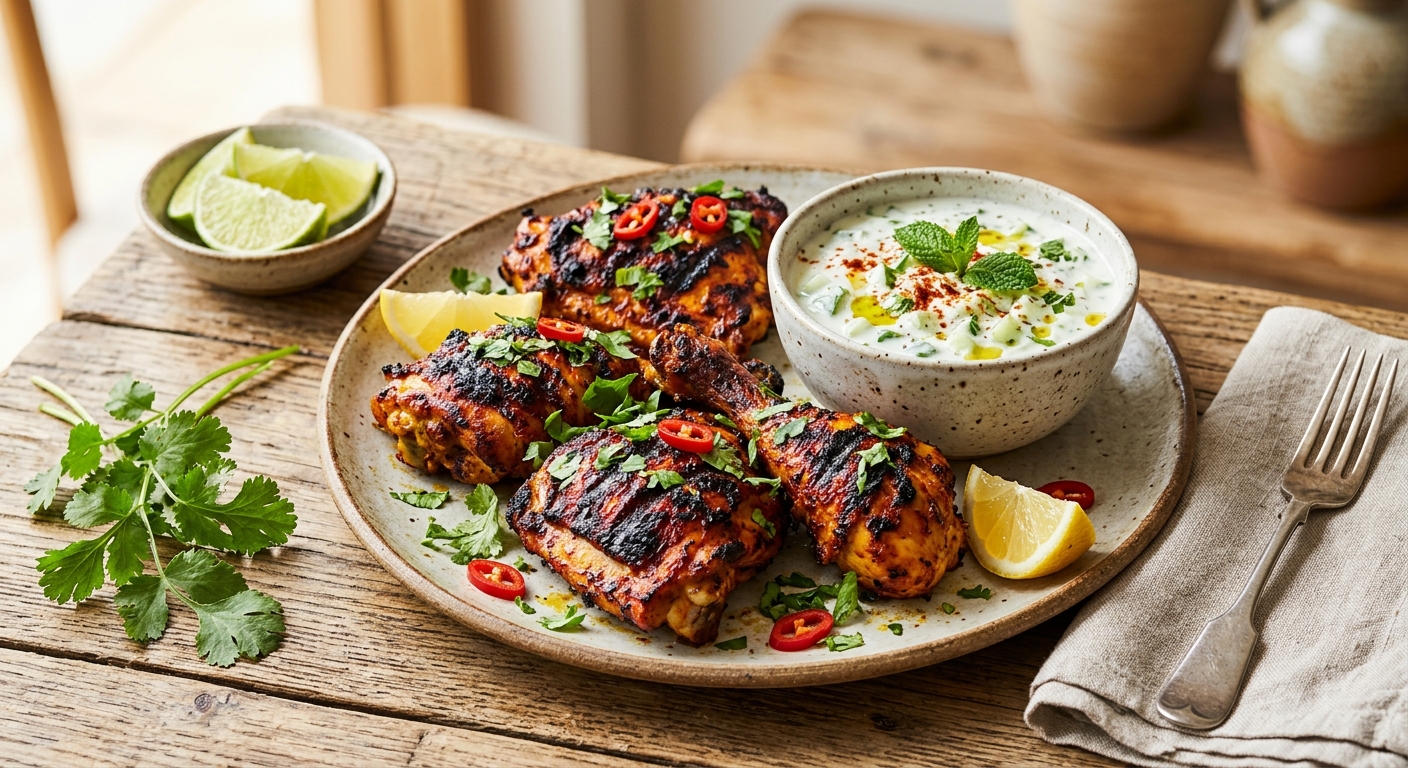
Tandoori chicken is one of the great culinary achievements of the Indian subcontinent, and it earns its place on Calibrated Cuisine because the nutritional profile is as impressive as the flavour. A long marinade in full-fat yogurt does two critical things: the lactic acid gently denatures surface proteins so spices penetrate deep into the muscle fibres, and the calcium in the yogurt activates enzymes that tenderise tough collagen. The result is chicken that is simultaneously succulent inside and fiercely charred outside, with every gram of lean protein intact.
The spice blend is not merely decorative. Turmeric contributes curcumin, one of the most studied anti-inflammatory compounds in food science. Smoked paprika and cayenne supply capsaicinoids that have been shown to transiently boost metabolic rate. Garam masala layers in cinnamon-derived cinnamaldehyde, cardamom phenols, and clove eugenol, giving you a genuine polyphenol payload alongside extraordinary depth of flavour. The cucumber raita provides cooling contrast while adding a meaningful dose of probiotics, vitamin K, and additional calcium to complete the nutritional story.
We have calibrated this recipe across four cooking methods, each engineered to suit the technique rather than simply copy the same steps with different timings. Whether you char the chicken under a broiler, braise it low and slow, blast it in a pressure cooker, or finish it in a cast-iron skillet on the stovetop, the marinade does the foundational work. A single serving lands at approximately 410 calories with 40 grams of protein, making this one of the most protein-dense meals in our entire collection.
4
servings
Ingredients
- 800 gbone-in, skin-on chicken thighs and drumsticks (about 4 pieces each), skin removed
- 240 gfull-fat plain yogurt (for marinade)
- 3 tbspfresh lemon juice
- 4 clovesgarlic, finely grated
- 25 gfresh ginger, finely grated
- 2 tspground cumin
- 2 tspsmoked paprika
- 1.5 tspground turmeric
- 1.5 tspgaram masala
- 1 tspground coriander
- 0.5 tspcayenne pepper (adjust to heat preference)
- 1.5 tspColima Sea SaltMicroplastic Free Salt (for marinade)
- 2 tbspAvocado Oil100% Pure Avocado Oil (avocado or sunflower), for cooking
- 1 tbsptomato paste
- 300 gfull-fat plain yogurt (for raita)
- 200 gEnglish cucumber, grated and excess liquid squeezed out
- 2 tbspfresh mint leaves, finely chopped
- 1 tbspfresh cilantro, finely chopped
- 0.5 tspground cumin (for raita)
- 1 clovegarlic, finely grated (for raita)
- 1 tbsplemon juice (for raita)
- —Colima Sea SaltMicroplastic Free Salt and black pepper to taste
- —Lemon wedges and fresh cilantro sprigs, to serve
Instructions
Click on an item below to shop for the recommended items for this recipe on Amazon.
As an Amazon Associate, we earn from qualifying purchases.
- Prepare the marinade: in a large bowl, whisk together the yogurt, lemon juice, grated garlic, grated ginger, cumin, smoked paprika, turmeric, garam masala, ground coriander, cayenne, tomato paste, and 1.5 tsp salt until fully combined and vivid orange-red in colour.
- Score each piece of chicken deeply with 3 diagonal cuts down to the bone on each side. This is not optional on the stovetop method. Without scoring, the thick muscle around drumstick bones will not cook through before the exterior burns. Toss the chicken in the marinade, pressing it into every cut. Cover and refrigerate for at least 4 hours, ideally overnight.
- While the chicken marinates, make the raita: combine the strained grated cucumber, yogurt, mint, cilantro, ground cumin, grated garlic, and lemon juice. Season with salt and pepper, stir well, cover, and refrigerate until serving. Cold raita set against hot chicken is one of the defining contrasts of this dish.
- Remove chicken from the refrigerator 30 minutes before cooking to take the chill off. Scrape off any excess marinade that would otherwise burn before the interior is done, but leave a thin coating intact.
- Heat a large cast-iron skillet over high heat for 3 full minutes until smoking. Add the neutral oil and swirl to coat. Sear the chicken pieces in a single layer, pressing gently with a spatula, for 4 to 5 minutes per side until deeply charred and blackened in places.
- Reduce heat to medium-low. Add 3 tablespoons of water to the pan, immediately cover tightly with a lid or foil, and steam-cook for 15 to 18 minutes, turning once halfway. The steam carries heat to the bone without burning the exterior. Check doneness with a thermometer: the thickest part of the thigh should read 74 degrees C (165 degrees F).
- Uncover, increase heat to high for 60 to 90 seconds to re-crisp the surface. Rest the chicken on a wire rack for 5 minutes. Serve with raita, lemon wedges, and fresh cilantro.
- Prepare the marinade and score the chicken as described above. Because the slow cooker traps all moisture, reduce the yogurt in the marinade to 180g (three-quarters of the amount) to prevent the sauce from becoming too thin. Marinate for at least 4 hours or overnight.
- Lightly grease the slow cooker insert. Arrange the marinated chicken pieces in a single layer, bone-side down where possible. Scrape all remaining marinade from the bowl over the chicken. Do not add extra water. The yogurt and chicken juices will provide all the liquid needed.
- Cook on High for 4 hours or Low for 7 hours. Avoid lifting the lid during cooking. Each peek releases trapped steam and adds roughly 20 to 30 minutes to the effective cooking time. The chicken is done when it reads 74 degrees C (165 degrees F) at the thickest point and the meat pulls easily from the bone.
- Optional but highly recommended: line a baking sheet with foil and set a wire rack on top. Transfer the cooked chicken pieces to the rack. Brush lightly with any cooking juices from the slow cooker. Place under a preheated broiler on the highest rack setting for 4 to 6 minutes, watching closely, until the surface blisters and chars in spots.
- While the chicken cooks, prepare the raita: combine the squeezed cucumber, yogurt, mint, cilantro, cumin, grated garlic, and lemon juice. Season with salt and pepper and refrigerate. The slow cooker method gives you ample hands-off time to prepare sides and the raita without rushing.
- Rest the chicken for 5 minutes. Serve with the cold raita, lemon wedges, and cilantro. The braising juices left in the slow cooker can be drizzled over rice or flatbread as a flavourful sauce.
- Prepare the marinade and score the chicken as described above. For the pressure cooker method, reduce the yogurt in the marinade to 160g and add 60ml of water separately (do not mix into the marinade). This ensures the pot reaches pressure reliably. The water is added directly to the pot, not to the marinade. Marinate the chicken for at least 4 hours.
- Set the Instant Pot to Saute on High. Add the neutral oil. Once the display reads Hot, sear the chicken pieces in batches, pressing them against the insert for 3 minutes per side until browned and slightly charred. Do not crowd the pot. Set seared pieces aside. This step builds the Maillard flavour compounds that pressure alone cannot replicate.
- Pour the 60ml of water into the insert and use a wooden spoon to deglaze, scraping up all browned bits from the bottom. This is critical: any stuck residue will trigger a Burn warning. Return all chicken pieces to the pot, bone-side down. Pour any remaining marinade over the top.
- Secure the lid, set the valve to Sealing, and cook on Manual High Pressure for 10 minutes. Allow a natural pressure release for 10 minutes, then carefully switch to Quick Release to vent any remaining steam.
- Remove the chicken. Set the Instant Pot back to Saute on High. Simmer the cooking juices for 4 to 5 minutes, stirring frequently, until the sauce reduces and thickens to a glossy, spoonable consistency. Taste and adjust seasoning.
- Optional char finish: place cooked chicken on a foil-lined tray and broil for 4 to 5 minutes on the highest rack until the surface blisters. Meanwhile, make the raita by combining all raita ingredients and refrigerating until serving.
- Spoon the reduced sauce over the chicken before serving. Accompany with the cold cucumber raita, lemon wedges, and fresh cilantro.
- Prepare the marinade using the full quantities listed. Score the chicken deeply on both sides and marinate for at least 4 hours, ideally 12 to 24 hours. The oven method rewards a longer marinade more than any other method because the dry radiant heat amplifies any bitterness in under-marinated yogurt.
- When ready to cook, preheat the oven to 220 degrees C (425 degrees F) with a rack in the upper-middle position. Line a large baking sheet or roasting pan with foil. Set a wire rack on top and lightly oil it. The wire rack is essential: it elevates the chicken so hot air circulates underneath, preventing the bottom from steaming and turning pale.
- Remove the chicken from the marinade, allowing most of the excess to drip off but keeping a generous coating. Arrange pieces on the wire rack spaced at least 2cm apart. Roast at 220 degrees C for 20 minutes without opening the oven.
- After 20 minutes, switch the oven to Broil on High. Broil for 8 to 10 minutes, rotating the baking sheet once halfway through, until the marinade coating is deeply charred in spots and the internal temperature at the thickest part of the thigh reads 74 degrees C (165 degrees F). Watch carefully during broiling as the sugars in the yogurt can go from perfectly charred to burnt in under 60 seconds.
- While the chicken roasts, prepare the raita: combine the squeezed cucumber, yogurt, mint, cilantro, ground cumin, grated garlic, and lemon juice. Season generously and refrigerate. The oven method’s hands-off roasting time makes this easy to prepare without distraction.
- Remove the chicken from the oven and rest on the wire rack for 5 minutes. The elevated resting position prevents steam from softening the crust. Serve immediately with the cold raita, lemon wedges, and fresh cilantro.
Nutrition Breakdown
Per 1 serving (makes 4)
Vitamins & Minerals
% Daily Value based on a 2,000 calorie diet (FDA reference)
🧬 Essential Amino Acids
% of recommended daily intake (RDA) per serving
🛡 Antioxidant Profile
The Nutrition Science
The yogurt marinade in tandoori chicken is a masterclass in applied food science. Full-fat yogurt contains lactic acid at a pH of approximately 4.0 to 4.5, which denatures surface myofibrillar proteins and disrupts cell membranes in the outer muscle layers. This creates physical channels through which fat-soluble spice compounds like curcumin and capsaicin, dissolved in the yogurt’s lipid fraction, can migrate inward. Research published in the Journal of Agricultural and Food Chemistry confirms that fat content in marinades significantly increases the bioavailability and depth of penetration of lipophilic flavour compounds. This is why low-fat or Greek-style yogurt produces a noticeably less flavourful result despite identical spice quantities.
Turmeric’s curcumin content deserves particular attention. At the 1.5 teaspoon dose in this recipe, each serving delivers approximately 48mg of curcumin. While this is below the therapeutic doses used in clinical supplementation studies (typically 500 to 2000mg), regular dietary curcumin intake at culinary doses has been associated with meaningful reductions in C-reactive protein in population studies. Critically, curcumin has poor standalone bioavailability, but the piperine present in black pepper (used to season this dish) enhances its absorption by up to 2000% by inhibiting glucuronidation in the intestinal wall. Always finish tandoori-spiced dishes with a generous grind of black pepper for this reason.
The cucumber raita adds a probiotic dimension that counterbalances the protein-heavy main. Live cultures in full-fat yogurt, primarily Lactobacillus bulgaricus and Streptococcus thermophilus, support gut microbiome diversity. Pairing probiotic yogurt with the prebiotic fibre in garlic and cucumber creates a synbiotic effect. Cucumber also contributes fisetin, a flavonoid with emerging neuroprotective research interest, and a meaningful dose of vitamin K1 (approximately 17mcg per serving), which supports osteocalcin carboxylation for bone matrix formation, complementing the dish’s substantial calcium load from the combined yogurt in both the marinade and the raita.
Pro Tips
- For the deepest colour and flavour, add 1 teaspoon of Kashmiri chili powder alongside the smoked paprika. Kashmiri chili is prized for its vivid brick-red pigment and mild heat, and it is largely responsible for the signature colour of authentic restaurant tandoori chicken.
- Squeeze grated cucumber very thoroughly before adding it to the raita. Cucumber is over 95% water and even a small amount of residual liquid will make the raita watery within 30 minutes. Wrap the grated cucumber in a clean kitchen towel and wring firmly until almost no liquid drips out.
- If you have access to a charcoal or gas grill, the chicken can be finished over direct high heat for 3 to 4 minutes per side after any of the four cooking methods. The smoke compounds from the grill react with the Maillard products already present in the charred marinade to create an additional layer of complexity that genuinely approximates a wood-fired tandoor.




omg this is exactly the kind of meal i’ve been wanting to make for my family because the spice profile is so anti-inflammatory, but i was actually wondering if you’d recommend soaking or sprouting the spices first, or does the yogurt marinade itself activate some of those enzyme inhibitors? also curious about priya’s point on amino acid absorption since im always thinking about how to maximize what my kids’ brains are actually absorbing, not just consuming, and the raita probiotics are such a smart addition for their gut health which obviously affects everything. my oldest was finally willing to try yogurt-based marinades after i explained they’re basically pre-digesting the protein for him, which sounds silly but
omg yes the marinade is doing SO much work here, the lactic acid is literally breaking down the protein structure so your kids’ bodies dont have to work as hard during digestion, which means better amino acid uptake and faster recovery for growing bodies. honestly i wouldnt soak or sprout the spices unless youre specifically trying to reduce phytic acid in other foods, but the turmeric in the yogurt marinade paired with that fat content? chefs kiss for curcumin bioavailability. the raita probiotics are the real MVP though because a healthy gut microbiome genuinely impacts nutrient absorption across the board, so youre setting them up to actually utilize all that complete protein
Love this recipe! I’m curious though, since you’re highlighting the protein content so prominently, did you calculate whether the yogurt marinade helps with amino acid absorption? I work with a lot of clients doing plant-based eating, and the lactic acid in fermented yogurt actually enhances mineral bioavailability, so pairing that with the spices (turmeric especially) could amplify the anti-inflammatory benefits even more than the macros alone suggest. The raita is such a smart move nutritionally, not just for probiotics but for that fat-soluble vitamin absorption too. Do you have thoughts on whether the cooling element of the cucumber is intentional for balancing the thermal properties of the spices
This is such a sharp observation, Priya! You’re absolutely right that yogurt’s lactic acid enhances mineral bioavailability, particularly for calcium and magnesium, which makes the pairing with turmeric especially elegant since curcumin absorption itself benefits from fat and acid. I’d gently push back though on amplifying anti-inflammatory effects beyond what the research shows – curcumin bioavailability is really the limiting factor there, not the mineral uptake – but the broader point stands that this meal’s design creates genuine synergies rather than just stacking nutrients. The raita cooling the spice thermal load is definitely intentional in traditional Ayurvedic thinking, and while that
oh this thread is making me so happy because yes yes yes to the bioavailability piece, we’ve totally seen this play out with my kids when they eat yogurt based marinades versus regular ones – like noticeably better digestion and they actually want seconds without the spice overwhelm. quick question though, does the lactic acid fermentation time matter here? like if i let the chicken marinade overnight versus just a couple hours, does that actually increase the breakdown further, and would that affect how the turmeric gets absorbed? also now im wondering if id get even more benefit if i sprouted some mung beans to serve alongside this instead of rice to amp up the enzyme content even more for their developing brains,