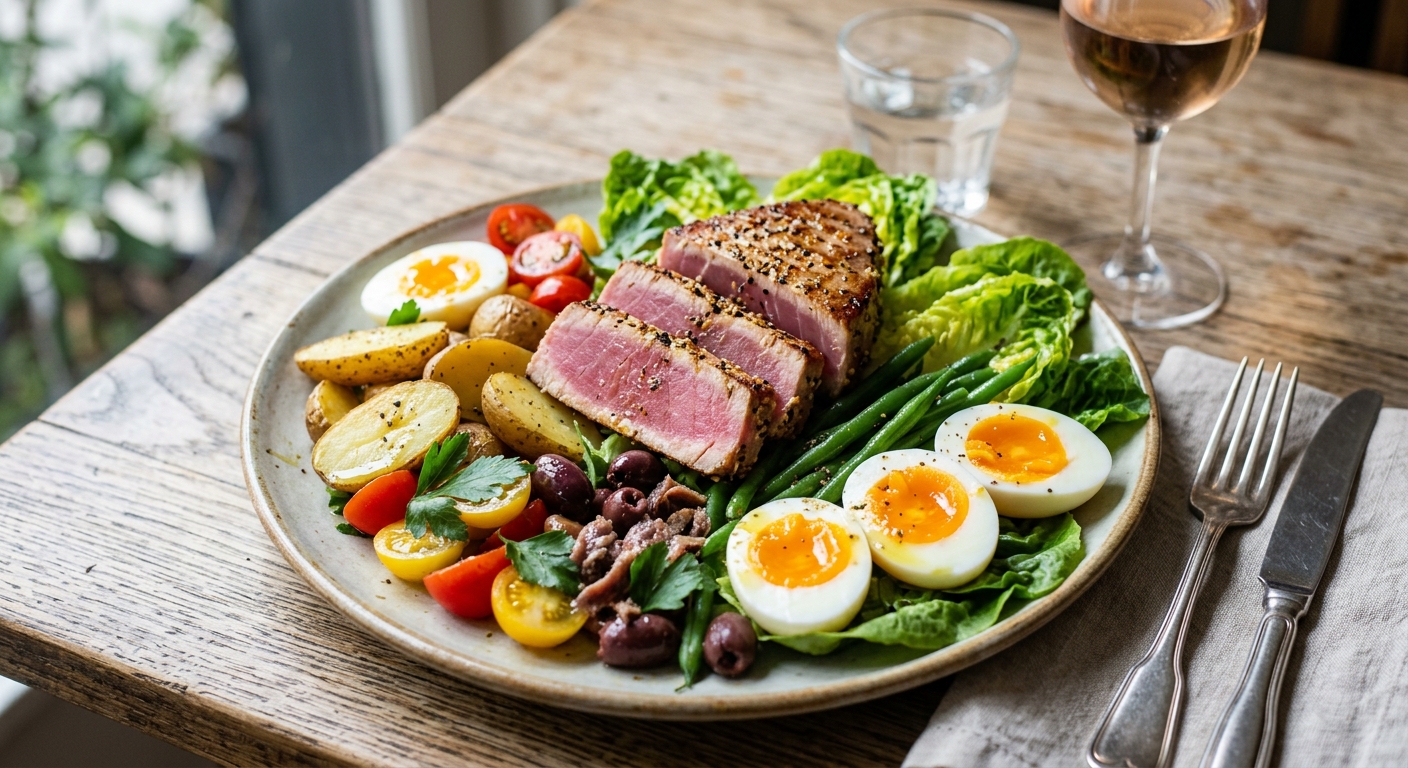
The Nicoise salad was born on the sun-drenched coast of Nice, France, and for good reason it has never gone out of style. What began as a humble assembly of local produce, preserved fish, and hard-boiled eggs has evolved into one of the most nutritionally complete single-dish meals in European cuisine. At Calibrated Cuisine, we have reverse-engineered the classic to maximise protein density without sacrificing a single drop of the dish’s legendary flavour. The result is a salad that delivers 45 grams of high-quality, complete protein per serving, sourced from two distinct animal proteins that complement each other’s amino acid profiles beautifully.
The star is a thick-cut yellowfin tuna steak, seared hard on the outside and left rose-pink at the centre in the French tradition. Yellowfin tuna is one of nature’s most efficient protein sources: lean, dense, and loaded with selenium, B12, and long-chain omega-3 fatty acids EPA and DHA. Paired with two pasture-raised eggs per serving, you gain all nine essential amino acids in near-perfect ratios. The supporting cast, including Nicoise olives, haricots verts, waxy potatoes, cherry tomatoes, and anchovies in the dressing, adds fibre, potassium, iron, and a cascade of polyphenols and carotenoids that make this salad as functional as it is beautiful.
We have developed three genuinely different preparation methods so this recipe works for every kitchen and schedule. The stovetop method delivers the classic seared tuna experience with the most control over doneness. The pressure cooker method is a weeknight workhorse that cooks the potatoes and eggs simultaneously in under 15 minutes before a quick tuna sear. The slow cooker method takes an unconventional but deeply flavourful approach, gently poaching the tuna confit-style in olive oil with herbs, producing extraordinarily tender, silky fish that pairs perfectly with the crisp raw and blanched components assembled at serving time.
4
servings
Ingredients
- 700 gyellowfin tuna steaks, about 2.5cm thick
- 8 largeeggs, pasture-raised
- 400 gbaby waxy potatoes (e.g. Charlotte or fingerling), halved
- 300 gharicots verts (fine green beans), trimmed
- 250 gcherry tomatoes, halved
- 120 gNicoise olives (or Kalamata), pitted
- 2 headsLittle Gem or Romaine lettuce, leaves separated and washed
- 4 filletsoil-packed anchovy fillets, finely minced
- 3 tbspextra-virgin olive oil, divided
- 2 tbspred wine vinegar
- 1 tbspDijon mustard
- 1 tsphoney
- 2 clovesgarlic, finely minced
- 2 tbspfresh flat-leaf parsley, finely chopped
- 1 tbspfresh tarragon leaves, roughly torn
- 100 mlextra-virgin olive oil (for slow cooker confit method only)
- —Colima Sea SaltMicroplastic Free Salt and freshly cracked black pepper to taste
Instructions
Click on an item below to shop for the recommended items for this recipe on Amazon.
As an Amazon Associate, we earn from qualifying purchases.
- Fill a large saucepan with cold water, add the halved baby potatoes and a generous pinch of salt. Bring to the boil over high heat, then reduce to a steady simmer and cook for 12 to 15 minutes until a paring knife slides through with no resistance. Scoop the potatoes out with a slotted spoon and set aside in a single layer to cool slightly. Keep the water at a simmer.
- Lower the eggs gently into the simmering potato water using a slotted spoon. Cook for exactly 7 minutes for a jammy, slightly soft yolk, or 9 minutes for a fully set yolk. Transfer immediately to a bowl of iced water and leave for at least 5 minutes before peeling. Peel carefully, halve lengthwise, and set aside.
- While the eggs cool, bring a separate small saucepan of salted water to a rolling boil. Add the haricots verts and blanch for 2 to 3 minutes until bright green and just tender with a slight snap. Drain and immediately plunge into the iced water you used for the eggs (topping it up with fresh ice if needed). Drain and pat dry. This stops the cooking and locks in the vibrant colour.
- Make the vinaigrette: whisk together the minced anchovies, Dijon mustard, garlic, red wine vinegar, and honey in a small bowl until the anchovies have dissolved into a paste. Slowly drizzle in 3 tablespoons of extra-virgin olive oil while whisking constantly to emulsify. Season with black pepper (it will not need much salt given the anchovies). Stir in the parsley and tarragon.
- Pat the tuna steaks completely dry with paper towels and season liberally on both sides with salt and cracked black pepper. Heat a large cast-iron skillet or heavy stainless steel pan over the highest heat your stovetop offers for at least 2 minutes until the pan is screaming hot. Add 1 tablespoon of olive oil, swirl to coat, then lay the tuna steaks in the pan without moving them. Sear for 90 seconds to 2 minutes per side for rare-to-medium-rare (internal temperature of 46 to 52 degrees C). Transfer to a cutting board and rest for 2 minutes, then slice against the grain into 1.5cm thick slices.
- Assemble the salads: arrange lettuce leaves as a base on a large platter or individual plates. Arrange the potatoes, haricots verts, cherry tomatoes, halved eggs, and olives in separate clusters around the platter for that classic composed presentation. Lay the sliced tuna prominently in the centre. Drizzle the entire platter generously with the anchovy vinaigrette, ensuring every component gets some. Serve immediately with any remaining dressing on the side.
- Pour 100ml of extra-virgin olive oil into the base of the slow cooker insert. Add the minced garlic, 2 of the minced anchovy fillets, the tarragon leaves, and a few cracks of black pepper. Stir briefly. Nestle the tuna steaks in a single layer into the oil mixture, then pour in just enough additional olive oil so the tuna is at least halfway submerged (the tuna will release moisture and the oil will rise slightly). Season the top surface of the tuna with salt. Set the slow cooker to Low.
- Cook on Low for 1 hour to 1 hour 30 minutes. The tuna is done when it just begins to flake when pressed gently with a spoon and has turned from translucent to opaque throughout, but still looks moist and slightly glossy. Do not cook on High, as rapid heat will tighten the protein fibres and you lose the confit texture entirely. Begin checking at the 60-minute mark.
- While the tuna cooks, prepare the vegetables on the stovetop. Place the halved baby potatoes in a saucepan of cold salted water, bring to a boil, and cook for 12 to 15 minutes until tender. Remove with a slotted spoon. In the same water, cook the eggs for 7 minutes from a simmer, then transfer to iced water to halt cooking. Peel and halve. In a separate small pot of boiling salted water, blanch the haricots verts for 2 to 3 minutes, then shock in iced water and drain.
- Make the vinaigrette in a bowl by whisking together the remaining 2 minced anchovy fillets, Dijon mustard, red wine vinegar, honey, and the remaining olive oil in the standard emulsification method. Here is a trick specific to this method: once the tuna is done, spoon 1 tablespoon of the warm, now-tuna-and-herb-infused confit oil directly into the vinaigrette and whisk it in. This adds a haunting depth of flavour that the stovetop version cannot replicate. Season and stir in the parsley.
- Use a wide spatula to carefully lift the confit tuna from the oil, as it will be very tender and may break apart (which is perfectly fine and actually beautiful in the final presentation). Let it drain briefly on a paper towel, then break into large, rustic flakes rather than slicing, as the confit texture lends itself to a more relaxed, chunky presentation. Assemble over lettuce leaves with the potatoes, haricots verts, tomatoes, olives, and halved eggs arranged around the flaked tuna. Dress generously with the enriched vinaigrette and serve at room temperature.
- Pour 250ml of water into the pressure cooker insert. Place the trivet inside. Arrange the halved baby potatoes on the trivet in a loose pile. Place the whole eggs directly on top of the potatoes (they will not crack at pressure; their shells protect them). Close and seal the lid, set the valve to Sealing, and cook on Manual High Pressure for 5 minutes.
- When the 5-minute cook time is complete, perform a Quick Release by carefully moving the valve to Venting. Open the lid once all steam has escaped. Remove the eggs immediately with tongs and place in a bowl of iced water to stop the cooking (at this pressure and time, you will have a fully set but still creamy yolk; for a jammier result, reduce to 4 minutes). Remove the potatoes and set aside; they should be perfectly tender. Peel and halve the cooled eggs.
- While the pressure cooker is running, blanch the haricots verts on the stovetop in a small saucepan of boiling salted water for 2 to 3 minutes, then shock in iced water and drain. Also prepare the vinaigrette at this point by whisking together all minced anchovies, mustard, garlic, vinegar, honey, and 3 tablespoons olive oil until emulsified. Stir in the parsley and tarragon. Working in parallel with the pressure cooker is the key to hitting 30 minutes total.
- Pat the tuna steaks completely dry with paper towels and season assertively with salt and black pepper on both sides. Heat a heavy skillet (cast iron works best here) over maximum heat for 2 full minutes. Add 1 tablespoon of olive oil and sear the tuna for 90 seconds per side for medium-rare. Remove, rest for 2 minutes on a cutting board, and slice against the grain into 1.5cm slices.
- Compose the salad on a large platter or individual plates: lay out the lettuce as a base, then arrange the warm potatoes, blanched haricots verts, cherry tomatoes, olives, and halved eggs in grouped clusters. Fan the sliced tuna across the centre. Drizzle everything with the Dijon-anchovy vinaigrette and serve immediately while the tuna and potatoes are still slightly warm, which is arguably the best way to experience this dish.
- Preheat the oven to 220 degrees C (200 degrees C fan, Gas Mark 7). Toss the halved baby potatoes with 1 tablespoon of olive oil, a pinch of salt, and cracked black pepper on a large rimmed baking sheet. Spread in a single layer cut-side down. Roast on the middle rack for 20 to 25 minutes, flipping once halfway, until the cut faces are deeply golden and the skins are wrinkled and slightly crisp. Remove and keep warm.
- While the potatoes roast, bring a small saucepan of salted water to the boil. Lower in the eggs and cook for exactly 7 minutes (for a jammy yolk) or 9 minutes (for fully set). Transfer to iced water, then peel and halve. In the same saucepan, blanch the haricots verts for 2 to 3 minutes, shock in iced water, drain, and pat dry.
- Prepare the anchovy-Dijon vinaigrette: in a bowl, mash all 4 anchovy fillets with the flat of a fork into a smooth paste. Whisk in the garlic, mustard, honey, and red wine vinegar. Slowly whisk in 3 tablespoons of olive oil to emulsify. Season with black pepper and stir in the parsley and tarragon. Set aside.
- When the potatoes come out of the oven, increase the temperature to 230 degrees C (210 degrees C fan). Heat an ovenproof cast-iron skillet on the stovetop over very high heat for 2 minutes. Season the tuna steaks with salt and pepper and sear in 1 tablespoon of olive oil for 60 seconds on one side only until a crust forms. Immediately transfer the entire skillet to the hot oven (seared-side up) and roast for 3 to 4 minutes for medium-rare (internal temp 48 to 52 degrees C). Remove and rest on a cutting board for 2 minutes before slicing.
- Arrange the lettuce leaves on a large platter. Scatter the warm roasted potatoes, haricots verts, cherry tomatoes, and olives over and around the lettuce. Lay the halved eggs in clusters. Slice the rested tuna against the grain and fan across the platter. Spoon the vinaigrette liberally over the entire composition and serve immediately while the roasted components are still warm.
Nutrition Breakdown
Per 1 serving (makes 4)
Vitamins & Minerals
% Daily Value based on a 2,000 calorie diet (FDA reference)
🧬 Essential Amino Acids
% of recommended daily intake (RDA) per serving
🛡 Antioxidant Profile
The Nutrition Science
The extraordinary protein density of this salad, 45 grams per serving, comes from a calculated combination of yellowfin tuna and eggs that together deliver all nine essential amino acids in amounts that exceed the RDA for every single one. Yellowfin tuna is one of the highest-protein whole foods on the planet at approximately 30g per 100g of cooked flesh, with a Protein Digestibility-Corrected Amino Acid Score (PDCAAS) of 1.0, the maximum possible. The two eggs per serving contribute an additional 12g of protein alongside phosphatidylcholine and fat-soluble vitamins that the lean tuna alone cannot provide. The combination is not accidental: it mirrors the nutritional logic that French fishermen who originated this dish understood intuitively.
The selenium content of this dish deserves special attention. A single 175g serving of yellowfin tuna delivers roughly 130 to 150 micrograms of selenium, well over twice the adult RDA of 55 micrograms. Selenium is the critical cofactor for the glutathione peroxidase family of enzymes, which are the primary defence system cells use to neutralise lipid peroxides and hydrogen peroxide before they can damage DNA and membrane structures. Selenium also activates thioredoxin reductase, which recycles oxidised vitamin C back to its active form, creating an elegant nutritional synergy with the vitamin C contributed by the cherry tomatoes and haricots verts in the same plate. This is nutrient teamwork at the molecular level.
The anchovy-Dijon vinaigrette is more than a flavour vehicle: it is a fat delivery system that meaningfully enhances the bioavailability of every fat-soluble compound in this salad. Lycopene from the tomatoes, lutein and zeaxanthin from the egg yolks and lettuce, vitamin K from the haricots verts and parsley, and beta-carotene from any carotenoid-containing ingredient all require dietary fat present in the same meal for meaningful intestinal absorption. A 2017 meta-analysis in Molecular Nutrition and Food Research confirmed that pairing carotenoid-rich vegetables with a fat source increases carotenoid absorption by two to six fold compared with fat-free dressings. The extra-virgin olive oil in this vinaigrette is not optional; it is a delivery mechanism built into the recipe’s nutritional architecture.
Pro Tips
- Buy sushi-grade or ‘sashimi-grade’ yellowfin tuna if available, not because it changes the cooking process but because the quality and freshness premium is especially noticeable in a recipe where the fish is served rare or medium-rare and its texture is the centrepiece of the dish.
- The anchovy fillets in the vinaigrette will not make the dressing taste fishy; they dissolve completely into the emulsion and function as an umami amplifier, adding depth and savouriness that makes you feel the whole salad is more seasoned without being able to identify a fishy note. Do not skip them.
- For the most visually striking platter presentation, compose the salad in the traditional French way: arrange each component (potatoes, green beans, tomatoes, eggs, olives) in its own cluster rather than tossing everything together, and slice the tuna last so it is still warm when it lands on the plate.
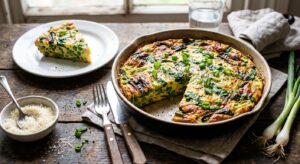
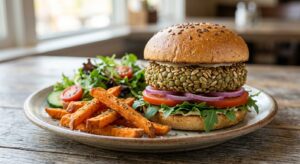
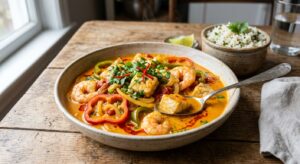
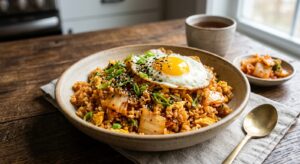
Great question, Priya. The protein challenge with plant-based swaps here isn’t just hitting the gram target, it’s nailing the amino acid profile that the tuna gives you. Seared tuna scores a perfect 1.0 on DIAAS because it’s got all nine essentials in optimal ratios, especially that leucine hit that triggers muscle protein synthesis. If you’re building a plant-based version, I’d layer it: hemp seeds or pumpkin seeds for completeness, add tempeh or edamame for that leucine boost (about 1.2g per serving of cooked edamame), and honestly, a poached egg or two keeps the salad closer
This looks absolutely beautiful, but I’m curious how you’d approach building a similar nutritional profile for clients who don’t eat fish? I work with a lot of plant-based eaters who love the Mediterranean vibe, and I’ve had great success swapping the tuna for crispy baked chickpeas or tempeh, then pairing them with hemp seeds or pumpkin seeds to hit that complete amino acid profile. The haricots verts and eggs (or aquafaba for vegan versions) actually do a lot of the heavy lifting nutritionally, so the base is already solid. Would love to know if you’ve experimented with plant-forward versions of this classic!
love that youre diving into the protein quality piece, paul, because that actually matters so much for how our bodies use it. ive had to get really intentional about complete proteins during flares when my gut cant absorb nutrients efficiently, and i found that mixing something like lentils with a grain or adding tempeh actually helped me feel more satisfied than just chasing the gram count. curious though, priya, if youve noticed whether plant-based swaps sit differently for people managing inflammation? i know raw salads can be tough for me during flares, but maybe cooking down some of the veggies or swapping the crunch for softer proteins like white beans could keep the mediterranean vibe without triggering dig