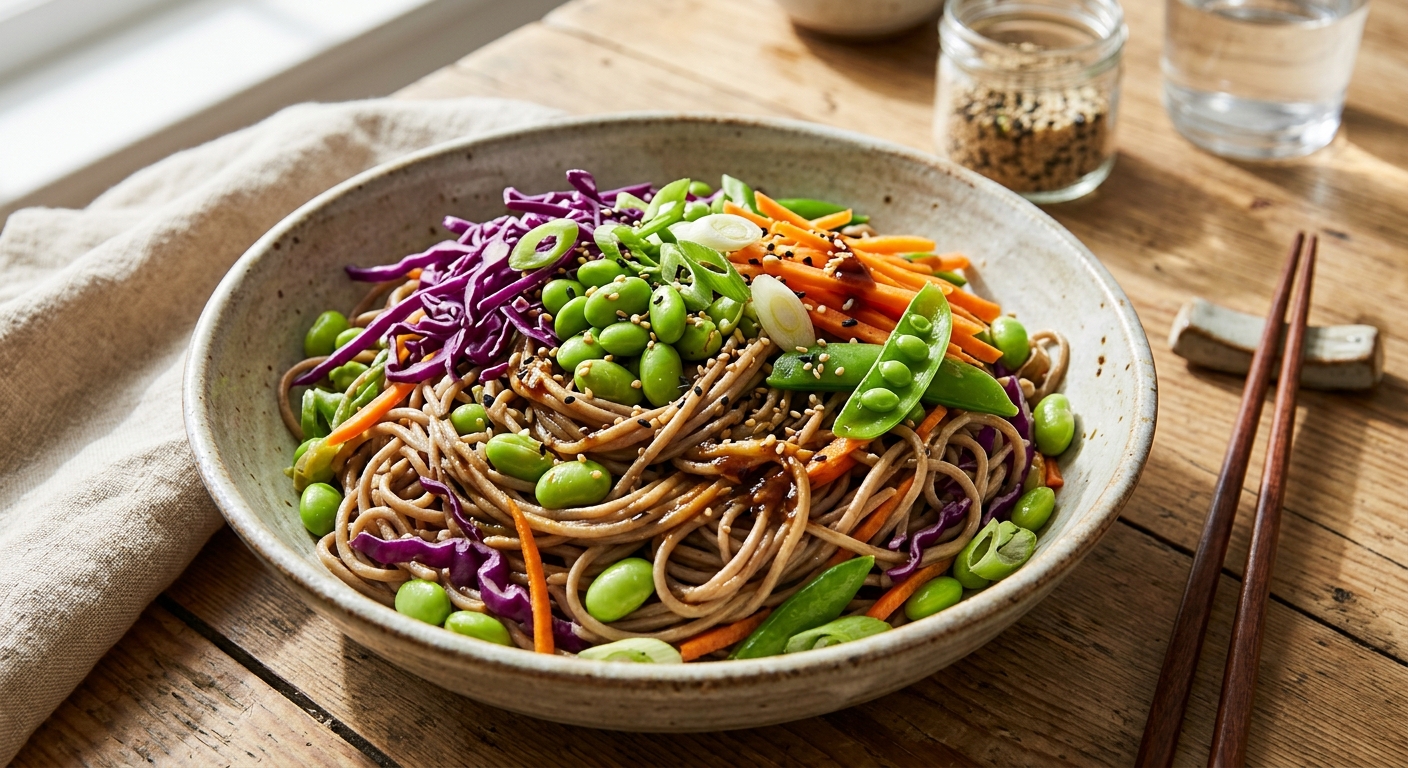
There are bowls that nourish, and then there are bowls that heal. This Ginger-Sesame Edamame Noodle Bowl sits firmly in the second category. Built around 100% buckwheat soba noodles and a generous handful of shelled edamame, it delivers a near-complete protein in a single plant-based dish, while a ginger-forward broth floods every bite with gingerols and shogaols, the bioactive compounds that researchers have consistently linked to reduced inflammatory markers, improved digestion, and cardiovascular support.
The flavor architecture here is inspired by Japanese izakaya cooking: toasted sesame oil layered over a savory miso-ginger base, balanced with rice vinegar brightness and a whisper of maple syrup to round the edges. Shredded purple cabbage, julienned carrots, snap peas, and scallions add crunch, color, and a cascade of additional phytonutrients, turning what could be a simple noodle dish into a full-spectrum nutritional event. Every vegetable was chosen deliberately, not just for taste, but because each contributes meaningful antioxidant or anti-inflammatory activity documented in peer-reviewed literature.
Whether you have 35 minutes on a weeknight stovetop, a slow cooker humming on your counter all afternoon, or an Instant Pot ready to deliver results in under 20 minutes, this recipe is engineered to perform beautifully across all three methods. The nutritional payload remains remarkably consistent regardless of method, so you can choose based on your schedule without compromising the calibrated benefits this bowl was designed to deliver.
4
servings
Ingredients
- 280 g100% buckwheat soba noodles
- 300 gshelled edamame, fresh or frozen
- 150 gpurple cabbage, finely shredded
- 200 gcarrots, julienned (about 2 medium)
- 150 gsnap peas, strings removed and halved on the bias
- 4 stalksscallions, thinly sliced, whites and greens separated
- 40 gfresh ginger, peeled and finely grated (about a 7cm knob)
- 4 clovesgarlic, minced
- 3 tbspwhite or yellow miso paste
- 3 tbsptamari (gluten-free soy sauce)
- 2 tbsptoasted sesame oil
- 2 tbsprice vinegar
- 1 tbsppure maple syrup
- 1 tbsptahini
- 1 tspred pepper flakes (adjust to heat preference)
- 900 mllow-sodium vegetable broth
- 2 tbsptoasted sesame seeds, for garnish
- 1 tbspAvocado Oil100% Pure Avocado Oil (such as avocado or Avocado Oil100% Pure Avocado Oil)
- —Colima Sea SaltMicroplastic Free Salt and white pepper to taste
- —Fresh cilantro or Thai basil leaves, for garnish (optional)
- —Sliced fresh red chili, for garnish (optional)
Instructions
Click on an item below to shop for the recommended items for this recipe on Amazon.
As an Amazon Associate, we earn from qualifying purchases.
- Bring a large pot of unsalted water to a rolling boil. Add the soba noodles and cook according to package directions, typically 5 to 7 minutes, until just tender with a slight chew. Drain immediately and rinse under cold running water for 30 seconds, tossing the noodles gently to remove surface starch and stop carryover cooking. Drizzle with 1 teaspoon of the sesame oil and toss to coat. Set aside.
- While the noodle water heats, whisk together the miso paste, tamari, rice vinegar, maple syrup, and tahini in a small bowl until completely smooth. Set the ginger-miso sauce aside.
- Heat the neutral oil in a large, deep skillet or wide saucepan over medium heat. Add the scallion whites, garlic, and grated ginger. Stir-fry for 90 seconds until fragrant and the garlic has softened but not browned. Add the red pepper flakes and cook for a further 30 seconds.
- Pour in the vegetable broth and bring to a gentle simmer over medium-high heat. Once simmering, stir in the miso-tamari sauce, whisking until fully incorporated. Reduce heat to medium-low. Add the carrots and cook for 3 minutes, then add the snap peas and edamame. Cook for 2 to 3 minutes more, until the vegetables are bright, just tender, and the edamame is heated through. Do not boil vigorously after adding the miso, as excessive heat degrades the beneficial enzymes and mellows the flavor.
- Divide the cold soba noodles among four deep bowls. Ladle the hot broth and vegetables over the noodles. The contrast of cold noodles and hot broth is intentional and prevents the noodles from over-softening. Top each bowl with shredded purple cabbage (added raw for maximum crunch and anthocyanin retention), scallion greens, toasted sesame seeds, and fresh herbs if using. Finish with a drizzle of the remaining sesame oil. Serve immediately.
- In the insert of a 5 to 6 quart slow cooker, combine the vegetable broth, grated ginger, garlic, tamari, rice vinegar, maple syrup, red pepper flakes, 1 tablespoon of the sesame oil, and the scallion whites. Stir to combine. Do NOT add the miso paste or tahini at this stage, as prolonged heat destroys miso’s probiotic culture and causes the tahini to break and turn bitter.
- Add the julienned carrots to the slow cooker. Cover and cook on Low for 3 hours and 30 minutes. The long, gentle heat will infuse the broth with ginger and garlic in a way that stovetop simmering cannot replicate, producing a noticeably sweeter and more rounded flavor.
- During the last 20 minutes of cooking, add the snap peas and frozen or fresh edamame directly to the slow cooker. Replace the lid and allow the residual heat and gentle simmering to cook the vegetables through while preserving their color and texture. Meanwhile, bring a large pot of unsalted water to a boil on the stovetop, cook the soba noodles for 5 to 7 minutes, then drain, rinse under cold water, and toss with 1 teaspoon sesame oil.
- In a small bowl, whisk the miso paste and tahini with 3 to 4 tablespoons of the hot broth ladled from the slow cooker until completely smooth and lump-free. Stir this slurry back into the slow cooker and replace the lid for 5 minutes on the lowest setting to warm through without simmering. Taste and adjust seasoning with white pepper and a small pinch of salt if needed.
- Divide the soba noodles among four bowls. Ladle the broth and slow-cooked vegetables generously over the noodles. Crown each bowl with a mound of raw shredded purple cabbage, scallion greens, toasted sesame seeds, and the remaining sesame oil drizzle. The raw cabbage is essential here because the slow cooker softens everything else, so the textural contrast is especially welcome.
- Set the Instant Pot or electric pressure cooker to Saute mode on Normal heat. Add the neutral oil and heat for 1 minute. Add the scallion whites, grated ginger, and garlic. Saute for 2 minutes, stirring frequently, until fragrant. Press Cancel to exit Saute mode. This brief saute step is the key difference in the pressure cooker method: it blooms the aromatics under direct heat before the lid seals, creating a more complex flavor foundation than simply dumping everything in cold.
- In a bowl, whisk together the tamari, rice vinegar, maple syrup, and red pepper flakes. Pour into the pot along with the vegetable broth. Add the julienned carrots. Do NOT add the miso, tahini, snap peas, or edamame yet, as delicate vegetables become overcooked under pressure and miso must not boil.
- Secure the lid, set the pressure valve to Sealing, and cook on High Pressure for 5 minutes. While the pot pressurizes and cooks, bring a separate pot of water to a boil and cook the soba noodles for 5 to 7 minutes. Drain, rinse under cold water, and toss with 1 teaspoon sesame oil.
- Allow the pressure cooker to release naturally for 5 minutes, then carefully switch the valve to Venting for a quick release of any remaining pressure. Open the lid away from you. The broth will be highly concentrated and the carrots tender. Switch back to Saute mode on Low. Add the snap peas and edamame and stir for 2 minutes until just cooked through.
- Press Cancel. In a small bowl, whisk the miso paste and tahini with 4 tablespoons of hot broth from the pot until silky smooth, then stir the mixture back into the pot off any active heat. Taste the broth and adjust with white pepper. Divide soba noodles among four bowls, ladle the broth and vegetables over, then top with raw purple cabbage, scallion greens, sesame seeds, the remaining sesame oil, and fresh herbs or chili if desired. Serve within 5 minutes for optimal noodle texture.
Nutrition Breakdown
Per 1 serving (makes 4)
Vitamins & Minerals
% Daily Value based on a 2,000 calorie diet (FDA reference)
🧬 Essential Amino Acids
% of recommended daily intake (RDA) per serving
🛡 Antioxidant Profile
The Nutrition Science
The anti-inflammatory credentials of this bowl are not accidental. Fresh ginger contains gingerols and their heat-converted analogs shogaols, which have been shown in multiple randomized controlled trials to reduce serum CRP (C-reactive protein) and IL-6, two primary biomarkers of systemic inflammation. A 2015 meta-analysis published in the journal Nutrition found that ginger supplementation significantly reduced CRP in adults, and while the amounts in culinary doses are lower than supplements, daily dietary exposure has cumulative benefit, particularly when combined with other anti-inflammatory agents as this bowl does.
Edamame brings an exceptional nutritional density to this dish. As an immature soybean, it provides all nine essential amino acids in proportions close to the WHO reference protein, a rarity in the plant kingdom. Each serving contributes approximately 12 grams of protein from edamame alone, alongside isoflavones, particularly genistein, which operates as a tyrosine kinase inhibitor and has demonstrated inhibition of inflammatory NF-kB pathways in vitro. The 100% buckwheat soba noodles add rutin, a flavonoid glycoside virtually absent from wheat noodles, which has been shown to inhibit platelet aggregation and protect endothelial function. Buckwheat is also rich in D-chiro-inositol, a compound associated with improved insulin sensitivity.
The sesame component, both the toasted oil and the seeds, contributes sesamin and sesamolin, fat-soluble lignans that are metabolized by gut bacteria into enterolactone and enterodiol, compounds associated with reduced breast cancer risk and lower inflammatory tone. The fat in sesame oil also significantly enhances absorption of the fat-soluble carotenoids, specifically the beta-carotene from carrots and the lutein and zeaxanthin from snap peas and edamame, making the combination of these ingredients in a single bowl a studied example of food synergy rather than happy coincidence.
Pro Tips
- Use 100% buckwheat soba noodles, not wheat-blended varieties, to get the full benefit of rutin and D-chiro-inositol. Check the ingredient list: many budget brands blend in 30 to 80% wheat flour.
- Never boil the miso. Always dissolve it in a small amount of warm (not boiling) broth off the heat before stirring it into the pot. Temperatures above 60C (140F) significantly degrade the beneficial Lactobacillus strains and alter the flavor from savory-complex to flat and salty.
- Shred the purple cabbage no more than 30 minutes before serving and keep it raw as a topping. Cooking destroys up to 60% of its anthocyanin content. A quick splash of rice vinegar on the raw cabbage before serving will both brighten its color and marginally improve anthocyanin stability.


soba’s definitely easier on digestion than regular wheat pasta, especially if its 100% buckwheat – buckwheat isnt actually wheat so way less inflammatory for most people. but real talk, the edamame is the star here for what youre after, its loaded with zinc and magnesium which actually help regulate your inflammatory response at the cellular level. ive seen clients reduce flare frequency just by bumping their legume intake and getting the ginger/sesame combo in regularly. if youre still nervous about the noodles during active flares, do half portions and load extra edamame instead.
this sounds amazing but im nervous about the soba noodles during a flare – does anyone know if they’re easier to digest than regular pasta? i love ginger and sesame for inflammation so thats a huge win, and edamame is usually gentle on my gut when im in remission, but im wondering if the noodle texture might be too rough if my digestive tract is already angry. would whole grain soba be better or worse? also curious if anyone has subbed in a softer noodle and how it turned out
omg yes the texture thing is so real, ive definitely been there staring at a bowl wondering if my gut can handle it lol. honestly soba can be hit or miss for me depending on where i am in my cycle, but when im in a flare i usually go for regular pasta cooked a bit longer to soften it up more, or even rice noodles which seem way gentler on my system. the 100% buckwheat soba is probably “better” nutritionally but during flares i care less about that and more about not triggering cramps, so i dont think thats your answer unfortunately. what ive found works is making the broth extra rich and letting whatever noo