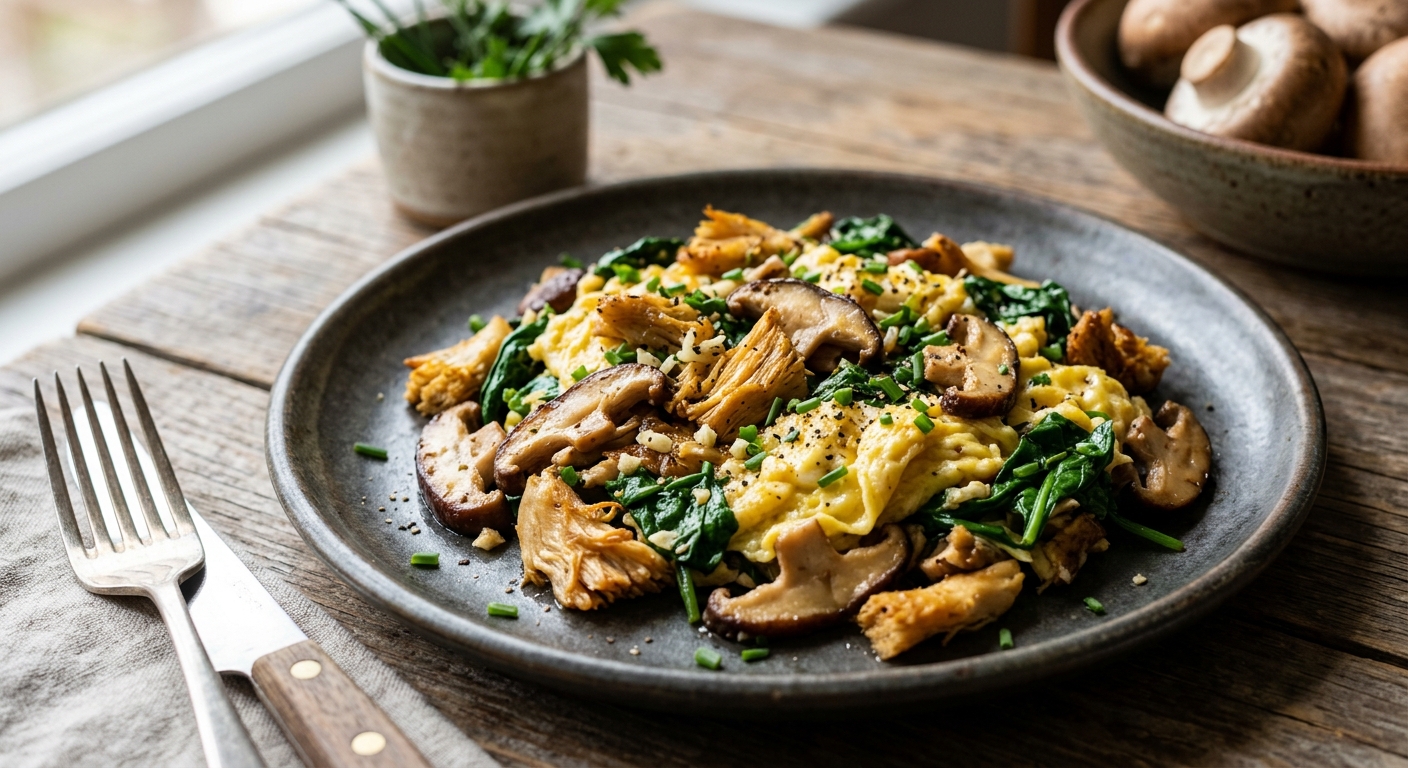
Chronic elevated cortisol is one of the most underappreciated metabolic saboteurs in modern life. It drives visceral fat storage, disrupts insulin sensitivity, and fragments sleep architecture. The good news is that whole-food nutrition can meaningfully move the needle. This Adaptogen Mushroom and Egg Scramble was engineered from the ingredient up to address exactly that: each component earns its place by contributing measurable compounds that either modulate the HPA axis, support adrenal function, or provide the cofactor vitamins your stress-response machinery literally cannot run without.
Lion’s mane mushroom supplies hericenones and erinacines, beta-glucans that also act as prebiotic fuel for the gut-brain axis. Reishi powder brings triterpenes including ganoderic acids that have demonstrated cortisol-modulating activity in several double-blind trials. Shiitake contributes lentinan, a potent immunomodulating polysaccharide, alongside a rare dietary source of ergothioneine, one of the most resilient antioxidants known to nutritional science. Binding it all together are pasture-raised eggs, which deliver choline for acetylcholine synthesis, selenium for thyroid conversion, and a complete essential amino acid profile that keeps muscle protein synthesis running even during high-stress periods when catabolism accelerates.
Ashwagandha (KSM-66 extract is ideal, but any standardised root powder works) is folded in at a low heat stage to preserve its withanolide content. A quarter-teaspoon per serving is all the evidence base supports for daily culinary use, and that dose is baked into this recipe. Finishing the scramble with cold-pressed extra-virgin olive oil rather than butter keeps saturated fat in check while supplying oleocanthal, a COX-inhibiting polyphenol that compounds the anti-inflammatory effect of the mushroom beta-glucans. The result is a breakfast that tastes like a high-end brunch and performs like a clinical intervention.
4
servings
Ingredients
- 200 gfresh lion’s mane mushroom, torn into 2cm pieces
- 150 gfresh shiitake mushrooms, stems removed, caps sliced 5mm thick
- 1 tspreishi mushroom powder (standardised extract)
- 1 tspashwagandha root powder (KSM-66 or equivalent standardised extract)
- 8 largepasture-raised eggs
- 100 gfresh baby spinach
- 3 tbspextra-virgin olive oil, divided
- 4 clovesgarlic, finely minced
- 1 mediumshallot, finely diced
- 2 tbsplow-sodium tamari (certified gluten-free if needed)
- 1 tspfresh thyme leaves
- 0.5 tspsmoked paprika
- 0.25 tspground white pepper
- 2 tbspnutritional yeast
- 1 tbspcold-pressed flaxseed oil (for finishing)
- —Colima Sea SaltMicroplastic Free Salt and cracked black pepper to taste
- —Fresh chives and microgreens, to garnish
Instructions
Click on an item below to shop for the recommended items for this recipe on Amazon.
As an Amazon Associate, we earn from qualifying purchases.
- Crack all 8 eggs into a medium bowl. Add the reishi powder, ashwagandha powder, nutritional yeast, smoked paprika, white pepper, and a pinch of sea salt. Whisk vigorously for 90 seconds until the yolks and whites are fully homogenised and the powders are completely dissolved with no visible lumps. Set aside.
- Heat a 28cm or 30cm stainless steel or cast iron skillet over medium-high heat. Once the pan is hot (a drop of water should skitter and evaporate in under 2 seconds), add 2 tablespoons of the olive oil. Add the lion’s mane pieces in a single layer and press them gently with a spatula. Sear undisturbed for 3 minutes until a deep golden crust forms on the underside, then flip and cook for a further 2 minutes. Season lightly and transfer to a plate.
- Reduce heat to medium. Add the remaining 1 tablespoon olive oil to the same pan. Add the shallot and cook, stirring frequently, for 2 minutes until softened and translucent. Add the garlic and thyme and cook for 45 seconds until fragrant. Add the sliced shiitake and tamari, toss to coat, and cook for 3 to 4 minutes until the shiitake is tender and the liquid has evaporated. Return the seared lion’s mane to the pan and toss everything together.
- Reduce heat to the lowest possible setting on your burner. Add the baby spinach to the mushroom mixture and stir for 30 seconds until just wilted. Spread the mixture evenly across the pan. Pour the egg mixture over the top, distributing it evenly. Leave untouched for 20 seconds until the very edges begin to set.
- Using a silicone spatula, draw large, slow folds from the edges toward the center, rotating the pan a quarter-turn after each fold. Continue this patient folding every 20 to 25 seconds. After approximately 3 to 4 minutes of folding, the eggs should be just barely set with a glossy, custardy finish and still-moist curds. Remove the pan from heat while they still look slightly underdone; residual heat will finish them. Drizzle with flaxseed oil, garnish with chives and microgreens, and serve immediately.
- Heat 2 tablespoons of olive oil in a skillet over medium-high heat. Sear the lion’s mane pieces undisturbed for 3 minutes per side until golden. Transfer to a plate. In the same pan, cook the shallot for 2 minutes, then add garlic, thyme, and shiitake with the tamari. Cook for 4 minutes until tender. Add spinach and stir for 30 seconds until wilted. Remove from heat and allow the mixture to cool for 5 minutes.
- Generously coat the inside of a 4-quart (3.8-litre) slow cooker with the remaining 1 tablespoon of olive oil, making sure to cover the sides at least 5cm up to prevent sticking.
- In a large bowl, whisk together the eggs, reishi powder, ashwagandha powder, nutritional yeast, smoked paprika, white pepper, and a pinch of salt until smooth and uniform. Stir the cooled mushroom and spinach mixture into the egg base and combine thoroughly.
- Pour the entire egg and mushroom mixture into the prepared slow cooker and spread evenly. Lay a double layer of paper towels or a clean kitchen towel under the lid before closing; this absorbs condensation and prevents water droplets from dripping onto the surface and making the top rubbery.
- Cook on Low for 1 hour 45 minutes to 2 hours. Check at 1 hour 45 minutes: the frittata is done when the center is set (not liquid), and a skewer inserted in the middle comes out clean. Do not cook on High, as the eggs will become tough and the adaptogen compounds will degrade from excess heat. Drizzle with flaxseed oil, scatter chives and microgreens over the top, slice into wedges, and serve directly from the insert.
- Prepare the mushroom base first: Set your Instant Pot or electric pressure cooker to Saute mode on Medium heat. Add 2 tablespoons olive oil, then add the shallot and cook for 2 minutes. Add garlic, thyme, and shiitake with tamari; cook for 3 minutes until tender. Add lion’s mane and cook for 2 minutes more. Add spinach and stir until wilted, about 30 seconds. Press Cancel and allow the sauted mixture to cool for 5 minutes. Transfer to a bowl and wipe out the insert.
- Whisk together the eggs, reishi powder, ashwagandha powder, nutritional yeast, smoked paprika, white pepper, and salt in a large bowl until completely smooth. Fold the cooled mushroom mixture into the egg base. Pour the mixture into 8 well-greased silicone egg bite molds or a greased 7-inch (18cm) round springform pan that fits inside your pressure cooker.
- Pour 240ml (1 cup) of water into the clean pressure cooker insert. Place the steam rack (trivet) inside. Lower the filled molds or pan onto the rack. If using a springform pan, cover the top tightly with aluminium foil to prevent condensation dripping onto the surface.
- Seal the lid and set the pressure release valve to Sealing. Cook on Manual Low Pressure for 8 minutes. Once the cycle is complete, allow a natural pressure release for 5 minutes, then carefully switch the valve to Venting to release the remaining steam.
- Remove the molds or pan from the cooker. If using silicone molds, let them rest for 2 minutes before popping the egg bites out. If using a springform pan, cool for 3 minutes then carefully unmold. Drizzle with flaxseed oil and finish with chives and microgreens before serving.
- Preheat your oven to 175C (350F) with the rack positioned in the center. Place a 25cm (10-inch) oven-safe cast iron skillet on the stovetop over medium-high heat and add 2 tablespoons olive oil. Sear the lion’s mane pieces for 3 minutes per side until golden and caramelised. Remove and set aside.
- Reduce heat to medium. Add the remaining olive oil to the same skillet. Cook the shallot for 2 minutes, then add garlic and thyme and cook for 45 seconds. Add shiitake and tamari and cook for 3 minutes until tender and the pan is nearly dry. Return lion’s mane to the skillet, add the spinach, and stir until just wilted. Distribute the mushroom and spinach mixture evenly across the bottom of the skillet.
- Whisk together the eggs, reishi powder, ashwagandha powder, nutritional yeast, smoked paprika, white pepper, and a generous pinch of salt until completely smooth and all powders are dissolved. Pour the egg mixture slowly and evenly over the mushroom base in the skillet. Do not stir. Allow the pan to sit on low heat for 90 seconds until you can see the very edges of the egg beginning to set and pull away from the sides.
- Transfer the skillet carefully to the preheated oven. Bake for 20 to 22 minutes, until the top is just set, lightly golden at the edges, and the center has only a slight wobble when you gently shake the pan. A skewer inserted in the center should come out with moist but not liquid crumbs.
- Remove from the oven using heavy oven mitts and allow the frittata to rest in the pan for 3 minutes before slicing. The residual heat from the cast iron will finish any underdone sections. Drizzle with flaxseed oil, scatter chives and microgreens over the surface, slice into 4 wedges, and serve directly from the skillet for a dramatic table presentation.
Nutrition Breakdown
Per 1 serving (makes 4)
Vitamins & Minerals
% Daily Value based on a 2,000 calorie diet (FDA reference)
🧬 Essential Amino Acids
% of recommended daily intake (RDA) per serving
🛡 Antioxidant Profile
The Nutrition Science
The cortisol-controlling mechanism at work here is multi-pronged. Ashwagandha’s withanolides have been shown in a 2019 double-blind, randomised trial (Chandrasekhar et al.) to reduce serum cortisol by up to 27.9% compared to placebo over 60 days of daily supplementation. While a single meal cannot replicate a supplement protocol, consistent daily intake of even sub-clinical culinary doses contributes cumulatively, particularly when stacked with reishi triterpenes that independently suppress adrenocortical reactivity. The eggs serve a deeper role than mere protein delivery: choline is the rate-limiting substrate for acetylcholine synthesis, and adequate cholinergic tone is essential for the parasympathetic nervous system to counteract the sympathetic fight-or-flight response that chronically elevates cortisol.
Selenium deserves particular attention in any cortisol-modulating dietary strategy. The adrenal glands are among the highest selenium-concentrating tissues in the body, and selenium deficiency directly impairs the enzymatic conversion of cortisol to its inactive metabolite cortisone via 11-beta-hydroxysteroid dehydrogenase. A single serving of this scramble provides 69% of the selenium DV, predominantly from the egg yolks and shiitake mushrooms. Zinc, which this dish supplies at 22% DV, similarly acts as a cofactor for HPA axis negative feedback, helping the hippocampus sense elevated cortisol and signal the hypothalamus to down-regulate CRH production.
Ergothioneine, the rare antioxidant concentrated almost exclusively in mushrooms, has been the subject of growing research interest for its role in mitochondrial protection. Unlike most antioxidants, the human body expresses a dedicated transporter protein (OCTN1) for ergothioneine, suggesting evolutionary adaptation to rely on this compound. Chronic psychological stress accelerates mitochondrial oxidative damage; ergothioneine’s accumulation in high-metabolic tissues including the adrenals, brain, and liver positions it as a targeted defence. The combination of lion’s mane and shiitake in this recipe provides an estimated 4.8mg per serving, meaningfully above the 1 to 3mg typically found in mushroom-free diets.
Pro Tips
- Do not add ashwagandha powder directly to a screaming-hot pan. Add it to the egg mixture instead, where the proteins buffer the heat exposure and protect the withanolide content from thermal degradation above 180C.
- For the deepest sear on lion’s mane, ensure the mushroom pieces are completely dry before they hit the pan. Lion’s mane holds a surprising amount of moisture; press the torn pieces between paper towels for 2 minutes and the caramelisation will be dramatically better.
- Upgrade the omega-3 profile by swapping 2 of the 8 eggs for 2 tablespoons of silken tofu whisked in. This maintains protein content while reducing saturated fat and adding isoflavones without meaningfully altering the flavour.



This is such a thoughtful combination, especially pairing lion’s mane with the reishi for that cortisol modulation piece. I’m curious whether you sourced these mushrooms specifically for their fruiting body content, or if you’re working with mycelium products? I’ve found the difference really matters for bioavailability, especially with reishi where the beta-glucan profile shifts pretty significantly. The ashwagandha addition is interesting too, since stacking withanolides with the polysaccharides in those mushrooms seems to create this gentle cumulative effect on HPA axis downregulation that single ingredients alone don’t quite deliver. I used a similar formula to recover from some pretty stubborn
Love this question, Alex! I’m always asking the same thing when I’m sourcing adaptogens for clients. The fruiting body vs mycelium distinction really matters for potency and bioavailability, and it sounds like you’ve already noticed the difference in practice. One thing I’d add is that pairing these mushrooms with the egg yolks is actually genius from a nutrient absorption angle, since the fat soluble compounds in adaptogens absorb so much better with a fat source, plus you’re getting that complete amino acid profile from the eggs themselves. Have you noticed any difference in how you feel when you use fruiting body extracts versus mycelium?
the egg base here is smart because youre getting choline for brain function plus the complete amino acid profile to actually keep cortisol from spiking in the first place. ive seen way more success with people stabilizing blood sugar through protein than just relying on adaptogens solo. that said, the B6 in the spinach paired with the zinc from the eggs is doing real work for your HPA axis, especially if youre training hard. one thing id add though – make sure those mushrooms are fruiting body, not mycelium on grain like alex mentioned. the bioavailability difference is massive and it changes whether this is actually clinically meaningful or just expensive breakfast theater.