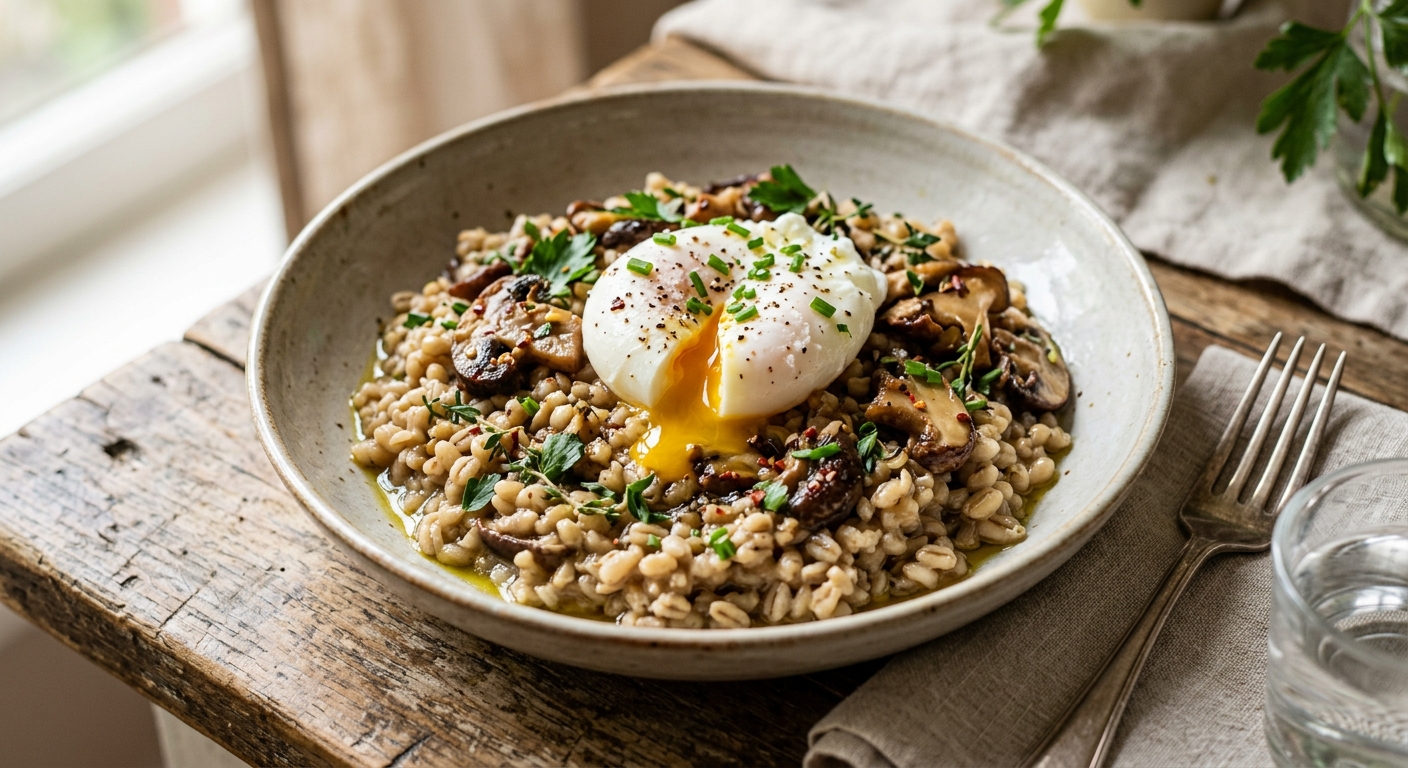
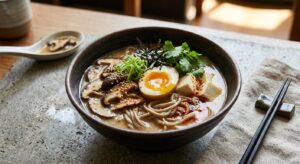
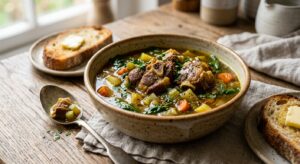
Few ingredients in the whole-food pantry carry the clinical weight of pearl barley. Multiple randomized controlled trials, including those reviewed by the FDA and EFSA, confirm that consuming at least 3 grams of beta-glucan daily produces a meaningful reduction in LDL cholesterol, typically in the range of 5 to 10 percent. A single generous serving of this bowl delivers approximately 3.2 grams of beta-glucan, putting you at or above that therapeutic threshold before you have even considered the rest of your day. Pair that with the immunomodulatory beta-glucans found in shiitake and cremini mushrooms, which activate macrophages and natural killer cells via Dectin-1 receptor binding, and you have a bowl that your cardiologist and your immunologist would both approve of.
The mushroom selection here is deliberate and nutritionally strategic. Shiitake mushrooms contribute lentinan, a well-researched polysaccharide with documented anti-tumor and antiviral activity, alongside meaningful amounts of ergothioneine, one of the few dietary antioxidants with its own dedicated cellular transporter (OCTN1), suggesting the body considers it unusually important. Cremini mushrooms add selenium and riboflavin, while a handful of dried porcini dissolved into the cooking liquid creates an umami-rich stock that eliminates any need for commercial broth. The poached egg on top is not garnish: it is the dish’s complete protein anchor, contributing all nine essential amino acids and a rich supply of choline for cognitive function.
What elevates this from nutritious to genuinely craveable is the layering of technique. The barley is toasted briefly in fat before liquid is added, developing nutty complexity the way a risotto builds flavor. A Parmesan rind simmered in the cooking liquid adds glutamates that make every grain taste more of itself. Fresh thyme, a splash of dry sherry, and a finish of cold butter pulled through at the end create a sauce consistency that coats each grain. This is the kind of bowl you will think about the next morning and make again that same week.
4
servings
Ingredients
- 300 gpearl barley, rinsed and drained
- 250 gcremini mushrooms, sliced 5mm thick
- 200 gfresh shiitake mushrooms, stems removed and caps sliced
- 20 gdried porcini mushrooms
- 1000 mlboiling water (for rehydrating porcini and cooking liquid)
- 3 tbspextra-virgin olive oil, divided
- 1 tbspunsalted butter, cold, cut into cubes
- 1 mediumyellow onion, finely diced
- 4 clovesgarlic, minced
- 2 sprigsfresh thyme
- 1 sprigfresh rosemary
- 60 mldry sherry or dry white wine
- 1 pieceParmesan rind (approximately 8cm), optional but highly recommended
- 30 gParmesan cheese, freshly grated, for serving
- 4 largeeggs, the freshest available
- 30 mlwhite wine vinegar (for poaching eggs)
- 1 tbspfresh flat-leaf parsley, finely chopped
- 1 tspsmoked paprika, for finishing
- —Colima Sea SaltMicroplastic Free Salt and cracked black pepper to taste
Instructions
Click on an item below to shop for the recommended items for this recipe on Amazon.
As an Amazon Associate, we earn from qualifying purchases.
- Place the dried porcini in a heatproof bowl and cover with 250ml of boiling water. Allow to steep for 15 minutes until fully rehydrated and the liquid is deep amber. Lift the porcini out with a slotted spoon, roughly chop them, and set aside. Pour the soaking liquid through a fine-mesh sieve lined with a piece of kitchen paper into a measuring jug, discarding the grit at the bottom. Top up with additional boiling water to reach 900ml total. Keep warm.
- Heat 2 tablespoons of olive oil in a large Dutch oven or heavy-based saucepan over medium-high heat until shimmering. Add the cremini and shiitake mushrooms in a single layer, resisting the urge to stir for the first 3 minutes. Season with a pinch of salt and continue to cook, stirring occasionally, for 5 to 6 minutes total until the mushrooms are deeply golden and any released moisture has evaporated. Stir in the chopped porcini for the final minute. Transfer all mushrooms to a bowl and set aside.
- Reduce heat to medium. Add the remaining 1 tablespoon of olive oil to the same pot. Add the diced onion and cook, stirring regularly, for 5 to 6 minutes until softened and translucent. Add the minced garlic, thyme sprigs, and rosemary sprig, and cook for 1 minute more until fragrant. Add the rinsed pearl barley and stir to coat every grain in the oil and aromatics. Toast for 2 minutes, stirring constantly, until the barley begins to smell faintly nutty.
- Pour in the dry sherry and stir vigorously, scraping up any fond from the base of the pot. Let the alcohol cook off for about 45 seconds. Add the warm porcini liquid and the Parmesan rind if using. Bring to a boil, then reduce heat to a gentle simmer. Cover partially with the lid and cook for 28 to 32 minutes, stirring every 8 minutes, until the barley is tender with a slight chew and has absorbed most but not all of the liquid. The consistency should be loose and porridge-like, not stiff.
- Fish out and discard the thyme sprigs, rosemary sprig, and Parmesan rind. Stir the reserved sauteed mushrooms back into the barley. Remove from heat and stir in the cold butter cubes until fully melted and the sauce turns glossy. Taste and adjust seasoning generously with salt and pepper. Cover to keep warm while you poach the eggs.
- To poach the eggs, fill a wide saucepan or deep saute pan with at least 8cm of water. Add the white wine vinegar and bring to a gentle simmer over medium heat, aiming for 90 to 95 degrees C. The water should show small lazy bubbles rising from the base, not a rolling boil. Crack each egg individually into a small ramekin or cup. Create a gentle whirlpool in the water with a spoon, then slide the first egg from the ramekin into the center of the swirl. Cook for 3 minutes for a fully set white with a runny, warm yolk. Lift out with a slotted spoon and rest briefly on a folded kitchen towel to drain. Repeat with remaining eggs, or poach two at a time once comfortable with the technique.
- Divide the barley and mushroom mixture between four warm bowls. Place one poached egg on top of each bowl. Finish with grated Parmesan, a scattering of fresh parsley, a pinch of smoked paprika, and a final crack of black pepper. Serve immediately.
- Begin with the porcini steep and mushroom saute as a deliberate front-loading step, since the slow cooker cannot develop the Maillard browning that defines the dish’s flavor. Place dried porcini in a bowl with 250ml boiling water and steep for 15 minutes. Strain through a sieve lined with kitchen paper into a jug, chop the porcini, and reserve liquid. Meanwhile, heat 2 tablespoons of olive oil in a large skillet over high heat. Add the cremini and shiitake mushrooms without stirring for 3 minutes, then cook a further 3 minutes, stirring, until deeply browned. Add chopped porcini, stir for 1 minute, then add garlic and stir 30 seconds. Deglaze with the dry sherry, scraping the pan, and cook 45 seconds. This entire skillet mixture goes directly into the slow cooker insert.
- Add the diced onion, rinsed pearl barley, thyme sprigs, rosemary sprig, and Parmesan rind to the slow cooker insert. Pour in the reserved porcini liquid plus enough additional boiling water to reach 850ml of total liquid. Add the remaining 1 tablespoon of olive oil. Stir everything together, ensuring the barley is fully submerged. Season lightly with salt, remembering that the liquid will concentrate as it cooks.
- Place the lid on the slow cooker and cook on High for 4 hours or on Low for 7 hours. Do not lift the lid during cooking, as each peek adds 20 to 30 minutes to effective cooking time. The barley is done when it is swollen, tender with a slight chew, and the mixture has a thick, spoonable consistency. If the mixture looks too dry after the cooking time, stir in 60 to 80ml of boiling water to loosen.
- Remove and discard the thyme sprigs, rosemary sprig, and Parmesan rind. Stir in the cold butter cubes until the sauce turns glossy. Taste and adjust seasoning. Switch the slow cooker to the Warm setting while you poach the eggs.
- To poach the eggs, fill a wide saucepan with at least 8cm of water, add the white wine vinegar, and bring to a gentle 90 to 95 degree C simmer. Crack each egg into a small ramekin. Create a gentle swirl in the water and slide the egg into the center. Cook for 3 minutes for a runny yolk. Remove with a slotted spoon and drain on kitchen paper. Repeat for all four eggs.
- Ladle the barley and mushroom mixture into warm bowls, top each with a poached egg, and finish with grated Parmesan, fresh parsley, smoked paprika, and cracked black pepper.
- Steep the dried porcini in 250ml boiling water for 15 minutes in a heatproof bowl. Strain through a fine sieve lined with kitchen paper into a jug, chop the porcini, and set both aside. Top up the strained porcini liquid with additional water to reach 750ml total (less than other methods, since pressure cooking loses no liquid to evaporation).
- Set the Instant Pot or electric pressure cooker to the Saute function on High (or use a stovetop pressure cooker over high heat with the lid off). Add 2 tablespoons of olive oil. Once hot, add cremini and shiitake mushrooms in as close to a single layer as possible. Cook without stirring for 3 minutes, then stir and cook a further 2 to 3 minutes until well browned. Add the chopped porcini and cook 1 minute. Add the diced onion and cook 3 minutes, stirring, until slightly softened. Add the minced garlic and stir 30 seconds. Pour in the dry sherry and scrape up all the fond from the bottom of the pot thoroughly, as any stuck bits will trigger a burn warning during pressure cooking. Cook 45 seconds until the alcohol smell fades.
- Add the rinsed pearl barley, 750ml of the porcini-infused liquid, thyme sprigs, rosemary sprig, Parmesan rind, remaining 1 tablespoon of olive oil, and a generous pinch of salt. Stir well to combine. Cancel the Saute function. Secure the lid, ensure the pressure valve is set to Sealing, and set to Manual or Pressure Cook on High Pressure for 20 minutes.
- When the cooking time ends, allow the pressure to release naturally for at least 15 minutes before carefully turning the valve to Venting to release any remaining steam. Open the lid. The barley will be very tender and the mixture thick. If it appears too loose, switch back to Saute on Low and stir for 2 to 3 minutes to reduce. If too thick, stir in 60ml of warm water.
- Remove and discard the thyme sprigs, rosemary sprig, and Parmesan rind. Stir in the cold butter cubes until the sauce turns glossy and emulsified. Taste and adjust seasoning. While the barley rests on Warm, poach the eggs in a separate wide saucepan filled with at least 8cm of water and the white wine vinegar, brought to a 90 to 95 degree C simmer. Crack each egg into a ramekin and slide gently into the swirling water. Poach 3 minutes per egg for a runny yolk, remove with a slotted spoon, and drain on kitchen paper.
- Divide the barley and mushroom mixture into warm bowls. Crown each with a poached egg, grated Parmesan, fresh parsley, smoked paprika, and cracked black pepper. Serve immediately.
- Preheat your oven to 180C (350F / Gas Mark 4). Place the dried porcini in a heatproof bowl with 250ml boiling water and steep 15 minutes. Strain through a kitchen-paper-lined sieve into a jug, chop the porcini, and reserve. Top up the porcini liquid with additional boiling water to reach 900ml total.
- Place a Dutch oven or large oven-safe heavy pot with a tight-fitting lid over medium-high heat on the stovetop. Add 2 tablespoons of olive oil and heat until shimmering. Brown the cremini and shiitake mushrooms in batches if necessary, cooking without stirring for 3 minutes before turning, for a total of 5 to 6 minutes per batch. A deep, dark sear on the mushrooms is especially important here because the oven will not develop additional browning. Remove all mushrooms to a bowl. Add the chopped porcini to the hot pot for 1 minute, then remove and add to the mushroom bowl.
- Reduce the stovetop heat to medium. Add the remaining 1 tablespoon of olive oil to the Dutch oven. Cook the diced onion for 5 minutes until soft. Add garlic, thyme sprigs, and rosemary sprig and stir for 1 minute. Add the rinsed pearl barley and toast, stirring constantly, for 2 to 3 minutes until the grains smell nutty and begin to look slightly translucent at the edges. Pour in the dry sherry and stir 45 seconds to cook off the alcohol.
- Return all sauteed mushrooms to the pot. Pour in the 900ml of warm porcini liquid and add the Parmesan rind. Bring to a boil, then immediately remove from the stovetop heat. Season generously with salt, stir once, and cover the Dutch oven tightly with its lid. If the lid is not a snug fit, place a sheet of foil over the pot before placing the lid on top to create a proper seal.
- Transfer the covered Dutch oven to the preheated oven. Bake for 50 to 55 minutes without opening the lid. After 50 minutes, remove the lid and test the barley: it should be fully tender with a light chew and most of the liquid absorbed, with the top layer of grains looking slightly toasted and separate. If the liquid is not fully absorbed, return to the oven uncovered for 5 minutes more.
- Remove from the oven. Discard the thyme sprigs, rosemary sprig, and Parmesan rind. Stir in the cold butter cubes and fluff the barley gently with a fork so the grains remain distinct. Taste and adjust seasoning. Let the Dutch oven rest covered with a clean kitchen towel for 5 minutes while you poach the eggs on the stovetop: bring a wide saucepan of water with the white wine vinegar to a 90 to 95 degree C simmer, swirl the water, and slide each egg from a ramekin into the center. Poach 3 minutes per egg for a runny yolk, then drain on kitchen paper.
- Spoon the baked barley pilaf into warm bowls, ensuring each serving gets a generous portion of mushrooms. Place a poached egg on top and finish with grated Parmesan, fresh parsley, smoked paprika, and cracked black pepper.
Nutrition Breakdown
Per 1 serving (makes 4)
Vitamins & Minerals
% Daily Value based on a 2,000 calorie diet (FDA reference)
🧬 Essential Amino Acids
% of recommended daily intake (RDA) per serving
🛡 Antioxidant Profile
The Nutrition Science
The defining nutritional feature of this dish is its beta-glucan content, a viscous soluble fiber found in the cell walls of barley and oats. When beta-glucan dissolves in the aqueous environment of the gut, it forms a gel that slows gastric emptying, blunts the postprandial glucose and insulin response, and, critically, traps bile acids in the small intestine and escorts them out of the body via the stool. The liver must then synthesize new bile acids from circulating LDL cholesterol to replace them, directly lowering serum LDL. The FDA has authorized a qualified health claim for barley beta-glucan and heart disease risk reduction since 2006, and EFSA followed with a formal positive opinion in 2011. The 3.2 grams of beta-glucan per serving in this recipe meets the minimum effective dose validated in clinical trials.
Mushrooms contribute a second, structurally distinct class of beta-glucans. Shiitake lentinan and the (1,3)/(1,6)-beta-D-glucans from cremini activate pattern recognition receptors on immune cells, particularly Dectin-1 on macrophages, dendritic cells, and neutrophils. This triggers a cascade that enhances phagocytosis, cytokine production, and natural killer cell activity. Separately, ergothioneine, which is biosynthesized only by fungi and certain bacteria and must be obtained entirely from diet, has attracted significant research attention since the discovery of its dedicated transporter OCTN1. Tissues with the highest OCTN1 expression, including the liver, kidneys, bone marrow, and eyes, accumulate ergothioneine selectively, suggesting a protective role under conditions of oxidative stress. One large epidemiological study found that plasma ergothioneine levels were significantly inversely associated with cardiovascular disease mortality.
The poached egg completes the dish’s nutritional architecture in two important ways. First, its yolk provides approximately 147mg of choline per egg, contributing meaningfully toward the Adequate Intake of 425 to 550mg per day that most adults do not reach from diet alone. Choline is the precursor to acetylcholine, the primary neurotransmitter for memory and muscle control, and is essential for hepatic fat export via VLDL particles. Second, the fat in the egg yolk, alongside the olive oil in the recipe, converts the dish’s fat-soluble compounds including the lutein, zeaxanthin, vitamin E, and fat-soluble B vitamins from a theoretical presence to an absorbed reality, since these compounds require dietary fat for micellar solubilization and uptake through the intestinal epithelium.
Pro Tips
- Do not skip the porcini soaking step even when pressed for time: those 15 minutes build a free, intensely flavored liquid that does the work of a commercial stock and contributes additional beta-glucan and B vitamins from the dried fungi.
- For the sharpest poached egg whites, use the freshest eggs you can find (ideally less than 7 days old) since the whites of older eggs spread more in the water; storing them in the coldest part of the refrigerator and using them straight from cold also helps the white set before it disperses.
- If serving this for a dinner party, you can poach the eggs up to 2 hours ahead: transfer them directly from the poaching water into a bowl of cold water, then reheat for exactly 60 seconds in simmering water when ready to serve.
This hits exactly right. Beta-glucan from barley has solid LDL-lowering data, and pairing it with mushroom polysaccharides (especially if you’re using shiitake or oyster) creates real synergy for both lipid and immune markers. I’ve watched patients reverse early metabolic dysfunction with bowls basically like this, though most don’t realize they’re essentially taking a functional medicine approach to lunch. The poached egg adds choline and lutein without the oxidized cholesterol you’d get from a scramble, which matters more than people think. This is the kind of recipe I actually reference when patients ask what “anti-inflammatory eating” looks like in practice.
This is exactly the kind of bowl I find myself recommending in my yoga and cooking classes, Nick, especially for students managing inflammation and cholesterol. I’m curious whether you’re suggesting specific mushroom varieties amplify the beta-glucan effect, or if it’s more about the combined polysaccharide load. I always add a pinch of turmeric and black pepper to my barley preparations, not just for the anti-inflammatory turmeric but because the piperine actually enhances absorption of so many of these immune compounds we’re talking about. The poached egg yolk is such a grounded touch too, brings in the choline and fat-soluble vitamins that help your body actually utilize all those
Love the synergy angle here, Nick. I’m curious how this bowl fits into training periodization though – pearl barley sits around 28g carbs per cooked cup, which is solid for recovery days, but I’m wondering if the beta-glucan’s slower digestion makes it less ideal for immediate post-ride refueling when I need faster glycogen repletion. Have you tracked any glycemic response data with your patients, or does the fiber content actually work in favor of steadier blood sugar during endurance training windows? Might experiment with this on my easy recovery days instead of my typical white rice carb-load.