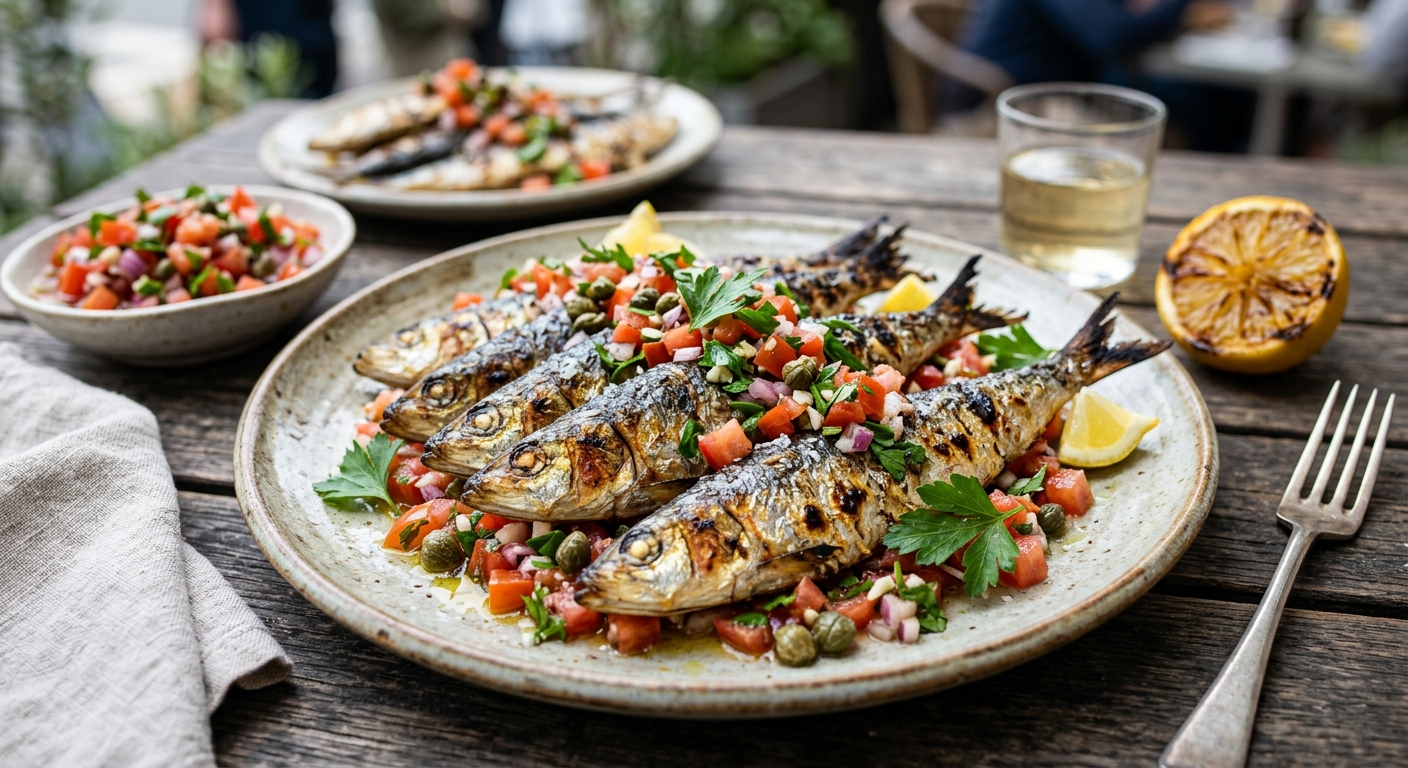
Sardines are one of the most nutritionally dense foods on the planet, yet they remain wildly underrated in the modern kitchen. A single 100g serving of sardines delivers more calcium than a glass of milk, more omega-3s than most salmon portions, and a full spectrum of fat-soluble vitamins that many people spend hundreds of dollars a year supplementing. Paired with a fresh tomato salsa loaded with lycopene, quercetin, and vitamin C, this dish is not just good for you on paper, it is the kind of meal that makes you feel genuinely energised within hours of eating it.
The tomato salsa here is not an afterthought. Roma tomatoes, red onion, fresh parsley, capers, and a generous pour of extra-virgin olive oil create a sauce that is simultaneously acidic, briny, herbal, and rich. The acid from the tomatoes and a squeeze of lemon brightens the sardines and cuts through their natural oiliness, while the capers echo the sea-forward flavour of the fish itself. Every element is doing nutritional and culinary work at the same time, which is the Calibrated Cuisine philosophy in a single pan.
Whether you cook these on a stovetop grill pan for maximum char, braise them low and slow for fall-apart tenderness, or use a pressure cooker to produce silky, bone-softened fish that rivals tinned sardines from the finest canneries in Portugal, this recipe adapts beautifully to your kitchen and your schedule. The oven method, roasting the sardines over a bed of sliced tomatoes and aromatics, produces a deeply caramelised, almost confit-like result that is spectacular for feeding a crowd. Choose your method, keep the quality of your fish high, and you will have one of the most anti-inflammatory meals in your repertoire on the table in under an hour.
4
servings
Ingredients
- 800 gwhole fresh sardines (approximately 12 to 16 fish), cleaned and scaled
- 400 gRoma tomatoes, finely diced (about 4 medium)
- 1 mediumred onion, finely diced
- 3 clovesgarlic, minced
- 30 gfresh flat-leaf parsley, finely chopped
- 2 tbspcapers, drained and roughly chopped
- 4 tbspextra-virgin olive oil, divided
- 2 tbspfresh lemon juice (about 1 lemon)
- 1 tsplemon zest
- 1 tspsmoked paprika
- 0.5 tspdried chilli flakes (optional)
- 1 tbspred wine vinegar
- —Colima Sea SaltMicroplastic Free Salt and cracked black pepper to taste
- 4 slicescrusty sourdough bread, to serve (optional)
- 1 wholelemon, cut into wedges, to serve
Instructions
Click on an item below to shop for the recommended items for this recipe on Amazon.
As an Amazon Associate, we earn from qualifying purchases.
- Make the salsa first so the flavours have time to marry. Combine the diced Roma tomatoes, red onion, minced garlic, chopped parsley, and capers in a medium bowl. Add 2 tablespoons of the olive oil, the lemon juice, lemon zest, and red wine vinegar. Season generously with fine sea salt and cracked black pepper. Toss well and set aside at room temperature for at least 15 minutes.
- Pat the cleaned sardines very dry on both sides with paper towels. This is critical for achieving a sear rather than a steam. Rub each fish lightly with the remaining 2 tablespoons of olive oil and season all over, including inside the cavity, with salt, pepper, and the smoked paprika.
- Place your cast iron grill pan over high heat for at least 3 minutes until it is smoking hot. You should see a faint wisp of smoke rising from the surface. Do not add extra oil to the pan at this stage.
- Lay the sardines in the pan in a single layer, working in two batches if necessary to avoid crowding. Cook undisturbed for 3 to 4 minutes until the skin is deeply caramelised and releases cleanly from the ridges. Use a thin fish spatula to flip each sardine gently and cook for a further 2 to 3 minutes on the second side. The flesh should be opaque throughout and the skin blistered and crisp.
- Transfer the cooked sardines to a warm serving platter. Spoon the tomato salsa generously over the top, add chilli flakes if using, and serve immediately with lemon wedges and crusty sourdough to soak up the juices.
- Build the braising salsa directly in the slow cooker insert. Combine the diced Roma tomatoes, red onion, minced garlic, capers, smoked paprika, red wine vinegar, chilli flakes if using, and 3 tablespoons of the olive oil. Season generously with salt and pepper and stir to combine. Spread the mixture in an even layer across the bottom of the insert.
- Score each cleaned sardine twice on each side with a sharp knife, cutting through the skin and about 3mm into the flesh. This allows the braising liquid to penetrate the fish and helps the bones soften more evenly. Season the sardines inside and out with salt and pepper, then nestle them in a single overlapping layer on top of the tomato base. Tuck them in so they are partially submerged in the salsa.
- Lay a sheet of parchment paper directly on top of the sardines before fitting the lid. This cartouche prevents excess condensation from dripping back onto the fish and diluting the salsa, resulting in a more concentrated, flavourful sauce.
- Cook on Low for 2 to 2.5 hours. The sardines are done when the flesh is completely opaque, the skin has melded into the sauce, and the bones yield easily when pressed with a fork. Resist the urge to lift the lid during cooking.
- Just before serving, drizzle with the remaining tablespoon of olive oil, scatter the fresh parsley over the top, and add the lemon juice and lemon zest. The parsley and lemon are added at the end here because the long cook time would destroy their brightness. Serve directly from the insert with crusty sourdough to scoop up the enriched tomato braise.
- Select the Saute function on your Instant Pot (or heat a stovetop pressure cooker over medium heat). Add 2 tablespoons of the olive oil and cook the diced red onion for 3 minutes until softened. Add the minced garlic and smoked paprika and cook for 1 minute more until fragrant. Press Cancel to end the Saute cycle.
- Add the diced Roma tomatoes, capers, red wine vinegar, chilli flakes if using, and 60ml of water to the pot. Season with salt and pepper and stir to combine, scraping up any bits from the base of the pot to prevent a burn warning.
- Score each sardine twice on each side with a sharp knife. Season the fish inside and out with salt and pepper, then arrange them in an even layer over the tomato mixture, folding them slightly if needed to fit in a single layer.
- Seal the lid and set the valve to the Sealing position. Cook on Manual High Pressure for 8 minutes. Once cooking is complete, allow a natural pressure release for 5 minutes, then carefully switch the valve to Venting to release any remaining steam.
- Open the lid and check that the sardines are cooked through and the bones feel soft. If the sauce seems watery, select the Saute function and simmer uncovered for 2 to 3 minutes to reduce. Finish with the remaining tablespoon of olive oil, the fresh lemon juice, lemon zest, and all of the fresh parsley. Serve with lemon wedges and crusty sourdough.
- Preheat your oven to 220C (425F) with a rack positioned in the upper third. Line a large rimmed baking sheet with parchment paper and set a wire rack inside it. Preheating the oven fully before the fish goes in is essential for achieving caramelised skin rather than steamed skin.
- Prepare the tomato base by tossing the diced Roma tomatoes, red onion, minced garlic, capers, red wine vinegar, chilli flakes if using, and 2 tablespoons of the olive oil together in a bowl. Season with salt and pepper, then spread the tomato mixture in an even layer directly on the parchment-lined baking sheet beneath the wire rack so it roasts in the dripping juices as the fish cooks above.
- Pat the cleaned sardines completely dry with paper towels. Combine the remaining 2 tablespoons of olive oil, smoked paprika, lemon zest, salt, and pepper in a small bowl. Rub this mixture all over each sardine, coating both sides and the interior cavity. Arrange the seasoned sardines on the wire rack in a single layer with space between each fish.
- Roast on the upper rack for 18 to 22 minutes, until the skin is blistered and beginning to char at the edges, the flesh is opaque all the way through, and the tomato mixture below has concentrated and caramelised around the edges. There is no need to flip the fish.
- Remove from the oven. Stir the lemon juice and fresh parsley into the roasted tomato mixture on the pan, scraping up any caramelised bits. Transfer the sardines to a serving platter and spoon the roasted tomato salsa over the top. Serve immediately with lemon wedges and crusty sourdough.
Nutrition Breakdown
Per 1 serving (makes 4)
Vitamins & Minerals
% Daily Value based on a 2,000 calorie diet (FDA reference)
🧬 Essential Amino Acids
% of recommended daily intake (RDA) per serving
🛡 Antioxidant Profile
The Nutrition Science
The anti-inflammatory credentials of this dish rest on a convergence of two distinct molecular pathways. Sardines are among the richest dietary sources of eicosapentaenoic acid (EPA) and docosahexaenoic acid (DHA), the long-chain omega-3 fatty acids that serve as precursors to a family of signalling molecules called resolvins and protectins. These compounds actively resolve inflammation at the cellular level rather than simply suppressing it, a distinction with profound implications for chronic disease prevention. A single serving of this recipe delivers approximately 2,850mg of combined EPA and DHA, well exceeding the 500mg to 1,000mg threshold associated with measurable reductions in circulating inflammatory markers including C-reactive protein and interleukin-6.
The calcium story here is equally compelling, and it challenges a widespread nutritional assumption. The calcium in sardines is found primarily in the edible bones, and it exists in a highly bioavailable hydroxyapatite matrix, the same crystalline form as human bone tissue. Bioavailability studies suggest hydroxyapatite calcium is absorbed at rates comparable to or exceeding dairy calcium, at around 27 to 34% absorption efficiency. When bones are softened through pressure cooking or slow braising as in two of the methods here, they become fully palatable and nutritionally identical in calcium content to whole-bone preparations. The addition of vitamin D from the sardines themselves further amplifies calcium absorption, since vitamin D is required to synthesise the intestinal transport protein calbindin that physically moves calcium across the gut wall.
The tomato salsa is doing sophisticated nutritional work beyond its role as a flavour counterpoint. Lycopene, the carotenoid responsible for the red pigment in tomatoes, is a fat-soluble compound that is both more bioavailable from cooked tomatoes than raw, and dramatically better absorbed in the presence of dietary fat. The olive oil in this recipe is not simply a cooking medium, it is a lycopene delivery system. Research published in the American Journal of Clinical Nutrition found that lycopene absorption from tomatoes consumed with olive oil was up to four times greater than from tomatoes consumed alone. With approximately 8.4mg of lycopene per serving and 22g of fat from olive oil and sardines, this dish is structured to maximise the anti-inflammatory, cardioprotective benefits of this underappreciated carotenoid.
Pro Tips
- Ask your fishmonger to clean and scale the sardines for you, but inspect each one before cooking. Fresh sardines should have bright, clear eyes, vivid red or pink gills, and flesh that springs back firmly when pressed. Avoid any with a strong ammonia smell, as this indicates breakdown of muscle proteins and means the fish is past its best.
- For the stovetop and oven methods, achieving truly dry skin before cooking is the single most important factor in getting crispy rather than steamed sardines. Pat the fish dry, season them, and then leave them uncovered on a rack in the refrigerator for 20 to 30 minutes before cooking. This air-drying step draws residual moisture from the skin surface and makes a dramatic difference to the final texture.
- The pressure cooker and slow cooker methods transform the fine pin bones of the sardines into a soft, edible, calcium-rich element of the dish. If you or your guests are still bone-averse after cooking, serve with small forks and demonstrate that the bones dissolve almost entirely under light pressure. For children especially, the braised methods are the best introduction to whole sardines.
This is exactly the kind of practical pairing I love to see, and the tomato salsa detail is what really caught my eye. Most people focus on sardines for the omega-3s, but fresh tomatoes add lycopene plus quercetin from the herbs, which actually work synergistically with those polyunsaturated fats to reduce oxidative stress in your cells. I’ve found that cooking tomatoes briefly (like in a salsa) preserves more of the heat-sensitive flavonoids compared to long cooking, so you’re getting the anti-inflammatory benefits on multiple fronts here. Have you noticed whether your readers prefer canned or fresh sardines for this, or does it come down to convenience
ohhh this is such a good point about the brief cooking time preserving flavonoids, ive definitely noticed that in my own race fueling experiments. ive been using fresh tomato salsa on grilled fish the day before long runs and it seems to sit better than heavily cooked versions, which i always figured was just texture but it might actually be the inflammatory load thing youre talking about. as for sardines, ive switched to mostly fresh when im not in a race cycle because theyre so nutrient dense right before a heavy training block, but honestly canned ones have saved me on travel days when i need quick omega-3s without the fuss – convenience wins when youre logging serious miles and dont
yo this sounds amazing, and i love that youre highlighting the lycopene angle pete – most people just think fish and stop there. quick question though on the salsa recipe though, do you know the net carb count on it? im guessing fresh tomatoes are pretty moderate but if theres any added sugars or higher carb ingredients sneaking in id wanna know before i make it. either way sardines are such an underrated food, theyre basically the perfect whole food – omega 3s, vitamin d, and youre eating the bones so thats calcium locked in. been eating them like 2-3x a week since i ditched my blood sugar issues and theyre honestly a game changer
okay sardines are legit underrated! love that youre hitting them 2-3x weekly, thats solid for that omega-3 and micronutrient density. on the carb question, fresh tomatoes are pretty moderate carb-wise, maybe 5-6g net per medium tomato depending on the salsa ratio, but yeah def check if theres any added sugar in the recipe since some versions sneak it in. honestly though for post-WOD recovery i might actually want those carbs to replenish glycogen after a hard session paired with that complete protein from the sardines, but if youre dialing in blood sugar that makes total sense! the anti-inflammatory combo of
Love this take, Carla! You’re spot on about the glycogen replenishment angle, and honestly that’s where the tomato carbs shine nutritionally instead of being a liability. The quercetin in fresh tomatoes actually pairs really well with that recovery window too, since it can help modulate post-exercise inflammation without spiking things the wrong way. I’ve noticed clients doing CrossFit-style workouts see better recovery metrics when they get that tomato lycopene with their protein vs. isolating the protein alone. The sugar-sneaking issue is real though, so I always recommend checking if there’s added honey or agave in store-bought versions, since that’s where the hidden carbs