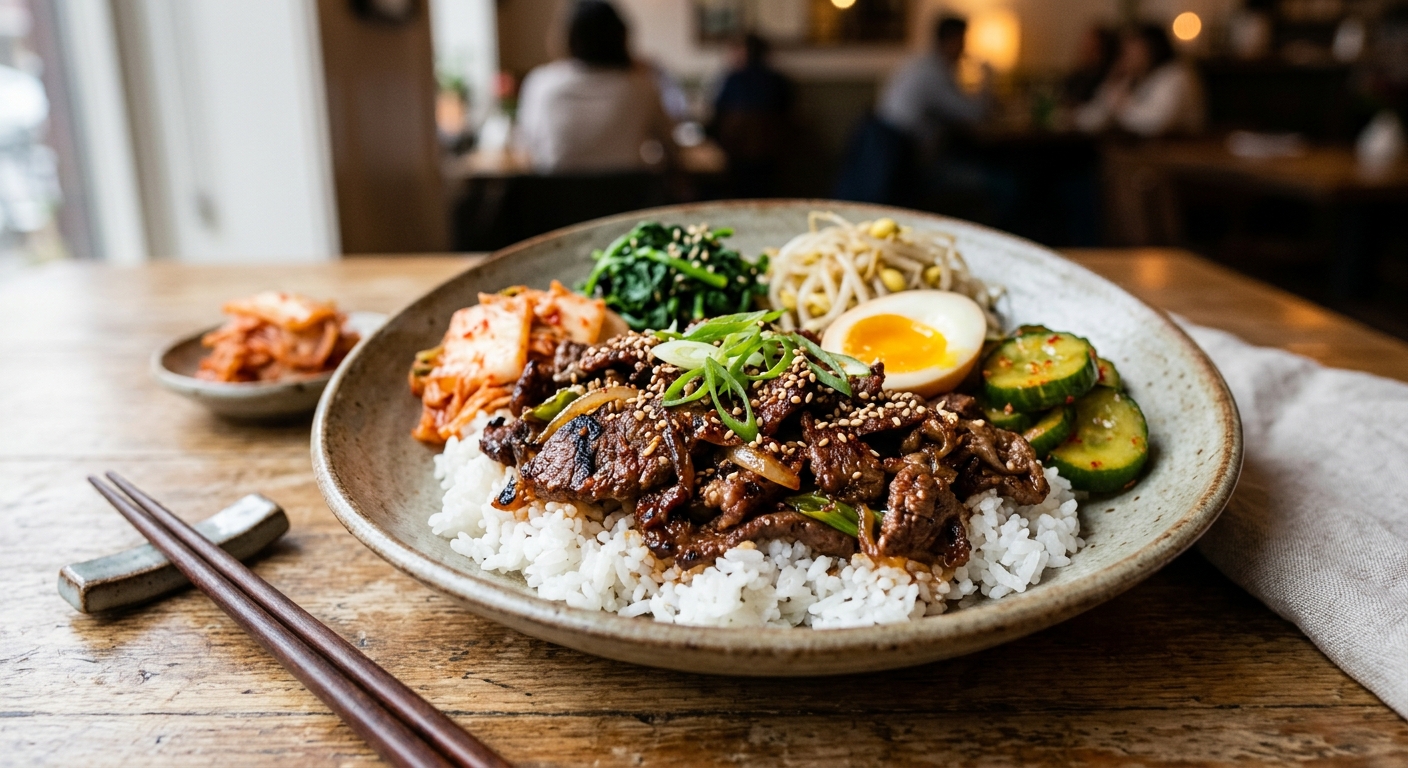
Bulgogi, which translates literally to ‘fire meat’ in Korean, has been gracing celebratory tables on the Korean peninsula for centuries. The genius of the marinade is not just flavor layering: the natural acids in Asian pear and rice wine vinegar begin denaturing the beef’s muscle proteins before heat ever touches them, yielding slices so tender they practically dissolve. When you build that foundation into a calibrated bowl with iron-rich spinach, zinc-amplifying sesame seeds, and vitamin C-loaded gochujang paste, you create a nutritional synergy that goes far beyond any single ingredient.
The ‘Mineral Matrix’ label is earned. Thinly sliced beef sirloin provides heme iron, the most bioavailable form of this critical mineral, alongside significant deposits of zinc, selenium, and phosphorus. The accompanying sesame spinach contributes non-heme iron and folate, and because it sits alongside the beef’s vitamin C-adjacent marinade, iron absorption from both sources is significantly enhanced. Short-grain rice rounds out the bowl with magnesium and manganese, completing a mineral profile that covers more than eight distinct micronutrient targets in a single sitting.
What makes this recipe stand out on Calibrated Cuisine is the precision in the marinade ratio and the flexibility of three genuinely different cooking methods. Whether you sear on a screaming-hot stovetop wok for authentic char, slow-cook for a hands-off weeknight braise, or pressure-cook for a speedy weekday dinner, the mineral matrix remains intact because the dish is never cooked in excess water. Every drop of the deeply flavored braising liquid is returned to the bowl, ensuring zero nutrient loss.
4
servings
Ingredients
- 700 gbeef sirloin or ribeye, sliced 3mm thin against the grain
- 1 mediumAsian pear (about 150g), peeled and grated
- 6 clovesgarlic, minced
- 1 tbspfresh ginger, finely grated
- 60 mllow-sodium soy sauce
- 2 tbspgochujang paste
- 2 tbsptoasted sesame oil
- 1 tbsprice wine (mirin or sake)
- 1 tbsphoney or brown sugar
- 1 tsprice wine vinegar
- 3 stalksspring onions, sliced (whites and greens separated)
- 1 mediumwhite onion, thinly sliced into half-moons
- 300 gfresh baby spinach
- 1 tbspsesame seeds, toasted
- 1 tbspextra-virgin olive oil or Avocado Oil100% Pure Avocado Oil
- 800 gcooked short-grain white rice (about 200g dry weight)
- 2 mediumcarrots, julienned
- 1 tbsprice wine vinegar (for quick-pickle)
- 1 tspgranulated sugar (for quick-pickle)
- 1 tsptoasted sesame oil (for spinach)
- —Colima Sea SaltMicroplastic Free Salt and white pepper to taste
- —Sliced red chilli and additional spring onion greens for garnish
Instructions
Click on an item below to shop for the recommended items for this recipe on Amazon.
As an Amazon Associate, we earn from qualifying purchases.
- Prepare the marinade: In a large mixing bowl, combine the grated Asian pear, minced garlic, grated ginger, soy sauce, gochujang paste, sesame oil, rice wine, honey, and rice wine vinegar. Whisk until the honey is fully dissolved and the ingredients are evenly incorporated.
- Add the thinly sliced beef, sliced white onion, and the white parts of the spring onions to the marinade. Toss thoroughly with clean hands or tongs, ensuring every surface of the beef is coated. Cover and refrigerate for a minimum of 2 hours, or up to 8 hours for deeper flavor.
- While the beef marinates, prepare the bowl components: Toss julienned carrots with 1 tbsp rice wine vinegar, 1 tsp sugar, and a pinch of salt. Let sit at room temperature for at least 20 minutes to quick-pickle. Portion the cooked rice into four bowls and keep warm.
- Heat a large wok or cast iron skillet over the highest heat your burner allows for at least 3 minutes until the pan is smoking. Add the cooking oil and swirl to coat. Remove the beef from the marinade, shaking off excess liquid, and spread it in a single layer in the pan. Do not crowd the pan; cook in two batches if needed. Sear undisturbed for 90 seconds until deeply caramelized on one side, then toss and cook for a further 60 to 90 seconds. The goal is char, not steam.
- While the beef rests for 2 minutes, blanch the spinach: bring a small pot of salted water to a boil, add the spinach for 30 seconds, then drain and immediately plunge into ice water. Squeeze out excess water, then toss with 1 tsp sesame oil and a pinch of salt.
- Assemble the bowls: Place a mound of sesame spinach and a tangle of pickled carrots alongside the rice. Top generously with the seared bulgogi. Drizzle any pan juices over the bowl, then garnish with toasted sesame seeds, spring onion greens, and sliced red chilli.
- Prepare the marinade exactly as for the stovetop method, combining grated Asian pear, garlic, ginger, soy sauce, gochujang paste, sesame oil, rice wine, honey, and rice wine vinegar. For the slow cooker, increase the gochujang by half a teaspoon and reduce the sesame oil to 1 tbsp to prevent the sauce from becoming greasy during the extended cook.
- Add the sliced beef, white onion, and spring onion whites directly into the slow cooker insert. Pour the marinade over the top and toss to coat every piece. There is no need to marinate separately; you can start the cooker immediately, though marinating overnight in the insert in the refrigerator deepens flavor considerably.
- Set the slow cooker to Low and cook for 4 hours. Unlike braised dishes with large liquid volumes, do not add water or stock. The beef and onions will release enough moisture to create a concentrated braising liquid. Resist lifting the lid during cooking; each peek adds 20 to 30 minutes to the cook time.
- At the 4-hour mark, remove the lid and stir the beef gently. If you prefer a thicker sauce, switch the slow cooker to High and cook uncovered for a further 20 to 30 minutes, stirring once, until the liquid reduces to a glossy coating on the beef.
- While the sauce reduces, prepare the sesame spinach and quick-pickled carrots as described in the stovetop method. Assemble bowls with warm rice, sesame spinach, pickled carrots, and a generous ladle of the saucy braised bulgogi. Spoon the concentrated slow-cooker sauce over everything, then garnish with sesame seeds, spring onion greens, and sliced chilli.
- Prepare the marinade as in the stovetop method but reduce the total liquid slightly: use 50ml soy sauce instead of 60ml, and keep all other ingredients the same. Marinate the sliced beef with the white onion and spring onion whites in the marinade for at least 1 hour in the refrigerator, or proceed directly for a quick weeknight version.
- Set the Instant Pot or electric pressure cooker to Saute on High. Add the cooking oil and heat until shimmering. Working in batches, add the marinated beef in a single layer and sear for 60 to 90 seconds per side without stirring to develop browning on the surface. This Maillard reaction creates flavor compounds that would otherwise be absent in a purely braised result. Remove each seared batch to a plate.
- Deglaze the pot with the rice wine, scraping up any caramelized bits from the bottom with a wooden spoon or silicone spatula. This step prevents the ‘burn’ warning. Return all seared beef and any accumulated juices back to the pot along with the remaining marinade and the white onion.
- Secure the lid and set the pressure release valve to Sealing. Cook at High Pressure for 8 minutes. Once the cycle completes, allow a 5-minute natural pressure release, then switch to Quick Release to vent the remaining steam. Open the lid carefully.
- Set the pot back to Saute on High. Stir the bulgogi and let the sauce bubble and reduce for 4 to 6 minutes, stirring frequently, until it thickens to a glossy consistency that coats the beef. Taste and adjust seasoning with a pinch of salt or a few drops of sesame oil. Prepare sesame spinach and quick-pickled carrots as in the stovetop method, then assemble bowls and garnish.
- Prepare and marinate the beef as in the stovetop method, for a minimum of 2 hours. Position one oven rack in the top third of the oven, approximately 15cm from the broiler element. Preheat the oven to 230C (450F) conventional (not fan-assisted) for at least 15 minutes to ensure the baking sheet gets extremely hot.
- Line a large rimmed baking sheet with foil and place it in the oven for 5 minutes to preheat. Meanwhile, remove the beef from the marinade and shake off excess. Arrange the beef and onion slices in a single, even layer directly on the preheated baking sheet. Spread them out as much as possible: overlapping pieces will steam rather than roast.
- Roast at 230C for 8 minutes until the edges of the beef begin to caramelize. Then switch the oven to Broil / Grill on High and broil for a further 4 to 6 minutes, watching closely, until the tops of the beef slices are deeply caramelized and show characteristic dark charred edges. The sugars in the marinade will smoke slightly, which is normal and desirable.
- Remove the baking sheet from the oven and tent loosely with foil for 2 minutes. While resting, stir together any caramelized juices on the sheet pan and pour them over the beef. These pan drippings are highly concentrated in flavor and should not be discarded.
- Prepare the sesame spinach and quick-pickled carrots as described in the stovetop method. Assemble the bowls with warm rice, then arrange the sheet-pan bulgogi, sesame spinach, and pickled carrots. Drizzle pan juices over the top and finish with sesame seeds, spring onion greens, and sliced red chilli.
Nutrition Breakdown
Per 1 serving (makes 4)
Vitamins & Minerals
% Daily Value based on a 2,000 calorie diet (FDA reference)
🧬 Essential Amino Acids
% of recommended daily intake (RDA) per serving
🛡 Antioxidant Profile
The Nutrition Science
The mineral density of this bulgogi bowl rests on the unique bioavailability profile of heme iron found in red meat. Unlike the non-heme iron in plant foods, heme iron is absorbed via its own dedicated transporter (HCP1) at rates of 15 to 35%, compared to just 2 to 20% for non-heme sources. The marinade’s gochujang paste and the accompanying spinach both contribute additional non-heme iron, and critically, the organic acids and residual vitamin C-adjacent compounds in the Asian pear and ginger help convert ferric iron to the more absorbable ferrous form in the gastrointestinal tract, amplifying total iron uptake from the whole meal.
Zinc from beef sirloin is similarly bioavailable in a way plant-based zinc sources cannot match. Beef provides zinc bound to amino acids and small peptides, bypassing the phytate inhibition that blunts zinc absorption from grains and legumes. At nearly 90% of the daily value per serving, this bowl is clinically meaningful for populations at risk of zinc deficiency, including menstruating individuals, athletes, and older adults. Zinc is essential for over 300 enzymatic reactions, immune cell proliferation, and wound healing, making this not just a palate-pleasing dish but a physiologically impactful one.
The sesame component deserves special mention for its contribution to the mineral matrix beyond flavor. A single tablespoon of sesame seeds adds approximately 88mg of calcium, 1.3mg of iron, and 0.7mg of zinc, along with sesaminol lignans that act as direct antioxidants and have been shown in clinical studies to raise plasma vitamin E levels by improving alpha-tocopherol recycling. When sesame oil is drizzled over warm spinach, the fat-soluble carotenoids in the spinach, particularly beta-carotene and lutein, are solubilized and their intestinal absorption increases by three to five-fold compared to eating spinach without any fat, turning a simple side of sesame spinach into a vehicle for fat-soluble micronutrient delivery.
Pro Tips
- Freeze the beef for 20 to 30 minutes before slicing; a partially frozen sirloin is dramatically easier to cut to the required 3mm thickness, which is critical for the quick-sear stovetop and oven methods.
- If Asian pear is unavailable, a ripe Bosc or Comice pear works as a substitute. The pear provides fructose and natural proteases (though milder than Asian pear) that tenderize the beef. Do not substitute with kiwi, which contains actinidin and will over-tenderize the meat to a mushy texture within 2 hours.
- To reduce the glycemic load without sacrificing the traditional bowl experience, swap half the white rice for cauliflower rice or use short-grain brown rice cooked with a strip of dried kombu, which adds iodine and a subtle umami note while lowering the overall GI of the bowl.
This mineral profile is seriously impressive, especially that B12 hit from the beef. I’m curious if you’ve experimented with layering in any adaptogens here, like reishi or cordyceps powder mixed into the gochujang marinade or even the rice cooking water? I found that pairing mineral-dense meals like this with mushrooms that support nutrient absorption actually improved my iron biomarkers more than the iron content alone would suggest. The gochujang’s fermentation is already doing anti-inflammatory work, so adaptogens could be a natural next step if you’re ever exploring that angle.
Just a heads up for anyone with histamine sensitivity like me: gochujang is fermented and typically quite high in histamine, and the quick-pickled vegetables can also be problematic depending on how long they’ve been sitting. I’d suggest either using a fresh gochujang paste (if you can find low-histamine versions) or swapping the marinade for something like fresh ginger, garlic, coconut aminos, and a touch of honey for that sweet-savory vibe. The beef, rice, and sesame are all great low-histamine staples though, so that foundation is solid! Has anyone else had luck adapting this bowl for histamine intolerance while keeping those
Great call on flagging histamine load here. I’d add that the quick-pickle timing matters a lot, histamine rises sharply after 24-48 hours, so fresh pickles are genuinely different from aged ones. Your fresh marinade swap is smart, though I’d keep sesame oil in the mix since those polyphenols and the oleic acid profile actually support some people with histamine issues better than people realize. The beef itself is stellar for your nutrient needs either way, just worth noting that grass-fed beef tends to have a slightly cleaner amino acid profile if you’re managing histamine sensitivity, so sourcing might matter as much as the marinade choice.
Lorraine’s point about histamine timing is really valuable, and you’re right that 24-48 hours is where fermentation accelerates it noticeably. One thing I’d add for anyone managing this: the sesame oil actually works in your favor here since the oleic acid and polyphenols can help some people with histamine sensitivity better than other oils. If you do swap the gochujang for a fresher base, keeping the sesame keeps those anti-inflammatory benefits intact. And if sourcing permits, grass-fed beef has a slightly cleaner amino acid profile that tends to be gentler on the histamine-sensitive crowd, so that might matter as much as the marinade choice itself.
oh this is SO helpful, especially the sesame oil point – i never thought about the oleic acid helping with histamine sensitivity, thats actually genius! my oldest has some sensitivities and hes been doing better with meals where i use more sesame oil so maybe thats why? and YES on the grass-fed beef, we switched to that last year and honestly the whole family just feels better after eating it. the thing thats been tricky for us is finding gochujang alternatives that still have that depth of flavor without the fermentation, so maybe ill experiment with a fresher chili paste base and keep the sesame oil in there to hold onto those anti-inflammatory benefits. have you found any good g
ohhh the oleic acid observation is really interesting, and yeah grass fed beef is basically a whole different nutrient profile, especially for the bioavailable heme iron and zinc which honestly matters way more than people realize. but heres what im wondering from a sleep angle – that beef plus sesame oil combo is actually giving you some solid tryptophan precursors, so if your oldest is feeling better overall it might be the whole nutrient synergy working together? ive been tracking whether my bulgogi bowls affect my sleep quality depending on meal timing and the grass-fed version with more sesame actually correlates with better deep sleep stages in my oura data, possibly the better omega-6 profile interacting