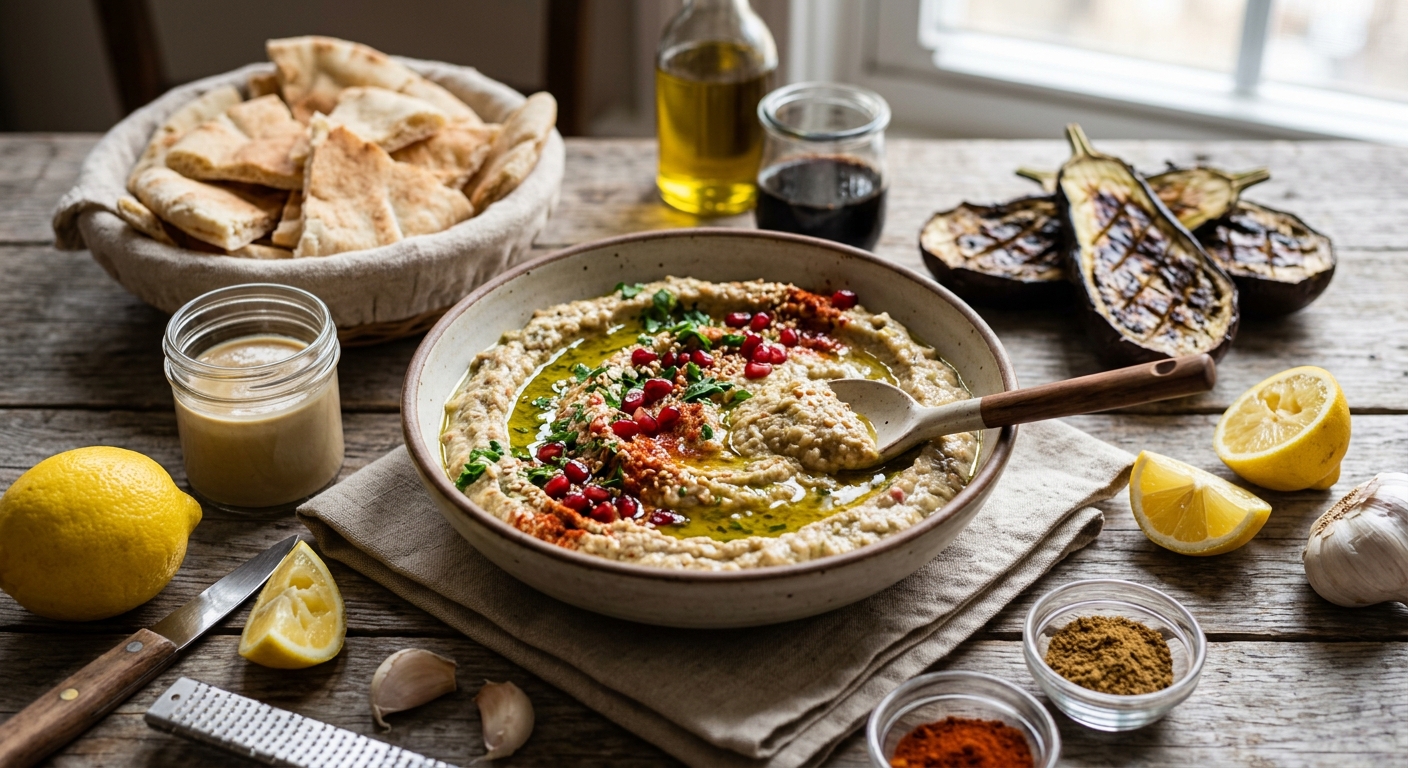
Baba ganoush is one of the ancient world’s most elegant culinary achievements: a handful of humble ingredients coaxed through fire and smoke into something altogether transcendent. At Calibrated Cuisine, we look beyond the romance and into the science, and what we find in this dish is genuinely remarkable. Eggplant is one of the most underappreciated mineral-dense vegetables in Western cooking, rich in manganese, copper, and potassium, while tahini, the sesame paste backbone of this recipe, contributes meaningful calcium, phosphorus, and iron that many plant-based eaters struggle to source.
The technique matters enormously here. Charring the eggplant directly over flame, or achieving the deepest possible caramelization in an oven, is not merely aesthetic. The Maillard reaction and direct combustion break down the thick, bitter skin while concentrating the natural sweetness of the flesh and generating new aromatic compounds including pyrazines and furans, the very molecules responsible for that signature smokiness. This is culinary chemistry in action, and every method in this recipe is designed to maximize that transformation. We also introduce a measured amount of pomegranate molasses, which adds tartness, a modest antioxidant boost from ellagic acid and anthocyanins, and a glycemic buffer when paired with the fiber-rich eggplant.
Each serving of this recipe is calibrated to provide more than 10% of your Daily Value for at least six distinct minerals, making it a legitimate entry in our Mineral Matrix category. Serve it as a mezze centerpiece with raw vegetables, whole grain flatbread, or as a protein plate accompaniment, and you have one of the most nutritionally efficient appetizers in the entire Mediterranean canon.
4
servings
Ingredients
- 900 glarge globe eggplants (approximately 2 eggplants), scrubbed dry
- 80 gtahini (well-stirred, 100% sesame paste)
- 45 mlfresh lemon juice (about 1.5 large lemons)
- 2 clovesgarlic, finely minced or grated
- 2 tbspextra-virgin olive oil, plus more for finishing
- 1 tbsppomegranate molasses
- 1 tspground cumin
- 0.5 tspsmoked paprika
- 15 gflat-leaf parsley, finely chopped
- 2 tbsppomegranate arils, for garnish
- —Colima Sea SaltMicroplastic Free Salt and freshly ground black pepper to taste
Instructions
Click on an item below to shop for the recommended items for this recipe on Amazon.
As an Amazon Associate, we earn from qualifying purchases.
- Place a wire rack or metal trivet directly over a gas burner set to medium-high flame. Pierce each eggplant 6 to 8 times all over with a sharp paring knife, these vents prevent steam buildup and dangerous bursting during charring.
- Set both eggplants directly on the rack over the open flame. Using long-handled tongs, turn every 4 to 5 minutes as each side chars and blisters. You want the skin to be fully blackened and crackling, not just darkened. The total time for this stage is 20 to 25 minutes. The eggplants are ready when they have completely collapsed and feel completely soft when pressed with tongs, with no firm resistance at the core.
- Transfer the charred eggplants to a colander set over a bowl and allow them to cool for 10 minutes. This resting step is critical: the steam inside finishes cooking the flesh and the colander allows bitter, watery juices to drain away, which would otherwise make your baba ganoush thin and acrid.
- Once cool enough to handle, split each eggplant lengthwise and scoop the flesh away from the charred skin using a large spoon. Discard the skin. Roughly chop the flesh on your cutting board two or three times to break up any large fibrous strands, then transfer to a mixing bowl.
- Add tahini, lemon juice, minced garlic, cumin, smoked paprika, pomegranate molasses, and olive oil to the bowl. Using a fork, mash and fold everything together vigorously for 1 to 2 minutes. Do not use a blender for this method; you want a rustic, chunky texture with visible smoky strands that speak to the open-flame technique. Taste and adjust salt, lemon, or garlic to preference. Fold in half the chopped parsley.
- Transfer to a wide, shallow serving bowl. Use the back of a spoon to swirl the surface. Drizzle generously with extra-virgin olive oil, scatter over pomegranate arils and remaining parsley, and finish with a pinch of smoked paprika. Serve immediately or refrigerate for up to 3 days; the flavor deepens overnight.
- Preheat your oven to 230 degrees Celsius (450 degrees Fahrenheit) with a rack positioned in the upper third. Line a rimmed baking sheet with foil. Pierce each eggplant 8 to 10 times with a paring knife to allow steam to escape during roasting.
- Place the eggplants directly on the foil-lined baking sheet. Roast on the upper rack for 20 minutes, then use tongs to rotate each eggplant a half turn, exposing the underside. Continue roasting for a further 25 to 35 minutes, until the skins are deeply wrinkled and visibly charred in spots, and the eggplants have completely deflated and feel uniformly soft when pressed. The internal temperature should reach at least 85 degrees Celsius (185 degrees Fahrenheit).
- Remove from the oven and immediately tent loosely with a second sheet of foil, creating a sealed steam pocket. Allow to rest for 15 minutes. This steam rest is the key step unique to the oven method: it loosens the skin from the flesh, making peeling effortless, and drives final caramelization of the natural sugars in the eggplant flesh.
- Unwrap and carefully split each eggplant over the baking sheet, collecting all the caramelized roasting juices, which are packed with flavor and concentrated minerals. Scoop the flesh and any collected juices into a colander over a bowl. Allow to drain for 5 minutes to remove excess water, then transfer the drained flesh to a food processor.
- Add tahini, lemon juice, garlic, cumin, smoked paprika, pomegranate molasses, and olive oil to the food processor. Pulse 8 to 10 times in short bursts for a smooth but not completely homogenous texture. Over-processing creates a gluey paste; you want it silky with some body. Taste carefully, adjusting salt and lemon. Fold in half the parsley by hand using a spatula.
- Spread into a serving dish, drizzle with olive oil, and garnish with pomegranate arils, remaining parsley, and a dusting of smoked paprika. For the most intense flavor, cover and refrigerate for at least 1 hour before serving to allow the spices to bloom into the dip.
- Pierce each eggplant 8 to 10 times with a paring knife. This is especially important in a sealed slow cooker environment where pressure from steam can build inside the dense flesh. Rub the outside of each eggplant very lightly with a neutral oil to prevent any sticking to the ceramic insert.
- Place the whole, pierced eggplants directly into the slow cooker insert. Do not add any water or liquid; the eggplants will release substantial moisture on their own. Set the lid on, sealing it. Cook on High for 4 hours or Low for 7 hours, until the eggplants have completely collapsed and feel entirely soft when pressed through the lid with a wooden spoon handle.
- Carefully remove the lid, directing steam away from you. Transfer the eggplants to a colander set over a large bowl. Allow to cool for 15 minutes. Because the slow cooker is a sealed, moist environment, the eggplants will have released a significant volume of liquid. Draining this liquid is essential; it is thin and carries bitter compounds that will dilute and sour your finished dip. Discard the drained liquid.
- Split each eggplant and scoop the flesh into a bowl, discarding all of the skin. The flesh will be exceptionally soft and almost pudding-like in texture. Using a fork, mash the flesh thoroughly until broken down, then add tahini, lemon juice, garlic, cumin, smoked paprika (increase to 1 teaspoon for this method), liquid smoke if using, pomegranate molasses, and olive oil.
- Beat vigorously with the fork or a whisk, incorporating air as you go, until the mixture is smooth and creamy. The slow cooker flesh blends very readily and produces a notably smooth result without any food processor needed. Taste carefully and adjust seasoning. The slower cook may mellow the garlic, so add an extra half clove if desired. Fold in half the parsley, then garnish and serve as directed.
- Pierce each eggplant 8 to 10 times all over with a paring knife. Pour 240ml (1 cup) of cold water into the pressure cooker insert and place the trivet or steam rack inside. Arrange the eggplants on the trivet, stacking them if necessary. The eggplants must not sit in the water, they should steam above it.
- Secure the lid and set the pressure release valve to Sealing. Cook on Manual High Pressure for 10 minutes. The pot will take approximately 8 to 10 minutes to come to pressure before the cook time begins. When the cycle completes, allow a natural pressure release for 10 minutes, then carefully switch the valve to Venting to release any remaining pressure before opening.
- While the eggplants are depressurizing, position your oven rack 10 to 12 cm (4 to 5 inches) below the broiler element and preheat the broiler to its highest setting. Remove the eggplants from the Instant Pot and transfer them to a foil-lined baking sheet. They will be soft and fragile; use two large spoons or silicone-tipped tongs to handle them gently.
- Broil the steamed eggplants for 6 to 8 minutes, rotating once at the halfway mark, until the skins are visibly blistered, charred, and darkened in patches. Watch them closely as broiler intensity varies significantly between ovens. This critical step introduces the characteristic smoky char flavor that pressure cooking alone cannot provide, and it also drives off surface moisture for a more concentrated result.
- Transfer the broiled eggplants to a colander over a bowl and cool for 10 minutes. Drain away all released liquid. Split, scoop, and chop the flesh as described, then combine with tahini, lemon juice, garlic, cumin, smoked paprika, pomegranate molasses, and olive oil in a mixing bowl. Mash and fold with a fork until you achieve your preferred texture, somewhere between chunky and smooth. Fold in half the chopped parsley, transfer to a serving bowl, and finish with olive oil, pomegranate arils, and remaining parsley.
Nutrition Breakdown
Per 1 serving (makes 4)
Vitamins & Minerals
% Daily Value based on a 2,000 calorie diet (FDA reference)
🧬 Essential Amino Acids
% of recommended daily intake (RDA) per serving
🛡 Antioxidant Profile
The Nutrition Science
Eggplant belongs to the nightshade family and owes its distinctive purple color to a group of anthocyanins, most notably nasunin, concentrated in the skin. Nasunin is one of the few food-derived antioxidants that has been specifically shown in vitro to chelate excess iron within cells, a mechanism that protects cell membranes from iron-catalyzed free radical damage. Importantly, charring or roasting the eggplant with its skin on, then discarding the blackened exterior after cooking, allows these compounds to migrate into the flesh during the cooking process, meaning you capture some of their benefit even without consuming the skin directly. The chlorogenic acid in eggplant flesh has been studied for its ability to inhibit glucose-6-phosphatase activity, an enzyme involved in hepatic glucose production, making this dip a genuinely supportive food for blood sugar management.
Tahini is the nutritional anchor of this recipe. At 80g across four servings, it contributes approximately 20g of fat per recipe, predominantly oleic acid (the same monounsaturated fatty acid dominant in olive oil) and linoleic acid, an essential omega-6. More significantly for the Mineral Matrix category, sesame seeds are among the richest plant sources of copper, a trace mineral essential for iron metabolism, collagen synthesis, and the function of superoxide dismutase, one of the body’s primary endogenous antioxidant enzymes. The calcium in tahini is also notable: sesame seeds contain calcium in the form of calcium oxalate and free calcium, and while bioavailability is lower than dairy calcium, the quantities in tahini are substantial enough to contribute meaningfully to daily intake, particularly for those avoiding dairy.
The combination of eggplant and tahini creates a synergistic mineral delivery system. The fiber in eggplant (predominantly soluble pectin and insoluble cellulose) slows gastric emptying, which moderates the absorption rate of the fat-soluble vitamins and minerals present in tahini and olive oil. Meanwhile, the lemon juice in this recipe serves a dual biochemical purpose: it provides vitamin C, which significantly enhances non-heme iron absorption from the tahini and eggplant, and its citric acid chelates calcium ions in a form that maintains mineral solubility in the gut, potentially improving calcium uptake. This is the kind of intuitive nutritional pairing that has made Levantine cuisine one of the most studied traditional diets in nutritional epidemiology.
Pro Tips
- The single most important step regardless of cooking method is thorough draining. Eggplant is approximately 92% water and releases large volumes of liquid during cooking. Failing to drain for at least 5 to 10 minutes results in a watery, separated dip. Use a fine-mesh colander and do not press or squeeze the flesh, simply let gravity do the work.
- For maximum mineral bioavailability, always choose unhulled or lightly hulled tahini (sometimes labeled whole sesame or natural tahini) over heavily processed white tahini. Unhulled tahini retains significantly more calcium, magnesium, and iron in the bran layer and has a deeper, more complex bitter-sweet flavor that improves the finished dip.
- Make baba ganoush at least 2 hours before serving whenever possible. The flavor compounds from the roasted eggplant, particularly the aldehyde and furan groups responsible for smokiness, continue to equilibrate into the tahini and olive oil fat matrix as the dip rests. A baba ganoush chilled overnight in the refrigerator is measurably more complex and balanced than one served immediately after preparation.



Rosa, I love that you’re connecting the dots between the mineral profile and metabolic health! Just a quick note though – while eggplant is indeed low glycemic and those minerals matter, the manganese and magnesium here are present in modest amounts per typical serving (we’re talking a few tablespoons of dip). The tahini is where the real mineral density comes through, especially for magnesium. The lemon juice angle is interesting because those polyphenols in eggplant actually absorb better in acidic environments, so you might be onto something with how it affects nutrient bioavailability and blood sugar response!
This is such a win for PCOS management, honestly! Eggplant is one of my go-to vegetables because it’s so low glycemic and that tahini adds both fiber and magnesium, which helps with insulin sensitivity. I’ve found that the lemon juice here is key too, since citric acid can help slow glucose absorption. The mineral profile you’re highlighting matters so much for us because PCOS often comes with mineral deficiencies, so I love seeing dips like this that do the heavy lifting nutritionally. Do you have thoughts on pairing this with specific veggie sticks versus crackers to keep the insulin load in check?
omg yes rosa the magnesium angle! tahini is seriously such a sneaky nutrient bomb, my kids will actually eat this dip on veggies when they wont touch a salad lol. i love that youre thinking about the mineral combo for insulin health because thats exactly what i try to do with our meals – like its not just one nutrient in isolation, its how they all work together right? have you found this works especially well as a side dish or do you do it as more of a snack situation?