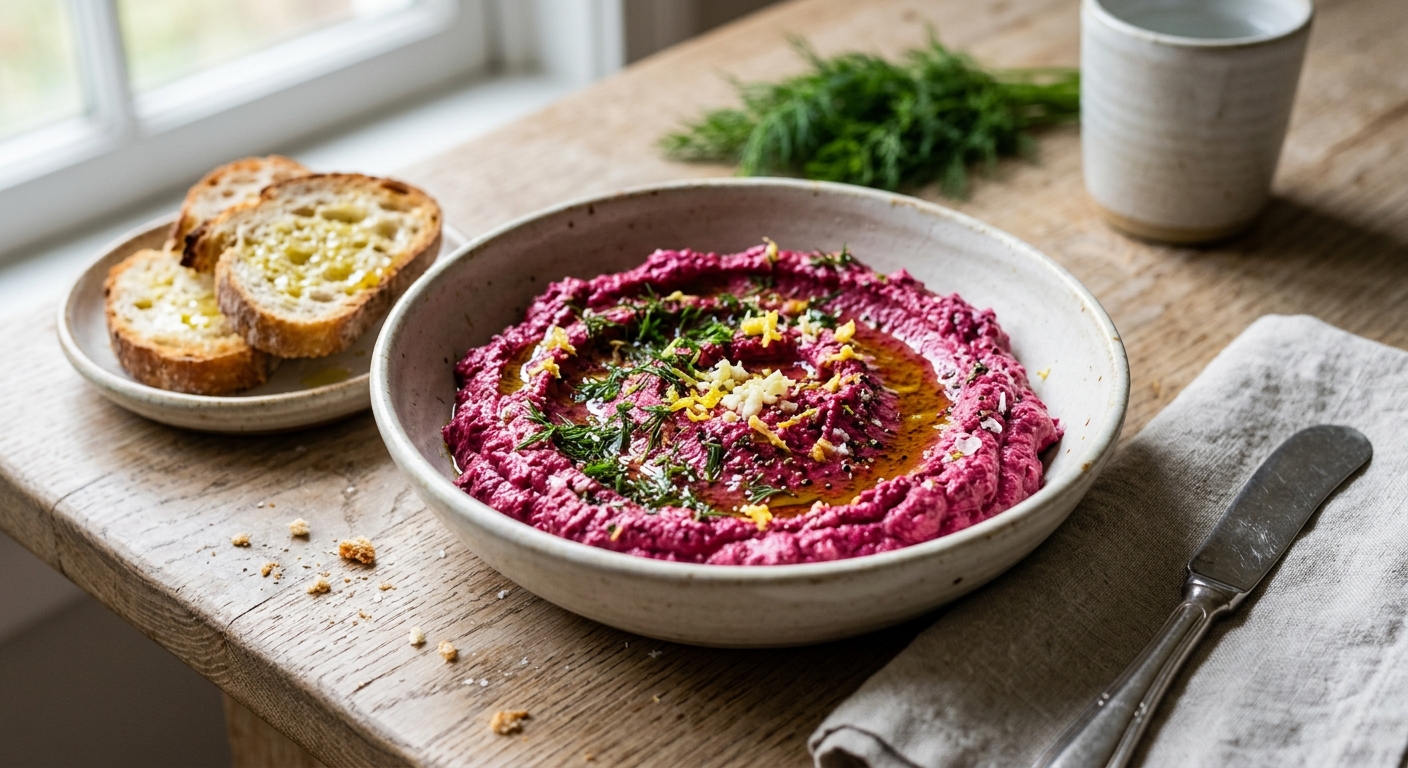
Few combinations in the culinary world are as visually arresting and nutritionally compelling as deep crimson beetroot paired with creamy, tangy goat cheese. This spread transforms humble root vegetables into something genuinely luxurious, worthy of a dinner party centrepiece yet simple enough for a weeknight snack board. The natural earthy sweetness of beetroot is perfectly counterbalanced by the lactic brightness of aged goat cheese, with fresh dill and lemon zest tying everything together into a cohesive, craveable whole.
What makes this recipe particularly exciting from a nutritional standpoint is the synergy between its two star ingredients. Beetroot is one of the most concentrated food sources of dietary folate (vitamin B9), a nutrient critical for DNA synthesis, red blood cell formation, and neural tube development. Goat cheese steps in as a surprisingly rich source of bioavailable calcium and phosphorus, supporting bone density, nerve signalling, and muscle contraction. Together, they also deliver meaningful amounts of vitamin C, manganese, and potassium, making this spread far more than a pretty face on a grazing board.
At Calibrated Cuisine, we have developed four cooking methods for the beetroot component so you can fit this recipe into any schedule or kitchen setup. The oven method produces the most intensely concentrated, caramelised flavour. The stovetop boil is the quickest weeknight route. The pressure cooker splits the difference, delivering tender beets in under 20 minutes. And the slow cooker produces an almost silky, deeply flavoured beet with almost zero active effort. Whichever method you choose, the final blend takes just minutes and yields a spread that is as nutritionally calibrated as it is delicious.
4
servings
Ingredients
- 600 gfresh beetroot (about 3 medium), scrubbed and trimmed
- 150 gsoft goat cheese (chevre), at room temperature
- 2 tbspextra-virgin olive oil
- 1 tbspfresh lemon juice
- 1 tsplemon zest
- 2 tbspfresh dill, finely chopped
- 1 clovegarlic, minced
- 1 tspraw honey
- 2 tbspwalnuts, toasted and roughly chopped (for garnish)
- 1 tbsppumpkin seeds, toasted (for garnish)
- —Colima Sea SaltMicroplastic Free Salt and cracked black pepper to taste
Instructions
Click on an item below to shop for the recommended items for this recipe on Amazon.
As an Amazon Associate, we earn from qualifying purchases.
- Place the whole, scrubbed beetroots in a medium saucepan and cover with cold water by at least 5 cm. Add a generous pinch of salt and bring to a rolling boil over high heat.
- Reduce heat to medium and maintain a steady simmer. Cook uncovered for 35 to 45 minutes, depending on size, until a thin knife or skewer slides through the thickest part with no resistance. Top up with hot water if the level drops below the beets.
- Drain the beets and transfer immediately to a bowl of ice water. Let them sit for 5 minutes until cool enough to handle. Slip the skins off using your fingers or a paper towel. Roughly chop the peeled beets and allow to cool to room temperature.
- Transfer the cooled chopped beets to a food processor. Add the goat cheese, olive oil, lemon juice, lemon zest, minced garlic, and honey. Pulse 8 to 10 times for a chunky, rustic texture, or process continuously for 30 to 45 seconds for a smooth, silky spread.
- Taste and adjust seasoning with salt, pepper, and extra lemon juice as needed. Transfer to a wide serving bowl, swirl the top with the back of a spoon, and top with chopped fresh dill, toasted walnuts, and pumpkin seeds. Drizzle with a little extra olive oil before serving.
- Individually wrap each whole, scrubbed beetroot tightly in aluminium foil. There is no need to peel or trim beyond removing the top inch of stem. Place the wrapped beets directly in the slow cooker insert with no added liquid.
- Cook on Low for 6 to 8 hours or on High for 3 to 4 hours. The beets are done when they yield completely to a firm squeeze through the foil. The slow, moist heat will intensify their sweetness significantly compared to boiling.
- Carefully unwrap the beets, as steam will escape. Allow to cool for 10 minutes, then rub the skins off easily with a folded paper towel. The skin should slip away with virtually no effort. Roughly chop and allow to cool to room temperature.
- Place the cooled beets into a food processor along with the goat cheese, olive oil, lemon juice, lemon zest, garlic, and honey. Any collected juices from inside the foil are rich in nutrients and flavour, so pour them in as well.
- Process to your desired consistency, either a coarse, textured spread with 6 to 8 pulses or a smooth, mousse-like puree with 40 to 50 seconds of continuous blending. Adjust salt, pepper, and acidity to taste. Spoon into a bowl, garnish with dill, toasted walnuts, pumpkin seeds, and a drizzle of olive oil.
- Pour 240 ml (1 cup) of cold water into the pressure cooker or Instant Pot inner pot. Place the trivet or steamer basket insert into the pot. Arrange the whole, scrubbed, unpeeled beetroots on the trivet in a single layer. Do not submerge them; they should steam above the water.
- Secure the lid and ensure the pressure valve is set to Sealing. Select Manual or Pressure Cook mode and set to High Pressure for 22 minutes for medium beets (about 200 g each). Add 5 minutes for larger beets, subtract 3 minutes for small beets under 150 g.
- Once the cook time is complete, allow the pressure to release naturally for 10 minutes, then carefully switch the valve to Venting to release any remaining pressure. Open the lid away from you to avoid the steam.
- Transfer the beets to a cutting board. Once cool enough to handle (about 5 minutes), peel them: the skin will slide off with a single motion using your thumb. The steaming method yields beets with a firmer, less waterlogged texture than boiling, which translates to a thicker, more concentrated spread.
- Chop the peeled beets and add to a food processor with the goat cheese, olive oil, lemon juice, lemon zest, garlic, and honey. Pulse for a rustic texture or blend continuously for a smooth, vibrant puree. Season, transfer to a serving bowl, and finish with dill, walnuts, pumpkin seeds, and a drizzle of olive oil.
- Preheat your oven to 200 degrees C (400 degrees F) with the rack in the centre position. Drizzle the whole, scrubbed beetroots with 1 teaspoon of olive oil and a pinch of salt. Wrap each beet individually in a double layer of aluminium foil, sealing tightly to trap steam inside.
- Place the foil-wrapped beets directly on the oven rack or on a rimmed baking sheet. Roast for 50 to 60 minutes depending on size. To test for doneness, use tongs to gently squeeze a beet through the foil. It should feel completely soft with no firmness remaining in the centre.
- For extra caramelisation, unwrap the beets in the final 10 to 15 minutes, return them to the baking sheet, and continue roasting until the exterior is slightly dried and the edges show some browning. This optional step dramatically deepens the flavour of the final spread.
- Remove from the oven and cool until handleable, about 10 to 15 minutes. Peel by rubbing with a paper towel. The skin will come away cleanly. Roughly chop and allow to cool to room temperature so the heat does not melt the goat cheese during blending.
- Combine the roasted beets in a food processor with the goat cheese, remaining olive oil, lemon juice, lemon zest, garlic, and honey. Pulse for a chunky, bread-friendly texture or blend for a smooth, glossy spread. The roasted beet version will have a noticeably deeper, sweeter, more complex flavour than the boiled version. Adjust seasoning, plate, and garnish generously with dill, walnuts, pumpkin seeds, and a finishing drizzle of olive oil.
Nutrition Breakdown
Per 1 serving (makes 4)
Vitamins & Minerals
% Daily Value based on a 2,000 calorie diet (FDA reference)
🧬 Essential Amino Acids
% of recommended daily intake (RDA) per serving
🛡 Antioxidant Profile
The Nutrition Science
Beetroot owes its remarkable folate content to its status as a leafy root: the same metabolic pathways that make dark leafy greens folate-rich operate in the beetroot bulb. Folate (vitamin B9) is essential for the synthesis of purines and thymidine, the building blocks of DNA, making adequate intake critical during periods of rapid cell division including pregnancy, infancy, and recovery from illness. A single serving of this spread provides 165 mcg of dietary folate equivalents (DFE), representing 41% of the 400 mcg Daily Value for non-pregnant adults and a meaningful contribution toward the 600 mcg recommended during pregnancy.
Goat cheese is an often-overlooked calcium source that has a distinct bioavailability advantage over cow’s milk cheese for many people. Its fat globules are smaller and its casein protein structure differs from bovine casein, making it easier to digest and its minerals more accessible for intestinal absorption. The 150g of goat cheese in this recipe contributes approximately 300 mg of calcium per full batch (75 mg per serving), alongside phosphorus and vitamin D-precursor compounds that work synergistically to support bone mineralisation. The lemon juice in the recipe also serves a nutritional purpose: the citric acid slightly lowers the pH in the gut, enhancing calcium solubility and absorption at the intestinal wall.
The betalain pigments in beetroot, specifically betanin and vulgaxanthin, represent a class of antioxidants distinct from the carotenoids and polyphenols found in most other vegetables. Clinical research suggests these compounds can reduce serum markers of oxidative stress and may support endothelial function by preserving nitric oxide bioavailability. Cooking method matters here: boiling leaches betalains into the water (hence the brilliant purple cooking liquid), while oven roasting with foil and slow cooking retain significantly more of these pigments within the beet tissue. For maximum antioxidant retention, the slow cooker and oven foil methods are the scientifically preferred options.
Pro Tips
- Wear latex or nitrile gloves when peeling beetroot. Betalain pigments bind strongly to skin and will stain your hands a vivid magenta for 24 to 48 hours. A squeeze of lemon juice can help fade any staining that does occur.
- For the smoothest, most stable emulsion, make sure your goat cheese is fully at room temperature before blending. Cold goat cheese will blend into small lumps rather than a homogenous, creamy spread.
- The spread keeps refrigerated in an airtight container for up to 5 days and its flavour actually improves after 24 hours as the garlic, dill, and lemon fully permeate the beet and cheese base. It also freezes well for up to 6 weeks; thaw overnight in the refrigerator and stir vigorously before serving.




Oh, this sounds absolutely lovely! I’ve been making beet and cheese spreads for years, but I never calculated the micronutrient breakdown like this, and seeing that folate and calcium content really validates why this combination has always felt so nourishing. The lemon and herb brightening is exactly what I’ve learned makes the earthiness pop without needing extra salt, which my students appreciate. I’m definitely featuring a version of this at my next class, maybe with some fresh dill and a touch of horseradish for a little more complexity. Do you find the ratio of beet to cheese affects the folate content much, or does the cheese essentially just add the creamy texture without diluting those benefits?
This looks delicious, but I wanted to flag something for anyone with histamine sensitivities like me: fresh beets are actually pretty low-histamine, which is great, but if the recipe calls for roasting ahead and storing (even refrigerated), that increases histamine content over time. My tip would be to roast and blend fresh, then consume same day or freeze in portions rather than keeping it in the fridge for more than a few hours. Also, some goat cheeses can vary wildly in histamine depending on aging, so I always double-check with my brand or ask the maker directly. For a lower-histamine version, I’ve had good luck substituting fresh cream cheese or ricotta if
Love this breakdown, Sue! One thing I’d add for anyone sourcing ingredients: conventional beets can carry pretty high pesticide residues, so if budget allows, I’d definitely prioritize organic here since you’re eating the whole root. For the goat cheese, grass-fed matters less for toxin load than it does for omega-3 profile, but it’s worth checking if your brand sources from pasture-raised animals since that affects the nutrient density you’re actually getting. The folate and calcium synergy here is chef’s kiss though, especially for anyone dealing with methylation issues.