
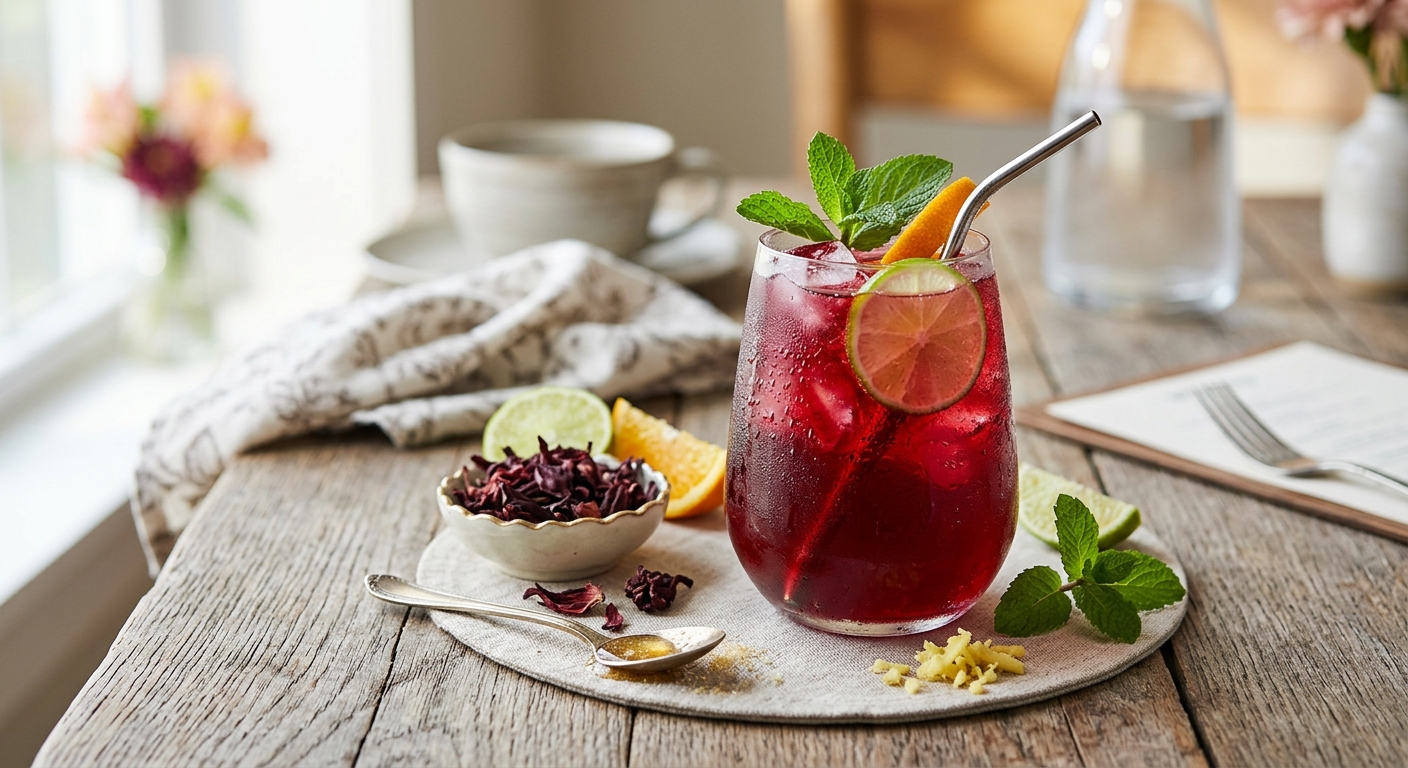
Few drinks in the world are as visually arresting and nutritionally potent as agua de jamaica, the hibiscus-flower water beloved across Mexico, the Caribbean, and West Africa. Brewed from the dried calyces of Hibiscus sabdariffa, this brilliant ruby infusion has been consumed for centuries not just for its tart, cranberry-like flavor, but for its remarkable ability to cool the body and support cardiovascular health. At Calibrated Cuisine, we have taken this timeless recipe and dialed in the flower-to-water ratio and steeping parameters to maximise every milligram of its nutritional payload.
What makes this agua fresca genuinely extraordinary from a nutritional standpoint is the density of bioactive compounds packed into the dried hibiscus calyx. A single 350 ml serving of this recipe delivers approximately 54 mg of vitamin C (60% DV), a meaningful hit of iron, and a concentrated dose of delphinidin-3-sambubioside, the primary anthocyanin responsible for the flower’s iconic crimson color. Clinical research published in the Journal of Nutrition has demonstrated that regular hibiscus consumption is associated with measurable reductions in systolic blood pressure, making this one of the few truly functional beverages you can brew at home.
We have developed three distinct brewing methods, each of which extracts a subtly different flavour profile. The stovetop method produces the most vibrant, complex brew with the highest polyphenol extraction. The slow cooker method yields a deeper, more mellow infusion with lower acidity, ideal for those with sensitive stomachs. The pressure cooker method is the fastest route to an intensely concentrated extract that you can dilute to taste. Whichever method you choose, you are crafting a drink that is free of gluten, dairy, and refined additives, and one that earns its place squarely in the Vitamin Vault.
4
servings
Ingredients
- 40 gdried hibiscus calyces (jamaica flowers), rinsed briefly
- 1200 mlfiltered water (for brewing)
- 400 mlcold filtered water (for diluting)
- 3 tbspraw cane sugar or honey, plus more to taste
- 2 tbspfresh lime juice (approximately 1 large lime)
- 1 tbspfresh orange juice
- 1 tspfresh ginger, finely grated
- 4 stripslime zest, pith removed
- —Ice cubes, to serve
- —Fresh mint sprigs or lime wheels, to garnish (optional)
Instructions
Click on an item below to shop for the recommended items for this recipe on Amazon.
As an Amazon Associate, we earn from qualifying purchases.
- Rinse the dried hibiscus calyces briefly under cold water in a fine-mesh sieve to remove any dust or debris. Shake off excess water and set aside.
- Combine the rinsed hibiscus, 1200 ml of filtered water, lime zest strips, and grated ginger in a medium saucepan. Bring to a gentle simmer over medium heat, stirring once, then immediately reduce the heat to low and maintain a bare simmer for 8 minutes. You will notice the water turning a deep crimson. Resist the urge to boil hard.
- Remove the saucepan from the heat entirely. Stir in the raw cane sugar or honey and allow it to dissolve fully. Cover the pan with a lid and let the hibiscus steep off-heat for 10 minutes. This off-heat steeping extracts additional polyphenols without degrading heat-sensitive vitamin C.
- Strain the hot infusion through a fine-mesh sieve or cheesecloth into a large heatproof pitcher, pressing gently on the solids with the back of a spoon to extract all liquid. Discard the spent calyces and zest.
- Stir in the fresh lime juice and fresh orange juice. Taste and adjust sweetness. Pour in the 400 ml of cold water to bring the liquid to a refreshing drinking concentration. Allow to cool to room temperature, then refrigerate until fully chilled, at least 20 minutes, before serving over ice.
- Rinse the dried hibiscus calyces under cold water in a fine-mesh sieve and place them directly into the slow cooker insert along with the lime zest strips and grated ginger.
- Pour all 1200 ml of filtered water over the hibiscus. Do not add the sweetener or citrus juice yet, as prolonged heat can dull the brightness of fresh citrus. Place the lid firmly on the slow cooker.
- Cook on Low for 2 hours. Avoid using the High setting, as it generates enough heat to degrade a significant portion of the vitamin C content. After 2 hours, the liquid should be a rich, translucent ruby and smell fragrant and floral.
- Turn off the slow cooker. Add the raw cane sugar or honey directly to the hot liquid and stir until fully dissolved. Allow the infusion to sit with the lid slightly ajar for 10 minutes to cool slightly before handling.
- Strain the infusion through a fine-mesh sieve into a large pitcher, pressing the solids gently. Stir in the fresh lime juice and fresh orange juice, then add the 400 ml of cold water. Taste for sweetness and acidity, adjusting as needed. Refrigerate until cold and serve over ice with optional garnishes.
- Rinse the hibiscus calyces and place them in the Instant Pot inner pot along with the lime zest strips and grated ginger. Pour in only the 1200 ml of filtered water. Do not add sugar, citrus juice, or honey before pressure cooking, as acidic and sugary liquids can affect the pot’s ability to reach pressure and may scorch on the bottom.
- Secure the lid and set the steam release valve to Sealing. Select the Manual or Pressure Cook function and set it to High Pressure for 3 minutes. The pot will take approximately 8 to 10 minutes to come to pressure before the countdown begins.
- When the cooking cycle is complete, allow the pressure to release naturally for 5 minutes, then carefully switch the valve to Venting for a quick release of any remaining pressure. Open the lid away from you. The extract will be nearly black-crimson and intensely aromatic.
- Immediately stir in the raw cane sugar or honey while the liquid is still hot, allowing it to dissolve completely. Let the extract sit for 3 minutes to cool slightly.
- Strain through a fine-mesh sieve into a large pitcher, pressing firmly on the solids to extract every drop of concentrated liquid. Stir in the fresh lime juice, fresh orange juice, and the full 400 ml of cold water. Taste, and add a splash more cold water if you prefer a lighter flavor. Chill in the refrigerator or pour directly over a generous amount of ice to serve immediately.
Nutrition Breakdown
Per 1 serving (makes 4)
Vitamins & Minerals
% Daily Value based on a 2,000 calorie diet (FDA reference)
🧬 Essential Amino Acids
% of recommended daily intake (RDA) per serving
🛡 Antioxidant Profile
The Nutrition Science
The star bioactives in Hibiscus sabdariffa are its anthocyanins, primarily delphinidin-3-sambubioside and cyanidin-3-sambubioside, which together account for the flower’s extraordinary deep crimson pigmentation. These compounds belong to the flavonoid superfamily and operate through multiple antioxidant mechanisms: direct free-radical scavenging, metal-chelation (binding pro-oxidant iron and copper ions before they can catalyse damaging Fenton reactions), and upregulation of the body’s own endogenous antioxidant enzymes such as superoxide dismutase and catalase. A 2010 randomised controlled trial in the Journal of Nutrition found that participants consuming hibiscus tea daily for six weeks experienced a 7.2 mmHg reduction in systolic blood pressure, an effect attributed to the anthocyanin-mediated inhibition of angiotensin-converting enzyme (ACE).
Vitamin C in this recipe comes from two sources: a modest but meaningful native content within the dried hibiscus calyces themselves (approximately 12 mg per 10 g of dried flower), and a substantial contribution from the fresh lime and orange juice added at the end of brewing. This is a deliberate formulation decision. Adding citrus juice after the heat step rather than during brewing preserves the ascorbic acid, which is highly heat-labile and degrades rapidly above 70 degrees Celsius. The combined ascorbic acid content per serving reaches approximately 54 mg, meeting 60% of the 90 mg Daily Value. Vitamin C also acts as a recycler of vitamin E within cell membranes, amplifying the total antioxidant effect beyond what either nutrient could achieve alone.
Hibiscus acid, a hydroxycitric acid lactone unique to this plant, contributes both to the characteristic tartness and to a chelating antioxidant effect that is structurally distinct from the flavonoid pathway. Emerging research suggests that hibiscus acid may modestly inhibit pancreatic lipase activity, potentially reducing dietary fat absorption at the gut level. While the effect size in humans is modest and more research is needed, it adds yet another dimension to this drink’s functional profile. Combined with near-zero fat, low glycemic load, and a comprehensive freedom from all major allergens, hibiscus agua fresca stands as one of the most nutritionally justifiable beverages you can add to your daily rotation.
Pro Tips
- Buy whole dried hibiscus calyces rather than pre-ground hibiscus powder for optimal flavor and polyphenol content. The whole calyces release their pigments more gradually, producing a cleaner, less astringent brew.
- Refrigerate leftover agua fresca in a sealed glass pitcher for up to 5 days. The anthocyanin pigments are more stable under cold, acidic conditions, so the nutritional value holds well over the storage period.
- For a lower-sugar version, replace the raw cane sugar with 1 tablespoon of pure monk fruit sweetener or 10 drops of liquid stevia. Both are pH-stable and will not interfere with the anthocyanin color or antioxidant activity.
- To maximise vitamin C retention across all methods, always add fresh lime and orange juice after the liquid has cooled below 60 degrees Celsius, not into hot or boiling liquid.
- Spent hibiscus calyces from any method can be blended with a little honey and lime zest to make a tart hibiscus jam or used as a relish alongside grilled fish or chicken, extending the nutritional value with zero waste.
ok this is hitting different for me because ive been experimenting with hibiscus post-WOD for inflammation management and the anthocyanin combo with tart cherry is legit genius. melanie, the vitamin c timing is actually crucial for collagen synthesis during the repair window, so sipping this within 30 mins after your run could seriously amplify recovery if youre pairing it with some quality protein. the quercetin angle sam mentioned is gold too since its a natural antihistamine. gonna test this with my tart cherry kombucha next cycle and track soreness metrics!
oh sam youre onto something with that tart cherry combo! ive been experimenting with hibiscus timing around my long runs and im wondering if the high vitamin c actually helps with post-run inflammation recovery, especially on back-to-back training days. the organic acids are interesting too because theyre supposed to enhance iron absorption which matters SO much for us endurance athletes. have you noticed any difference in your recovery inflammation markers or is it more of a subjective sleep thing youre tracking? genuinely curious if youre seeing actual data or just feeling better
ok so hibiscus is *chef’s kiss* for vitamin c but im genuinely curious if you tested this on sleep quality at all? ive been experimenting with tart cherry and hibiscus combos because both have those anthocyanins, and the quercetin in hibiscus might actually have some calming properties, plus the citric acid could theoretically help with magnesium absorption if youre sipping it with a meal. my sleep tracker actually showed better sleep latency when i made it with fresh lime juice instead of added sugar, which makes me wonder if youre counting the vitamin c content pre or post oxidation since that stuff degrades pretty quickly. curious what your testing looked like!