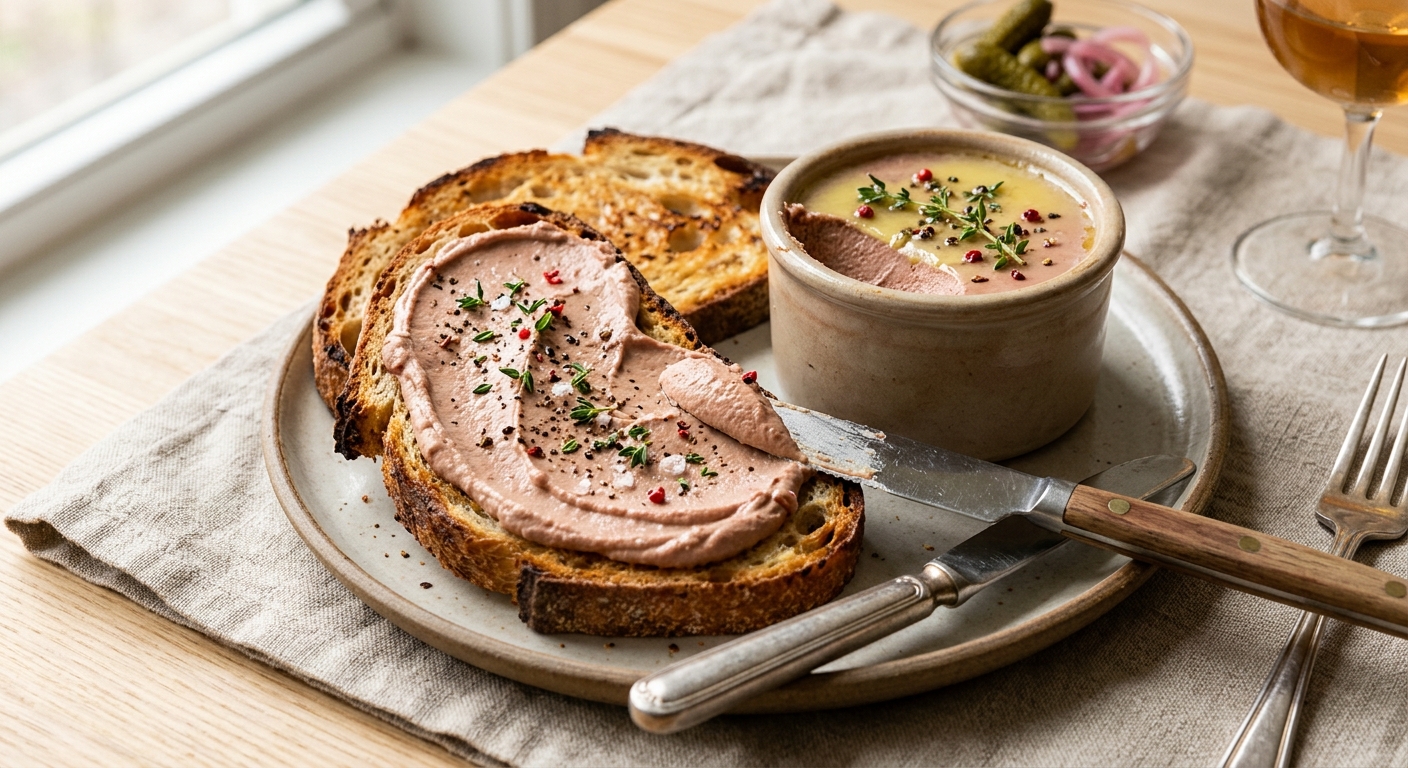
Chicken liver pate has graced the tables of French bistros and Eastern European households for centuries, and for good reason: it is cheap, deeply flavorful, and nutritionally extraordinary. What sets this version apart is the precision with which every ingredient has been chosen to amplify the natural nutrient density of chicken livers, the single richest dietary source of vitamin B5 (pantothenic acid) available to home cooks. A 100g serving of chicken liver contains roughly 8.3mg of B5, against a daily reference intake of just 5mg. Combined with the supporting cast of shallots, thyme, and a finishing layer of clarified butter, this pate delivers not just B5 but a remarkable spectrum of B vitamins, iron, and zinc in a single, gorgeous spread.
Pantothenic acid plays roles that are easy to underestimate. It is the precursor to coenzyme A, the molecular workhorse that sits at the center of every major energy-producing pathway in your cells, from fatty acid oxidation to the Krebs cycle. Without adequate B5, your body struggles to synthesize steroid hormones, metabolize macronutrients efficiently, and maintain healthy skin and hair. Unlike vitamin B12, which tends to steal the spotlight in conversations about liver, B5 is rarely discussed, yet chicken livers deliver it in quantities that dwarf almost every other whole food. This recipe is our answer to the question: what does genuinely therapeutic eating taste like when it also happens to be delicious?
The sourdough base is not just a vehicle. Traditionally fermented sourdough bread has a meaningfully lower glycemic index than standard white bread, and its long fermentation partially breaks down phytic acid, improving mineral bioavailability. This means the iron and zinc from the pate are more readily absorbed when eaten alongside a good sourdough than alongside a standard cracker or baguette. The finishing clarified butter seal, a classic French technique, both extends shelf life and adds a subtle richness that transforms this from a casual snack into something genuinely celebration-worthy.
4
servings
Ingredients
- 450 gfresh chicken livers, trimmed of sinew and green-tinged spots
- 3 tbspunsalted butter, divided (plus 2 tbsp extra for clarified butter seal, optional)
- 2 tbspextra-virgin olive oil
- 3 mediumshallots, finely diced
- 3 clovesgarlic, minced
- 60 mldry brandy or cognac
- 60 mldouble cream (heavy cream)
- 2 tspfresh thyme leaves (or 1 tsp dried)
- 1 tspfresh rosemary, finely minced
- 1 tspDijon mustard
- 0.5 tspground allspice
- 0.25 tspfreshly grated nutmeg
- 4 thick slicessourdough bread, toasted or grilled
- 1 tbspcapers, rinsed, for garnish (optional)
- 1 small bunchflat-leaf parsley, leaves picked, for garnish
- —Colima Sea SaltMicroplastic Free Salt and freshly ground black pepper to taste
Instructions
Click on an item below to shop for the recommended items for this recipe on Amazon.
As an Amazon Associate, we earn from qualifying purchases.
- Pat the chicken livers thoroughly dry with paper towels. This is the single most important prep step: moisture is the enemy of a good sear, and a proper sear drives out any residual iron-heavy rawness from the flavor. Season generously with salt and black pepper on both sides.
- Melt 1.5 tablespoons of the butter with the olive oil in a large, heavy skillet (cast iron or stainless steel preferred) over medium-high heat until the foam subsides and the fat just begins to shimmer. You want the pan genuinely hot before the livers go in.
- Add the livers in a single layer without crowding. Sear undisturbed for 2 to 2.5 minutes until a deep mahogany crust forms on the underside. Flip and sear the second side for 1.5 to 2 minutes. The livers should be browned outside but still show a blush of pink at the thickest point when cut. Remove to a plate and set aside.
- Reduce heat to medium. In the same pan, add the remaining 1.5 tablespoons of butter and saute the shallots with a pinch of salt for 4 to 5 minutes until soft and translucent. Add the garlic, thyme, and rosemary and cook for 1 minute more until fragrant.
- Remove the pan from the heat. Add the brandy and return to medium heat, scraping up any browned bits. Let it reduce for 1 to 2 minutes until the alcohol smell has mellowed and the liquid is reduced by about half. Pour in the cream and stir to combine, simmering gently for 1 minute.
- Transfer the livers, all pan juices, Dijon mustard, allspice, and nutmeg into a food processor or high-powered blender. Process on high for 1 to 2 minutes, scraping down the sides twice, until completely smooth and velvety. Taste and adjust salt, pepper, and mustard.
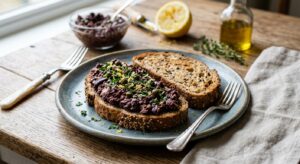
- Press the pate through a fine-mesh sieve into a clean bowl using a spatula for an ultra-silky result (optional but recommended). Spoon into ramekins, smooth the surface, and either serve immediately or top with a thin layer of clarified butter and refrigerate for up to 3 days. Serve spread thickly on toasted sourdough, garnished with capers and parsley.
- In a small saucepan over medium-high heat, briefly flambe or reduce the brandy for 2 minutes to cook off the raw alcohol. Set aside. Pat the livers dry and season with salt and pepper. This step matters even without searing: well-seasoned livers infuse the surrounding liquid more effectively during slow cooking.
- Combine the shallots, garlic, thyme, rosemary, allspice, nutmeg, Dijon mustard, olive oil, and 2 tablespoons of the butter in the slow cooker insert. Stir to distribute the aromatics evenly across the base.
- Lay the seasoned chicken livers on top of the aromatics in a single layer as much as possible. Pour the reduced brandy and the double cream over the livers. The livers should be mostly submerged or at least well coated.
- Cover and cook on Low for 2 hours. Resist lifting the lid: the gentle, even heat is what keeps the livers tender rather than rubbery. After 2 hours, check that the livers are fully cooked through (no pink when pressed) but still moist. They will appear pale rather than seared, which is expected.
- Transfer everything from the slow cooker insert, including all accumulated juices, into a food processor. Add the remaining 1 tablespoon of cold butter in small pieces (this helps emulsify the pate to a silkier texture). Blend on high for 1 to 2 minutes until completely smooth. Taste and adjust seasoning, adding a small pinch of extra salt if the flavors seem muted from the gentle cooking.
- Pass through a fine-mesh sieve for maximum smoothness. Spoon into ramekins, smooth the tops, and top with optional clarified butter seal. Refrigerate for at least 1 hour before serving to allow the pate to firm up and the flavors to deepen. Serve on toasted sourdough with capers and parsley.
- Set your Instant Pot or electric pressure cooker to Saute mode on High. Add 1 tablespoon of butter and the olive oil. Once shimmering, quickly sear the patted-dry, seasoned livers in batches for just 60 to 90 seconds per side, focusing on color rather than full cooking. Remove and set aside. This optional sear adds a roasted depth that compensates for the sealed pressure environment.
- Without cleaning the pot, add the remaining butter and saute the shallots for 2 to 3 minutes. Add the garlic, thyme, rosemary, allspice, and nutmeg, stirring for 30 seconds. Pour in the brandy and use a wooden spoon to scrape up all the browned bits from the bottom of the pot. This deglazing step is critical to prevent a burn warning during pressurization.
- Return the seared livers to the pot. Pour in the cream and add the Dijon mustard. Stir gently to coat everything. The liquid level will be low, which is correct: the livers release moisture under pressure. Cancel Saute mode.
- Secure the lid and set the pressure release valve to Sealing. Cook on High Pressure for 5 minutes. When the cycle completes, perform a quick release immediately by carefully switching the valve to Venting. Do not use natural release, as continued residual heat will overcook the livers.
- Transfer the entire contents of the pot, including all cooking liquid, to a food processor or high-powered blender. Blend on high for 1 to 2 minutes until completely smooth, scraping down the sides as needed. The pate will look slightly more liquid at this stage than the stovetop version but will firm up significantly on chilling. Taste and adjust salt and pepper. Pass through a sieve if desired, pour into ramekins, seal with optional clarified butter, and refrigerate for at least 45 minutes. Serve on toasted sourdough with capers and parsley.
- Preheat your oven to 150C (300F). Place a deep roasting pan large enough to hold your ramekins or terrine dish in the oven to begin warming. Boil a kettle of water for the bain-marie. In a skillet over medium heat, warm the olive oil and 1.5 tablespoons of butter. Saute the shallots for 4 to 5 minutes until soft. Add garlic, thyme, rosemary, allspice, and nutmeg for 1 minute. Add brandy and reduce by half. Set aside to cool slightly.
- Pat the chicken livers dry and season well. Transfer the raw livers directly to a food processor along with the cooled shallot mixture, the remaining 1.5 tablespoons of butter, the cream, and the Dijon mustard. Process on high for 2 to 3 minutes until you have a completely smooth, pourable custard-like mixture. This uncooked blending technique is specific to the terrine method and produces a more refined, even-textured result than blending after cooking.
- Pass the raw liver mixture through a fine-mesh sieve into a large measuring jug, pressing firmly with a spatula. This step is essential for the terrine method and removes any remaining connective tissue, ensuring the oven-set pate has a pristine, silky texture. Season the strained mixture once more with salt and pepper.
- Pour the strained mixture into 4 individual ramekins (or one 500ml terrine dish), filling to just below the rim. Tap each ramekin gently on the counter to release air bubbles. Place the ramekins in the warmed roasting pan and carefully pour the boiling water into the pan until it reaches halfway up the sides of the ramekins. Cover the entire roasting pan tightly with aluminum foil.
- Bake in the bain-marie for 40 to 45 minutes. The pate is done when the edges are set but the center still has a very gentle wobble, like a barely-set creme brulee. An instant-read thermometer inserted in the center should read 68 to 70C (155 to 158F). Do not overbake: the carryover heat will finish the center as it cools.
- Carefully lift the ramekins from the water bath using tongs and a folded kitchen towel. Allow to cool at room temperature for 20 minutes. Top each with a thin layer of clarified butter for the traditional seal and refrigerate for a minimum of 2 hours, preferably overnight. The flavor improves significantly after a full night of chilling. Serve directly from the ramekins alongside toasted sourdough, capers, and fresh parsley.
Nutrition Breakdown
Per 1 serving (makes 4)
Vitamins & Minerals
% Daily Value based on a 2,000 calorie diet (FDA reference)
🧬 Essential Amino Acids
% of recommended daily intake (RDA) per serving
🛡 Antioxidant Profile
The Nutrition Science
Vitamin B5, or pantothenic acid, takes its name from the Greek word pantothen, meaning ‘from everywhere’, because it was once thought to be so widespread in food that deficiency was impossible. In reality, modern processed diets strip pantothenic acid during refinement, and subclinical deficiency is now recognized as a contributor to fatigue, poor wound healing, and impaired stress hormone synthesis. Chicken livers are exceptional because they are the tissue in which an animal’s own B5 is most concentrated: the liver acts as a metabolic hub, storing and processing this vitamin for use in synthesizing coenzyme A (CoA). Every molecule of fatty acid your body burns for energy, every molecule of acetylcholine synthesized in your neurons, and every steroid hormone produced by your adrenal glands requires CoA as a cofactor. One serving of this pate delivers 17.2mg of B5, against a daily reference intake of 5mg.
The combination of B5 with the remarkably high B12 content (700% DV per serving) warrants specific attention. Vitamin B12 is required for the recycling of homocysteine back to methionine via methionine synthase, while B5 is required for the acetylation reactions that regulate gene expression and neurotransmitter synthesis. Together, they support both the methylation cycle and the broader CoA-dependent metabolic network. The retinol in chicken liver (preformed vitamin A, not beta-carotene) is directly bioavailable without the conversion step that limits plant-based sources. At 4850mcg RAE per serving, this dish comfortably exceeds the adult RDA of 900mcg (men) and 700mcg (women), so individuals who are pregnant should note that vitamin A intake from liver sources should be moderated and discussed with a healthcare provider.
The sourdough base contributes more than texture. During traditional long-fermentation, lactic acid bacteria produce phytase enzymes that break down phytic acid in the grain’s bran. Phytic acid chelates divalent mineral ions including iron (Fe2+) and zinc (Zn2+), forming insoluble complexes that the human gut cannot absorb. By reducing phytate content by an estimated 30 to 50% relative to standard yeast-leavened bread, sourdough fermentation meaningfully improves the bioavailability of the substantial iron and zinc delivered by the chicken liver pate. This is a compelling example of traditional food preparation techniques inadvertently optimizing nutritional outcomes long before the science was understood.
Pro Tips
- Always inspect chicken livers carefully and trim away any green-tinged patches (bile contamination) and the visible white connective tissue cords: both contribute bitterness if left in. Fresh, bright-red livers with no grey areas will produce the mildest, cleanest-tasting pate.
- Do not overcook the livers under any method. The cardinal rule of pate-making is that the livers should remain slightly pink at the center before blending: carryover heat and the blending process finish the cooking. Overcooked livers turn chalky, grainy, and develop a metallic bitterness that no amount of cream or seasoning can correct.
- For the clarified butter seal, melt 2 tablespoons of unsalted butter over low heat, skim the white foam from the surface, and carefully pour only the clear golden fat over the chilled pate, leaving the milky solids behind in the pan. This traditional French technique creates an airtight barrier that extends refrigerator life to 5 to 7 days and adds a beautiful, professional finish.
- The pate freezes exceptionally well for up to 2 months if sealed with the clarified butter layer before freezing. Thaw overnight in the refrigerator rather than at room temperature to preserve the smooth emulsified texture.
This is such a nourishing approach, Zack! I’ve noticed something similar with my yoga students who’ve incorporated organ meats more regularly, especially how liver seems to support sustained energy through practice without the crash. I’m curious if you’ve experimented pairing those liver meals with black pepper or ginger, even just a pinch? In Ayurveda, liver is considered particularly rajasic (stimulating) and benefits from warming spices that aid digestion and absorption of those B vitamins you mentioned, plus they help with the richness. The pantothenic acid connection to energy and recovery makes so much sense through that lens too.
Oh wow, chicken liver pate is such a powerhouse! I’m actually writing my thesis on phytonutrient pharmacology and while organ meats aren’t my main focus, I’m really curious about how the B5 bioavailability works alongside the micronutrient density – have either of you noticed whether pairing it with something chlorophyll-rich (like those dark leafy greens or even a watercress salad) affects the energy stability you’re describing? I’ve been experimenting with magnesium-bound chlorophyll absorption and wonder if the mineral cofactors might amplify the B-complex utilization. Also Zack, twice weekly sounds like such a sustainable approach compared
damn this is solid, chicken livers are criminally underrated for b5 and the whole b-complex honestly. ive been running clients through liver twice a week since i noticed how much it moved their energy and recovery, especially when paired with zinc rich stuff like oysters or pumpkin seeds. sourdough fermentation helps absorption too which is the play here, nice catch on that detail. gonna test this exact recipe next week and track how my clients respond to the pantothenic acid bump.