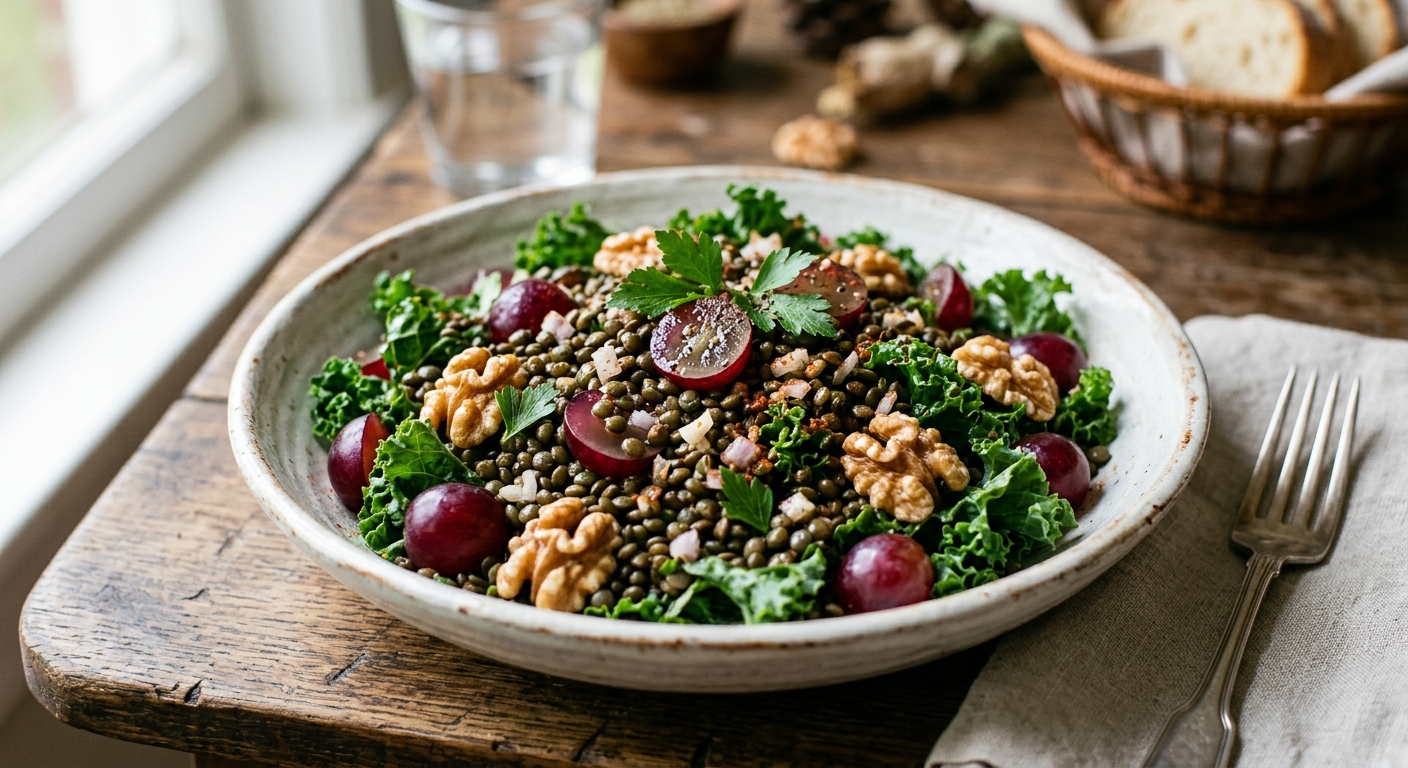
Some salads are an afterthought. This one is a nutritional strategy. The Resveratrol Red Grape and Walnut Power Salad was architected from the ground up around the science of inflammation reduction, pairing the polyphenol-dense skin of red grapes with the alpha-linolenic acid (ALA) powerhouse that is the walnut, then grounding everything in a warm French green lentil base that delivers slow-release energy and a remarkable spectrum of B vitamins. The result is a salad that genuinely sustains you for hours, not minutes.
What makes this dish stand apart on a crowded table of healthy greens is its layered approach to both flavor and function. The lentils are cooked with bay leaf, smoked paprika, and a soffritto of shallots and garlic, so the base is deeply savory before a single grape is halved. That warm, herby lentil foundation wilts the kale just enough to tame its bitterness while keeping enough structure to hold the dressing. The red grapes, split and tossed in the dressing just before serving, burst against the earthiness of the lentils in a way that feels almost luxurious. Toasted walnuts add a final layer of crunch and a hit of plant-based omega-3 fats that work synergistically with the fat-soluble antioxidants in the kale.
From a culinary standpoint, the technique choices here are deliberate. Toasting walnuts dry in a pan rather than roasting them in oil preserves their delicate polyunsaturated fat profile while still developing the Maillard-browned, nutty depth of flavor that raw walnuts simply cannot offer. The dressing is built on extra-virgin olive oil and red wine vinegar with a touch of Dijon and raw honey, a classic emulsion that also contributes its own modest polyphenol load from the olive oil. This is, in every sense, a dish where the cooking method is part of the medicine.
4
servings
Ingredients
- 200 gFrench green lentils (Puy lentils), rinsed
- 750 mllow-sodium vegetable stock
- 300 gseedless red grapes, halved
- 120 graw walnut halves
- 200 gcurly kale, tough stems removed, leaves torn
- 2 mediumshallots, finely diced
- 3 clovesgarlic, minced
- 1 tspsmoked paprika
- 2 leavesdried bay leaves
- 1 sprigfresh thyme
- 60 gcrumbled feta cheese (optional, omit for vegan)
- 30 gdried tart cherries
- 2 tbsppomegranate seeds (arils)
- 3 tbspextra-virgin olive oil, divided
- 2 tbspred wine vinegar
- 1 tspDijon mustard
- 1 tspraw honey (or maple syrup for vegan)
- 1 tbspfresh lemon juice
- —Colima Sea SaltMicroplastic Free Salt and black pepper to taste
Instructions
Click on an item below to shop for the recommended items for this recipe on Amazon.
As an Amazon Associate, we earn from qualifying purchases.
- Toast the walnuts first: place them in a dry skillet over medium heat, stirring constantly for 4 to 5 minutes until fragrant and lightly golden on the edges. Watch closely as they can turn from toasted to burnt in under a minute. Transfer immediately to a cutting board, let cool, then roughly chop and set aside.
- In a medium saucepan, heat 1 tablespoon of the olive oil over medium heat. Add the shallots and a pinch of salt, cooking for 3 to 4 minutes until softened and translucent. Add the minced garlic and smoked paprika, stirring for 60 seconds until aromatic.
- Add the rinsed lentils, vegetable stock, bay leaves, and thyme sprig. Bring to a boil, then reduce heat to a gentle simmer. Cook uncovered for 22 to 25 minutes, stirring occasionally, until the lentils are tender but still hold their shape. Puy lentils should have a slight bite, not be mushy. Drain any excess liquid and remove the bay leaves and thyme. Season generously with salt and pepper.
- While the lentils simmer, prepare the dressing. In a small jar or bowl, combine the remaining 2 tablespoons of olive oil, red wine vinegar, Dijon mustard, honey, and lemon juice. Whisk or shake vigorously until emulsified. Taste and adjust acidity or sweetness.
- Place the torn kale into a large mixing bowl. Spoon the warm lentils (directly from the pot while still hot) over the kale. Using tongs, toss together for 1 to 2 minutes. The residual heat from the lentils will wilt the kale slightly, removing harshness while keeping texture. Drizzle half the dressing over and toss again.
- Add the halved red grapes, dried tart cherries, and pomegranate seeds to the bowl. Drizzle the remaining dressing over the top. Finish with the chopped toasted walnuts and, if using, crumbled feta. Serve immediately while the lentil base is still warm for the best textural contrast.
- No pre-sauteeing is required. Add the rinsed lentils, vegetable stock, finely diced shallots, minced garlic, smoked paprika, bay leaves, and thyme sprig directly into the slow cooker insert. Stir once to combine, ensuring the lentils are fully submerged. The slow, moist environment will soften the shallots and bloom the paprika without any browning step.
- Drizzle 1 tablespoon of olive oil over the top. Place the lid on and cook on High for 3 to 4 hours or Low for 6 to 7 hours. Puy lentils hold their shape better than red lentils in a slow cooker, but check at the lower end of the time range. Lentils are done when completely tender with a slight firmness at the center. Remove bay leaves and thyme, then season with salt and pepper.
- About 20 minutes before serving, toast the walnuts in a dry skillet on the stovetop over medium heat, stirring for 4 to 5 minutes until golden and fragrant. Set aside to cool, then roughly chop. (This step is always done on the stovetop regardless of the method used for the lentils.)
- Prepare the dressing in a small jar: combine the remaining 2 tablespoons of olive oil, red wine vinegar, Dijon mustard, honey, and lemon juice. Shake vigorously until fully emulsified.
- Place the torn kale into a large serving bowl. Using a slotted spoon, transfer the warm cooked lentils from the slow cooker directly onto the kale, leaving behind excess liquid. The warm lentils will gently wilt the kale. If you prefer a saucier base, ladle a few tablespoons of the cooking liquid over as well. Toss with half the dressing.
- Top the dressed kale and lentil base with the halved red grapes, dried tart cherries, and pomegranate seeds. Scatter the chopped toasted walnuts over everything, drizzle with the remaining dressing, and finish with crumbled feta if using. The slow cooker version of the lentils will have a slightly silkier, more stew-like quality that pairs especially well with the bright acidity of the grapes.
- Set your Instant Pot or pressure cooker to Saute mode on medium heat. Add 1 tablespoon of olive oil and, once shimmering, cook the shallots for 2 to 3 minutes until soft. Add garlic and smoked paprika, stirring for 45 seconds. Hit Cancel to turn off the Saute function. This brief saute step is unique to the pressure cooker method because the high-pressure environment does not caramelize aromatics the way stovetop or slow cooker does.
- Add the rinsed lentils, vegetable stock, bay leaves, and thyme to the pot. Stir to deglaze any stuck bits from the bottom (this prevents the burn warning). Secure the lid and set the steam valve to Sealing. Cook on Manual or Pressure Cook at High Pressure for 10 minutes.
- Allow the pressure to release naturally for 10 minutes, then carefully turn the valve to Venting for full release. Open the lid away from you. The lentils should be perfectly tender with structure intact. Remove bay leaves and thyme, season with salt and pepper, and let sit uncovered for 3 to 4 minutes to allow surface moisture to evaporate slightly.
- While the pressure releases naturally, use those 10 minutes efficiently: toast the walnuts in a dry skillet on the stovetop over medium heat for 4 to 5 minutes, then chop and set aside. Whisk together the dressing of olive oil, red wine vinegar, Dijon, honey, and lemon juice in a small bowl.
- Place the torn kale in a large wide bowl. Spoon the hot lentils from the Instant Pot directly over the kale and toss immediately with tongs. The residual heat from pressure-cooked lentils is intense and wilts the kale beautifully in 60 to 90 seconds. Add half the dressing and toss again.
- Arrange the halved red grapes, dried tart cherries, and pomegranate seeds across the top. Add the chopped toasted walnuts, drizzle with the remaining dressing, and finish with crumbled feta if desired. The pressure cooker method produces the most tender lentil base of the three methods and is ideal when you need the salad ready in under 30 minutes.
- Preheat your oven to 200C (400F) with the rack in the upper-middle position. Line a rimmed baking sheet with parchment paper. Spread the halved red grapes cut-side up on one half of the baking sheet. Scatter the whole raw walnut halves on the other half. Drizzle the grapes lightly with 1 teaspoon of olive oil and a pinch of salt. Do not dress the walnuts.
- Roast at 200C for 12 to 14 minutes. Check the walnuts at the 8-minute mark as they toast faster than the grapes. Remove the walnuts when they are golden and fragrant (they will continue to cook slightly on the hot pan), and return the baking sheet to the oven for the grapes to continue roasting until they are blistered, slightly collapsed, and beginning to caramelize at the edges, about 12 to 14 minutes total. The roasted grapes will release a small amount of concentrated, jammy juice on the parchment. Reserve this juice for the dressing.
- While the grapes and walnuts roast, cook the lentils on the stovetop. In a medium saucepan, heat 1 tablespoon of olive oil over medium heat. Soften the shallots for 3 to 4 minutes, then add garlic and smoked paprika for 60 seconds. Add lentils, stock, bay leaves, and thyme. Bring to a boil, reduce to a simmer, and cook for 22 to 25 minutes until tender but firm. Drain, remove aromatics, and season.
- Build the dressing by combining the remaining olive oil, red wine vinegar, Dijon mustard, honey, and lemon juice in a small bowl. Whisk in any reserved roasted grape juice from the parchment for an intensely flavored, naturally sweetened vinaigrette.
- Place the torn kale in a large bowl. Add the warm lentils and toss together, using the heat to wilt the kale. Drizzle half the dressing over and toss to coat. Arrange the roasted grapes over the lentil and kale base, including all their caramelized juices. Scatter the toasted walnuts, dried tart cherries, and pomegranate seeds across the top.
- Finish with the remaining dressing, crumbled feta if using, and a few grinds of black pepper. Serve immediately. The roasted grape version has a markedly different flavor profile, warmer, richer, and more complex than the fresh grape version, while retaining all the same nutritional benefits from the resveratrol-concentrated grape skins.
Nutrition Breakdown
Per 1 serving (makes 4)
Vitamins & Minerals
% Daily Value based on a 2,000 calorie diet (FDA reference)
🧬 Essential Amino Acids
% of recommended daily intake (RDA) per serving
🛡 Antioxidant Profile
The Nutrition Science
The headline compound in this salad is resveratrol, a stilbenoid polyphenol produced by red grape vines as a defense mechanism against fungal infection and UV radiation. In human biology, resveratrol activates SIRT1 (sirtuin-1), a longevity-associated protein deacetylase that simultaneously suppresses NF-kB inflammatory transcription factor activity and enhances mitochondrial biogenesis. Clinical studies have shown that regular dietary intake of resveratrol from whole grape sources (rather than supplements) is associated with reduced serum levels of interleukin-6 (IL-6) and C-reactive protein (CRP), two of the most reliable biomarkers of chronic systemic inflammation. The halved grape preparation used in this recipe maximizes resveratrol bioavailability by exposing the skin tissue where the compound is concentrated.
Walnuts are one of the few plant foods to provide a meaningful dose of alpha-linolenic acid (ALA), the precursor to EPA and DHA. A single 30g serving of walnuts delivers approximately 2.6g of ALA, exceeding the daily adequate intake for adults. ALA competes with arachidonic acid for the COX and LOX enzyme pathways, reducing downstream production of pro-inflammatory prostaglandins and leukotrienes. Importantly, the fat-soluble antioxidants in kale (including lutein, zeaxanthin, and fat-soluble vitamin K) require dietary fat for absorption, meaning the walnut and olive oil components of this salad are not just flavorings but essential co-factors for the kale’s micronutrient delivery. This is the nutritional equivalent of designed synergy.
Puy lentils form the functional backbone of this dish from a glycemic management perspective. Their exceptionally low glycemic index of approximately 29 is attributable to their high resistant starch content and the intact cotyledon cell wall structure that slows amylase enzyme access during digestion. Combined with 11g of dietary fiber per serving, predominantly soluble fiber that forms a viscous gel in the intestinal lumen, this dish produces a blunted postprandial glucose response that is clinically meaningful for metabolic health. The folate content from the lentils and kale, delivering 55% of the daily value per serving, also directly supports the methylation cycle that governs homocysteine metabolism, elevated homocysteine being an independent cardiovascular risk factor and inflammatory marker.
Pro Tips
- Do not overdress the kale before adding the grapes. Add the dressing in two stages as described, otherwise the acid will break down the grape skins and the salad will become watery within minutes.
- For maximum resveratrol content, choose organically grown red grapes with the deepest purple-red skin color you can find. The darker the skin, the higher the polyphenol concentration. Concord grapes, if available, contain up to three times the resveratrol of standard seedless table grapes.
- If meal prepping, store the lentil base, the dressing, the walnuts, and the fresh components (grapes, kale, pomegranate seeds) in four separate containers. Combine only at serving time. The lentil base holds well refrigerated for up to 4 days and reheats well in 60 seconds in a microwave before being added to fresh kale.
I’m so glad you brought up sourcing, Klara – it really does matter, especially with grapes since their thin skins mean more pesticide contact. I’ve noticed the same thing in my own kitchen practice, and I actually started buying organic red grapes specifically during peak season so I can freeze them for smoothie bowls and golden milk variations year-round. What I find beautiful about this salad is that the resveratrol content pairs so well with anti-inflammatory spices like turmeric and ginger if you wanted to add them to that dressing, and of course black pepper to maximize curcumin absorption – it’s like building layers of plant medicine into one bowl.
Love the resveratrol focus here, though I’d be curious about your sourcing approach for the grapes and walnuts, since both show up on the Dirty Dozen pretty consistently. I’ve found that sourcing organic red grapes specifically makes a real difference in the total polyphenol content (not just residues), and organic walnuts tend to have notably better omega-3 profiles when they haven’t been treated with fungicides pre-harvest. Have you noticed sourcing affecting the actual inflammation response in clients, or is that more anecdotal for you? The kale massaging + lentil base combo is smart for bioavailability too.
yeah this is solid – ive definitely seen clients show different inflammation markers depending on sourcing, though its hard to isolate since they usually clean up their whole diet at once. that said, the fungicide thing on walnuts is real, ive tested my own omega-3 ratios before and after switching to organic and the difference was noticeable on bloodwork. red grapes though, thats where i really focus because youre getting polyphenols AND zinc in that skin, so pesticide load directly tanks the micronutrient density. honestly curious if youve measured the actual polyphenol content yourself or if youre going off third party testing – that kale bioavailability point youre