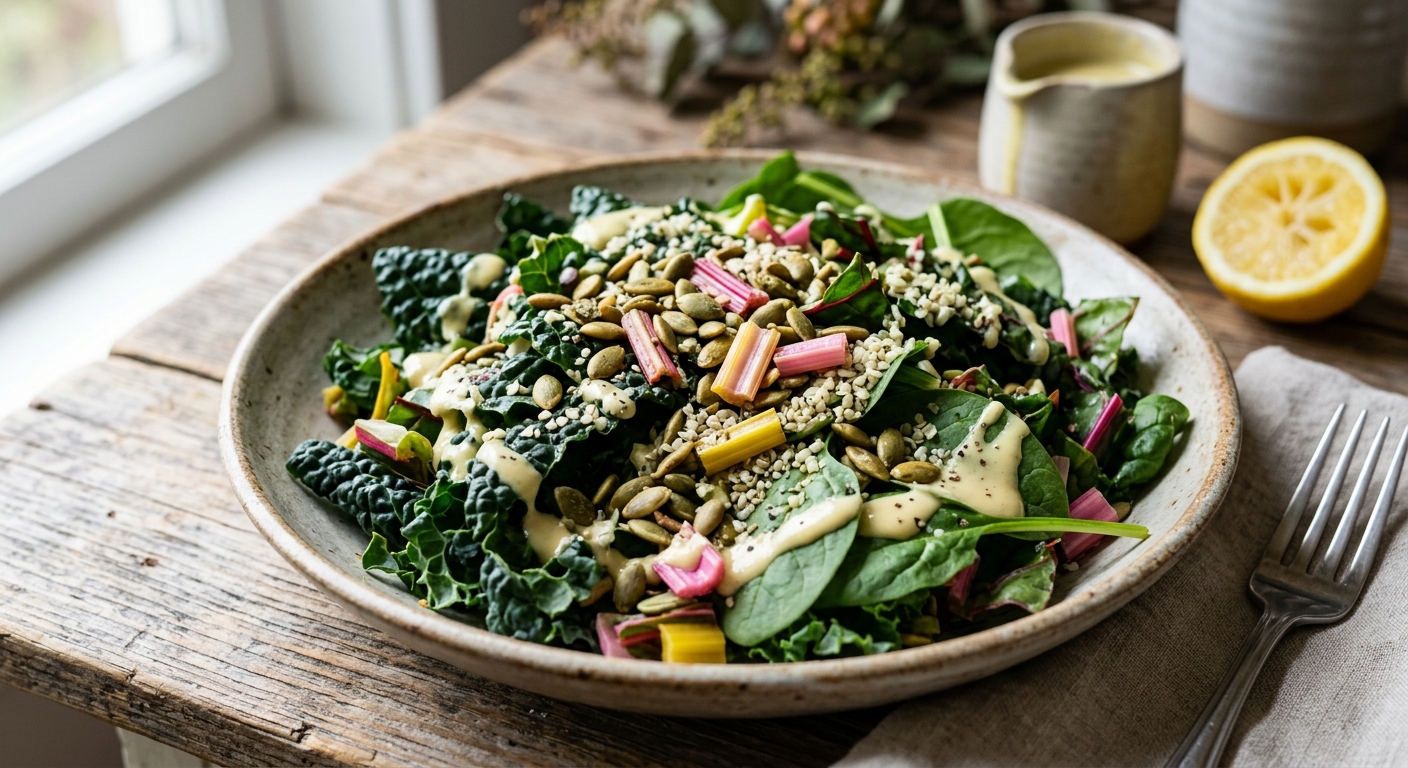
Not all salads are created equal. This one is built from the ground up as a nutritional statement, layering three of the most micronutrient-dense leafy greens on the planet into a single bowl that reads like a multivitamin come to life. Tuscan kale brings bold, chewy texture and a concentrated hit of Vitamins K1, C, and A. Rainbow chard contributes earthy depth alongside magnesium, potassium, and iron. Baby spinach rounds everything out with folate, additional iron, and a soft, yielding texture that balances the heartier leaves. Together, they create a salad that is simultaneously robust enough to anchor a meal and elegant enough to serve at a dinner party.
The warm lemon-tahini dressing is where culinary science meets kitchen craft. Tahini provides calcium and a generous dose of the amino acid methionine, while cold-pressed olive oil dramatically improves the bioavailability of the fat-soluble vitamins in the greens, particularly Vitamins K, A, and E. A touch of heat from the dressing wilts the chard and softens the kale just enough to improve digestibility without destroying the heat-sensitive folate in the spinach, which is added raw at the very end. Toasted pepitas and hemp seeds layered on top contribute plant-based complete protein, zinc, and magnesium, transforming a side dish into a nutritionally complete main course.
This recipe has been carefully calibrated so that a single serving delivers well over 100% of the Daily Value for Vitamin K1, meaningful contributions to iron, folate, calcium, and magnesium, and a glycemic load low enough to suit virtually any dietary approach. Whether you prepare the warm dressing on the stovetop, let the chard braise low and slow, or use a pressure cooker to develop a richer braised-green base in minutes, each method results in a deeply satisfying, restaurant-quality bowl.
4
servings
Ingredients
- 200 gTuscan (lacinato) kale, stems removed, leaves torn into bite-sized pieces
- 180 grainbow chard, stems thinly sliced, leaves roughly chopped (keep stems separate)
- 120 gbaby spinach, washed and dried
- 60 gpepitas (pumpkin seeds), raw
- 40 ghemp seeds (hulled)
- 80 gtahini (well-stirred)
- 60 mlfresh lemon juice (about 2 large lemons)
- 3 tbspextra-virgin olive oil
- 3 clovesgarlic, minced
- 2 tsplemon zest
- 1 tspground cumin
- 1 tspsmoked paprika
- 2 tbspnutritional yeast
- 60 mlwater, warm
- 1 tbspapple cider vinegar
- 30 gdried cranberries, unsweetened or lightly sweetened
- —Colima Sea SaltMicroplastic Free Salt and freshly cracked black pepper to taste
- —Red pepper flakes to taste (optional)
Instructions
Click on an item below to shop for the recommended items for this recipe on Amazon.
As an Amazon Associate, we earn from qualifying purchases.
- Begin by massaging the kale: place the torn kale leaves in a large mixing bowl, drizzle with 1 teaspoon of olive oil and a pinch of sea salt. Using both hands, squeeze and rub the leaves firmly for 2 to 3 minutes until they darken, soften noticeably, and reduce in volume by about one-third. This breaks down the tough cell walls, improving both texture and nutrient bioavailability. Set aside.
- Toast the pepitas in a dry skillet over medium heat for 3 to 4 minutes, tossing frequently, until they begin to pop and turn lightly golden. Transfer immediately to a small plate to prevent burning. Set aside.
- In the same skillet, heat the remaining 2 tablespoons of olive oil over medium heat. Add the sliced chard stems and cook, stirring, for 3 minutes until they begin to soften. Add the minced garlic, cumin, and smoked paprika, and stir for 30 seconds until fragrant. Add the chard leaves and toss with tongs for 1 to 2 minutes until just wilted. Season lightly with salt and pepper, then remove from heat.
- While the chard is still in the warm skillet, prepare the dressing directly in a small saucepan over low heat. Combine the tahini, lemon juice, lemon zest, warm water, apple cider vinegar, and nutritional yeast. Whisk continuously over low heat for 1 to 2 minutes until smooth, creamy, and warmed through (do not boil). Taste and adjust seasoning with salt and pepper.
- Assemble the salad: spread the massaged kale across a large serving platter or divide among four bowls. Top with the warm wilted chard mixture. Add the baby spinach on top of the chard (the residual heat will gently wilt the spinach slightly without cooking it). Drizzle the warm tahini dressing generously over the greens.
- Finish with the toasted pepitas, hemp seeds, dried cranberries, and a pinch of red pepper flakes if desired. Serve immediately while the dressing and chard are still warm.
- In the insert of your slow cooker, combine the torn kale leaves, chard stems, chard leaves, minced garlic, olive oil, cumin, smoked paprika, lemon zest, apple cider vinegar, and 80ml of warm water. Season with salt and pepper. Toss everything together directly in the insert so the greens are evenly coated.
- Place the lid on the slow cooker and set to Low. Cook for 1 hour 45 minutes to 2 hours. The kale and chard will braise down into silky, tender greens with a rich, concentrated flavour. Check at the 1 hour 30 minute mark: if there is excess liquid pooling, tilt the lid slightly to allow steam to escape for the final 20 to 30 minutes.
- While the greens braise, prepare the tahini dressing. In a medium bowl, whisk together the tahini, lemon juice, warm water, nutritional yeast, and apple cider vinegar until completely smooth. The dressing will be thick; adjust consistency with additional water, one tablespoon at a time, until it pours easily. Season with salt and set aside at room temperature.
- Toast the pepitas in a dry skillet over medium heat on the stovetop for 3 to 4 minutes until golden and popping. Set aside.
- When the braised greens are done, remove the slow cooker insert from the base. Gently fold in the baby spinach directly into the warm braised greens, stirring until just wilted from the residual heat (about 1 minute).
- Divide the warm braised greens among four bowls. Drizzle liberally with the lemon-tahini dressing, then top with toasted pepitas, hemp seeds, dried cranberries, and red pepper flakes. The dressing does not need to be reheated as the warm greens will bring it to temperature on contact.
- Set your Instant Pot or electric pressure cooker to the Saute function on medium heat. Add 1 tablespoon of olive oil. Once shimmering, add the chard stems and saute for 2 minutes. Add the minced garlic, cumin, and smoked paprika, stirring for 30 seconds until fragrant. Press Cancel to stop the Saute function.
- Add the torn kale leaves and chard leaves directly to the pot on top of the sauteed stems. Pour in 80ml of water and the apple cider vinegar. Drizzle the remaining 2 tablespoons of olive oil over the top and season with salt and pepper. Do not stir, as this layering prevents the garlic from scorching on the bottom.
- Secure the lid and set the pressure release valve to Sealing. Cook on Manual (High Pressure) for 3 minutes. When the cooking cycle is complete, perform an immediate quick release by carefully switching the valve to Venting. Open the lid away from your face.
- While pressure builds or while cooking, prepare the tahini dressing: whisk together the tahini, lemon juice, lemon zest, warm water, nutritional yeast, and apple cider vinegar in a bowl until smooth. Season with salt and pepper. Using the residual heat from the now-empty Saute cycle, quickly toast the pepitas in the dry pot for 2 to 3 minutes using the Saute function, then remove. Press Cancel again.
- Fold the baby spinach into the hot pressure-cooked greens inside the pot. Stir gently for 30 to 45 seconds: the retained heat will wilt the spinach without overcooking it and without requiring the lid or additional heat.
- Spoon the greens into bowls, drizzle generously with the tahini dressing, and finish with toasted pepitas, hemp seeds, dried cranberries, and red pepper flakes. Serve immediately.
- Preheat your oven to 200C (400F) with two large rimmed baking sheets inside the oven as it heats. Preheating the pans creates immediate sear contact with the greens, which prevents steaming and encourages crisping.
- In a large mixing bowl, toss the torn kale leaves with 1.5 tablespoons of olive oil, a pinch of sea salt, the smoked paprika, and half the lemon zest. Use your hands to ensure every leaf is lightly and evenly coated. In a separate bowl, toss the chard stems and chard leaves with the remaining 1.5 tablespoons of olive oil, the minced garlic, cumin, salt, and pepper.
- Carefully remove the hot baking sheets from the oven using oven mitts. Spread the kale in a single layer on one sheet and the chard mixture on the second sheet, ensuring pieces do not overlap (overcrowding causes steaming rather than roasting). Slide both sheets back into the oven.
- Roast the chard for 10 to 12 minutes until stems are tender and leaf edges begin to curl and lightly crisp. Roast the kale for 14 to 18 minutes, checking at the 12-minute mark: the leaves should be crisp at the edges but not burnt. Remove each sheet as the greens reach the correct texture, as kale takes longer than chard.
- While the greens roast, prepare the tahini dressing in a small saucepan over low heat. Whisk together tahini, lemon juice, remaining lemon zest, warm water, apple cider vinegar, and nutritional yeast over low heat for 1 to 2 minutes until smooth and just warmed. Season with salt and pepper. Toast the pepitas on a small section of one of the baking sheets during the last 4 minutes of roasting.
- Arrange the fresh baby spinach across a large serving platter as the base. Pile the hot roasted chard and crispy kale on top of the spinach: the heat from the roasted greens will gently wilt the spinach beneath. Drizzle the warm tahini dressing over everything, then scatter the toasted pepitas, hemp seeds, and dried cranberries across the top. Serve while the roasted greens are still warm and crisp.
Nutrition Breakdown
Per 1 serving (makes 4)
Vitamins & Minerals
% Daily Value based on a 2,000 calorie diet (FDA reference)
🧬 Essential Amino Acids
% of recommended daily intake (RDA) per serving
🛡 Antioxidant Profile
The Nutrition Science
Vitamin K1 (phylloquinone) is synthesised exclusively in plant chloroplasts, which is why dark leafy greens are by far its richest dietary source. A single serving of this salad delivers roughly 820 mcg of Vitamin K1, more than six times the adult Daily Value of 120 mcg. Vitamin K1 functions as an essential cofactor for the carboxylation of glutamic acid residues in clotting factors II, VII, IX, and X, as well as the anticoagulant proteins C and S. Beyond coagulation, it also activates osteocalcin, the bone matrix protein responsible for binding calcium into hydroxyapatite crystals, making adequate Vitamin K status a cornerstone of long-term bone mineral density. Research published in the American Journal of Clinical Nutrition has consistently associated higher phylloquinone intake with reduced risk of hip fracture, independent of calcium and Vitamin D status.
The olive oil and tahini in this recipe are not merely culinary choices: they are deliberate nutritional delivery systems. Vitamins K, A, E, and the carotenoids beta-carotene, lutein, and zeaxanthin are all fat-soluble, meaning they require dietary fat present in the same meal for meaningful intestinal absorption. A landmark study from Ohio State University demonstrated that adding avocado or avocado oil to a salad increased carotenoid absorption by 4 to 17 times compared to a fat-free dressing. The approximately 26g of fat per serving in this recipe, predominantly monounsaturated, ensures that the extraordinary vitamin and phytonutrient payload of the greens is actually absorbed, not simply consumed.
The combination of three distinct green species also provides meaningful nutritional redundancy. Kale is the dominant source of Vitamin K1 and Vitamin C. Chard contributes significantly to magnesium and potassium, electrolytes critical for neuromuscular function and blood pressure regulation. Spinach is the primary folate source, providing the reduced form (5-methyltetrahydrofolate) that requires no enzymatic conversion in individuals with MTHFR gene variants. Pepitas and hemp seeds layer in plant-complete protein, zinc (essential for immune function and DNA synthesis), and magnesium, while the Vitamin C from lemon juice meaningfully enhances absorption of the non-heme iron present across all three greens by reducing Fe3+ to the more bioavailable Fe2+ form directly in the digestive tract.
Pro Tips
- Do not skip the kale massage step: the mechanical action ruptures the tough fibrous cell walls, reducing bitterness, improving texture, and increasing the surface area available for dressing absorption. Two to three minutes of firm squeezing transforms raw kale from challenging to genuinely delicious.
- If you take warfarin (Coumadin) or other Vitamin K-dependent anticoagulants, consult your prescribing physician before making this salad a regular part of your diet. The very high Vitamin K1 content can interact with anticoagulant therapy, though the key is consistency of intake rather than avoidance.
- For optimal nutrient retention, add the baby spinach last and off direct heat in every cooking method. Spinach’s folate content begins to degrade meaningfully above 70C (158F), and its brief contact with residual heat is sufficient to wilt it pleasantly without significant nutrient loss.
this looks amazing and i love that youre breaking down the bioavailability piece since that matters so much, but just curious about the carb load on this one? the greens themselves are pretty low but im wondering what the tahini dressing adds and whether you calculated net carbs with the tahini included. ive found that massaged greens with warm dressings are a total game changer for satiety on keto, and the vitamin k density here is incredible, so id definitely make this if i can keep it in my macros.
Love that you’re digging into bioavailability, Ben – that’s the question most recipes skip over entirely. I’m actually really curious about your approach here too, since I have to be careful with vitamin K intake due to medications, but I’ve found that the heat treatment in the chard and kale does seem to make a meaningful difference in how my body handles the overall load compared to eating raw spinach. The warm dressing detail in this recipe is smart because it gives you some of that gentle cooking effect without destroying the other micronutrients, which is what I’m always trying to balance. Would love to know if your CGM tracking has shown you a pattern with different preparation methods.
This is exactly the kind of detailed nutrient breakdown I obsess over, so I’m genuinely curious: are you accounting for the bioavailability difference between raw spinach phylloquinone and the heat-treated kale/chard in your 600% calculation? I’ve been tracking my CGM response to this exact salad combo for weeks, and the warm dressing seems to blunt my post-meal glucose spike compared to room-temp versions, possibly due to the fat content slowing gastric emptying. Would love to know your phylloquinone retention estimates post-wilting if you’ve run any analysis on that.