Molybdenum is the quiet achiever of the mineral world. You will rarely see it headlining a wellness article, yet this trace mineral powers two of your body’s most essential detoxification enzymes: sulfite oxidase, which neutralises toxic sulfites from food and metabolism, and aldehyde oxidase, which breaks down environmental pollutants and pharmaceutical byproducts. Without adequate molybdenum, these enzymatic pathways stall, and sulfite sensitivity, fatigue, and impaired detoxification can follow. The Recommended Daily Allowance sits at just 45 micrograms for adults, but research suggests that optimal enzymatic function may benefit from intakes closer to 100 to 150 micrograms. This bowl delivers approximately 135 micrograms per serving, making it one of the most efficient single-meal sources available from whole foods.
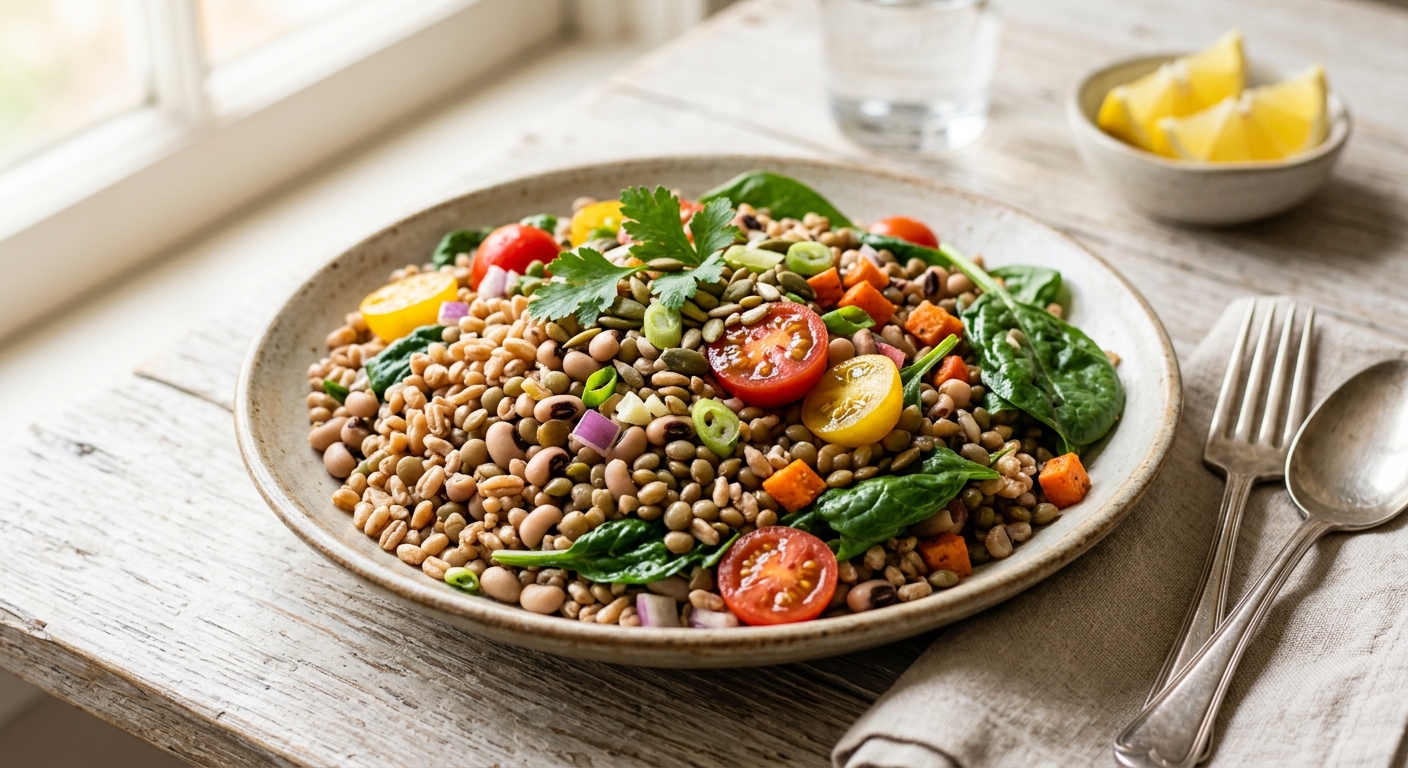
The architecture of this bowl is deliberate. Black-eyed peas are among the highest molybdenum-containing legumes at roughly 52 micrograms per 100g cooked, while green lentils contribute a further 27 micrograms per 100g alongside an extraordinary folate and iron payload. Farro, an ancient emmer wheat, adds chewy texture, selenium, and a complete B-vitamin matrix that supports the same methylation pathways molybdenum feeds into. The roasted cherry tomatoes bring lycopene and vitamin C, which dramatically enhances non-heme iron absorption from the legumes, a pairing that is as scientifically grounded as it is delicious. A turmeric-spiked lemon-tahini dressing binds the bowl together while contributing calcium, additional zinc, and curcumin’s anti-inflammatory synergy.
What makes this recipe genuinely exciting from a culinary standpoint is how each cooking method transforms the texture and depth of the dish. The stovetop approach gives you real-time control for perfectly tender, individual grains and legumes. The slow cooker produces a creamier, more melded result as the starches slowly hydrate and the flavours deepen over hours. The pressure cooker slashes time without sacrificing nutrition, as the sealed environment preserves water-soluble B vitamins far better than prolonged boiling. The oven method transforms this into a sheet-pan roast situation, concentrating the vegetables and creating caramelised edges on the legumes that no other method can replicate. Every version is worth making, and the nutritional profile remains consistent across all four.
4
servings
Ingredients
- 200 gdried black-eyed peas, soaked overnight and drained
- 150 gdried green lentils, rinsed and picked over
- 180 gpearled farro, rinsed
- 300 gcherry tomatoes, halved
- 200 gbaby spinach, washed
- 1 mediumred onion, diced
- 4 clovesgarlic, minced
- 1 mediumcarrot, peeled and diced
- 1 stalkcelery, finely sliced
- 900 mllow-sodium vegetable broth
- 3 tbspextra-virgin olive oil, divided
- 3 tbsptahini (sesame paste)
- 2 tbspfresh lemon juice
- 1 tspground turmeric
- 1 tspground cumin
- 0.5 tspsmoked paprika
- 0.5 tspground coriander
- 2 tbspapple cider vinegar
- 1 tbspnutritional yeast
- 30 gfresh flat-leaf parsley, roughly chopped
- —Colima Sea SaltMicroplastic Free Salt and black pepper to taste
- —Pinch of chilli flakes (optional)
Instructions
Click on an item below to shop for the recommended items for this recipe on Amazon.
As an Amazon Associate, we earn from qualifying purchases.
- Bring a medium saucepan of lightly salted water to a boil. Add the soaked, drained black-eyed peas and cook over medium-high heat for 35 to 40 minutes, skimming any foam that rises in the first 5 minutes, until completely tender but still holding their shape. Drain and set aside.
- While the black-eyed peas cook, place the green lentils in a separate small saucepan with 450ml of cold water and a pinch of salt. Bring to a boil, then reduce to a gentle simmer. Cook for 20 to 25 minutes until just tender with a slight bite remaining. Drain any excess water and set aside.
- In a third saucepan, combine the rinsed farro with 500ml of cold water and a pinch of salt. Bring to a boil, then reduce heat to low, cover, and simmer for 25 to 30 minutes until the grains are tender and chewy but not bloated. Drain any residual water.
- Heat 2 tablespoons of olive oil in a large Dutch oven or wide saucepan over medium heat. Add the diced red onion and cook, stirring occasionally, for 5 to 6 minutes until softened and translucent. Add the garlic, carrot, and celery and cook for a further 3 minutes. Stir in the turmeric, cumin, smoked paprika, and coriander and toast the spices in the oil for 60 seconds, stirring constantly.
- Pour in 200ml of the vegetable broth and the apple cider vinegar, scraping up any spiced bits from the bottom of the pot. Add the cherry tomatoes and simmer over medium heat for 8 to 10 minutes until the tomatoes have burst and begun to collapse into a loose, fragrant sauce. Season generously with salt and pepper.
- Add the cooked black-eyed peas, lentils, and farro to the tomato base and fold gently to combine. Pour in a further 100ml of broth if the mixture looks dry and heat through over medium-low for 3 to 4 minutes. Fold in the baby spinach in two batches, letting each batch wilt before adding the next.
- Whisk together the tahini, lemon juice, remaining 1 tablespoon of olive oil, nutritional yeast, and 2 to 3 tablespoons of warm water until a smooth, pourable dressing forms. Season with salt. Divide the grain and legume mixture into bowls, drizzle generously with the turmeric-tahini dressing, scatter with fresh parsley, and add chilli flakes if using. Serve immediately.
- Lightly oil the insert of a 5 to 6 litre slow cooker. Add the soaked, drained black-eyed peas, rinsed green lentils, and rinsed farro directly to the insert. There is no need to pre-cook them separately: the extended low-heat environment will cook all three components together, with the farro releasing starch that creates a naturally silky, cohesive texture.
- Add the diced red onion, minced garlic, diced carrot, sliced celery, halved cherry tomatoes, turmeric, cumin, smoked paprika, coriander, and apple cider vinegar to the insert. Pour in all 900ml of vegetable broth and stir everything together. The broth level should just cover the ingredients. Add up to 100ml of water if needed.
- Place the lid on firmly and cook on Low for 7 to 8 hours or on High for 4 hours. Avoid lifting the lid during the first 6 hours on Low, as each peek releases steam and extends cooking time by approximately 20 minutes. The mixture is ready when the black-eyed peas are completely tender and the farro has swelled and thickened the liquid into a loose porridge-style base.
- Remove the lid and stir in the nutritional yeast and 1 tablespoon of olive oil. Taste and season generously with salt and pepper. Fold in the baby spinach in two large handfuls, replace the lid, and cook on High for a further 10 to 15 minutes until the spinach has fully wilted and integrated.
- Whisk the tahini, lemon juice, remaining 2 tablespoons of olive oil, and 3 tablespoons of warm water together in a small bowl until smooth and drizzleable. Season with salt. Ladle the slow-cooked bowl into deep dishes, drizzle with the tahini dressing, top with fresh parsley, and finish with chilli flakes if desired.
- Select the Saute function on your Instant Pot or electric pressure cooker. Heat 2 tablespoons of olive oil, then add the diced red onion, carrot, and celery. Saute for 4 to 5 minutes, stirring frequently, until softened. Add the minced garlic, turmeric, cumin, smoked paprika, and coriander and stir constantly for 45 seconds until the spices are fragrant and coating the vegetables.
- Pour in the apple cider vinegar to deglaze, scraping any spiced residue from the bottom of the insert with a wooden spoon. This deglazing step is critical to prevent a burn notice during pressurisation. Add the cherry tomatoes and stir to combine.
- Add the soaked, drained black-eyed peas, rinsed green lentils, and rinsed farro. Pour in 850ml of the vegetable broth and the nutritional yeast, stirring to distribute everything evenly. The liquid should just cover the ingredients. Do not add the spinach at this stage.
- Secure the lid and set the valve to Sealing. Select Manual or Pressure Cook at High Pressure and set the timer for 18 minutes. Once cooking is complete, allow the pressure to release naturally for 12 minutes, then carefully quick-release any remaining pressure by turning the valve to Venting.
- Open the lid away from you. The mixture should be thick and cohesive. If there is excess liquid, select Saute and simmer uncovered for 3 to 4 minutes to reduce. Fold in the baby spinach in batches, using the residual heat and the Saute function on Low if needed, until fully wilted. Season generously with salt and pepper.
- Whisk the tahini, lemon juice, remaining 1 tablespoon of olive oil, and 2 to 3 tablespoons of warm water together until smooth and pourable. Divide the bowl into serving dishes, drizzle with the tahini dressing, scatter with fresh parsley, and add chilli flakes if desired. Serve hot.
- Preheat your oven to 200C (180C fan) / 400F. Par-cook the rinsed farro in boiling salted water for 15 minutes only (it should be about 60% cooked and still quite firm at the centre) and drain well. Separately, simmer the green lentils for 12 minutes until just undercooked, then drain. The soaked black-eyed peas will complete their cooking in the oven.
- On a large rimmed baking sheet (approximately 45x35cm), toss the halved cherry tomatoes, diced red onion, carrot, and celery with 2 tablespoons of olive oil, the turmeric, cumin, smoked paprika, coriander, half the minced garlic, a generous pinch of salt, and black pepper. Spread in a single layer and roast on the upper-middle rack for 20 to 22 minutes until the tomatoes are blistered and the edges of the vegetables are beginning to caramelise.
- Meanwhile, in a large oven-safe casserole dish or deep roasting pan, combine the par-cooked farro, par-cooked lentils, soaked black-eyed peas, remaining garlic, apple cider vinegar, nutritional yeast, and 600ml of vegetable broth. Cover tightly with a lid or two layers of foil.
- Once the sheet-pan vegetables are roasted, reduce the oven temperature to 180C (160C fan) / 350F. Place the covered casserole dish in the oven and bake for 35 to 40 minutes until the black-eyed peas are completely tender and most of the broth has been absorbed. Check at the 25-minute mark and add a splash of broth if it looks dry.
- Remove the casserole from the oven, discard the foil, and fold in the roasted vegetables and all their caramelised juices from the baking sheet. Nestle the baby spinach on top in an even layer, cover again, and return to the switched-off oven for 8 minutes, using the residual heat to wilt the spinach without overcooking it.
- Whisk the tahini, lemon juice, remaining 1 tablespoon of olive oil, and 3 tablespoons of warm water together until smooth. Remove the casserole from the oven, fold everything together gently, and season generously with salt and pepper. Serve directly from the dish, drizzled with tahini dressing and topped with fresh parsley and optional chilli flakes.
Nutrition Breakdown
Per 1 serving (makes 4)
Vitamins & Minerals
% Daily Value based on a 2,000 calorie diet (FDA reference)
🧬 Essential Amino Acids
% of recommended daily intake (RDA) per serving
🛡 Antioxidant Profile
The Nutrition Science
Molybdenum functions primarily as a cofactor embedded in four human metalloenzymes, but the two most clinically relevant are sulfite oxidase and aldehyde oxidase. Sulfite oxidase catalyses the terminal step in the catabolism of sulfur-containing amino acids, converting toxic sulfite to inert sulfate for renal excretion. Individuals with inadequate molybdenum intake, or the extremely rare genetic condition of molybdenum cofactor deficiency, accumulate sulfite to neurotoxic levels. Even subclinical insufficiency may manifest as sulphite sensitivity, characterised by wine headaches, dried-fruit intolerance, and asthma-like reactivity to sulfite-preserved foods. The 135 micrograms delivered by this bowl dwarfs the 45-microgram RDA and comfortably approaches the tolerable upper intake level of 2000 micrograms, ensuring robust cofactor saturation without any risk of excess.
The iron story in this dish is nuanced and worth understanding. Both black-eyed peas and green lentils provide non-heme iron, the form with intrinsically lower bioavailability (roughly 2 to 20%) compared to heme iron from meat (15 to 35%). However, the vitamin C from cherry tomatoes and parsley in this bowl dramatically upregulates non-heme iron absorption by reducing ferric iron (Fe3+) to the more soluble ferrous form (Fe2+) in the intestinal lumen, while simultaneously inhibiting the formation of insoluble iron-tannin complexes. Studies have shown that consuming as little as 25mg of vitamin C alongside non-heme iron can increase its absorption by 2 to 3 fold. This dish provides approximately 28mg of vitamin C per serving, placing it squarely in the optimal enhancement range. The apple cider vinegar further acidifies the gastric environment, a secondary but meaningful facilitator of mineral solubility.
Farro contributes a selenium and manganese payload that works synergistically with the molybdenum from the legumes. Manganese is itself a cofactor for manganese superoxide dismutase (MnSOD), the primary mitochondrial antioxidant enzyme, and selenium powers glutathione peroxidase. Together, these three trace minerals form an enzymatic triad that addresses oxidative stress at three distinct cellular compartments: the cytosol, the mitochondrial matrix, and the peroxisomal detoxification network. The curcumin from turmeric further potentiates this network by upregulating the Nrf2 transcription factor, which increases endogenous production of glutathione and catalase. This bowl is not merely a source of individual nutrients; it is a precisely engineered environment in which those nutrients amplify each other’s bioavailability and biological function.
Pro Tips
- Soak the black-eyed peas for a full 12 hours and discard the soaking water before cooking. This removes the majority of raffinose and stachyose, the oligosaccharides responsible for intestinal gas, and also leaches out a portion of phytic acid that would otherwise bind and inhibit iron and zinc absorption.
- Do not add salt to the legumes until after they are fully cooked. Salt added to the cooking water toughens the seed coat by competing with calcium and magnesium ions in the pectin matrix, dramatically extending cook time and resulting in unevenly textured peas and lentils.
- The tahini dressing can be made up to 5 days ahead and stored in a sealed jar in the refrigerator. If it thickens on chilling, whisk in warm water one teaspoon at a time until the desired consistency returns. A squeeze of extra lemon brightens the flavour on day 3 and beyond.
This is solid work, but I’d gently push back on the “detox mineral” framing since molybdenum’s role in sulfite oxidation doesn’t translate to some magical detox effect the way people imagine it. That said, what you’ve actually built here is genuinely valuable: the cofactor support for xanthine oxidase and aldehyde oxidase does matter for purine metabolism and phase 1 detoxification, and pairing legumes this way for complete amino acids is exactly the kind of practical nutrition planning I wish more of my cardiac patients understood before their first event. The real win is the fiber load and mineral density hitting simultaneously. One clinical note though: anyone on allopurinol
honestly this is the nuance i needed to hear because i got caught up in the “detox” language too when i was first learning about molybdenum after my mold diagnosis, and it took me months to realize that hype around detox minerals can actually distract from whats genuinely happening in the body. what you said about xanthine oxidase and phase 1 support is real and matters way more than the magic bullet marketing. my question though is about the legume piece – black-eyed peas and lentils are both higher oxalate, and im curious if youve seen that create issues for people trying to optimize their detox pathways, especially if theyre already dealing with accumulated
Nick’s spot on, and I appreciate the precision here. What really caught my eye though is that legume/grain pairing for complete amino acid coverage, especially the leucine content across black-eyed peas and farro. For my athletes, this bowl hits different because you’re getting solid leucine timing around training while also capturing that molybdenum cofactor support for normal enzyme function, which matters for overall metabolic efficiency. The DIAAS on this combo has to be pretty solid given the complementary amino acid profiles, so it’s functionally a strong post-workout option even if we’re dropping the “detox” language.