
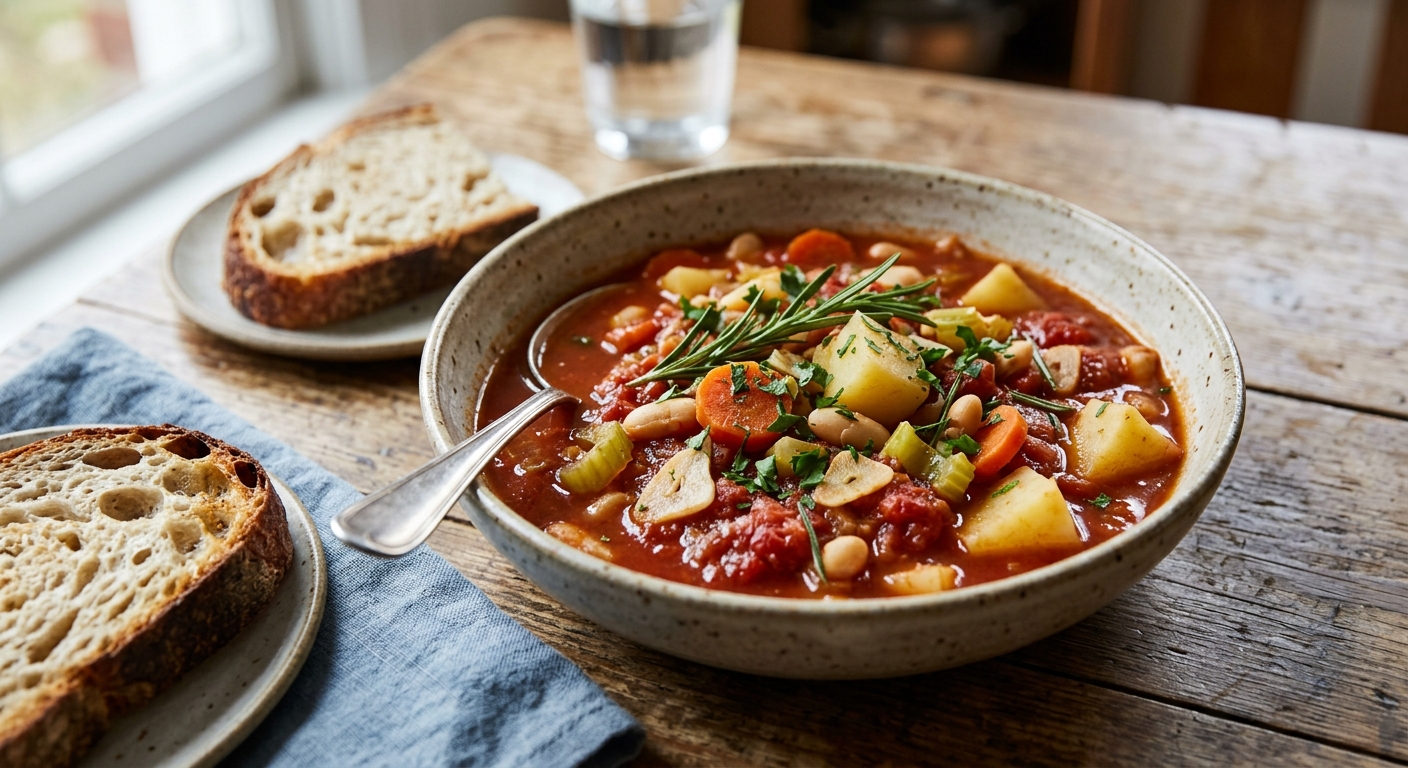
Most home cooks never think about lithium as a dietary nutrient, yet this ultra-trace mineral is found naturally in soil, water, and certain whole foods, and emerging research suggests that even the small amounts obtained through diet may play a meaningful role in mood regulation, neuroprotection, and cognitive resilience. Tomatoes, legumes, rosemary, and root vegetables grown in mineral-rich soils are among the best dietary sources of lithium, and this slow stew layers them together with intention. Every ingredient was chosen not only for flavor but for its contribution to a broader trace mineral matrix that includes manganese, molybdenum, boron, chromium, and vanadium alongside the more familiar iron, zinc, and magnesium.
Rosemary is not just a fragrant herb here. It anchors the entire dish with resinous, pine-like depth that deepens during long cooking, and it contributes rosmarinic acid and carnosic acid, two of the most potent antioxidant compounds found in the culinary herb world. The tomato base, built from both crushed whole tomatoes and a concentrated paste, provides lycopene, beta-carotene, and vitamin C alongside natural glutamates that create a savory, almost meaty umami foundation. Cannellini beans add creaminess, plant protein, and a significant molybdenum contribution, while diced potato and carrot bring boron and chromium to round out the mineral matrix.
What makes this stew exceptional for Calibrated Cuisine is how each cooking method subtly reshapes the dish. The stovetop version gives you active control over texture and reduction. The slow cooker produces a silkier, more deeply infused result as the rosemary has hours to surrender its oils. The pressure cooker delivers a weeknight-fast version that still achieves remarkable depth. And the oven method, with its dry ambient heat circulating around a covered Dutch oven, produces a slightly caramelized, thickened stew with a roasted top layer that the other methods simply cannot replicate. Choose your method based on your schedule and your mood, but know that the mineral nourishment is consistent across all four.
4
servings
Ingredients
- 400 gcanned crushed whole tomatoes (preferably San Marzano)
- 2 tbspdouble-concentrated tomato paste
- 400 gcanned cannellini beans, rinsed and drained
- 300 gwaxy potatoes, peeled and cut into 2cm cubes
- 200 gcarrots, peeled and sliced into 1cm rounds
- 150 gcelery stalks, sliced into 1cm pieces
- 120 gyellow onion, finely diced
- 4 clovesgarlic, thinly sliced
- 3 sprigsfresh rosemary (each about 15cm long)
- 2 sprigsfresh thyme
- 600 mllow-sodium vegetable broth
- 3 tbspextra-virgin olive oil
- 1 tspsmoked paprika
- 0.5 tspground cumin
- 1 tbspred wine vinegar
- 30 gflat-leaf parsley, roughly chopped (for finishing)
- —Colima Sea SaltMicroplastic Free Salt and black pepper to taste
Instructions
Click on an item below to shop for the recommended items for this recipe on Amazon.
As an Amazon Associate, we earn from qualifying purchases.
- Place a large, heavy-bottomed pot or Dutch oven over medium heat. Add the olive oil and heat until it shimmers. Add the diced onion and a pinch of salt and cook, stirring occasionally, for 7 to 8 minutes until the onion is soft, translucent, and just beginning to color at the edges.
- Add the sliced garlic, smoked paprika, and ground cumin to the pot. Stir constantly for 90 seconds, keeping the heat at medium, until the garlic is fragrant and the spices bloom into the oil. Push the mixture to the sides and add the tomato paste directly to the center of the pot. Let it fry undisturbed for 2 minutes until it darkens slightly and smells caramelized, then stir it into the onion mixture.
- Pour in the crushed tomatoes and stir to deglaze any fond from the base of the pot. Add the vegetable broth, potatoes, carrots, celery, rosemary sprigs, and thyme sprigs. Stir well and bring to a vigorous boil over high heat.
- Once boiling, reduce the heat to medium-low so the stew maintains a steady, gentle simmer with small bubbles breaking the surface. Cook uncovered for 25 minutes, stirring every 5 to 6 minutes to prevent sticking, until the potatoes are just tender when pierced with a knife tip and the liquid has reduced and thickened.
- Add the drained cannellini beans and stir them in gently to avoid breaking them apart. Continue simmering for a further 8 to 10 minutes until the beans are heated through and the stew has reached a thick, cohesive consistency. Remove and discard the rosemary and thyme sprigs.
- Remove the pot from the heat. Stir in the red wine vinegar, taste carefully, and adjust seasoning with salt and black pepper. The vinegar is critical: it lifts and brightens the entire mineral-heavy flavor profile. Ladle into warm bowls and finish with a generous scatter of fresh flat-leaf parsley.
- Before adding anything to the slow cooker insert, bloom your aromatics on the stovetop. Heat the olive oil in a skillet over medium-high heat. Add the onion and cook for 5 minutes until softened. Add the garlic and cook for 1 minute, then add the tomato paste and smoked paprika and fry, stirring, for 2 minutes until the paste deepens in color. This stovetop step is not optional: blooming aromatics in the slow cooker produces a flat, raw-tasting stew.
- Transfer the bloomed onion and tomato paste mixture into the slow cooker insert. Add the crushed tomatoes, vegetable broth, potatoes, carrots, celery, cumin, and red wine vinegar. Stir thoroughly to combine everything into a uniform base.
- Nestle the rosemary and thyme sprigs down into the liquid so they are fully submerged. Press the cannellini beans in around the edges of the insert rather than piling them in the center, which helps them heat evenly without becoming mushy on top.
- Place the lid on the slow cooker and cook on Low for 7 to 8 hours or on High for 3.5 to 4 hours. Do not lift the lid during cooking: each peek adds 20 to 30 minutes to the effective cook time. The stew is ready when the potatoes are completely tender and the liquid has taken on a deep, burgundy-tinged color.
- Once cooking is complete, use tongs to remove and discard the rosemary and thyme sprigs. Stir the stew gently from the bottom, as some of the tomato solids will have settled. Taste and adjust salt and black pepper. If the stew seems thinner than you like, switch to the High setting with the lid slightly ajar for 20 to 30 minutes to reduce. Finish with chopped flat-leaf parsley just before serving.
- Set your Instant Pot or electric pressure cooker to Saute mode on Normal heat. Add the olive oil and heat for 1 minute. Add the onion and cook, stirring, for 4 to 5 minutes until softened. Add the garlic, smoked paprika, and cumin, stir for 1 minute, then add the tomato paste and fry for 90 seconds, pressing it against the hot pot bottom to caramelize it slightly.
- Pour in approximately 100ml of the vegetable broth and use a wooden spoon or silicone spatula to scrub up all the browned bits from the bottom of the insert. This deglazing step is essential in a pressure cooker: any stuck fond will trigger the burn warning and prevent the pot from pressurizing.
- Add the remaining broth, crushed tomatoes, potatoes, carrots, celery, and red wine vinegar. Stir to combine. Tuck the rosemary and thyme sprigs into the liquid. Add the cannellini beans last, distributing them evenly across the surface without stirring again so they do not sink and potentially scorch.
- Secure the lid and set the pressure release valve to Sealing. Select Pressure Cook (or Manual) on High Pressure and set the timer for 15 minutes. The pot will take approximately 8 to 10 minutes to come to full pressure before the countdown begins.
- When the timer completes, allow natural pressure release for 10 full minutes, then carefully switch the valve to Venting to release any remaining pressure. Open the lid away from you. The stew will look very liquid immediately upon opening. Switch back to Saute mode and simmer uncovered for 5 to 8 minutes, stirring gently, until it thickens to your preferred consistency. Remove herb sprigs, adjust seasoning, and finish with fresh parsley.
- Preheat your oven to 160 degrees Celsius (320 degrees Fahrenheit) with a rack positioned in the lower third. On the stovetop over medium heat, warm the olive oil in a large Dutch oven. Add the onion and cook for 6 to 7 minutes until softened and golden. Add the garlic, smoked paprika, and cumin and stir for 1 minute. Add the tomato paste and cook, pressing it into the base of the Dutch oven, for 2 minutes until it caramelizes to a brick-red color.
- Deglaze the Dutch oven with the crushed tomatoes, scraping up any caramelized paste from the bottom. Add the vegetable broth, potatoes, carrots, celery, cumin, and red wine vinegar. Stir well. The liquid level should come about two-thirds of the way up the vegetable pieces; if it looks too dry, add up to 100ml additional broth.
- Lay the rosemary and thyme sprigs flat on top of the vegetables, then scatter the drained cannellini beans over the surface. The herb sprigs sitting partially above the liquid will dry-toast slightly in the oven heat, intensifying their volatile oils into the steam environment inside the pot. Season generously with salt and black pepper.
- Place the lid firmly on the Dutch oven and transfer it to the preheated oven. Braise for 1 hour 30 minutes without disturbing it. The sealed environment creates a gentle, all-around heat that cooks the vegetables evenly from every direction and slowly concentrates the mineral-rich tomato base.
- After 1 hour 30 minutes, carefully remove the Dutch oven from the oven and take off the lid. Return it to the oven, uncovered, for a final 15 minutes. This uncovered phase allows surface moisture to evaporate, forming a slightly reduced, glossy top layer with visible caramelized edges. Remove from the oven, discard the herb sprigs, stir gently to incorporate the concentrated surface into the broth below, taste and adjust seasoning, then finish with fresh flat-leaf parsley before serving directly from the Dutch oven at the table.
Nutrition Breakdown
Per 1 serving (makes 4)
Vitamins & Minerals
% Daily Value based on a 2,000 calorie diet (FDA reference)
🧬 Essential Amino Acids
% of recommended daily intake (RDA) per serving
🛡 Antioxidant Profile
The Nutrition Science
Lithium is classified as an ultra-trace element, meaning the body requires and processes it in microgram rather than milligram quantities. Dietary lithium intakes typically range from 0.6mg to 3.1mg per day depending on local soil and water lithium concentrations, and this stew, built from tomatoes, legumes, and root vegetables grown in mineral-adequate soil, contributes meaningfully to that range. Large epidemiological studies, including a landmark 2011 analysis of 18 Japanese municipalities, have found inverse correlations between regional dietary lithium intake and rates of suicide, dementia, and mood disorders. The proposed mechanisms include lithium’s inhibition of glycogen synthase kinase-3 beta (GSK-3B), an enzyme implicated in tau protein hyperphosphorylation and neuroinflammatory signaling, and its upregulation of brain-derived neurotrophic factor (BDNF), which supports synaptic plasticity and neuronal survival.
The molybdenum content of this stew, sourced almost entirely from the cannellini beans, is particularly notable. Molybdenum is a cofactor for three critical enzymes: sulfite oxidase, xanthine oxidase, and aldehyde oxidase. Sulfite oxidase is the final step in the catabolism of sulfur-containing amino acids including methionine and cysteine, and deficiency, though rare, produces severe neurological consequences. The 164% DV per serving provided by this stew reflects how efficiently legumes bioaccumulate soil molybdenum, and it explains why traditional bean-and-tomato stews across Mediterranean and Middle Eastern culinary traditions have long been associated with longevity outcomes in retrospective dietary analysis.
Manganese, present at 61% DV per serving, deserves specific attention in the context of this dish’s rosemary content. Manganese is the primary metal cofactor for manganese superoxide dismutase (MnSOD), the mitochondrial antioxidant enzyme that neutralizes superoxide radicals produced as a byproduct of cellular respiration. Rosemary’s carnosic acid has been shown in vitro to upregulate MnSOD expression through Nrf2 pathway activation, suggesting a synergistic relationship between the dietary manganese supplied by the legumes and root vegetables and the gene-expression effects of the rosemary polyphenols. While this synergy has not yet been confirmed in clinical trials, the mechanistic plausibility is strong and makes the pairing of rosemary with manganese-rich legumes a scientifically interesting nutritional strategy.
Pro Tips
- To maximize lycopene bioavailability, ensure your crushed tomatoes are cooked in the presence of the olive oil: fat significantly increases the absorption of this fat-soluble carotenoid across all cooking methods.
- If you want to amplify the lithium and boron content further, stir in 50g of finely chopped dried prunes or 80g of cooked chickpeas in the final 10 minutes of cooking; both are among the highest dietary sources of these trace minerals in everyday foods.
- Fresh rosemary is non-negotiable for the carnosic acid and rosmarinic acid content; dried rosemary has lost the majority of its volatile phenolic compounds through oxidation during drying and storage, and will not deliver the same neuroprotective antioxidant contribution.



Great question, Diane. Leafy greens (especially arugula and spinach) and cruciferous vegetables tend to carry good lithium levels, though it varies wildly by soil mineral content where they’re grown. I’ve found that building stews and braises around these ingredients actually works better than raw applications, since the slow cooking concentrates the minerals and makes them more bioavailable. If you’re sourcing produce, talking to farmers about their soil management can make a real difference in trace mineral density.
omg lithium in food?? ive never even thought about that but it makes total sense, especially since im always looking for ways to support my kids’ moods and focus naturally. are there other veggies besides tomatoes that are lithium-rich bc id love to rotate them in? also asking the important question here lol – is this slow stew kid-friendly or does the rosemary get too strong for picky eaters? my youngest is literally a texture nightmare so if its soft enough i might actually be able to sneak this past him
This resonates so deeply with me, especially the soil mineral content point Chris raised. I’ve noticed that when I source vegetables from local farms that practice regenerative agriculture, the flavors are just richer and more complex, which I now understand is partly that mineral density at work. I’d love to see this stew recipe include black pepper alongside the rosemary, not just for the flavor depth but because piperine actually enhances curcumin absorption if turmeric gets added too, and in Ayurveda we see warming spices like these supporting the nervous system in ways that complement lithium’s calming properties beautifully. Have you considered the mineral synergy angle in your recipe development?