
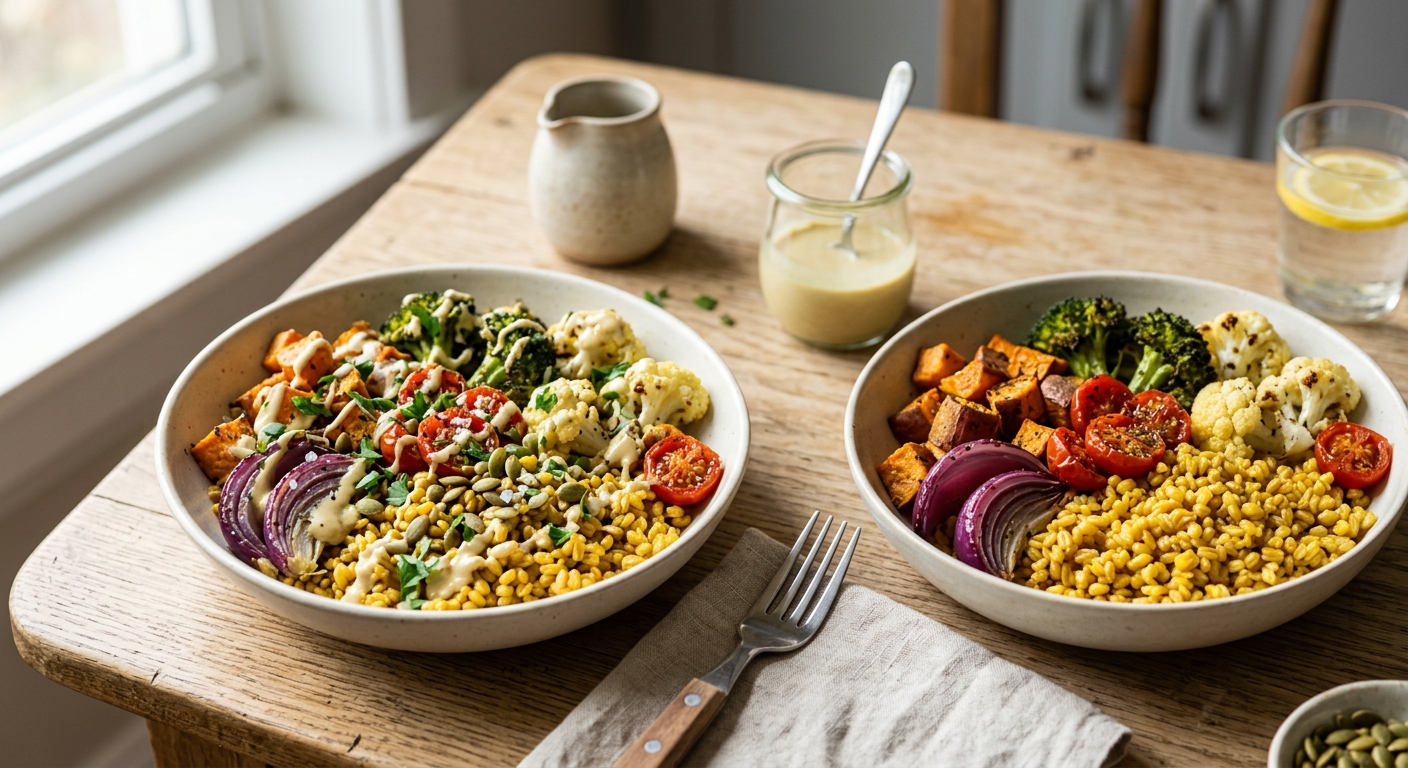
If you have ever wished a single cooking session could set your entire week up for anti-inflammatory success, this recipe is the answer. Turmeric farro and roasted vegetables sit at the intersection of ancient wisdom and modern nutritional science: farro is one of the oldest cultivated grains in the world, prized across the Mediterranean for its chewy bite and extraordinary mineral density, while turmeric’s curcumin compound has been studied in over 3,000 peer-reviewed papers for its ability to modulate the NF-kB inflammatory pathway. Together with roasted brassicas, sweet potato, and red onion, you get a bowl that actively works against the chronic low-grade inflammation linked to metabolic disease, joint pain, and cognitive decline.
What sets this recipe apart from a generic grain bowl is the layered approach to anti-inflammatory compounds. The farro is toasted before liquid is added, which deepens its nutty flavor and increases the bioavailability of its phenolic acids. The turmeric is bloomed in olive oil with black pepper, a technique backed by research showing that piperine in black pepper enhances curcumin absorption by up to 2,000%. The vegetables are roasted at high heat to trigger the Maillard reaction, concentrating their natural sugars and producing a caramelized crust that makes every bite genuinely craveable, not just virtuous.
This recipe is designed as a true meal-prep anchor. Make a full batch on Sunday using whichever cooking method fits your schedule: the stovetop method gives you the most control over the farro’s texture, the slow cooker method is entirely hands-off and perfect for busy mornings, the pressure cooker delivers a finished batch in under 40 minutes, and the oven method produces the most deeply roasted vegetable flavor by cooking everything together on sheet pans. All four methods yield the same nutritionally complete, deeply satisfying result.
4
servings
Ingredients
- 300 gpearled farro, rinsed and drained
- 750 mllow-sodium vegetable broth
- 250 mlwater
- 350 gsweet potato, peeled and cut into 2cm cubes
- 300 gbroccoli florets
- 200 gcauliflower florets
- 180 gred onion, cut into 2cm wedges
- 150 gcherry tomatoes, halved
- 3 tbspextra-virgin olive oil, divided
- 2 tspground turmeric
- 1 tspground cumin
- 0.5 tspsmoked paprika
- 0.75 tspfreshly ground black pepper, divided
- 3 clovesgarlic, minced
- 1 tbspfresh ginger, finely grated
- 2 tbsplemon juice, freshly squeezed
- 30 gflat-leaf parsley, roughly chopped
- 2 tbsppumpkin seeds (pepitas)
- —Colima Sea SaltMicroplastic Free Salt to taste
Instructions
Click on an item below to shop for the recommended items for this recipe on Amazon.
As an Amazon Associate, we earn from qualifying purchases.
- Preheat your oven to 220C (425F) for the vegetables. In a large bowl, toss the sweet potato, broccoli, cauliflower, and red onion with 2 tablespoons of olive oil, the smoked paprika, 0.25 teaspoon of the black pepper, and a generous pinch of salt. Spread in a single layer across two large sheet pans, ensuring the pieces are not crowded. Roast for 22 to 25 minutes, flipping halfway, until the edges are deeply caramelized and the sweet potato is tender. Add the cherry tomatoes to the pan in the final 8 minutes.
- While the vegetables roast, heat the remaining 1 tablespoon of olive oil in a large, heavy-bottomed saucepan or Dutch oven over medium heat. Add the minced garlic and grated ginger and cook, stirring constantly, for 60 to 90 seconds until fragrant but not browned. Add the turmeric, cumin, and remaining 0.5 teaspoon of black pepper and stir for 30 seconds to bloom the spices directly in the oil. This step is critical: fat-soluble curcumin needs to be activated in oil for optimal absorption.
- Add the rinsed farro to the pot and stir to coat every grain in the spiced oil. Toast the farro for 2 minutes, stirring frequently, until it smells nutty and the grains begin to look slightly dry.
- Pour in the vegetable broth and water, stir well, and bring to a boil over high heat. Once boiling, reduce the heat to a gentle simmer, cover the pot with a tight-fitting lid, and cook for 28 to 32 minutes, or until the farro is tender but still has a pleasant chew (al dente). Check at 28 minutes: the liquid should be fully absorbed. If any liquid remains, cook uncovered for 2 to 3 more minutes.
- Remove from heat and let the farro steam, covered, for 5 minutes. Fluff with a fork, then stir in the lemon juice. Fold in the roasted vegetables gently so they hold their shape. Taste and adjust salt. Divide into bowls and finish with fresh parsley and a scattering of pumpkin seeds.
- Before starting the slow cooker, prepare the spice base: in a small skillet, warm 1 tablespoon of olive oil over medium-low heat. Add the minced garlic, grated ginger, turmeric, cumin, and 0.5 teaspoon of black pepper. Stir constantly for 90 seconds until the spices bloom and the mixture is deeply fragrant. This step builds a flavor foundation that the slow cooker cannot replicate on its own due to its low, wet-heat environment.
- Transfer the bloomed spice mixture directly to the slow cooker insert. Add the rinsed farro and pour over 700ml of vegetable broth. Stir thoroughly to combine. Cover and cook on Low for 4 hours. Do not cook on High, as farro can become mushy and lose its characteristic chew at higher temperatures. Avoid lifting the lid during cooking.
- About 30 minutes before the farro is done, preheat your oven to 220C (425F). In a large bowl, toss the sweet potato, broccoli, cauliflower, and red onion with 2 tablespoons of olive oil, the smoked paprika, the remaining 0.25 teaspoon of black pepper, and a generous pinch of salt. Spread across two sheet pans in a single layer and roast for 22 to 25 minutes, flipping once halfway through. Add the cherry tomatoes in the final 8 minutes.
- When the farro is cooked, check the texture: the grains should be tender and most of the liquid absorbed. If the farro looks slightly wet, leave the lid ajar for 10 minutes on the Warm setting to allow steam to escape. Stir in the lemon juice directly in the insert.
- Fold the roasted vegetables into the slow cooker insert, or for better visual presentation, spoon the farro into bowls and arrange the vegetables on top. Finish with fresh parsley and pumpkin seeds before serving.
- Set your Instant Pot or electric pressure cooker to the Saute function on Normal heat. Add 1 tablespoon of olive oil. Once the oil shimmers, add the minced garlic and grated ginger and cook for 60 seconds, stirring. Add the turmeric, cumin, and 0.5 teaspoon of black pepper and stir for 30 seconds to bloom in the oil. Press Cancel to stop the saute function.
- Add the rinsed farro to the pot and stir to coat it in the spiced oil. Pour in 700ml of vegetable broth and 200ml of water. Stir once to deglaze any spices stuck to the bottom (this prevents a burn warning). Lock the lid in place, set the pressure release valve to Sealing, and cook on Manual High Pressure for 10 minutes.
- While the farro cooks under pressure, prepare and roast the vegetables. Preheat your oven to 220C (425F). Toss the sweet potato, broccoli, cauliflower, and red onion with 2 tablespoons of olive oil, the smoked paprika, 0.25 teaspoon of black pepper, and salt. Spread across two sheet pans and roast for 22 to 25 minutes, adding cherry tomatoes in the final 8 minutes.
- When the 10-minute pressure cycle ends, allow the pot to natural-release pressure for 10 minutes (do not touch the valve). After 10 minutes, carefully switch the valve to Venting to release any remaining pressure. Open the lid away from you. The farro should be tender and the liquid nearly fully absorbed. If excess liquid remains, use the Saute function on Low for 2 to 3 minutes, stirring, to evaporate it.
- Stir in the lemon juice, then gently fold in the roasted vegetables. Taste and adjust salt. Serve in bowls topped with fresh parsley and pumpkin seeds. Store remaining portions in airtight containers in the refrigerator for up to 5 days.
- Preheat your oven to 190C (375F). In a small skillet on the stovetop, warm 1 tablespoon of olive oil over medium-low heat. Add the garlic, ginger, turmeric, cumin, and 0.5 teaspoon of black pepper and bloom for 90 seconds until fragrant. Transfer this spice oil to a large oven-safe casserole dish or Dutch oven.
- Add the rinsed farro to the casserole dish and stir to coat it in the spice oil. Pour in the vegetable broth and water, stir well, and cover the casserole tightly with a lid or a double layer of aluminum foil, crimped around the edges to trap steam. Place on the center rack of the oven.
- After the farro has been cooking for 15 minutes, increase the oven temperature to 220C (425F) and place your sheet pans inside to preheat for 5 minutes (preheating the pans promotes better caramelization). Toss the sweet potato, broccoli, cauliflower, and red onion with 2 tablespoons of olive oil, the smoked paprika, 0.25 teaspoon of black pepper, and salt. Carefully spread the vegetables in a single layer across the hot sheet pans.
- Continue cooking both the covered farro casserole (now at 220C) and the sheet pan vegetables simultaneously. After 20 minutes at 220C, flip the vegetables and add the cherry tomatoes to the pans. Check the farro at this point: the liquid should be about three-quarters absorbed. If the casserole looks dry, add a splash of hot water, re-cover, and continue.
- After a total oven time of approximately 50 to 55 minutes (35 to 40 minutes of which are at 220C), remove the casserole from the oven. The farro should be tender with all liquid absorbed. Let it rest, covered, for 5 minutes. The vegetables should be done at the same time, with caramelized edges and tender centers. Remove foil from farro, stir in lemon juice, fold in the roasted vegetables, and finish with parsley and pumpkin seeds.
Nutrition Breakdown
Per 1 serving (makes 4)
Vitamins & Minerals
% Daily Value based on a 2,000 calorie diet (FDA reference)
🧬 Essential Amino Acids
% of recommended daily intake (RDA) per serving
🛡 Antioxidant Profile
The Nutrition Science
The anti-inflammatory power of this bowl is not accidental; it is the result of stacking multiple compounds that attack inflammation through distinct biochemical pathways. Curcumin from turmeric is the headline ingredient, but its effectiveness depends entirely on delivery: it is poorly absorbed when consumed in water-based preparations, which is why blooming it in olive oil with black pepper is not optional. Piperine inhibits glucuronidation in the intestinal wall and liver, slowing curcumin’s metabolism and allowing plasma concentrations to rise to therapeutically relevant levels. Studies using piperine co-administration have consistently demonstrated the 2,000% absorption increase that makes this technique so important.
Farro contributes a suite of nutrients that most whole grains cannot match. It provides meaningful amounts of selenium and zinc, both essential cofactors for glutathione peroxidase, the body’s primary endogenous antioxidant enzyme. Its arabinoxylan fiber fraction feeds Bifidobacterium and Lactobacillus species in the colon, which in turn produce short-chain fatty acids (particularly butyrate) that strengthen the intestinal barrier and reduce the systemic endotoxin load that drives metabolic inflammation. The brassica vegetables (broccoli and cauliflower) contribute glucosinolates, which are converted to sulforaphane by the enzyme myrosinase upon cell damage from chopping. Roasting preserves a significant portion of this activity, and the sulforaphane produced activates the Nrf2 transcription factor, switching on over 200 cytoprotective genes.
The olive oil in this recipe serves triple duty: it acts as the curcumin delivery vehicle, provides oleocanthal (a natural COX inhibitor functionally similar to ibuprofen), and supplies monounsaturated oleic acid, which reduces expression of the inflammatory adhesion molecule VCAM-1 in vascular endothelial cells. The synergy between these compounds is why dietary pattern research consistently shows that anti-inflammatory eating is more powerful than any single supplement: the whole, genuinely, is greater than the sum of its parts.
Pro Tips
- Do not skip toasting the farro in spiced oil before adding liquid. This 2-minute step gelatinizes the outer bran layer, giving each grain a firm, nutty shell that holds its texture through meal-prep storage without turning mushy by day 5.
- For maximum sulforaphane activity from the broccoli and cauliflower, cut the florets at least 10 minutes before they go in the oven. This resting time allows myrosinase to begin converting glucosinolates to sulforaphane before heat deactivates the enzyme, locking in more of the active compound.
- This bowl reheats best with a splash of water or broth (about 2 tablespoons per serving) added before microwaving covered for 90 seconds. The steam refreshes the farro’s texture and redistributes moisture into the vegetables without making them soggy.
This looks fantastic, and I’m curious about your sourcing on the farro – is it a hulled variety? My functional medicine doc flagged that pearled farro has most of the nutrient density stripped away, and since you’re highlighting the manganese and folate content, I want to make sure I’m getting the bioavailable version. Also, are you adding black pepper to the turmeric prep? I’ve seen my inflammatory markers drop noticeably when I pair curcumin with piperine, and it’s such a simple add that makes a real difference.
Thank you so much for featuring turmeric in this prep bowl – I’ve been tracking my CRP levels for years and turmeric has honestly been one of the most consistent anti-inflammatory tools in my kitchen! I love the make-ahead angle since meal prep has helped me stay consistent with my joint-friendly diet, and I’m with Fred on the farro sourcing question, since hulled varieties have made a noticeable difference in how my body responds. I’m definitely making this this Sunday, and I’ll probably add some fatty fish or walnuts on top to boost the omega-3s even more.
Fred’s got a really solid point here, and I’d push back gently on this one. Both hulled and pearled farro lose the bran, but hulled is minimally processed while pearled gets polished further, so yes, some micronutrient loss there. That said, farro still delivers solid manganese and iron even in the pearled form – it’s not like we’re stripping it down to white rice territory. What matters more clinically is the synergy: the turmeric’s curcumin absorption actually gets a bump from fat and black pepper (assuming they’re included), and that mineral density combined with the roasted veg fiber creates a real metabolic win for folks watching inflammation