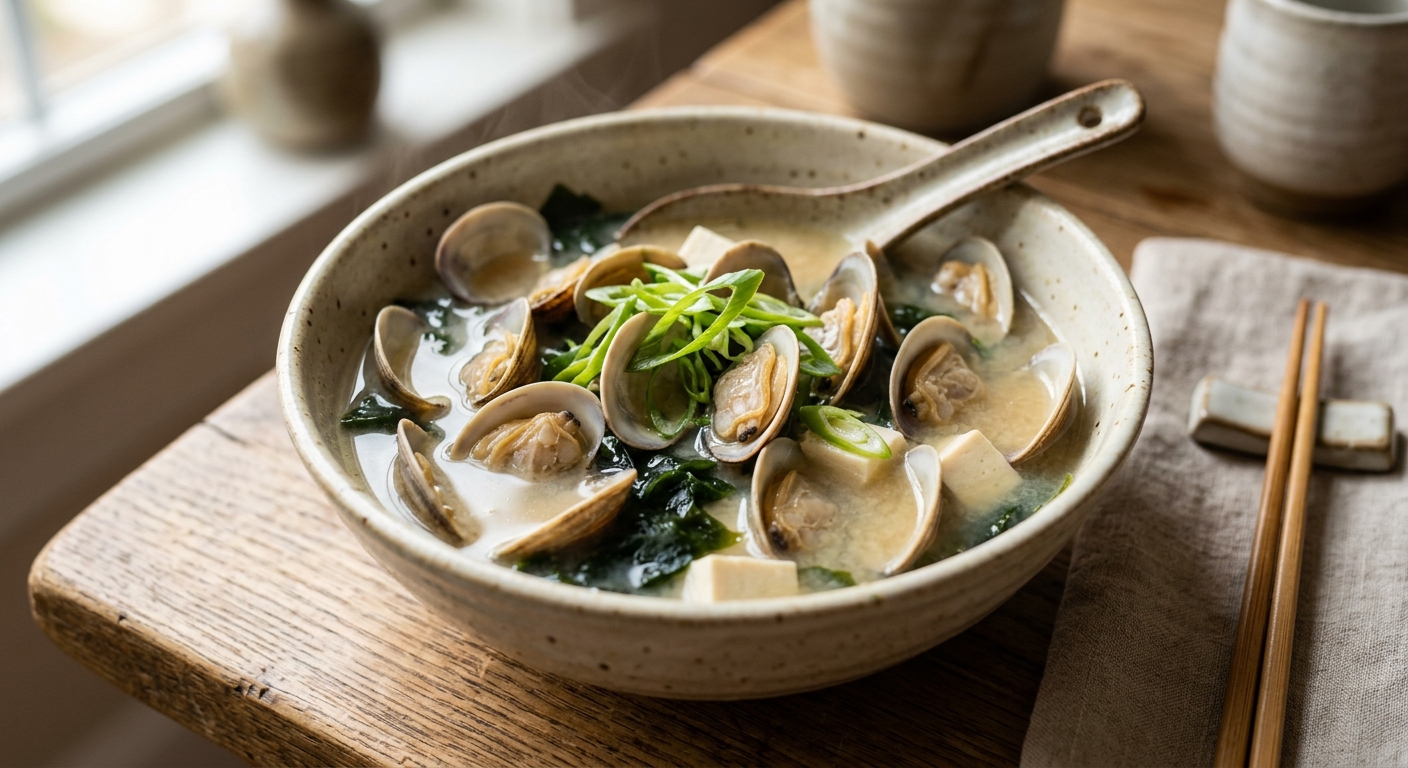
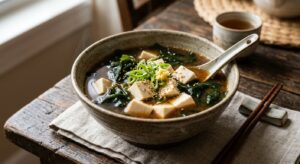
Few ingredients on earth rival shellfish for raw micronutrient density, and clams sit at the very top of that list. A single 85-gram serving of cooked clams provides over 1,400% of the daily value for vitamin B12, the cobalt-centered cobalamin molecule that underpins nerve function, red blood cell formation, and DNA synthesis. Yet most people who struggle with B12 adequacy are told to reach for supplements, when a bowl of properly made clam miso soup delivers the same nutrient in its most bioavailable whole-food form, wrapped in a broth so complex and satisfying it has been a cornerstone of Japanese wellness cuisine for centuries.
This recipe pairs littleneck clams with white shiro miso, kombu dashi, wakame seaweed, silken tofu, and sliced scallions to build a soup that is layered, deeply umami, and calibrated to deliver meaningful amounts of iodine from the kombu, zinc from the clams, manganese from the miso, and selenium from the tofu. The mineral synergy here is intentional: iodine and selenium work together to support thyroid hormone production and conversion, while zinc and B12 cooperate in neurological enzyme pathways. This is not incidental nutrition; it is architecture.
Three genuinely different cooking methods are provided below, because the technique you use with clams matters enormously. The stovetop method gives you maximum control over the critical moment the clams open. The slow cooker method uses a two-stage approach where the miso base builds slowly and the clams are added only in the final window to prevent rubbery overcooking. The pressure cooker method uses a rapid steam burst that opens the clams in under two minutes at high pressure, preserving their plump, tender texture while infusing the broth with concentrated brine. Each method produces a distinct but equally excellent result.
4
servings
Ingredients
- 900 glittleneck clams, scrubbed and purged in salted cold water for 30 minutes
- 15 gdried kombu (kelp), one 10cm piece
- 1000 mlcold filtered water
- 80 gwhite shiro miso paste
- 200 gsilken tofu, cut into 1.5cm cubes
- 10 gdried wakame seaweed, rehydrated in cold water for 10 minutes then drained
- 4 itemscallions (spring onions), thinly sliced on the bias
- 1 tbsplow-sodium soy sauce (tamari for gluten-free)
- 1 tsptoasted sesame oil
- 5 gfresh ginger, peeled and finely grated
- 2 tspmirin (Japanese sweet rice wine)
- —Colima Sea SaltMicroplastic Free Salt to taste (the clams and miso are already quite salty, so taste before adding any)
Instructions
Click on an item below to shop for the recommended items for this recipe on Amazon.
As an Amazon Associate, we earn from qualifying purchases.
- Place the dried kombu piece in a medium saucepan with 1000ml cold filtered water. Do NOT bring to a boil. Heat over medium-low heat, watching carefully, until the water reaches approximately 60 to 65 degrees C (140 to 149 degrees F), about 10 to 12 minutes. You will see small bubbles begin to form around the edges of the kombu. Remove the kombu at this point and discard or save for another use. This cold-steep dashi extraction method draws out maximum glutamate without the slippery texture that boiling releases.
- Raise the heat to medium and add the grated ginger and mirin to the dashi. Simmer for 2 minutes. Add the tamari and stir to combine. Taste the base broth; it should be subtly savory and lightly sweet with a clean ocean minerality from the kombu.
- Add the purged and scrubbed littleneck clams directly to the simmering dashi in a single layer. Place a lid on the pot. Cook over medium heat for 5 to 8 minutes, lifting the lid every 60 to 90 seconds to remove any clams that have opened fully and transfer them to a warm bowl. This staggered removal prevents the early-opening clams from becoming rubbery while the tighter clams continue to steam open. Discard any clams that remain shut after 10 minutes.
- Reduce the heat to the lowest possible setting. In a small bowl, ladle approximately 60ml of the hot broth over the miso paste and whisk vigorously until completely smooth and lump-free. Pour this miso slurry back into the pot and stir gently. Never boil miso once it has been added; temperatures above 80 degrees C degrade the live cultures and volatile aromatic compounds that give miso its complexity.
- Add the silken tofu cubes and drained wakame to the pot. Warm gently over low heat for 2 minutes until the tofu is heated through. Return all the reserved clams to the pot. Finish with the toasted sesame oil. Ladle into warmed bowls, distributing the clams evenly, and top with a generous scatter of sliced scallions. Serve immediately.
- Place the dried kombu piece, 1000ml cold water, grated ginger, mirin, and tamari in the slow cooker insert. Cover and set to Low. Cook for 3 hours. The extended low-temperature steep extracts a richer, more gelatinous minerality from the kombu than a stovetop quick-steep, and the ginger mellows and integrates into the broth over this time. The broth will take on a deeper golden color and noticeably more body.
- After 3 hours, remove and discard the kombu. In a small bowl, ladle approximately 80ml of the hot broth from the slow cooker over the miso paste and whisk until completely smooth. Stir the miso slurry back into the slow cooker insert. Add the silken tofu cubes and drained wakame. Stir gently to combine.
- Switch the slow cooker to the High setting. Arrange the purged and scrubbed clams in a single layer directly on top of the broth and tofu mixture. Place the lid back on immediately to trap the steam. Cook on High for 8 to 12 minutes, checking at 8 minutes. The clams need the intense direct steam of the High setting to open; the Low setting does not generate enough surface heat to reliably pop the shells.
- Check the clams and use tongs to remove and set aside any that have opened fully. Replace the lid and check again every 2 minutes. Once all clams have opened (discard any that remain firmly shut after 15 minutes on High), turn the slow cooker to Warm.
- Drizzle the toasted sesame oil over the surface of the broth and stir once. Ladle into warmed bowls, distributing the clams evenly among the bowls, and finish with sliced scallions. Because the slow cooker broth is more concentrated due to minimal evaporation, taste carefully before adding any salt.
- Pour 1000ml cold water into the Instant Pot inner pot. Add the kombu piece, grated ginger, mirin, and tamari. Arrange the purged and scrubbed clams in the pot, spreading them as evenly as possible. Do not stack the clams more than two layers deep. Secure the lid and set the valve to Sealing.
- Select Manual or Pressure Cook and set to High Pressure for 2 minutes. It will take approximately 8 to 10 minutes for the pot to come to pressure. Once the 2-minute cook cycle is complete, perform an immediate Quick Release by carefully switching the valve to Venting. Stand back from the steam release. The clam shells should all be open; the rapid pressure change is extremely effective at popping even stubborn clams.
- Open the lid and use a spider strainer or slotted spoon to carefully transfer all the clams to a large bowl, discarding any that are still firmly shut. Strain the broth through a fine-mesh sieve into a clean bowl or pot, discarding the kombu. The pressure-extracted broth will be noticeably saltier and brinier than the stovetop version because the pressure has driven clam liquor into the dashi more aggressively.
- Return the strained broth to the Instant Pot set to the Saute function on Low. In a small bowl, whisk the miso paste with 60ml of the warm broth until completely smooth. Stir the miso slurry into the pot. Add the drained wakame and silken tofu cubes. Heat gently for 2 to 3 minutes on Saute Low, stirring once, until the tofu is warmed through. Do not allow the broth to boil after the miso has been added.
- Return all the opened clams to the pot. Drizzle in the toasted sesame oil. Switch the Instant Pot to Keep Warm. Taste the broth and note that it will likely not need any salt whatsoever given the concentrated brine. Ladle into warmed bowls, ensuring each bowl receives an equal share of clams, tofu, and wakame. Finish with sliced scallions and serve immediately.
Nutrition Breakdown
Per 1 serving (makes 4)
Vitamins & Minerals
% Daily Value based on a 2,000 calorie diet (FDA reference)
🧬 Essential Amino Acids
% of recommended daily intake (RDA) per serving
🛡 Antioxidant Profile
The Nutrition Science
Vitamin B12 is unique among vitamins in that it contains a metal ion at its core: cobalt. This is why B12 is classified as a cobalt-containing organometallic compound, and why animal-derived foods, particularly shellfish and organ meats, are its primary dietary sources. Littleneck clams (Mercenaria mercenaria) are exceptional even within shellfish, providing roughly 84 micrograms of B12 per 85-gram serving before cooking losses. The bioavailability of B12 from whole clams is estimated at 42 to 89%, considerably higher than from supplements at equivalent doses, largely because clam B12 is bound to proteins that are cleaved by gastric acid and pepsin, releasing cobalamin for binding to intrinsic factor in the small intestine. For people with low stomach acid or those over 50, cooking the clams lightly rather than overcooking them helps preserve the protein matrix that facilitates this binding.
The iodine and selenium content of this recipe represent a particularly important nutritional pairing. Iodine is required for the synthesis of thyroid hormones T3 and T4, while selenium is required for the deiodinase enzymes that convert inactive T4 into the metabolically active T3 form. Deficiency in either mineral can impair thyroid function even when the other is adequate. The kombu in this recipe provides a substantial hit of iodine (approximately 1,000 to 3,000 mcg per gram of dried kombu, though the cold-steep method used here extracts a more moderate and controlled amount than boiling), while the tofu and clams together contribute meaningful selenium. This deliberate pairing transforms the recipe from a delicious soup into a genuinely functional thyroid-supportive meal.
The fermentation science behind white miso adds another dimension of nutritional value that is often overlooked. Shiro miso is made from soybeans and rice fermented with Aspergillus oryzae (koji) for a shorter period than darker varieties, preserving a higher concentration of bioactive isoflavones including genistein and daidzein. The fermentation process also partially breaks down the phytic acid in soybeans, the antinutrient that can chelate zinc and iron and reduce their absorption. This means the zinc delivered by the clams faces less competition for absorption in a miso-based broth than it would in, for example, a bean-based soup. The instruction in all three methods to never boil the miso once added is not merely a flavor consideration: temperatures above 75 to 80 degrees C progressively denature the heat-sensitive enzymes and degrade the volatile aroma compounds (primarily esters and aldehydes) produced during fermentation that give miso its characteristic depth.
Pro Tips
- Purging is non-negotiable: soak your clams in a bowl of cold water with 30g of salt per liter for at least 30 minutes, and up to 2 hours, before cooking. This causes the clams to expel any sand or grit from inside their shells. Without purging, even one sandy clam can ruin an entire pot of soup.
- For a deeper, more complex dashi without using bonito flakes (keeping the dish pescatarian-friendly), add 10g of dried shiitake mushroom alongside the kombu in the initial water. The glutamate from kombu and the guanylate from dried shiitake create a powerful synergistic umami effect that is measurably more intense than either alone.
- White miso (shiro) is the right choice for this recipe because its mild sweetness and lower sodium content let the briny clam flavor be the lead. If you substitute red miso (aka), reduce the quantity to 50g and expect a more robust, earthier soup. Never substitute with sweet or flavored miso pastes.
Laurie, this resonates so deeply with me – postpartum is when I see the most dramatic cognitive impacts from micronutrient depletion, and B12 specifically tanked executive function in every client I’ve worked with during that window. Clams are honestly one of my secret weapons because that single serving gives you the methylcobalamin your nervous system is desperately scavenging for, plus the zinc supports both mood stability and immune recovery when you’re running on fumes. The miso fermentation piece is gold too, since your gut barrier needs rebuilding postpartum and those live cultures genuinely matter for BDNF production downstream.
Oh this is exactly what I’ve been craving postpartum, literally! B12 is such a struggle when you’re breastfeeding and trying to replenish after birth, and clams are one of the few foods that actually moves the needle in one serving. Quick question though: do you have the DHA content on these littleneck clams, or any thoughts on pairing this with an omega-3 source? I’ve been experimenting with adding a drizzle of algae oil to my broths since my baby’s brain development is still so dependent on what I’m passing through breast milk, and this soup feels like the perfect vehicle for it. The miso already gives me the gut healing I
yo this thread is hitting different, the postpartum angle is so real and honestly clams are criminally underrated for that specific recovery window. ive been experimenting with adding a touch of kombu to the dashi base for extra iodine and it just deepens the umami in a way that makes people actually want to eat it multiple times a week instead of treating it like medicine, which is like the whole point right? when the mineral density tastes this good you’re not white knuckling through nutrition, you’re just eating something delicious that happens to rebuild your whole system