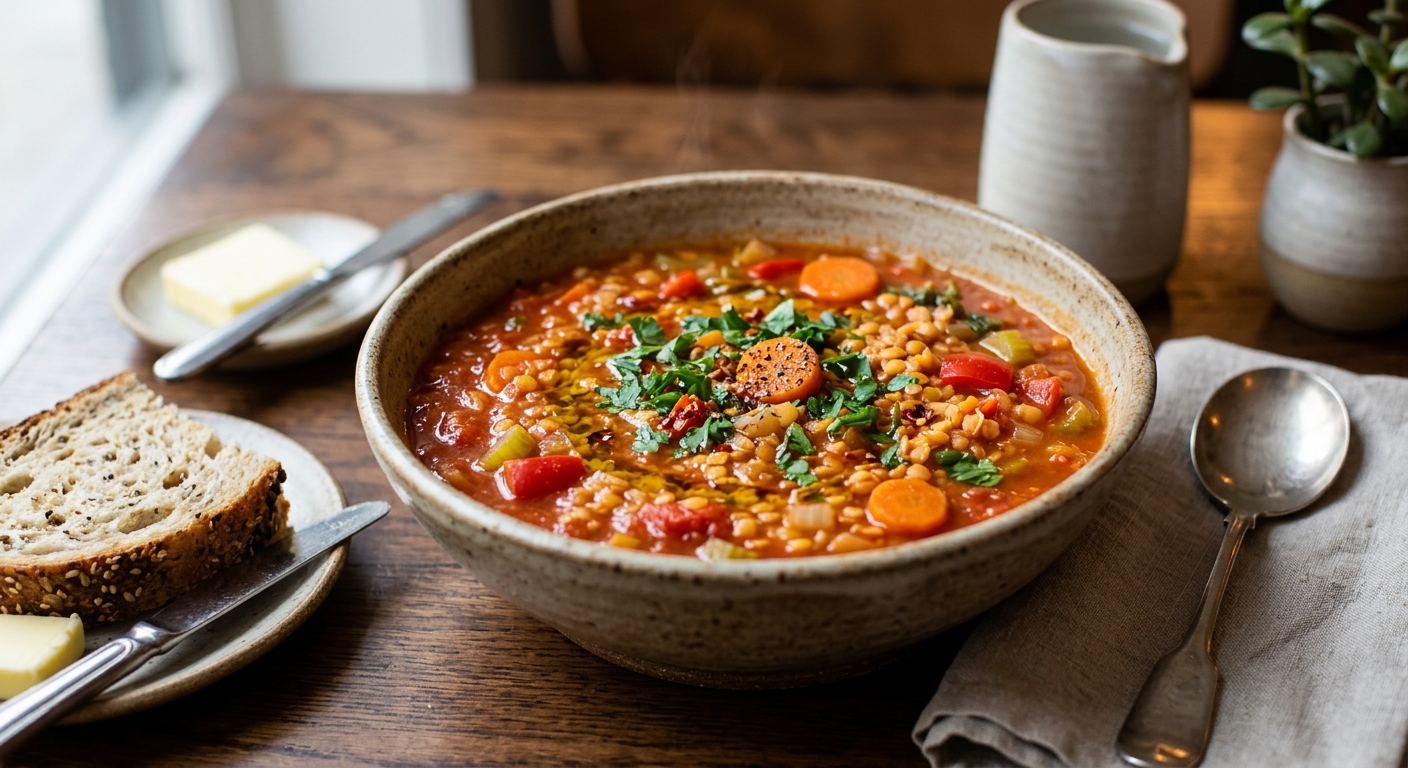
Some soups nourish you. This one fortifies you. Built on a foundation of red lentils and a colorful arsenal of vegetables, this soup was engineered from the ground up to hit the nutrients your immune system craves most: vitamin C from tomatoes and bell pepper, vitamin A from carrots and spinach, zinc and iron from lentils, and folate in quantities that rival a dedicated supplement. It is the kind of bowl that earns its place in your weekly rotation not just because it tastes extraordinary, but because it quietly does serious nutritional work every time you eat it.
The flavor story is just as compelling as the nutrition. A base of bloomed cumin, coriander, turmeric, and smoked paprika gives the soup a warm, aromatic complexity that makes it feel indulgent rather than virtuous. Lemon juice stirred in at the finish brightens everything, and a handful of wilted baby spinach adds color and a final hit of iron and vitamin K. The result is a soup with genuine depth: earthy from the lentils, sweet from slow-cooked carrots and onion, acidic from tomatoes and lemon, and gently smoky throughout.
Whether you make it on the stovetop in under an hour, set it in a slow cooker in the morning, or pressure-cook it in under 30 minutes on a weeknight, this recipe is designed to work beautifully with each method. The technique is tailored to each appliance so you get the best possible texture and flavor, not just the same instructions pasted across different cooking times. Make a double batch. It freezes perfectly and improves dramatically on day two.
4
servings
Ingredients
- 250 gred lentils, rinsed and drained
- 2 tbspextra-virgin olive oil
- 1 largeyellow onion, finely diced
- 4 clovesgarlic, minced
- 2 mediumcarrots, peeled and cut into 1cm rounds
- 1 largered bell pepper, diced
- 2 stalkscelery, thinly sliced
- 400 gcanned crushed tomatoes
- 100 gbaby spinach, roughly chopped
- 1200 mllow-sodium vegetable broth
- 1.5 tspground cumin
- 1 tspground coriander
- 0.75 tspground turmeric
- 1 tspsmoked paprika
- 0.5 tspcrushed red pepper flakes
- 2 tbspfresh lemon juice
- 1 tsplemon zest
- —Colima Sea SaltMicroplastic Free Salt and freshly ground black pepper to taste
- —Fresh flat-leaf parsley or cilantro, to garnish
Instructions
Click on an item below to shop for the recommended items for this recipe on Amazon.
As an Amazon Associate, we earn from qualifying purchases.
- Heat the olive oil in a large Dutch oven or heavy-bottomed pot over medium heat until shimmering. Add the diced onion and a pinch of salt. Cook, stirring occasionally, for 7 to 8 minutes until the onion is fully softened and beginning to turn golden at the edges. This extended sauté is important: properly caramelized onion builds the sweet base that balances the lentils’ earthiness.
- Add the minced garlic, celery, and red bell pepper. Stir and cook for 3 to 4 minutes until the pepper softens slightly and the garlic is fragrant. Push the vegetables to the side of the pot, add the cumin, coriander, turmeric, smoked paprika, and red pepper flakes directly to the cleared center, and toast the spices in the residual oil for 30 to 45 seconds, stirring constantly, until deeply fragrant. This dry-blooming step dramatically intensifies the spice flavor before any liquid is added.
- Add the sliced carrots and stir everything together, coating the vegetables in the bloomed spices. Pour in the crushed tomatoes and stir, scraping up any browned bits from the bottom of the pot. Let the tomatoes simmer and reduce for 2 minutes, which concentrates their flavor and deepens the color of the broth.
- Add the rinsed red lentils and pour in the vegetable broth. Stir well to combine. Raise the heat to bring the soup to a vigorous boil, then reduce heat to medium-low. Skim any foam that rises to the surface in the first few minutes of simmering. Cook uncovered for 20 to 25 minutes, stirring every 5 minutes, until the lentils have completely broken down and the soup has thickened to a creamy, hearty consistency. If the soup becomes too thick, add broth or water in 60ml increments.
- Remove the pot from heat. Stir in the chopped baby spinach and allow it to wilt in the residual heat for 2 minutes, which preserves more of its water-soluble vitamin C compared to prolonged cooking. Add the lemon juice and lemon zest, then taste and adjust salt, pepper, and lemon to your preference. Ladle into bowls and garnish generously with fresh parsley or cilantro.
- Before adding anything to the slow cooker, bloom your spices on the stovetop for maximum flavor: heat the olive oil in a small skillet over medium heat. Add the onion and cook for 5 minutes until softened. Add the garlic, cumin, coriander, turmeric, smoked paprika, and red pepper flakes and stir for 60 seconds until fragrant. Transfer this aromatic mixture to the slow cooker insert. Skipping this step results in a noticeably flat, less complex soup.
- Add the rinsed red lentils, diced carrots, red bell pepper, sliced celery, and crushed tomatoes to the slow cooker. Pour in 1000ml of the vegetable broth (slightly less than the stovetop version, as slow cookers trap steam and produce less evaporation). Stir everything together, scraping the spiced onion mixture from the sides of the insert.
- Place the lid on the slow cooker and set to Low for 7 to 8 hours or High for 3 to 4 hours. Do not lift the lid during cooking, as each peek adds approximately 20 minutes to the effective cook time. The soup is ready when the lentils have completely dissolved into the broth and the carrots are completely tender when pierced with a knife.
- About 15 minutes before serving, remove the lid and stir the soup vigorously. If the soup is thinner than you prefer, leave the lid off and cook on High for 15 to 20 minutes to reduce. Stir in the chopped baby spinach and replace the lid for 5 minutes to allow it to wilt gently in the trapped steam rather than the direct heat, preserving its vibrant color and nutrients.
- Stir in the lemon juice and lemon zest, then taste carefully and adjust seasoning with salt and pepper. Because slow cookers concentrate flavors differently than stovetop cooking, you may need slightly more lemon juice to brighten the soup. Add the remaining 200ml of broth if needed to reach your desired consistency before serving.
- Set the Instant Pot or electric pressure cooker to Saute mode on Normal heat. Add the olive oil and heat for 1 minute. Add the diced onion and cook, stirring frequently, for 4 to 5 minutes until softened. Add the garlic and cook for 30 seconds. Add all the dry spices (cumin, coriander, turmeric, smoked paprika, red pepper flakes) and stir constantly for 30 seconds to bloom them in the oil. Press Cancel to stop Saute mode.
- Add the carrots, red bell pepper, celery, rinsed red lentils, and crushed tomatoes directly to the pot. Pour in 1100ml of the vegetable broth. Stir well, then use a wooden spoon to scrape the bottom of the insert thoroughly, ensuring no browned spice or onion bits are stuck to the base. This step is critical: any scorched residue on the bottom can trigger a Burn notice during pressurization.
- Secure the lid and set the pressure release valve to Sealing. Select Pressure Cook (Manual) on High Pressure and set the timer for 10 minutes. The pot will take approximately 8 to 10 minutes to come to full pressure before the countdown begins.
- When the cook time ends, allow the pressure to release naturally for 10 full minutes, then carefully move the valve to Venting to release any remaining pressure. Open the lid away from you to avoid the steam. The lentils should be completely dissolved and the soup thick and creamy. If the soup is thicker than desired, stir in the remaining broth and use the Saute mode on Low for 2 minutes to bring it back to temperature.
- Switch to Saute mode on Low. Add the chopped baby spinach and stir it into the hot soup for 60 to 90 seconds until just wilted. Turn off the pot immediately to avoid overcooking the spinach. Stir in the lemon juice and lemon zest, taste for seasoning, and adjust with salt and pepper. Serve immediately garnished with fresh herbs.
- Preheat your oven to 180C (350F) with a rack positioned in the lower third. Place a large oven-safe Dutch oven on the stovetop over medium heat. Add the olive oil and heat until shimmering. Add the diced onion with a pinch of salt and cook for 7 to 8 minutes until golden and softened. Add the minced garlic, bell pepper, and celery and cook for 3 more minutes.
- Clear a space in the center of the Dutch oven and add all the dry spices directly to the oil. Toast for 45 seconds, stirring the spices in the oil until very fragrant, then stir them into the vegetables. Add the carrots and stir to coat. Pour in the crushed tomatoes and stir, letting them reduce and sizzle for 2 minutes over the stovetop heat to start building body.
- Add the rinsed red lentils and pour in 1300ml of the vegetable broth, slightly more than the stovetop version to account for the longer cook time and slight additional evaporation around the lid edges. Stir everything thoroughly. Bring the liquid to a boil on the stovetop, stirring once or twice.
- Once boiling, remove from heat. Place the lid firmly on the Dutch oven and transfer to the preheated oven. Bake covered for 55 to 60 minutes. The encircling oven heat cooks the lentils uniformly without requiring stirring, and the sealed environment allows a gentle pressurized steam effect that produces exceptionally creamy lentils. Resist opening the lid before 50 minutes.
- Carefully remove the Dutch oven from the oven using heavy oven mitts and place it on a heatproof surface. Remove the lid cautiously away from your face. Stir the soup and assess consistency: it should be thick and creamy with fully dissolved lentils. If needed, place it back on the stovetop over low heat uncovered for 5 minutes to reduce further.
- Stir in the chopped baby spinach and let it wilt for 90 seconds in the residual heat of the pot. Add the lemon juice and lemon zest, taste carefully (the oven method concentrates salt slightly, so season conservatively), and adjust as needed. Garnish with fresh herbs and serve directly from the Dutch oven.
Nutrition Breakdown
Per 1 serving (makes 4)
Vitamins & Minerals
% Daily Value based on a 2,000 calorie diet (FDA reference)
🧬 Essential Amino Acids
% of recommended daily intake (RDA) per serving
🛡 Antioxidant Profile
The Nutrition Science
Red lentils are a nutritional powerhouse for immune function for several interlocking reasons. They are one of the richest plant sources of folate (vitamin B9), which the body requires to synthesize and repair DNA in rapidly dividing immune cells. When immune activation occurs and lymphocytes begin proliferating, folate demand spikes sharply; chronic low folate status is consistently associated with impaired antibody response and reduced natural killer cell activity. One serving of this soup delivers 45% of the daily value from lentils alone, before accounting for the additional folate in spinach.
The strategic pairing of vitamin C-rich ingredients (red bell pepper, tomatoes, lemon juice) with the non-heme iron in lentils is not accidental. Non-heme iron from plant sources is absorbed at a baseline rate of roughly 2 to 20%, but vitamin C consumed in the same meal can increase that absorption by up to 300% by converting ferric iron (Fe3+) to the more soluble ferrous form (Fe2+) in the gut. The 68mg of vitamin C per serving in this soup is nearly the full daily value, making iron bioavailability from this plant-based meal significantly higher than the raw iron figures suggest.
Turmeric’s curcumin and the quercetin from onions and bell pepper both operate on inflammatory signaling pathways that, when chronically overactivated, suppress immune function and accelerate cellular aging. Curcumin inhibits the NF-kB transcription factor, a master regulator of pro-inflammatory gene expression, while quercetin has demonstrated direct inhibition of several respiratory viruses in vitro. Critically, curcumin has very low oral bioavailability on its own, but the olive oil in this recipe provides the dietary fat that increases its lymphatic absorption by several fold, making this recipe’s method of blooming the turmeric in oil before adding liquid a genuinely functional technique, not merely a culinary one.
Pro Tips
- Rinse your red lentils in a fine-mesh strainer under cold running water for a full 60 seconds until the water runs clear. This removes surface starches that cause excessive foaming and a slightly bitter taste in the finished soup.
- Boost iron absorption further by squeezing extra lemon juice directly into each bowl at the table. The additional hit of vitamin C at the point of eating maximizes non-heme iron bioavailability from the lentils and spinach.
- This soup freezes exceptionally well for up to 3 months. Freeze in individual 400ml portions so you can defrost a single serving overnight in the refrigerator. The flavor deepens considerably after a day or two, making it ideal for batch cooking.
- For a creamier, restaurant-style texture, use an immersion blender to partially blend the soup, blitzing 8 to 10 pulses to break down some but not all of the lentils, leaving plenty of texture from the carrots and bell pepper.

This sounds amazing, and I’m really curious about a couple of things for my AIP adaptation! Red lentils are technically legumes so I’d need to skip them, but I’m wondering if you’ve ever tested this with something like bone broth and added collagen or gelatin to bump up the protein since I’d be losing that lentil base? Also, I noticed tomatoes in the ingredients, and while I can tolerate them in small amounts, I’m guessing they’re a main component here rather than a garnish? I’d love to know if substituting with roasted carrots or beets for that depth of flavor worked for anyone, since I’m always looking for ways to get that iron boost without
for aip youre basically rebuilding the whole dish so honest take – if legumes are out, bone broth base with collagen is solid for protein but youre losing a lot of the folate and fiber that makes this soup shine. the tomatoes are def a main component here, not just garnish, so yeah that would need a swap. roasted beets could work for depth and theyre actually pretty iron rich, but theyre lower in bioavailable iron than the lentils were providing. real question though – have you tested your actual iron levels since going aip? sometimes people cut out their best iron sources thinking theyre fixing something when the real issue is absorption, not the food itself. worth checking before
This is absolutely beautiful, and I’m so glad to see red lentils getting their spotlight because they’re honestly one of the most underrated powerhouses, especially in communities where they’ve been a staple for centuries. I grew up eating lentil soups regularly, and it wasn’t until I started studying nutrition that I realized how strategically perfect that combination is, particularly for folks who might have barriers to accessing iron rich foods. The folate + iron + fiber ratio here is chef’s kiss for both energy and gut health, and I love that this approach feels nourishing rather than restrictive. Do you have thoughts on whether you’d recommend pairing this with any vitamin C rich additions to maximize that iron absorption?