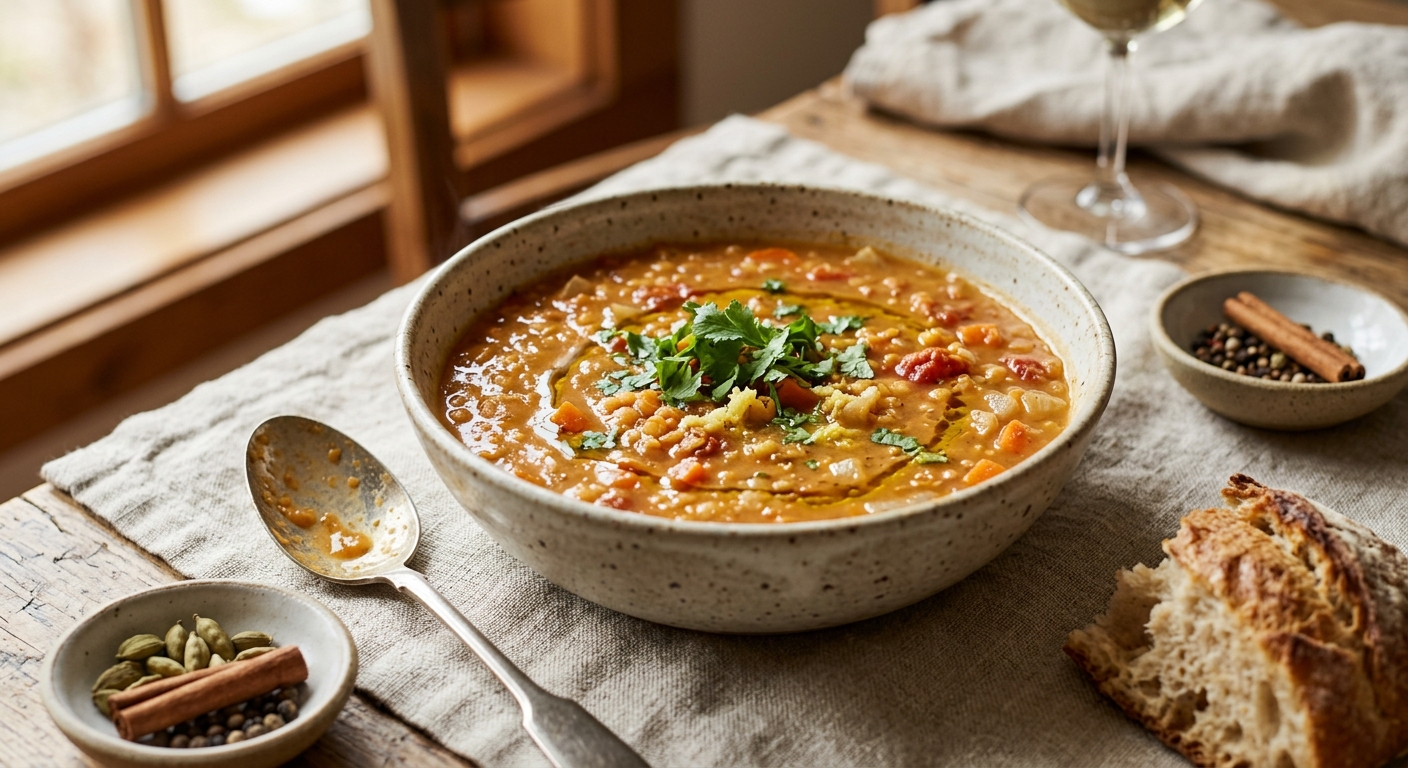
There is a reason spiced lentil soups have anchored the diets of some of the world’s longest-lived populations for millennia. This Cinnamon and Cardamom Spiced Lentil Soup is not a vague nod to tradition, it is a precisely engineered bowl where every ingredient pulls nutritional weight. Red lentils provide a foundation of plant-based protein and non-heme iron, while a bloom of whole and ground spices unlocks fat-soluble compounds that your body can absorb far more efficiently when cooked in olive oil. The result is a soup that is as deeply satisfying as it is rigorously nourishing.
The metabolic angle here is real and well-supported by research. Cinnamon contains cinnamaldehyde and polyphenolic polymers that improve insulin sensitivity and slow gastric emptying, which means the lentils’ complex carbohydrates enter the bloodstream gradually, sustaining energy without sharp glucose spikes. Cardamom contributes 1,8-cineole and alpha-terpinyl acetate, volatile compounds with documented thermogenic effects that mildly elevate metabolic rate. Turmeric’s curcumin amplifies this further by activating AMP-activated protein kinase (AMPK), an enzyme that essentially switches the body into fat-burning mode. Together, these spices transform a humble bowl of soup into a legitimate metabolic tool.
From a culinary standpoint, this recipe is built around a technique called tadka, the practice of blooming whole spices in hot fat before adding aromatics. This step is not optional for flavour, and it is also not optional for nutrition. Cinnamon’s water-insoluble polyphenols and cardamom’s volatile oils are dramatically more bioavailable when first dispersed in a lipid medium. The olive oil carries these compounds throughout the soup, ensuring every spoonful delivers the full therapeutic dose. Whether you make this on the stovetop, in a slow cooker, or under pressure, each method has been calibrated to protect these delicate compounds while coaxing the deepest possible flavour from the legumes.
4
servings
Ingredients
- 300 gred lentils, rinsed and drained
- 3 tbspextra-virgin olive oil
- 1 largeyellow onion, finely diced
- 4 clovesgarlic, minced
- 1 tbspfresh ginger, finely grated
- 2 mediumcarrots, peeled and diced (about 180g)
- 400 gcanned crushed tomatoes
- 1200 mllow-sodium vegetable broth
- 1 stickcinnamon (about 8cm)
- 6 wholegreen cardamom pods, lightly crushed
- 1 tspground cumin
- 1 tspground turmeric
- 0.5 tspground coriander
- 0.25 tspcayenne pepper
- 0.5 tspsmoked paprika
- 2 tbspfresh lemon juice
- 30 gfresh cilantro, roughly chopped
- 60 gbaby spinach
- —Colima Sea SaltMicroplastic Free Salt and freshly ground black pepper to taste
- —Plain unsweetened yogurt or coconut cream, for serving (optional)
Instructions
Click on an item below to shop for the recommended items for this recipe on Amazon.
As an Amazon Associate, we earn from qualifying purchases.
- Set a large Dutch oven or heavy-bottomed pot over medium-high heat. Add the olive oil and let it shimmer for about 30 seconds. Add the cinnamon stick and crushed cardamom pods directly to the hot oil. Fry the whole spices for 60 to 90 seconds, stirring constantly, until the cardamom pods puff slightly and the kitchen fills with a warm, toasty fragrance. This tadka step is critical for blooming the fat-soluble aromatic compounds.
- Add the diced onion to the spiced oil and reduce the heat to medium. Cook for 7 to 8 minutes, stirring occasionally, until the onion is soft, translucent, and just beginning to develop golden edges at the corners. Add the garlic and grated ginger, stir vigorously, and cook for another 90 seconds until fragrant and slightly deepened in colour.
- Add the diced carrots and stir to coat in the spiced onion mixture. Cook for 3 minutes to slightly soften the carrots. Add the ground cumin, turmeric, coriander, cayenne, and smoked paprika directly onto the vegetables. Stir constantly for 45 seconds to toast the ground spices in the residual fat, which intensifies their flavour compounds without burning them.
- Pour in the crushed tomatoes, stirring to deglaze any fond from the bottom of the pot. Let the tomatoes cook down and concentrate for 3 to 4 minutes over medium heat, stirring occasionally, until the mixture deepens in colour and the fat begins to separate slightly at the edges. This step drives off excess moisture and concentrates the lycopene.
- Add the rinsed red lentils and pour in the vegetable broth. Stir well to combine everything. Increase heat to bring the soup to a full boil, then reduce to a steady simmer. Partially cover the pot with the lid slightly ajar and cook for 20 to 22 minutes, stirring every 5 minutes, until the lentils have completely dissolved and the soup has thickened to a creamy, velvety consistency.
- Remove and discard the cinnamon stick and cardamom pods. Stir in the baby spinach and let it wilt for 1 minute. Add the fresh lemon juice, taste, and adjust seasoning with salt, pepper, and additional lemon if desired. Ladle into bowls, top with fresh cilantro, and finish with a swirl of yogurt or coconut cream if using.
- Perform the tadka on the stovetop first. Heat the olive oil in a skillet over medium-high heat. Add the cinnamon stick and crushed cardamom pods and fry for 60 to 90 seconds until aromatic. Add the onion and cook for 6 to 7 minutes until softened. Add garlic and ginger and cook for 90 seconds. Add the diced carrots and all the ground spices (cumin, turmeric, coriander, cayenne, smoked paprika) and stir for 45 seconds. Pour in the crushed tomatoes and cook for 3 minutes, stirring, until slightly reduced. Transfer this entire mixture to the slow cooker insert.
- Add the rinsed red lentils to the slow cooker over the spiced tomato and vegetable base. Pour in 1000ml of the vegetable broth, reserving 200ml to adjust consistency later. The slow cooker environment creates more steam than a stovetop pot, so using slightly less liquid at the start prevents the soup from becoming watery. Stir everything together to distribute the ingredients evenly.
- Place the lid on the slow cooker and cook on Low for 7 to 8 hours or on High for 3 to 4 hours. Resist lifting the lid during cooking, as each peek adds 20 to 30 minutes to the effective cook time by releasing built-up steam. The lentils will fully dissolve and the soup will thicken considerably during this time.
- About 15 minutes before serving, remove the cinnamon stick and cardamom pods. Stir in the baby spinach, which will wilt quickly in the residual heat. If the soup is thicker than you prefer, stir in some or all of the reserved 200ml of broth and allow it to warm through with the lid on for the final 10 minutes.
- Just before serving, stir in the fresh lemon juice. Taste and adjust salt and pepper. The slow-cooked version often needs a slightly more generous pinch of salt than the stovetop version because the extended cook time mellows spice intensity. Ladle into bowls and finish with fresh cilantro and an optional swirl of yogurt or coconut cream.
- Select the Saute function on your Instant Pot or electric pressure cooker and set it to High (or use a stovetop pressure cooker over medium-high flame). Add the olive oil and heat for 30 seconds. Add the cinnamon stick and crushed cardamom pods and fry for 60 seconds, stirring, until aromatic and slightly puffed. Add the onion and saute for 5 minutes, stirring often, until softened. The Saute function runs hot, so keep stirring to prevent scorching.
- Add the garlic and ginger to the pot and cook for 60 seconds. Add the diced carrots and all the ground spices: cumin, turmeric, coriander, cayenne, and smoked paprika. Stir constantly for 30 seconds to toast the spices. Immediately add the crushed tomatoes and stir vigorously, scraping any browned bits off the bottom of the pot. This deglazing step is essential in the pressure cooker to prevent the Burn notification. Cook the tomato mixture for 2 minutes, then press Cancel to end the Saute cycle.
- Add the rinsed red lentils and pour in 1100ml of the vegetable broth. Stir well to combine. Secure the lid, ensure the pressure valve is set to Sealing, and select Manual or Pressure Cook on High Pressure for 10 minutes. The pot will take approximately 8 to 10 minutes to come up to pressure before the countdown begins.
- Once the cook cycle ends, allow the pressure to release naturally for at least 10 minutes before carefully switching the valve to Venting to release any remaining pressure. Open the lid away from you. The soup will look quite thick, which is correct. Remove and discard the cinnamon stick and cardamom pods.
- Switch back to Saute on Low. Stir in the baby spinach and let it wilt for 1 minute. Add the fresh lemon juice and the remaining 100ml of reserved broth if a thinner consistency is preferred. Stir well, taste, and adjust seasoning with salt and pepper. The pressure cooker intensifies spice flavour, so taste before adding more cayenne. Serve immediately topped with fresh cilantro and optional yogurt or coconut cream.
Nutrition Breakdown
Per 1 serving (makes 4)
Vitamins & Minerals
% Daily Value based on a 2,000 calorie diet (FDA reference)
🧬 Essential Amino Acids
% of recommended daily intake (RDA) per serving
🛡 Antioxidant Profile
The Nutrition Science
The metabolic synergy in this soup operates on three distinct biochemical axes. First, the soluble fiber in red lentils, primarily consisting of resistant starch and pectin-like polysaccharides, ferments in the colon to produce short-chain fatty acids (SCFAs) including butyrate and propionate. Butyrate directly inhibits histone deacetylase enzymes in colonocytes, reducing inflammatory gene expression, while propionate travels to the liver via the portal vein where it suppresses de novo lipogenesis (new fat synthesis) and stimulates gluconeogenesis regulation. This is why high-lentil diets are consistently associated with improved HbA1c and fasting glucose in controlled trials.
The spice matrix in this recipe is a deliberate thermogenic stack. Cinnamon’s type-A polyphenolic polymers, specifically the procyanidin fraction, have been shown in randomized controlled trials to improve insulin receptor tyrosine kinase activity at doses as low as 1g per day, which is well within a single serving here. Cardamom’s primary volatile oil, 1,8-cineole, has been shown in animal models to increase uncoupling protein-1 (UCP1) expression in brown adipose tissue, a key driver of non-shivering thermogenesis. Turmeric’s curcumin, when consumed with even modest fat as in this recipe, reaches bioavailability peaks sufficient to measurably activate AMPK in skeletal muscle, which redirects cellular energy utilization toward fatty acid oxidation rather than storage.
The iron story in this soup is equally precise. Red lentils provide non-heme iron (Fe3+), which must be reduced to Fe2+ for intestinal absorption. The vitamin C from the tomatoes and fresh lemon juice creates a direct chemical reducing environment in the gut lumen, converting Fe3+ to the absorbable Fe2+ form and increasing non-heme iron bioavailability by up to 67% compared to eating the same lentils without the acidic components. Meanwhile, the manganese from the lentils and spices serves as a cofactor for superoxide dismutase (MnSOD), the mitochondrial antioxidant enzyme that is most directly linked to metabolic rate sustainability. These interactions are not incidental; they are the reason this specific combination of ingredients has been calibrated to work together rather than simply listed alongside each other.
Pro Tips
- Toast your whole cardamom pods briefly in a dry pan before crushing them to crack the outer husk, which releases far more of the volatile aromatic oils into the soup than crushing alone.
- Add a small pinch of black pepper alongside the turmeric wherever possible. Piperine in black pepper inhibits turmeric’s hepatic metabolism and has been shown to increase curcumin bioavailability by up to 2000% in clinical studies.
- If you prefer a partially smooth texture, use an immersion blender to pulse the finished soup three or four times rather than fully blending it. This creates a thick, creamy base while leaving visible pieces of lentil and carrot for textural contrast and a lower glycemic impact than a fully pureed soup.
- Red lentils have a relatively short shelf life compared to green or brown lentils. Buy them in small quantities and store in an airtight container away from light. Lentils older than 12 months cook unevenly and their folate content degrades measurably.
omg the thermogenic angle is so interesting bc ive been tracking how spice-forward meals affect my afternoon focus sessions and there’s def something there beyond just metabolism – cardamom especially seems to have compounds that might support acetylcholine synthesis which is huge for sustained attention during exams. to steve’s point about protein though, red lentils alone are only like 9g per cooked cup so yeah you’d probably want to pair this with something else or bump up the lentil ratio to really hit that mps threshold, maybe even a dollop of greek yogurt on top? ive found that combining plant proteins with even a small amount of animal protein in the same meal seems to improve amino acid bioav
Great recipe, but I’m curious about the protein per serving – lentils are solid, but are we hitting that 25-30g sweet spot per bowl that actually triggers muscle protein synthesis, especially for us older folks? I’ve been experimenting with adding a dollop of Greek yogurt or some hemp seeds to my lentil soups to push the leucine content higher, since the spices and iron are nice bonuses but the amino acid profile is really what matters for maintaining muscle mass as we age. Looks delicious though, definitely making this one.
omg YES to the thermogenic spices angle, ive actually noticed cinnamon and cardamom do something special for my energy too! but heres the thing that got me excited – lentils ferment SO well if you ever want to try it, the resistant starch and bioavailability of that iron goes way up when you let them sit with a bit of whey or starter culture for like 12-24 hours before cooking, plus your gut bacteria will literally have a party with the prebiotics that develops during fermentation. steve’s right about the protein question but adding fermented elements could help your body absorb and utilize all those minerals even better! have you guys played with any fermented additions to