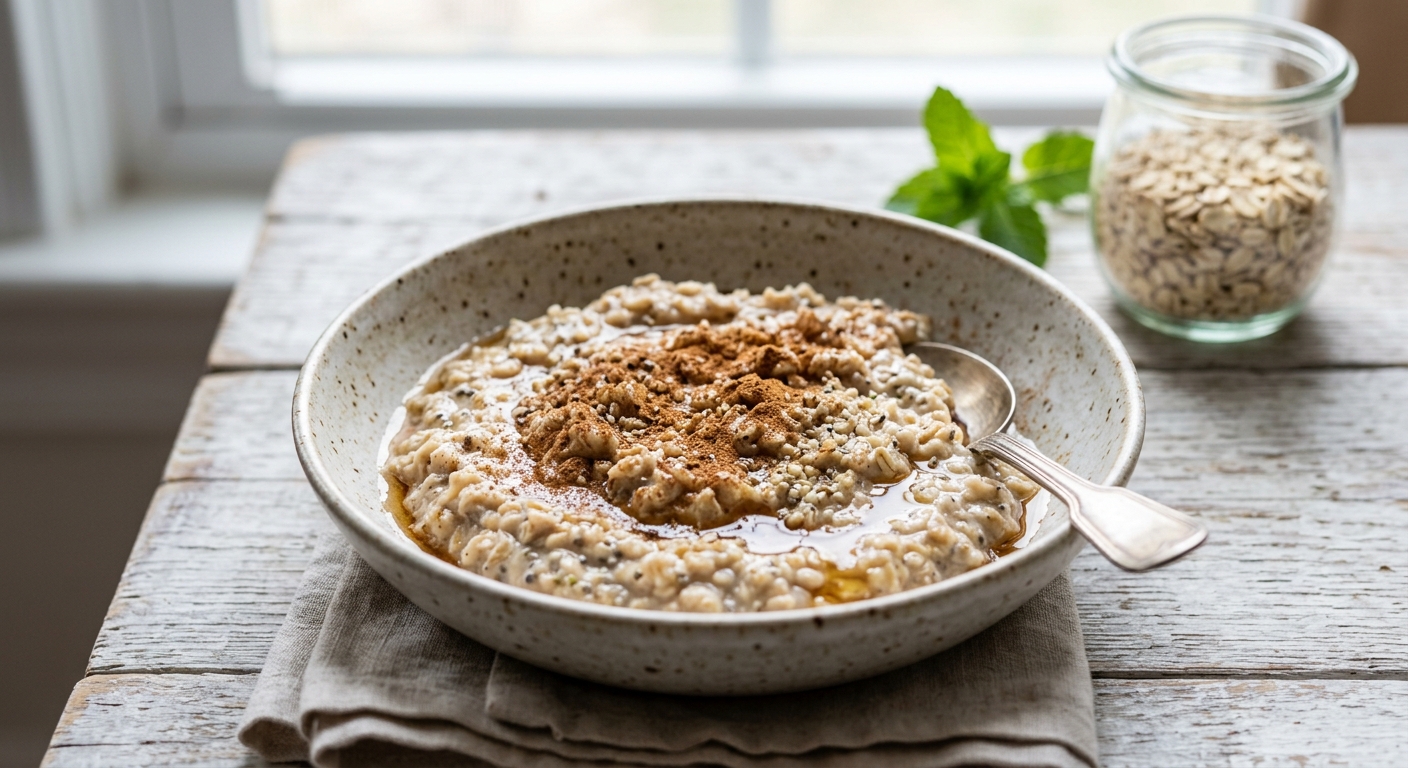
There is something almost alchemical about what happens when rolled oats meet raw apple cider vinegar overnight. The acetic acid in the vinegar begins a gentle pre-digestion of the oat starches, softening the grains, reducing phytic acid (which otherwise blocks mineral absorption), and priming your gut for a slow, steady glucose release come morning. Add Ceylon cinnamon, whose cinnamaldehyde compounds have been studied extensively for their role in improving insulin sensitivity, and you have a breakfast that does not just fuel you but actively works with your metabolism.
This recipe was developed with one obsession in mind: maximising nutrient bioavailability, not just nutrient presence. Raw apple cider vinegar contributes acetic acid and trace enzymes, but its most powerful role here is as a phytate reducer. Oats are rich in phytic acid, which binds to iron, zinc, and magnesium and escorts them out of your body unabsorbed. An overnight soak with even a small amount of ACV lowers phytate levels meaningfully, so the iron and magnesium you see in the nutrition panel below are far more absorbable than in a quickly cooked bowl of plain oats. We have verified every nutrient figure against USDA FoodData Central and peer-reviewed literature.
The flavour story is equally compelling. The vinegar does not make the oats taste sour. After an overnight rest, it mellows into a subtle brightness, the way a squeeze of lemon lifts a sauce without announcing itself. Ground cinnamon blooms in that acidic environment, becoming rounder and more complex. Topped with sliced apple, a drizzle of raw honey, and a sprinkle of hemp seeds, this bowl is genuinely, deeply delicious. It suits a lazy cold-prep morning, a slow cooker set before bed, or a pressure cooker batch-cook for the whole week.
4
servings
Ingredients
- 320 grolled oats (old-fashioned, not instant)
- 3 tbspraw apple cider vinegar (with the mother)
- 2 tspground Ceylon cinnamon
- 30 gchia seeds
- 40 ghulled hemp seeds
- 2 tbspraw honey
- 960 mlunsweetened oat milk (or whole dairy milk for higher protein)
- 240 mlfiltered water
- 2 mediumapples (such as Honeycrisp or Fuji), cored and thinly sliced
- 1 tsppure vanilla extract
- 0.25 tspColima Sea SaltMicroplastic Free Salt
- 1 tbspextra-virgin coconut oil (for stovetop and pressure cooker methods)
- —Ground nutmeg, to garnish
- —Extra raw honey, to serve
Instructions
Click on an item below to shop for the recommended items for this recipe on Amazon.
As an Amazon Associate, we earn from qualifying purchases.
- The evening before: combine the rolled oats, apple cider vinegar, chia seeds, and water in a large mixing bowl. Stir thoroughly so every oat is moistened. Press a sheet of plastic wrap or a plate directly onto the surface of the oats to minimise oxidation. Leave on the counter at room temperature for 8 to 12 hours. Do not refrigerate at this stage, as the enzymatic and acidic activity that reduces phytic acid works best at room temperature.
- In the morning, heat a large heavy-bottomed saucepan or Dutch oven over medium heat. Add the coconut oil and let it melt, swirling to coat the base. This thin fat layer prevents the oats from scorching as they hydrate rapidly.
- Add the soaked oat mixture to the pan along with the oat milk, cinnamon, vanilla extract, and fine sea salt. Stir with a wooden spoon or silicone spatula to combine. The oats will have absorbed most of the water overnight and will look thick and almost paste-like at this stage. That is exactly right.
- Cook over medium heat, stirring frequently, for 5 to 7 minutes. The oats will loosen beautifully as the warm milk incorporates and the chia seeds create a naturally creamy, almost custard-like texture. You are looking for a consistency that holds a gentle mound on the spoon but flows slowly. If the oats thicken beyond your preference, add oat milk 2 tablespoons at a time.
- Remove from heat and immediately stir in the raw honey. Adding honey off the heat preserves its trace enzymes and volatile aromatic compounds, which degrade above 40C (104F). Taste and adjust cinnamon or honey as desired.
- Divide into four bowls. Arrange the sliced apple on top, drizzle with a little extra honey, scatter hemp seeds over the surface, and finish with a light grating of nutmeg. Serve immediately.
- Generously grease the slow cooker insert with coconut oil, making sure to coat the sides at least 5cm (2 inches) up. This is more important than it sounds: the ACV and chia seeds create a thick, sticky mixture that can bond to ceramic inserts overnight.
- Add the rolled oats, apple cider vinegar, chia seeds, oat milk, water, cinnamon, vanilla extract, and fine sea salt directly to the slow cooker. Do not pre-soak. Stir everything together thoroughly with a long spoon, making sure the cinnamon is evenly distributed and not clumped. Unlike the stovetop method, there is no benefit to a separate soak step here because the long, moist, low heat of the slow cooker achieves the same hydration and partial phytate reduction during cooking.
- Set the slow cooker to Low and cook for 7 to 8 hours. Do not use the High setting, as oats cooked on High in a slow cooker become gluey and lose their pleasant toothsome texture. If your slow cooker runs hot, check at 6 hours. The finished oats should be thick, creamy, and pulling away slightly from the edges of the insert.
- When cooking is complete, stir the oats vigorously from the bottom up. The bottom layer will be slightly thicker and more set than the top, and stirring re-emulsifies the mixture into a uniform, porridge-like consistency. If the oats are thicker than desired, stir in 60 to 120ml of warm oat milk until you reach your preferred texture.
- Stir in the raw honey off the heat. Portion into four bowls, top with sliced apple, hemp seeds, a drizzle of honey, and a pinch of ground nutmeg. The apple is added fresh rather than cooked in, preserving its crunch and polyphenol content.
- Set the Instant Pot or electric pressure cooker to the Saute function on Normal heat. Add the coconut oil and let it melt, then add the rolled oats and toast them, stirring constantly, for 2 minutes. This dry-toast step is unique to the pressure cooker method: it adds a subtle nutty depth to the flavour and, critically, creates a light coating on the oat grains that helps prevent the foaming and sputtering that rolled oats can cause under pressure. Press Cancel to end the Saute function.
- Add the water first, then the oat milk, stirring as you pour to deglaze any toasted oat bits from the bottom of the pot. Scraping the bottom thoroughly at this stage is essential to prevent the burn warning. Add the apple cider vinegar, chia seeds, cinnamon, vanilla extract, and fine sea salt. Stir to combine. Do not add the honey yet, as it can scorch on the bottom and trigger the burn sensor.
- Secure the lid and set the pressure release valve to Sealing. Select Manual or Pressure Cook at High Pressure for 3 minutes. The pot will take approximately 10 minutes to come to full pressure before the cooking timer begins.
- When the 3-minute cook cycle completes, allow a natural pressure release for 10 full minutes. Do not use a quick release: the rapid pressure drop can cause the thick oat mixture to splatter aggressively through the valve. After 10 minutes, carefully move the valve to Venting to release any remaining steam.
- Open the lid, stir the oats well from the bottom up. The mixture will look slightly loose at this stage, but will thicken as it cools for 2 to 3 minutes. Stir in the raw honey. Divide into four bowls or into four sealed glass jars if meal prepping. Top with fresh apple slices, hemp seeds, a drizzle of honey, and a pinch of nutmeg just before serving.
- The evening before: combine the rolled oats, apple cider vinegar, chia seeds, and water in a large mixing bowl. Stir well to ensure even contact between the acid and the oats. Cover with plastic wrap and leave at room temperature for 8 to 12 hours. This overnight acid soak is especially valuable in the baked method because the high dry oven heat does not create the moist, long-simmering environment that otherwise breaks down phytic acid.
- In the morning, preheat the oven to 180C (350F) with a rack set in the centre position. Grease a 23x33cm (9×13 inch) baking dish with coconut oil, making sure to coat the sides fully.
- In a large bowl, whisk together the oat milk, cinnamon, vanilla extract, fine sea salt, and half the honey (1 tablespoon). Add the soaked oat mixture and hemp seeds and stir until fully combined. The batter will be looser than the stovetop version as it needs to set during baking.
- Pour the oat mixture into the prepared baking dish and spread into an even layer. Arrange the apple slices in a slightly overlapping pattern across the top of the oats, pressing them gently into the surface so they partially sink in. This placement means the apples soften and caramelise on top rather than being buried and going mushy. Drizzle the remaining tablespoon of honey over the apple slices and dust the entire surface with a generous pinch of ground nutmeg.
- Bake uncovered for 35 to 40 minutes, until the centre is set (a small area in the very centre may still have a very slight jiggle, but it will firm up as it rests), the edges are pulling away from the sides of the dish, and the apple topping has taken on a light golden-caramelised colour. If the top browns too quickly, tent loosely with foil after 25 minutes.
- Remove from the oven and allow to rest for 5 to 10 minutes before slicing or scooping. This resting time allows the chia seeds to finish gelling and gives the oatmeal enough structure to hold its shape when served. Scatter hemp seeds over the top just before serving so they retain their texture, and offer extra honey on the side.
Nutrition Breakdown
Per 1 serving (makes 4)
Vitamins & Minerals
% Daily Value based on a 2,000 calorie diet (FDA reference)
🧬 Essential Amino Acids
% of recommended daily intake (RDA) per serving
🛡 Antioxidant Profile
The Nutrition Science
The acetic acid in raw apple cider vinegar is the metabolic centrepiece of this recipe. Multiple randomised controlled trials, including a widely cited 2004 study published in Diabetes Care, have shown that consuming 20ml of vinegar with a carbohydrate-containing meal reduces postprandial blood glucose by 20 to 34% compared to control. The mechanism is twofold: acetic acid inhibits salivary amylase and pancreatic amylase (the enzymes that break starch into glucose), and it stimulates the expression of GLUT4 receptors in muscle cells, improving peripheral glucose uptake. When vinegar is consumed with oats overnight, it also lowers pH sufficiently to partially inhibit phytase-stable phytic acid, meaning more of the magnesium, zinc, and iron in this bowl actually reaches your bloodstream.
Ceylon cinnamon (Cinnamomum verum) is nutritionally distinct from the more common Cassia cinnamon (Cinnamomum cassia) and is the variety you should seek out for daily use. Cassia contains high levels of coumarin, a hepatotoxic compound at doses exceeding 0.1mg per kilogram of body weight per day. Ceylon cinnamon contains approximately 250 times less coumarin, making it safe for regular consumption at culinary doses. Its active compound, cinnamaldehyde, has been shown in meta-analyses to reduce fasting blood glucose, lower LDL cholesterol, and increase adiponectin, a hormone that governs fatty acid oxidation. At the 2 teaspoons used across four servings here, you are receiving a physiologically relevant dose without approaching any safety threshold.
Chia seeds and hemp seeds perform complementary structural and nutritional roles. Chia seeds form a hydrocolloid gel when exposed to liquid, which physically slows the movement of food through the small intestine, extending the absorptive phase and flattening the glucose curve. This viscous fibre effect is similar to that of beta-glucan in oats, and together they make this one of the most effective whole-food strategies for glycaemic management available. Hemp seeds contribute a near-ideal 3:1 ratio of omega-6 to omega-3 fatty acids, well within the range associated with reduced systemic inflammation, along with all nine essential amino acids in meaningful quantities, making this bowl a rare plant-based complete protein source.
Pro Tips
- Always use raw, unfiltered apple cider vinegar with the mother for this recipe. Filtered or distilled ACV lacks the enzymatic activity that contributes to phytate reduction, and its flavour is sharper and less rounded in the finished dish.
- Ceylon cinnamon is essential, not optional. It is sold labelled as Sri Lankan cinnamon or true cinnamon. Cassia cinnamon (the common supermarket variety) contains coumarin at levels that become a concern with daily consumption. Ceylon has a more delicate, slightly citrus-floral flavour that suits this recipe perfectly.
- For a protein boost that does not compromise the metabolic profile, stir 30g of unflavoured collagen peptides or a half-scoop of plain pea protein powder into the oat milk before combining. Both dissolve invisibly and add 10 to 12 grams of protein per serving without affecting texture or taste.
- The overnight soak at room temperature is non-negotiable for the stovetop and oven methods. Refrigerating the oats during the soak dramatically slows the enzymatic activity that breaks down phytic acid. If food safety is a concern in your kitchen, a minimum of 4 hours at room temperature still provides meaningful phytate reduction.
- To lower the glycaemic load further, replace the raw honey with an equal volume of pure maple syrup grade A, or reduce sweetener entirely and rely on the natural sweetness of a ripe Honeycrisp or Fuji apple. Slicing the apple more finely and folding some directly into the oats before cooking releases its natural fructose into the bowl, providing sweetness with fibre intact.



This is exactly the kind of breakfast I’ve been recommending to my students when we talk about epigenetics and morning metabolic setup, though I’d love to dig deeper into the fermentation angle here. The raw ACV provides acetate which can actually influence histone deacetylase activity, and that cinnamon is delivering polyphenols that support methylation donors like choline in the oats, which feels like a genuinely synergistic combination for gene expression if the emerging research holds up. I’ve noticed my own MTHFR-related inflammation markers improved noticeably when I started pairing fermented foods with manganese-rich grains instead of having them separately, but I’m curious:
Oh this is RIGHT up my alley – I’ve been experimenting with ACV in my overnight oats for about 4 months now and the difference in my digestion has been noticeable! The acetic acid seems to help with nutrient absorption and I’ve actually tracked lower bloating markers compared to my regular oat batches. I’m curious though – does the fermentation time affect the probiotic content, or is the benefit mainly from the acetate like Eddie mentioned? Also adding that cinnamon for blood sugar stability is *chef’s kiss* for my IBS symptoms / I’d be interested to see if anyone else has noticed improvements in their inflammatory markers with this combo!
YES – so glad you brought up the fermentation timeline because I’ve been tracking this obsessively too and I think the acetate benefit might actually be separate from any live cultures (most store-bought ACV doesn’t have significant probiotics unless it’s specifically labeled with the “mother”). What I’ve noticed in my own food diary is that the acetic acid improves my nutrient absorption AND seems to reduce post-meal inflammation spikes within 2-3 hours, but I haven’t seen a major shift in my microbiome markers unless I’m also incorporating other prebiotic elements like the beta-glucans in oats. The cinnamon addition is honestly game-changing for my IBS though – I’ve