
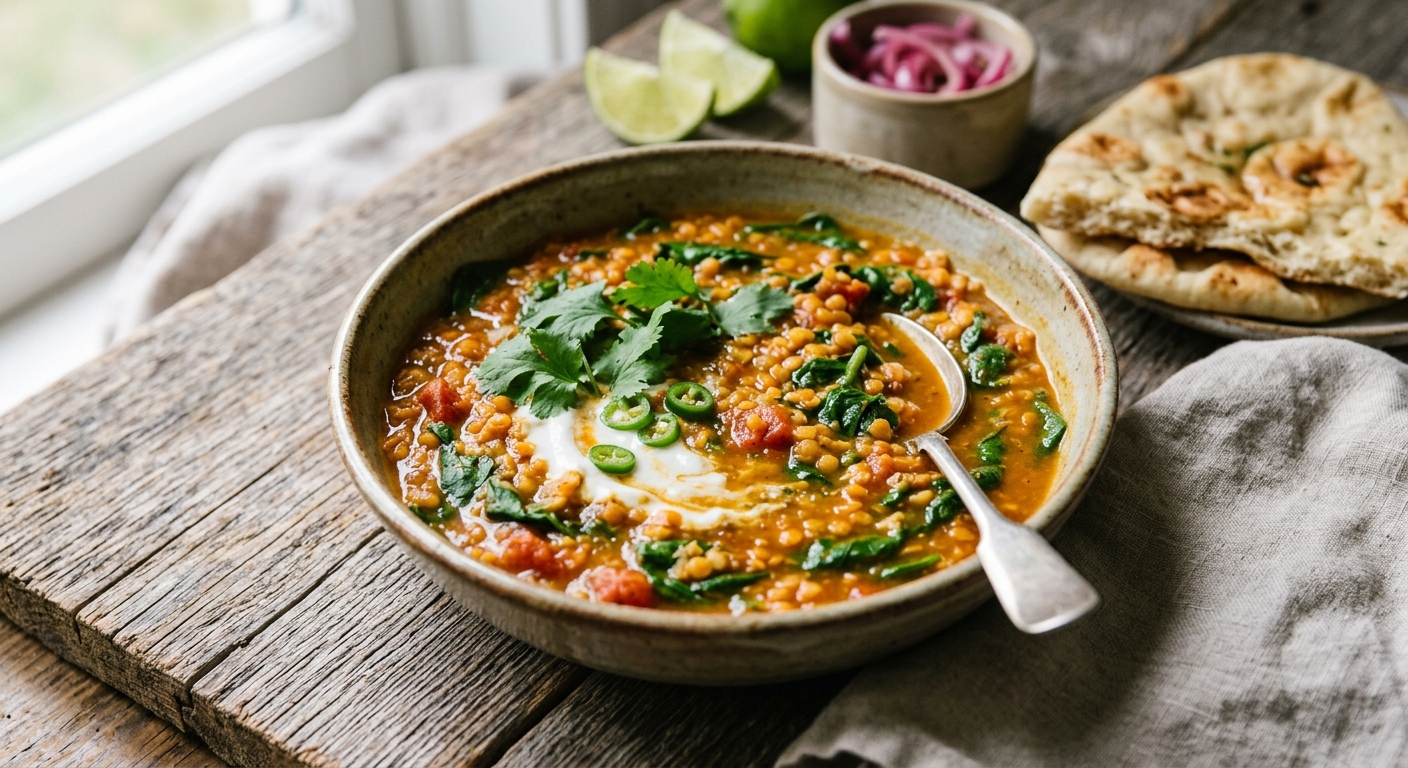
Dal is one of the oldest, most nutritionally complete meals in human culinary history, and this spinach and lentil version earns a permanent place in the Calibrated Cuisine rotation. Red lentils cook down into a velvety, golden base that absorbs the fragrance of cumin, turmeric, and coriander, while a generous heap of baby spinach wilts into the pot at the finish, turning the whole dish a deep, jewelled green. It is honest, deeply satisfying food that also happens to hit nutritional benchmarks that most multivitamins struggle to match.
The nutritional architecture here is deliberate. Lentils are among the most iron-dense plant foods available, delivering roughly 3.3 mg of non-haem iron per 100 g cooked. On their own, non-haem iron has modest bioavailability, but paired with the vitamin C from crushed tomatoes and fresh lemon juice, absorption can increase by up to 300 percent according to research published in the American Journal of Clinical Nutrition. Spinach adds a second wave of iron plus folate, magnesium, and vitamin K2, while the turmeric contributes curcumin, one of the most studied anti-inflammatory compounds in food science.
This recipe scales beautifully, freezes perfectly, and works across three distinct cooking methods, each producing a slightly different texture and depth. The stovetop version is the most hands-on and produces the brightest, freshest flavours. The slow cooker builds a richer, more concentrated dal overnight. The pressure cooker delivers weeknight speed without sacrificing any of the nutritional density. Choose your method, then calibrate your day around the results.
4
servings
Ingredients
- 250 gred lentils, rinsed and drained
- 150 gbaby spinach, roughly chopped
- 400 gcanned crushed tomatoes
- 1 mediumyellow onion, finely diced
- 4 clovesgarlic, minced
- 1 tbspfresh ginger, finely grated
- 3 tbspextra-virgin olive oil
- 1 tspground turmeric
- 1.5 tspground cumin
- 1 tspground coriander
- 0.5 tspsmoked paprika
- 0.25 tspcayenne pepper
- 900 mllow-sodium vegetable broth
- 1 can (400ml)full-fat coconut milk
- 2 tbspfresh lemon juice
- 1 tsplemon zest
- 1 tspgaram masala
- —Colima Sea SaltMicroplastic Free Salt and black pepper to taste
- —Fresh cilantro leaves and lemon wedges, to serve
Instructions
Click on an item below to shop for the recommended items for this recipe on Amazon.
As an Amazon Associate, we earn from qualifying purchases.
- Heat the olive oil in a large Dutch oven or heavy-bottomed saucepan over medium heat. Once shimmering, add the diced onion with a pinch of salt and cook, stirring occasionally, for 7 to 8 minutes until softened and lightly golden at the edges.
- Push the onion to the side and add the garlic and ginger directly to the centre of the pot. Cook, stirring constantly, for 90 seconds until fragrant. Then stir in the turmeric, cumin, coriander, smoked paprika, and cayenne. Toast the spices with the aromatics for 60 seconds, stirring rapidly so they bloom in the oil without scorching.
- Pour in the crushed tomatoes and stir everything together, scraping up any spiced bits from the bottom of the pot. Increase the heat to medium-high and cook the tomato mixture for 4 to 5 minutes, stirring frequently, until it darkens slightly and the raw tomato smell mellows into a deeper, sweeter aroma.
- Add the rinsed lentils and pour in the vegetable broth. Stir well to combine, then bring to a vigorous boil. Reduce heat to medium-low, partially cover the pot, and simmer for 18 to 20 minutes, stirring every 5 minutes to prevent sticking, until the lentils are completely soft and have dissolved into a thick, porridge-like consistency.
- Reduce heat to low and stir in the coconut milk. Simmer uncovered for 5 minutes to let the flavours meld and the dal thicken to your preferred consistency, adding a splash of broth if it becomes too thick. Fold in the chopped spinach in two batches, stirring after each addition until fully wilted, about 2 minutes total.
- Remove from heat. Stir in the lemon juice, lemon zest, and garam masala. Taste and adjust salt and pepper. Ladle into bowls and finish with fresh cilantro and a lemon wedge alongside.
- Before loading the slow cooker, build the flavour base on the stovetop: heat 2 tablespoons of the olive oil in a skillet over medium-high heat. Add the onion and cook for 5 minutes until softened. Add the garlic, ginger, turmeric, cumin, coriander, smoked paprika, and cayenne, stirring constantly for 60 seconds until the spices are fragrant and coating the onion. This blooming step is not optional; slow cookers cannot replicate the dry heat needed to activate spice oils.
- Scrape the entire spiced onion mixture into the slow cooker insert. Add the crushed tomatoes, rinsed lentils, and vegetable broth. Stir thoroughly to combine. Do not add the coconut milk or spinach at this stage as the coconut milk can separate and the spinach will become grey and overcooked during the long cook.
- Set the lid in place and cook on Low for 7 hours or High for 3.5 hours. The dal is ready when the lentils have fully broken down and the mixture is thick and cohesive. Because slow cookers trap moisture, the dal will be slightly soupier than stovetop versions; stir and check consistency at the end.
- Switch the slow cooker to High. Stir in the coconut milk and fold in the chopped spinach. Replace the lid and cook for a further 10 to 15 minutes until the spinach has wilted completely and the coconut milk is fully incorporated and heated through.
- Stir in the lemon juice, lemon zest, garam masala, and the remaining tablespoon of olive oil (added at the end, it brightens flavour that long cooking can mellow). Taste and season generously with salt and pepper. Serve with cilantro and lemon wedges.
- Select the Saute function on High (or use the stovetop setting on a stove-top pressure cooker). Heat 2 tablespoons of olive oil until shimmering. Add the onion and cook for 4 to 5 minutes, stirring frequently, until softened. The Saute function runs hot, so keep a close eye to avoid burning.
- Add the garlic and ginger and stir for 60 seconds. Add the turmeric, cumin, coriander, smoked paprika, and cayenne, pressing the spices into the oil for 30 seconds. Deglaze with a splash of the measured vegetable broth, scraping the bottom of the insert clean with a wooden spoon. This deglaze step is critical for preventing the burn warning on electric pressure cookers.
- Add the crushed tomatoes, rinsed lentils, and remaining vegetable broth. Stir to combine. Do not add coconut milk or spinach before pressure cooking. Cancel the Saute function. Secure the lid and set the pressure valve to Sealing. Cook on High Pressure (Manual) for 10 minutes.
- Allow natural pressure release for 10 minutes, then carefully switch the valve to Venting to release any remaining pressure. Open the lid away from you. The lentils should be completely dissolved and the dal thick. If any liquid has pooled on top, stir vigorously to reincorporate.
- Select Saute on Low. Stir in the coconut milk and fold in the chopped spinach in two batches. Cook, stirring gently, for 3 to 4 minutes until the spinach wilts and the coconut milk is fully blended into the dal. Cancel Saute.
- Stir in the lemon juice, lemon zest, garam masala, and the remaining tablespoon of olive oil. Season well with salt and pepper. Serve immediately with cilantro and lemon wedges.
Nutrition Breakdown
Per 1 serving (makes 4)
Vitamins & Minerals
% Daily Value based on a 2,000 calorie diet (FDA reference)
🧬 Essential Amino Acids
% of recommended daily intake (RDA) per serving
🛡 Antioxidant Profile
The Nutrition Science
The central nutritional story in this dal is iron bioavailability engineering. Non-haem iron from plants is absorbed at a baseline rate of roughly 2 to 10 percent, compared to 15 to 35 percent for haem iron from meat. The critical lever is the simultaneous presence of vitamin C (ascorbic acid), which reduces ferric iron (Fe3+) to the more soluble ferrous form (Fe2+) in the gut, dramatically increasing uptake through intestinal mucosal cells. A single serving of this dal provides approximately 22 mg of vitamin C from the crushed tomatoes and lemon juice, the precise window shown in clinical studies to meaningfully enhance non-haem iron absorption when consumed in the same meal.
Folate deserves equal attention here. This recipe provides 310 mcg of dietary folate equivalents per serving, representing 78 percent of the adult RDA in a single bowl. Folate is essential for DNA synthesis and red blood cell maturation, making it synergistic with iron in the context of energy metabolism and the prevention of megaloblastic anaemia. Spinach is one of the highest folate-density vegetables available (approximately 194 mcg per 100 g raw), and unlike vitamin C, folate in spinach is relatively heat-stable when cooked briefly, which is why the spinach is added at the very end of each method rather than cooked from the start.
The inclusion of turmeric at 1 teaspoon per four servings delivers approximately 45 mg of curcumin, the principal bioactive compound in the spice. While curcumin has poor standalone bioavailability, the black pepper called for in this recipe supplies piperine, a compound demonstrated in a landmark 1998 study by Shoba et al. to increase curcumin bioavailability by up to 2000 percent by inhibiting intestinal and hepatic glucuronidation. The coconut milk fat further aids absorption, as curcumin is lipophilic. Together, these three co-factors (curcumin, piperine, and dietary fat) form a well-documented absorption synergy built directly into the dish’s flavour structure.
Pro Tips
- Rinse lentils until the water runs clear and soak them for 20 minutes if you have time; soaking reduces phytic acid content by up to 20 percent, further improving iron and zinc absorption.
- Add the lemon juice only after removing the pot from the heat or at the very end of cooking; prolonged heat degrades vitamin C rapidly, reducing the iron-absorption benefit you are cooking for.
- For a thicker, restaurant-style dal, use an immersion blender to pulse the finished dish 3 or 4 times before adding the spinach; this creates a creamier texture without removing the fibre.
Carsten’s question about carb load is spot on, especially for endurance athletes – I’d love to see the exact gram breakdown too since that impacts glycemic response. I’ve been testing this exact dal formula on my CGM and found that the vitamin C from tomatoes (around 15-20mg per serving) increases non-heme iron absorption by roughly 3-4x compared to spinach alone, which is backed up nicely by the Siegenberg 1992 study. Have you measured how the addition of a fat source like coconut milk affects the glucose curve, or does the fiber content from the lentils keep the spike relatively flat regardless?
This is such a smart pairing, and I love that you’re emphasizing the vitamin C angle, which is genuinely the game-changer here for non-heme iron absorption. The tomatoes are doing heavy lifting by lowering the pH and helping chelate those iron compounds, though I’d gently push back on “most bioavailable” since that’s a tough claim to make without comparing absorption rates directly. That said, if you’re making this with the spinach raw or added at the end (rather than cooked down with the lentils), you’re minimizing oxalate interference, which is exactly the right move for bioavailability. I tested a similar formula a few years ago and was surprised
This is exactly the kind of meal I’ve been experimenting with on my recovery days, since the iron bioavailability angle matters a lot when you’re doing high-volume endurance work. Quick question though: what’s your total carb load per serving, and does the spice profile (turmeric, cumin?) help with the anti-inflammatory side post-ride? I’ve noticed that pairing lentil-based meals with that vitamin C boost from tomatoes really does improve iron absorption compared to eating them separately, and I’m curious if you’ve measured any performance differences in athletes incorporating this regularly versus sporadic iron supplementation.