
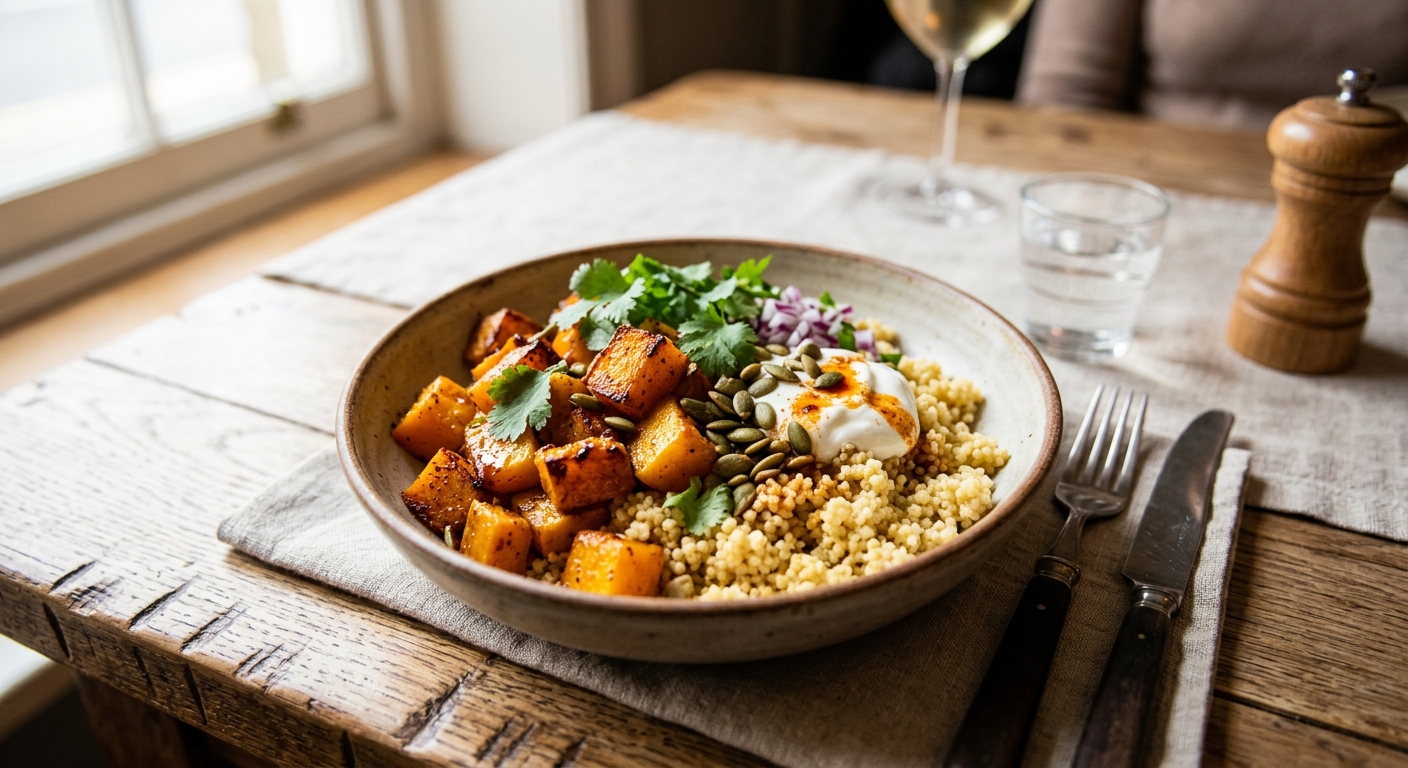
There is a quiet nutritional crisis hiding in plain sight: roughly 50% of adults in Western countries do not meet the recommended daily intake for magnesium, a mineral that governs over 300 enzymatic reactions in the human body. Energy production, muscle contraction, blood sugar regulation, and protein synthesis all depend on adequate magnesium, yet most people give it far less attention than calcium or iron. This Millet and Roasted Squash Bowl was engineered from the ground up to close that gap, delivering a generous dose of bioavailable magnesium from three complementary sources: millet, pepitas, and tahini.
Millet is the unsung hero of the ancient grain world. Unlike quinoa or farro, it rarely commands headlines, but gram for gram it rivals many celebrated grains for mineral density. Cooked millet is naturally fluffy and slightly nutty, absorbing aromatics beautifully and providing a neutral canvas for bold accompaniments. Butternut squash brings far more than sweetness: it is loaded with beta-carotene, vitamin C, and potassium, while its complex carbohydrates contribute meaningfully to the bowl’s impressive fiber count. Roasting the squash at high heat concentrates its natural sugars, creating caramelized edges that provide textural contrast against the soft millet.
The finishing touches are not mere garnishes. Pepitas (hulled pumpkin seeds) are one of the most magnesium-dense foods available, delivering roughly 74mg of magnesium per 28g serving. Tahini, made from sesame seeds, adds a further mineral boost alongside heart-healthy monounsaturated fats. A bright lemon-tahini drizzle ties the whole bowl together, and a handful of baby spinach wilted through the warm grain provides an additional hit of folate and iron. This is a bowl that earns its place at your table every single week.
4
servings
Ingredients
- 300 gmillet, rinsed and drained
- 720 mllow-sodium vegetable broth
- 240 mlwater
- 700 gbutternut squash, peeled and cut into 2cm cubes
- 3 tbspextra-virgin olive oil, divided
- 1 tspground cumin
- 1 tspsmoked paprika
- 0.5 tspground cinnamon
- 0.5 tspground turmeric
- 100 gbaby spinach
- 80 ghulled pepitas (pumpkin seeds), toasted
- 4 tbsptahini (sesame seed paste)
- 3 tbspfresh lemon juice
- 1 tbsppure maple syrup
- 1 clovegarlic, finely grated
- 3 tbspwarm water (for tahini drizzle)
- 1 mediumred onion, thinly sliced into half-moons
- 2 clovesgarlic, minced (for cooking)
- —Colima Sea SaltMicroplastic Free Salt and freshly cracked black pepper to taste
- —Fresh flat-leaf parsley or cilantro, to serve
Instructions
Click on an item below to shop for the recommended items for this recipe on Amazon.
As an Amazon Associate, we earn from qualifying purchases.
- Prepare the tahini drizzle first so it is ready to go: whisk together tahini, lemon juice, maple syrup, grated garlic, and 3 tablespoons warm water in a small bowl until completely smooth and pourable. Season with a pinch of salt and set aside. If the drizzle thickens as it sits, add water one teaspoon at a time.
- Roast the squash on the stovetop using a large, dry cast iron skillet over medium-high heat. Add 1.5 tablespoons of the olive oil and heat until shimmering. Add the squash cubes in a single layer (work in two batches if needed) and cook undisturbed for 4 to 5 minutes until deeply golden on the bottom. Toss, add the red onion, cumin, smoked paprika, cinnamon, and turmeric, and cook for a further 4 to 5 minutes, stirring occasionally, until the squash is tender and caramelized on multiple sides. Season generously with salt and pepper. Transfer to a plate and keep warm.
- In the same pot or a medium heavy-bottomed saucepan, heat the remaining 1.5 tablespoons of olive oil over medium heat. Add the millet and toast, stirring constantly, for 3 to 4 minutes until the grains turn a shade darker and smell nutty, like popcorn. Add the minced garlic and stir for 30 seconds until fragrant.
- Pour in the vegetable broth and water carefully (the liquid will steam vigorously). Add a generous pinch of salt. Bring to a boil over high heat, then immediately reduce to the lowest possible simmer. Cover tightly with a lid and cook for 18 minutes without lifting the lid.
- Remove from heat and let the millet steam, still covered, for 5 minutes. Uncover, fluff thoroughly with a fork, then fold in the baby spinach. The residual heat will wilt the spinach in about 1 minute.
- Divide the millet and spinach among four wide bowls. Top generously with the caramelized squash and onion mixture. Scatter toasted pepitas over each bowl, drizzle liberally with tahini sauce, and finish with fresh parsley or cilantro and a final crack of black pepper.
- Make the tahini drizzle ahead and refrigerate it in a jar: whisk tahini, lemon juice, maple syrup, grated garlic, and 3 tablespoons warm water until smooth. It will keep for up to 5 days refrigerated. Thin with a little water before serving.
- Lightly grease the insert of a 4 to 6 quart slow cooker with a small amount of olive oil. Add the rinsed millet directly to the insert along with the minced garlic, cumin, smoked paprika, cinnamon, turmeric, and 0.5 teaspoon fine sea salt. Stir to coat the grains in the spices.
- Add the butternut squash cubes and red onion slices on top of the millet. Pour over the vegetable broth and water. The liquid should just cover the squash. Do not stir once the vegetables are added, as you want the squash to steam rather than sink and turn to puree.
- Place a double layer of paper towels or a clean kitchen towel between the lid and the insert to absorb excess condensation. This prevents water from dripping back onto the millet and making it soggy. Cook on High for 3 to 3.5 hours, until the millet has absorbed the liquid and the squash is fork-tender.
- Remove the paper towel layer. Drizzle the remaining 2 tablespoons of olive oil over the surface and fold in the baby spinach gently. Replace the lid for 3 to 4 minutes until the spinach wilts. Because the slow cooker method does not allow for stovetop caramelization, carefully use a kitchen torch or broil individual bowls for 2 minutes to add color to the squash at the end if desired.
- Spoon into bowls, ensuring each portion gets a good mix of millet and squash. Top with toasted pepitas, drizzle with the tahini sauce, and garnish with fresh herbs.
- Make the tahini drizzle while the pot comes to pressure: whisk tahini, lemon juice, maple syrup, grated garlic, and 3 tablespoons warm water in a small bowl. Season with salt and set aside on the counter.
- Set the Instant Pot or electric pressure cooker to Saute on Normal heat. Add 1.5 tablespoons of the olive oil. Once hot, add the red onion and cook for 2 to 3 minutes until softened. Add the minced garlic, cumin, smoked paprika, cinnamon, and turmeric and stir for 45 seconds until fragrant and the spices bloom in the fat.
- Add the rinsed millet to the pot and stir to coat every grain in the spiced oil. Toast for 2 minutes, stirring, until the millet smells nutty. Press Cancel to stop the Saute function.
- Add the butternut squash cubes, vegetable broth, water, and 0.5 teaspoon fine sea salt. Stir once to combine. Secure the lid and set the steam valve to Sealing. Cook on Manual or Pressure Cook at High Pressure for 10 minutes.
- Allow the pressure to release naturally for 10 minutes, then carefully turn the valve to Venting to release any remaining steam. Open the lid away from you. The millet should have absorbed all the liquid and the squash should be very tender.
- Fluff the millet with a fork, breaking up any clumps around the squash. Drizzle in the remaining 1.5 tablespoons of olive oil and fold in the baby spinach, replacing the lid for 2 minutes to allow it to wilt from residual steam. Spoon into bowls, top with toasted pepitas, drizzle with tahini sauce, and garnish with fresh herbs. Because the squash will not have caramelized edges in this method, a finishing pinch of flaky salt provides extra textural interest.
- Preheat the oven to 220C (425F) with a large rimmed baking sheet inside the oven as it heats. Make the tahini drizzle: whisk tahini, lemon juice, maple syrup, grated garlic, and 3 tablespoons warm water in a small bowl. Season with salt and reserve.
- In a large bowl, toss the butternut squash cubes and red onion slices with 2 tablespoons of the olive oil, cumin, smoked paprika, cinnamon, turmeric, 0.5 teaspoon salt, and a generous crack of black pepper until every piece is evenly coated. Carefully remove the hot baking sheet from the oven and spread the squash mixture in a single layer, cut sides down where possible. Return to the oven and roast for 35 to 40 minutes, flipping once at the 20-minute mark, until deeply golden brown and caramelized at the edges. Do not overcrowd or the squash will steam instead of roast.
- While the squash roasts, prepare the millet for an oven bake. In an oven-safe 2 to 3 quart baking dish or Dutch oven, combine the rinsed millet, minced garlic, the remaining 1 tablespoon olive oil, vegetable broth, water, and 0.5 teaspoon salt. Stir to combine and cover very tightly with a lid or two layers of foil.
- After the squash has been roasting for 20 minutes, slide the covered millet dish into the oven on a lower rack. Bake for 20 minutes at 220C (425F). At the 20-minute mark, remove the millet from the oven and let it rest, still covered, for 5 minutes. The high oven heat and sealed environment create a pilaf-style steam cook that yields separate, fluffy grains.
- Uncover the millet and fluff with a fork. Scatter the baby spinach over the hot millet, replace the cover for 2 minutes to wilt the leaves, then fold gently to incorporate.
- Build your bowls: spoon the oven-pilaf millet and spinach into wide bowls. Pile the roasted squash and caramelized onion generously on top. Scatter toasted pepitas, drizzle with the tahini sauce, and finish with fresh parsley or cilantro. The contrast between the fluffy grain base and the deeply bronzed squash is the hallmark of this method.
Nutrition Breakdown
Per 1 serving (makes 4)
Vitamins & Minerals
% Daily Value based on a 2,000 calorie diet (FDA reference)
🧬 Essential Amino Acids
% of recommended daily intake (RDA) per serving
🛡 Antioxidant Profile
The Nutrition Science
Magnesium bioavailability is the most nuanced aspect of this recipe’s nutritional design. Millet, pepitas, and tahini all contain phytates, antinutrients that can bind minerals and reduce absorption. This recipe addresses that challenge on two fronts. First, rinsing the millet removes surface phytates. Second, the vitamin C from fresh lemon juice in the tahini drizzle and the organic acids in lemon juice both lower the pH of the meal, partially disrupting phytate-mineral bonds and improving the absorption of magnesium, iron, and zinc by an estimated 10 to 20% compared to eating these foods without an acidic component.
The pairing of fat-soluble carotenoids with dietary fat is equally deliberate. Beta-carotene, lutein, and zeaxanthin from butternut squash and spinach are classified as fat-soluble compounds, meaning they require the presence of dietary fat for micelle formation and lymphatic absorption. Each serving of this bowl contains approximately 19g of fat from olive oil, tahini, and pepitas. Studies show that consuming carotenoid-rich vegetables with even 3 to 5g of fat increases beta-carotene absorption by three to five times compared to a fat-free preparation. The tahini drizzle is therefore not optional from a nutritional standpoint; it is a delivery mechanism for the bowl’s most potent antioxidants.
Millet’s fiber composition deserves special mention. Approximately 30% of millet’s fiber is insoluble arabinoxylan, a prebiotic fiber that selectively feeds Bifidobacterium and Lactobacillus species in the colon. Fermentation of arabinoxylan produces short-chain fatty acids, particularly butyrate, which is the preferred fuel source for colonocytes and plays a critical role in maintaining intestinal barrier integrity. Combined with the soluble pectin fibers from butternut squash, this bowl provides both types of fiber that the gut microbiome needs to perform optimally.
Pro Tips
- Always rinse millet under cold running water and drain well before cooking. Millet has a natural coating of saponins that can impart a faintly bitter or soapy taste if not removed, much like unrinsed quinoa.
- Toast pepitas in a dry skillet over medium heat for 3 to 4 minutes, shaking frequently, until they begin to pop and turn golden. Toasting activates Maillard compounds and increases their apparent nuttiness, which is critical when they serve as a primary textural element rather than just a garnish.
- For maximum magnesium retention, avoid overcooking the millet. Once cooked, millet should be fluffy and slightly grainy, not porridge-like. If you have excess liquid after the recommended cook time, uncover and cook over low heat for 2 minutes to evaporate rather than continuing to steam, which converts starch and causes the magnesium-containing outer layer of the grain to break down further into the cooking water.

yo this bowl is hitting different, the millet base is such a chef move because it actually caramelizes in that subtle way that quinoa just wont do, plus the texture is cleaner. but what im really geeking out over is pairing it with the squash for that magnesium density – used to prep these kinda bowls at the restaurant but never thought about the electrolyte game, and honestly after i burned out from fine dining i started realizing how much my nervous system needed that combo. tahini-lemon drizzle is obviously *chefs kiss* for bioavailability of those fat soluble micronutrients too. def making this for meal prep this week
This is such a smart combination, honestly! I love that millet gets overlooked so often because people don’t realize how complete it is, especially paired with those pepitas for all nine amino acids. The magnesium angle is really what got me though, since so many of my vegetarian clients are surprised when we trace back their energy crashes to magnesium gaps, and a bowl like this could genuinely be game-changing for them. Do you find the tahini-lemon really helps with the mineral absorption, or is that more about flavor balance for you?
yo priya youre hitting on something real here, the tahini-lemon combo is actually doing heavy lifting on both fronts – like yeah the brightness cuts through the richness and makes it more craveable so people actually *eat* it consistently which matters, but that fat from tahini + vitamin c from lemon is legit facilitating mineral absorption. ive seen clients energy shifts just from adding more magnesium rich stuff but also the consistency piece, like this bowl makes it so easy to meal prep that people dont default to energy drink runs anymore. your clients are probably also not getting enough sea vegetables or dark leafies too tbh, so maybe thats another sneaky gap to check with the magnesium thing