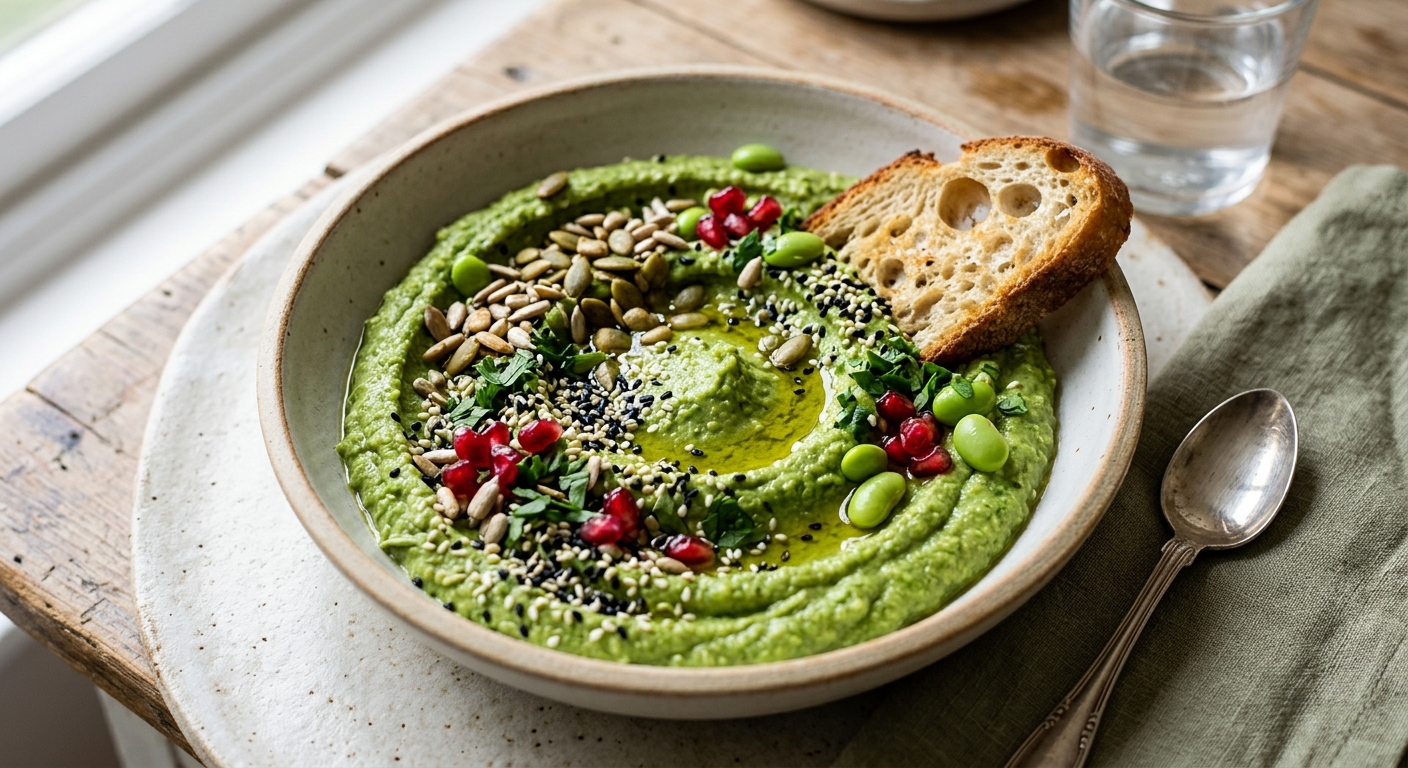
Most people chase their mineral needs across an entire day of eating, swapping between supplements, fortified cereals, and the occasional handful of nuts. This Edamame Hummus Bowl was engineered to collapse that effort into a single, deeply satisfying meal. The base, a silky hummus built from shelled edamame instead of chickpeas, brings a brighter green flavour and a meaningfully higher zinc and iron density per gram than its traditional counterpart. Layered on top are ingredients chosen not just for flavour contrast but for their mineral synergies: pepitas for magnesium and zinc, sesame tahini for calcium, dark leafy kale for iron and manganese, and a jammy soft-boiled egg to shuttle fat-soluble nutrients into your bloodstream alongside the plant-based minerals below.
The cooking method you choose shapes the texture of the edamame hummus considerably. The stovetop approach lets you control blanching time to the second, preserving the vivid jade colour and a slightly firmer, more rustic texture when blended. The pressure cooker drives moisture deep into the beans and produces the creamiest, most restaurant-smooth result in the shortest window. The slow cooker, counter-intuitively, is ideal for batch-cooking and meal prep: a long, low simmer concentrates the bean flavour and allows aromatics like garlic and cumin to fully bloom before blending. The oven method, meanwhile, unlocks a roasted dimension by caramelising the garlic and shallots before they ever meet the beans, adding toasty depth that none of the wet methods can replicate.
Beyond the headline minerals, this bowl delivers a meaningful dose of folate from the edamame, vitamin K from the kale, and a polyphenol profile from the radishes and sesame that supports cellular antioxidant defence. The tahini dressing ties every component together with a nutty, lemon-bright finish that makes this feel like a dish you would order at a forward-thinking all-day cafe, not a calculated nutritional exercise. It is both, and that is exactly the point.
4
servings
Ingredients
- 500 gfrozen shelled edamame, thawed
- 80 gtahini (sesame paste)
- 60 mlfresh lemon juice (about 2 lemons)
- 3 clovesgarlic, peeled
- 1 mediumshallot, peeled and roughly chopped
- 1.5 tspground cumin
- 0.5 tspground coriander
- 60 mlextra-virgin olive oil, plus more to serve
- 60 mlcold water, plus more as needed
- 200 gcurly kale, stems removed, leaves torn
- 1 tbsptoasted sesame oil
- 1 tbsplow-sodium soy sauce
- 1 tsprice vinegar
- 6 mediumradishes, very thinly sliced
- 2 tbspapple cider vinegar
- 1 tsphoney or maple syrup
- 60 graw pepitas (pumpkin seeds)
- 1 tbsptamari
- 4 largeeggs
- 2 tbsptoasted sesame seeds (white and black mix)
- 0.5 tspsmoked paprika, to garnish
- 1 pinchcayenne pepper
- —Colima Sea SaltMicroplastic Free Salt and black pepper to taste
Instructions
Click on an item below to shop for the recommended items for this recipe on Amazon.
As an Amazon Associate, we earn from qualifying purchases.
- Pickle the radishes first so they have time to mellow: combine the sliced radishes with apple cider vinegar, honey or maple syrup, a pinch of salt, and 2 tablespoons of cold water in a small bowl. Toss well and set aside at room temperature for at least 15 minutes, stirring once or twice.
- Bring a medium saucepan of well-salted water to a rolling boil over high heat. Add the thawed edamame and blanch for exactly 3 minutes. Drain immediately and transfer to a bowl of ice water for 2 minutes to stop cooking and set the colour. Drain again and pat dry with a clean towel.
- While the edamame cools, toast the pepitas: place a small dry skillet over medium heat. Add the pepitas and toast, shaking the pan frequently, for 3 to 4 minutes until they begin to pop and turn golden at the edges. Add the tamari and toss quickly for 30 seconds until the seeds are glazed and fragrant. Transfer to a plate to cool and crisp up.
- Make the sesame-dressed kale: in the same skillet over medium-low heat, warm the toasted sesame oil for 30 seconds. Add the torn kale leaves and toss with tongs for 2 minutes until just wilted but still bright green. Remove from heat, add soy sauce and rice vinegar, toss well, and set aside.
- Soft-boil the eggs: refill the saucepan with fresh water and bring to a gentle boil. Lower the eggs in carefully with a spoon and cook for exactly 6 minutes and 30 seconds. Transfer immediately to ice water, cool for 2 minutes, then peel and halve.
- Make the edamame hummus: place the blanched edamame, tahini, lemon juice, garlic, shallot, cumin, coriander, cayenne, and three-quarters of the olive oil into a food processor or high-powered blender. Process for 1 minute, scraping down the sides. With the motor running, stream in the cold water one tablespoon at a time until the hummus reaches a smooth, scoopable consistency. Season generously with sea salt and black pepper. Taste and adjust lemon juice or salt.
- To assemble: divide the warm edamame hummus among four wide bowls. Create a well in the centre with the back of a spoon. Arrange the wilted kale, quick-pickled radishes, and tamari pepitas in separate sections around the bowl. Nestle a halved soft-boiled egg into each bowl. Drizzle with the remaining olive oil, scatter sesame seeds over everything, dust lightly with smoked paprika, and serve immediately.
- Start the radish pickle: combine sliced radishes, apple cider vinegar, honey or maple syrup, a pinch of salt, and 2 tablespoons cold water in a small jar or bowl. Cover and refrigerate. The longer they sit during the slow-cooker cook time, the more developed their flavour will be.
- Place the thawed edamame, peeled garlic cloves, chopped shallot, ground cumin, ground coriander, cayenne, and 120ml (half a cup) of water into the slow cooker insert. Stir to combine, season lightly with salt, and lay a piece of parchment directly on the surface to retain moisture. Set to Low, cover with the lid, and cook for 4 hours. The beans will become very tender and the aromatics will deeply infuse the cooking liquid.
- About 20 minutes before the slow cooker finishes, toast the pepitas in a small dry skillet over medium heat, shaking frequently for 3 to 4 minutes until golden and popping. Add tamari, toss for 30 seconds, and transfer to a plate to cool.
- Wilt the kale: in the same skillet over medium-low heat, warm the sesame oil, add the torn kale, and toss with tongs for 2 minutes until just wilted. Remove from heat, add soy sauce and rice vinegar, and toss to coat. Set aside.
- Soft-boil the eggs: bring a small saucepan of water to a gentle boil. Lower eggs in gently, cook for 6 minutes and 30 seconds, then transfer to ice water. Cool for 2 minutes, peel, and halve just before serving.
- Transfer the entire contents of the slow cooker insert, including all cooking liquid, to a food processor or high-powered blender. Add tahini, lemon juice, and olive oil. Blend for 90 seconds until very smooth. The extra cooking moisture from the slow cooker means you may not need to add extra water; assess the consistency and blend in cold water one tablespoon at a time only if needed. Season to taste.
- Assemble the bowls: spoon the hummus into four wide bowls, creating a well in each. Arrange wilted kale, pickled radishes drained from their liquid, and tamari pepitas in the wells and around the hummus. Top each bowl with a halved soft-boiled egg, a drizzle of olive oil, a scatter of sesame seeds, and a dusting of smoked paprika.
- Place the thawed edamame, peeled garlic cloves, and chopped shallot in the pressure cooker inner pot. Add 180ml of water, the ground cumin, ground coriander, cayenne, and a half teaspoon of sea salt. Place a small trivet or steamer basket on top of the edamame layer. Set four eggs directly on the trivet. Seal the lid, set the steam release valve to Sealing, and cook on Manual or Pressure Cook at High Pressure for 5 minutes.
- While the pressure cooker builds pressure, prepare the radish pickle: combine sliced radishes with apple cider vinegar, honey or maple syrup, a pinch of salt, and 2 tablespoons cold water in a small bowl. Toss and set aside.
- When the cook time ends, perform a Quick Release by carefully switching the valve to Venting. Once the pin drops, open the lid. Remove the eggs immediately with tongs and transfer to a bowl of ice water for 2 minutes. The 5-minute pressure cook produces a just-set yolk; for a firmer yolk, increase to 6 minutes.
- Toast the pepitas in a small dry skillet over medium heat for 3 to 4 minutes, shaking constantly, until golden. Add tamari, toss for 30 seconds, and spread on a plate to cool. In the same skillet, warm the sesame oil over medium-low heat, add the torn kale, toss for 2 minutes until just wilted, then add soy sauce and rice vinegar off the heat.
- Use a slotted spoon to transfer the cooked edamame, garlic, and shallot to a food processor or high-powered blender. Reserve the cooking liquid in the pot. Add tahini, lemon juice, and olive oil to the blender. Process for 2 minutes, streaming in the reserved cooking liquid one tablespoon at a time until the hummus is ultra-smooth and creamy. The starchy cooking liquid from the pressure cooker is particularly effective at emulsifying the tahini. Season to taste with salt, black pepper, and additional lemon juice.
- Peel the cooled eggs and halve them. Divide the hummus among four bowls, creating a well in each. Arrange wilted kale, pickled radishes, and tamari pepitas in sections around each bowl. Add the egg halves, drizzle generously with olive oil, scatter sesame seeds, dust with smoked paprika, and serve immediately.
- Preheat the oven to 200C (400F) with the fan if available. Line a large baking sheet with parchment and a small baking sheet or oven-safe dish with foil. Start the radish pickle: combine sliced radishes, apple cider vinegar, honey or maple syrup, a pinch of salt, and 2 tablespoons cold water in a small bowl and set aside to develop while everything roasts.
- Arrange the peeled garlic cloves and chopped shallot on the small foil-lined dish. Drizzle with 1 tablespoon of olive oil and a pinch of salt. On one half of the large baking sheet, spread the thawed edamame in a single layer and drizzle with 1 tablespoon olive oil. On the other half, spread the torn kale leaves, drizzle with sesame oil, and season with a pinch of salt.
- Place both baking sheets in the oven. Roast the garlic and shallot for 25 to 30 minutes until golden and caramelised. Roast the edamame and kale for 18 to 20 minutes, removing the kale when it is crisp at the edges and the edamame is beginning to blister and take on golden patches. This roasted edamame creates a nuttier, slightly smoky hummus base that is unique to this method.
- While the oven works, toast the pepitas on a separate small baking sheet or skillet: toss with tamari and spread on a sheet. Slide into the oven for the final 8 minutes of roasting time, watching carefully to avoid burning. Remove and cool on the pan.
- Soft-boil the eggs: bring a small saucepan of water to a gentle boil on the stovetop. Lower eggs in, cook for exactly 6 minutes and 30 seconds, then transfer to ice water. Cool for 2 minutes, then peel and halve. Dress the roasted kale directly on its baking sheet with soy sauce and rice vinegar while still warm, and toss to coat.
- Transfer the roasted edamame, caramelised garlic, and shallot to a food processor or high-powered blender. The roasting will have reduced moisture, so add the tahini, lemon juice, remaining olive oil, ground cumin, ground coriander, and cayenne. Blend for 1 minute, then stream in cold water, one tablespoon at a time, up to 80ml, until the hummus is smooth and spreadable. The roasted hummus will have a deeper golden-green colour and toasty flavour profile compared to other methods. Season generously with salt and black pepper.
- Divide the hummus among four wide bowls. Arrange roasted kale, drained pickled radishes, and tamari pepitas over and around the hummus. Add halved soft-boiled eggs, drizzle with remaining olive oil, scatter sesame seeds over everything, dust with smoked paprika, and serve.
Nutrition Breakdown
Per 1 serving (makes 4)
Vitamins & Minerals
% Daily Value based on a 2,000 calorie diet (FDA reference)
🧬 Essential Amino Acids
% of recommended daily intake (RDA) per serving
🛡 Antioxidant Profile
The Nutrition Science
The mineral synergies in this bowl are not accidental. Vitamin C from the lemon juice and raw radishes sits alongside the non-haem iron in edamame and kale at the same meal, which is precisely when it matters: research consistently shows that consuming 25mg or more of vitamin C in the same eating occasion can increase non-haem iron absorption by two to four times by reducing ferric iron (Fe3+) to the more soluble ferrous form (Fe2+) in the acidic stomach environment. This bowl delivers over 50mg of vitamin C per serving, making it one of the more effective single-meal strategies for plant-based iron uptake available without supplementation.
Zinc and magnesium are frequently depleted together because they share absorption pathways and are both lost through sweat, yet they rarely appear together in high concentrations in a single dish. Pepitas are among the most zinc-dense plant foods available, with 100g of raw pepitas delivering approximately 7.6mg of zinc. The edamame contributes a further layer of zinc alongside its folate payload. Magnesium from the pepitas, edamame, and sesame tahini supports over 300 enzymatic reactions in the body, including those that activate vitamin D and regulate insulin signalling. The fat content of tahini and olive oil in this bowl also aids the absorption of fat-soluble vitamin K from the kale, which requires dietary lipid as a vehicle for transport across the intestinal wall.
Edamame is a nutritionally unique legume because, unlike mature soybeans or dried pulses, it is harvested before full maturity, retaining higher concentrations of folate, vitamin C, and free amino acids alongside its isoflavone content. Its amino acid profile is the closest of any legume to a complete protein, covering all nine essential amino acids at meaningful levels. When combined with the egg in this bowl, any gaps in the plant protein profile are elegantly closed, providing a bioavailable, complete protein source comparable in quality to a lean meat serving, measured by PDCAAS (Protein Digestibility-Corrected Amino Acid Score).
Pro Tips
- For the greenest, most vivid hummus, do not skip the ice bath after blanching the edamame. Even 30 seconds of carryover heat will begin to dull the chlorophyll and shift the colour from jade to olive.
- Tahini quality defines the final flavour of the hummus. Look for a tahini made from hulled white sesame seeds that has been stone-ground; it should pour smoothly and taste nutty rather than bitter. A bitter tahini will make a bitter hummus that no amount of lemon can fully correct.
- The tamari-glazed pepitas can be made in a large batch and stored in an airtight container at room temperature for up to two weeks. They make an outstanding zinc-rich snack on their own and work as a topping for yoghurt bowls, grain salads, and soups.
ok this bowl is literally my dream because the combo of heme iron from those eggs plus the vitamin c in the peppers is *chef’s kiss* for absorption, and i love that you’re pairing it with the pepitas and sesame – though im curious how the calcium from the sesame plays with the iron uptake? ive been tracking my ferritin levels pretty obsessively and sometimes calcium-heavy meals tank my iron absorption, so im wondering if maybe spacing those out or having the kale dressed separately helps? also the pickled radish is such a smart move if theres vinegar in there for the vitamin c boost.
This is exactly the kind of mineral density work I’ve been obsessing over in my own kitchen – I’ve started noticing how much my energy and mood stabilize when I actually hit consistent magnesium and zinc targets, especially from plant sources like pumpkin seeds and leafy greens. What really gets me about this bowl is how the edamame base provides those methyl donors through choline while the fermented radish adds that gut-supportive element that helps with mineral absorption, so you’re not just getting the nutrients, you’re optimizing the methylation pathway that allows your body to actually USE them effectively. Have you noticed whether your students or clients report differences in mental clarity or focus when they switch to dishes with this
Oh, I love this approach! I’ve found that combining plant-based minerals like those pepitas and sesame with the iron from soft-boiled eggs makes such a difference in how my body actually absorbs everything, especially compared to isolated supplements. My rheumatologist was amazed when my CRP dropped after I started being intentional about mineral density rather than just focusing on anti-inflammatory fats, so I’m really curious if you’ve noticed any connection between hitting those zinc and magnesium targets consistently and your overall inflammation markers? The kale base is perfect too, since I’ve tested how bitter greens seem to amplify mineral bioavailability for me personally.