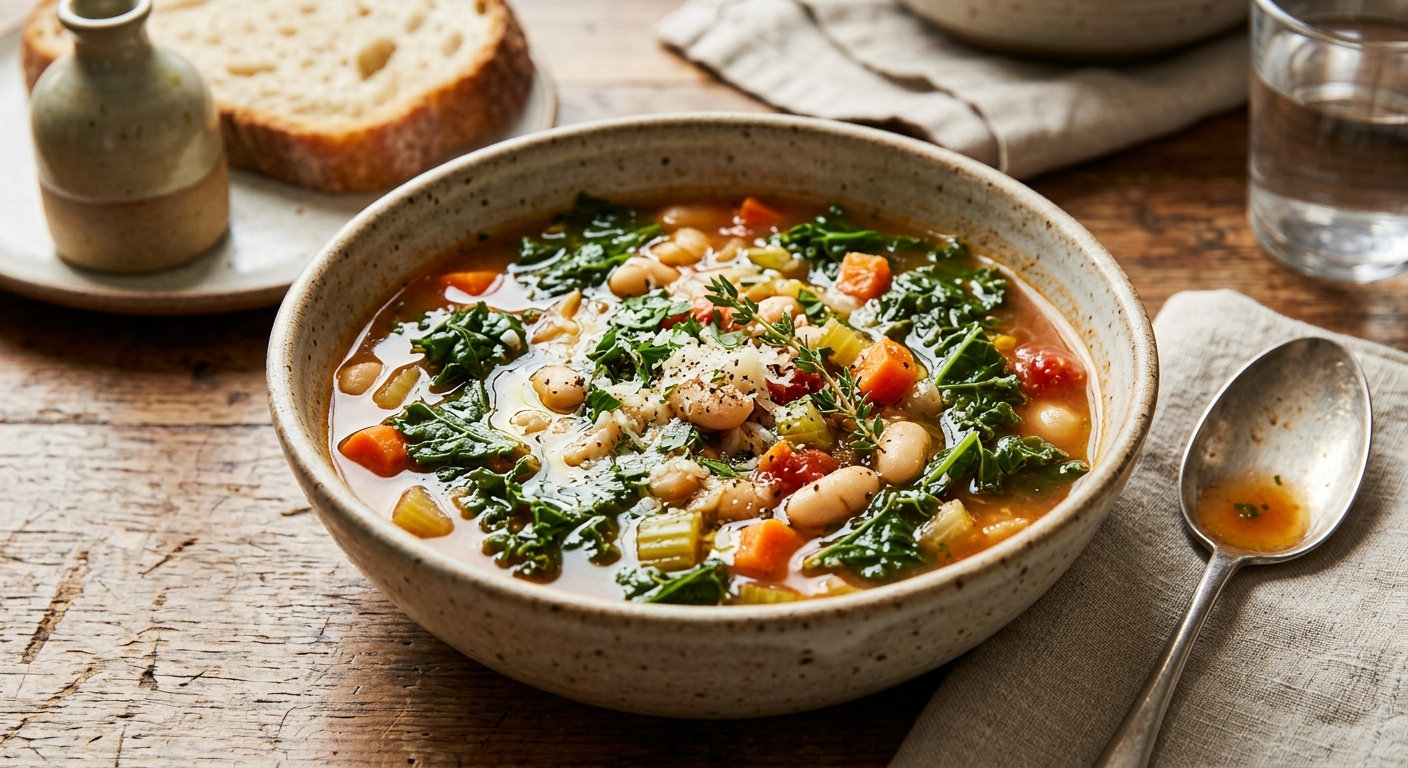
Minestrone is not a single recipe but a philosophy: use what the season and the garden provide, coax deep flavour from humble ingredients with patience and technique, and feed people well. This version is engineered with both Italian culinary tradition and modern nutritional science in mind. Lacinato kale (also called Tuscan or dinosaur kale) replaces the shredded cabbage common in northern Italian versions, bringing a richer concentration of vitamins K, C, and A alongside a satisfying, slightly chewy texture that holds up beautifully through long cooking. Cannellini beans anchor the soup with plant-based protein and soluble fibre, while the classic soffritto of onion, carrot, and celery provides the aromatic backbone every great minestrone demands.
What elevates this bowl beyond ordinary vegetable soup is the deliberate layering of nutrient-dense ingredients at precisely the right moments. The tomatoes are added early so their lycopene becomes more bioavailable through heat and the presence of olive oil. The kale goes in during the final minutes to preserve its water-soluble vitamin C. A Parmesan rind, simmered low and slow in the broth, contributes umami depth along with trace amounts of calcium and glutamates without adding significant calories. These are the kinds of small, intentional choices that separate a nutritionally calibrated dish from one that simply tastes good.
Whether you choose the stovetop method for maximum control, the slow cooker for effortless weekday prep, or the pressure cooker for a weeknight dinner on the table in under 40 minutes, each method is calibrated for the result that method does best. Stovetop gives you the most responsive texture and the clearest broth. The slow cooker produces a deeper, more integrated flavour as the vegetables slowly surrender their sugars. The pressure cooker delivers startlingly rich results in a fraction of the time. All three versions are worth making.
4
servings
Ingredients
- 2 tbspextra-virgin olive oil
- 1 mediumyellow onion, finely diced
- 3 mediumcarrots, peeled and diced into 1cm pieces
- 3 stalkscelery, diced into 1cm pieces
- 5 clovesgarlic, minced
- 2 tbsptomato paste
- 400 gcanned whole San Marzano tomatoes, crushed by hand
- 1200 mllow-sodium vegetable broth
- 2 cans (400g each)cannellini beans, drained and rinsed (about 480g drained)
- 200 glacinato kale (dinosaur kale), stems removed, leaves roughly torn
- 150 gzucchini, diced into 1cm pieces
- 120 gditalini or small elbow pasta (omit for gluten-free)
- 1 pieceParmesan rind (about 5cm), optional
- 1 tspdried oregano
- 1 tspdried thyme
- 1 sprigfresh rosemary
- 30 gfreshly grated Parmesan cheese, for serving
- —Colima Sea SaltMicroplastic Free Salt and freshly ground black pepper to taste
- —Extra-virgin olive oil for drizzling to serve
Instructions
Click on an item below to shop for the recommended items for this recipe on Amazon.
As an Amazon Associate, we earn from qualifying purchases.
- Heat 2 tablespoons of olive oil in a large Dutch oven or heavy-bottomed pot over medium heat. Add the diced onion, carrots, and celery with a generous pinch of salt. Cook, stirring occasionally, for 8 to 10 minutes until the vegetables have softened and the onion is translucent and just beginning to turn golden at the edges. Do not rush this step; a properly sweated soffritto is the flavour foundation of the entire soup.
- Add the minced garlic and cook for 90 seconds, stirring constantly, until fragrant. Push the vegetables to the sides of the pot and add the tomato paste directly onto the exposed base. Let it fry undisturbed for 60 seconds until it darkens slightly and smells sweet and caramelised, then stir it into the vegetable mixture. This step deepens the umami backbone of the broth considerably.
- Add the hand-crushed San Marzano tomatoes with their juices, the vegetable broth, the Parmesan rind if using, and the dried oregano, thyme, and rosemary sprig. Bring to a boil over medium-high heat, then reduce to a gentle but active simmer. Cook uncovered for 10 minutes to allow the tomato flavours to meld into the broth.
- Add the diced zucchini and the drained cannellini beans. Return to a simmer and cook for 8 minutes. Then add the pasta directly to the pot and cook for the time indicated on the package minus 1 minute, as it will continue cooking in the residual heat. Stir occasionally to prevent the pasta from sticking to the bottom.
- Remove the rosemary sprig and Parmesan rind. Reduce heat to low and stir in the torn kale leaves in two or three batches, pressing them down into the hot liquid. Cook for 3 to 4 minutes only, until the kale is wilted but still vibrant green, which preserves its vitamin C and prevents bitterness. Taste and adjust seasoning with salt and pepper.
- Ladle into warm bowls. Finish each serving with a drizzle of extra-virgin olive oil, a generous grating of fresh Parmesan, and a few extra grinds of black pepper. Serve immediately while the pasta is at its best texture.
- If you have 10 minutes in the morning, build the soffritto first for significantly better flavour: heat the olive oil in a skillet over medium heat, cook the onion, carrot, and celery for 6 to 7 minutes until softened, add the garlic and tomato paste, and fry for a further 2 minutes until fragrant and caramelised. Transfer everything to the slow cooker insert. If time is short, you can skip this step and add the raw vegetables directly, but the finished soup will be noticeably less complex.
- Add the hand-crushed San Marzano tomatoes, vegetable broth, drained cannellini beans, diced zucchini, dried oregano, dried thyme, rosemary sprig, and Parmesan rind if using to the slow cooker. Stir to combine, then season lightly with salt and pepper (you will adjust again at the end). Place the lid on the slow cooker.
- Cook on Low for 7 to 8 hours or on High for 3 to 4 hours. The long, gentle heat will fully integrate the flavours and create a broth that tastes like it has been simmered all day, because it has. The beans will become exceptionally creamy without falling apart.
- About 20 minutes before you are ready to serve, cook the pasta separately in a pot of well-salted boiling water according to package directions until just al dente. Drain and set aside. This keeps the pasta from absorbing the broth and becoming bloated.
- Remove the rosemary sprig and Parmesan rind from the slow cooker. Stir in the torn kale leaves, replace the lid, and cook on High for a final 8 to 10 minutes until the kale is just wilted. Taste the broth and adjust seasoning with salt and pepper, keeping in mind that the Parmesan topping will add saltiness.
- Divide the cooked pasta among warm bowls, then ladle the minestrone over the top. Finish with a drizzle of olive oil and freshly grated Parmesan. Serving the pasta separately also allows leftovers to be stored without the pasta soaking up all the broth overnight.
- Select the Saute function on your Instant Pot or electric pressure cooker and set it to Medium or Normal heat. Add the olive oil and heat until shimmering. Add the onion, carrots, and celery with a pinch of salt and saute, stirring frequently, for 5 to 6 minutes until softened. Add the garlic and cook for 60 seconds. Add the tomato paste and stir it into the vegetables, cooking for another 60 seconds until it turns a shade darker and smells fragrant. Press Cancel to turn off the saute function.
- Pour in a small splash of the vegetable broth and scrape the bottom of the pot thoroughly with a wooden spoon or silicone spatula to deglaze, lifting any browned bits. This is an important step with pressure cookers to prevent the burn notice from triggering. Add the remaining broth, the hand-crushed tomatoes, drained cannellini beans, zucchini, oregano, thyme, rosemary sprig, and Parmesan rind. Do not add the pasta or kale at this stage.
- Secure the lid and set the pressure release valve to Sealing. Select Manual or Pressure Cook on High for 10 minutes. The pot will take approximately 10 to 12 minutes to come to pressure before the cooking timer begins.
- Once the cook time is complete, perform a quick pressure release by carefully switching the valve to Venting. Stand back from the steam. Once the float valve drops, open the lid away from you. Remove and discard the rosemary sprig and Parmesan rind.
- Select Saute on Low or use the Keep Warm setting to maintain a gentle simmer. Stir in the dry pasta and cook, stirring often, for the time listed on the pasta package until just al dente, about 7 to 9 minutes. The starchy broth will thicken slightly as the pasta cooks, giving the soup a beautifully silky consistency.
- Turn off the heat. Stir in the torn kale in batches and let it wilt for 2 to 3 minutes in the residual heat of the pot with the lid resting loosely on top. The carryover heat is sufficient to wilt the kale fully while preserving its brilliant green colour and vitamin content. Season generously with salt and pepper, ladle into bowls, drizzle with olive oil, and top with grated Parmesan.
Nutrition Breakdown
Per 1 serving (makes 4)
Vitamins & Minerals
% Daily Value based on a 2,000 calorie diet (FDA reference)
🧬 Essential Amino Acids
% of recommended daily intake (RDA) per serving
🛡 Antioxidant Profile
The Nutrition Science
The nutritional architecture of this minestrone is built around three synergistic principles. First, fat-soluble carotenoids such as beta-carotene and lycopene require dietary fat for absorption, and the olive oil used in the soffritto and as a finishing drizzle provides precisely the right lipid matrix. A landmark study published in the American Journal of Clinical Nutrition found that carotenoid absorption from tomatoes and leafy greens increased by 200 to 400 percent when consumed with even a modest amount of monounsaturated fat. The extra-virgin olive oil here is not simply flavour; it is a delivery mechanism.
Second, the combination of cannellini beans and kale creates a potent iron-absorption pairing that nutritionists call the vitamin C and non-haem iron tandem. The beans provide approximately 3.6mg of non-haem iron per serving, which is absorbed at a baseline rate of only 2 to 8 percent in isolation. The 72mg of vitamin C contributed primarily by the kale and tomatoes converts ferric iron (Fe3+) to the more soluble ferrous form (Fe2+) in the gut lumen, increasing absorption by up to six-fold. This is why the kale is added at the very end: excessive heat degrades ascorbic acid rapidly, and keeping cooking time under five minutes preserves the majority of its activity.
Third, the soluble fibre from cannellini beans, specifically the beta-glucans and oligosaccharides, feeds Lactobacillus and Bifidobacterium species in the colon, producing short-chain fatty acids like butyrate that serve as the primary energy substrate for colonocytes. The 14g of total fibre per serving, of which roughly 5g is soluble, also forms a viscous gel in the small intestine that slows glucose absorption, explaining the moderate glycemic load despite the presence of pasta. This gel simultaneously binds bile acids and facilitates their excretion, contributing to the LDL-cholesterol-lowering effect consistently observed in legume-rich dietary patterns.
Pro Tips
- For the deepest flavour, buy a wedge of genuine Parmigiano-Reggiano and save every rind in a zip-lock bag in the freezer. One rind simmered in the soup adds a remarkable savoury depth that no amount of extra salt can replicate, contributing glutamates, umami, and a faint nuttiness to the broth.
- To maximise the iron-boosting effect of the vitamin C in the kale, avoid drinking coffee or tea for at least 30 minutes after eating this soup, as the polyphenols in both beverages compete with iron for intestinal transporters and can reduce absorption by up to 60 percent.
- Lacinato kale is notably more nutrient-dense and less bitter than curly kale, and its flatter leaf structure wilts more evenly. If you cannot find it, use baby spinach (stir in at the very last moment before serving) or cavolo nero, but avoid curly kale for this recipe as it can turn tough and fibrous.
oh my gosh YES to the kale in minestrone, that dark leafy green is such a game changer for the micronutrient profile! ive been sneaking lacinato kale into my kids soups forever and they literally cant taste it once its soft, plus the white beans add that magnesium boost we all need more of. is this recipe kid friendly as written or would you say its better for the adults, i might need to tone down any spice for my picky eaters but honestly this sounds like exactly the kind of nutrient dense meal i can feel good about serving my family!
This sounds incredible and I’m genuinely excited to try it. Kale’s vitamin K content is especially important for me since I manage MS, and the folate from the beans plus the anti-inflammatory potential of the whole composition fits perfectly into what I’ve been working with nutritionally. Diane’s right about it disappearing into soup, but I’m also curious whether you kept the cooking time moderate to preserve more of the heat-sensitive B vitamins, since that’s another thing I’m always chasing in my protocol? Thanks for putting this together with such clear nutritional transparency.
love that youre highlighting the micronutrient density here, but quick question – whats the net carb count on this with the white beans? i know they get a lot of hype for fiber and folding in that folate, but cannellini beans are pretty carb heavy and that adds up fast. ive found that swapping them for like hemp seeds or adding extra kale actually gives you similar nutrition without the blood sugar spike. that said, if someone’s metabolically flexible this looks genuinely amazing and those vitamins are no joke