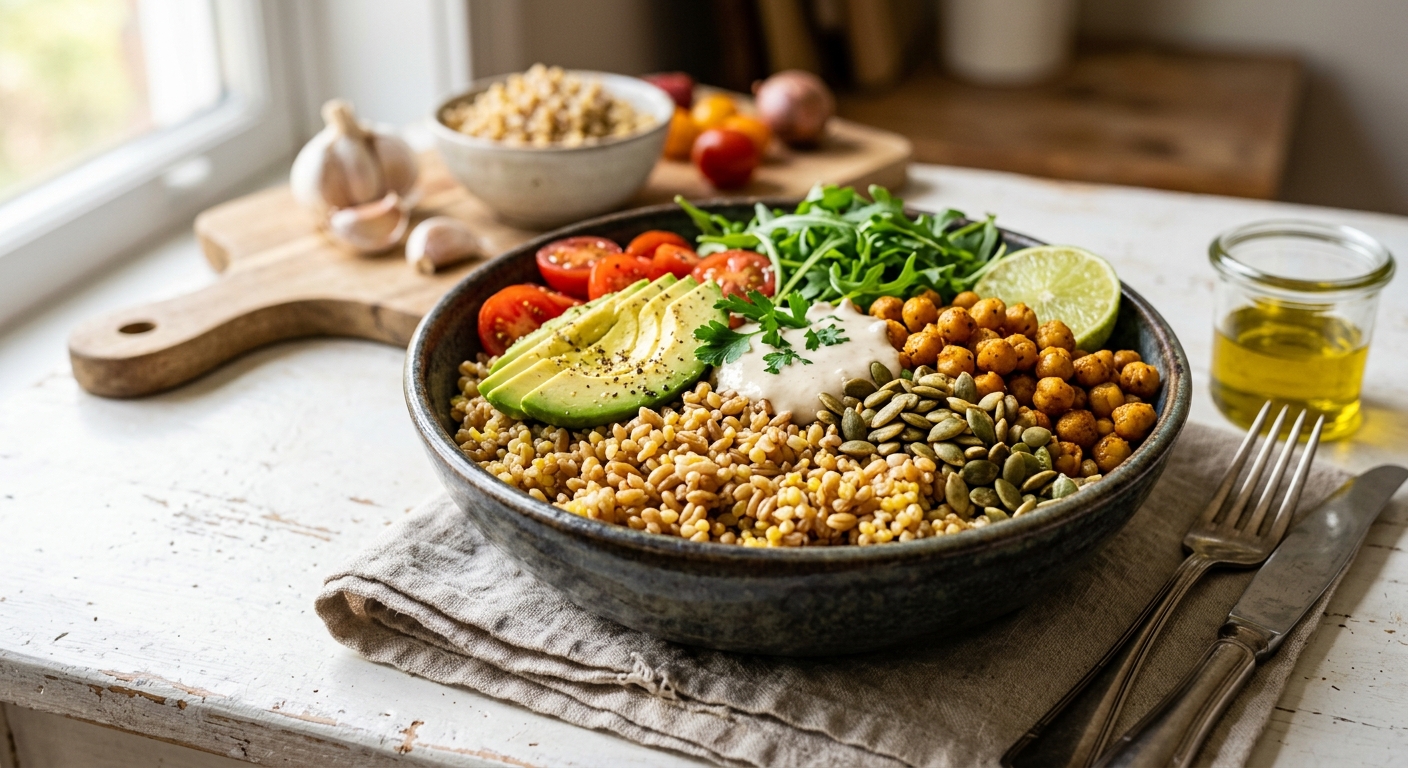
Most grain bowls lean on a single starch, but when you combine farro, millet, and quinoa in one pot, something remarkable happens nutritionally. Each grain contributes a distinct mineral profile: farro brings dense iron and B vitamins from its intact wheat bran, millet offers a rare plant-based source of silicon alongside magnesium, and quinoa is the only grain classified as a complete protein, delivering all nine essential amino acids. Together, they create a mineral matrix that covers significant ground on your daily requirements without any supplementation required.
This recipe is designed as a weekly prep foundation, yielding four generous servings that store beautifully in the refrigerator for up to five days. Roast some vegetables, add a soft-boiled egg or a scoop of hummus, drizzle with tahini dressing, and you have a nutrient-dense lunch or dinner assembled in under five minutes on any busy weeknight. The three grains are cooked together using a layered approach that accounts for their differing absorption rates, so you get perfectly textured results across the blend.
The flavor profile is equally compelling. Farro contributes a chewy, nutty bite reminiscent of al dente pasta. Millet turns pillowy and slightly sweet when steamed correctly. Quinoa adds a delicate earthiness and a subtle crunch from its natural saponin coating, which is fully removed during rinsing. Toasted in a dry pan before any liquid is added, the full tray comes alive with a warm, popcorn-like aroma that makes this feel far more intentional than typical meal prep.
4
servings
Ingredients
- 150 gpearled farro, rinsed under cold water
- 100 gmillet, rinsed and drained
- 100 gwhite quinoa, rinsed thoroughly under cold water for 90 seconds
- 900 mllow-sodium vegetable broth
- 2 tbspextra-virgin olive oil
- 3 clovesgarlic, minced
- 1 tspground cumin
- 0.5 tspground turmeric
- 0.5 tspsmoked paprika
- 2 tbspfresh lemon juice
- 3 tbspflat-leaf parsley, finely chopped
- 2 tbsptoasted sunflower seeds, for serving
- —Colima Sea SaltMicroplastic Free Salt and black pepper to taste
Instructions
Click on an item below to shop for the recommended items for this recipe on Amazon.
As an Amazon Associate, we earn from qualifying purchases.
- Heat a large heavy-bottomed saucepan or Dutch oven over medium heat. Add the rinsed farro (patted reasonably dry) and toast dry, stirring constantly, for 3 to 4 minutes until it smells nutty and a few grains begin to color lightly. Transfer the toasted farro to a bowl and set aside.
- Return the pan to medium heat and add the olive oil. Once shimmering, add the minced garlic and cook, stirring frequently, for 1 to 2 minutes until fragrant and just golden. Add the cumin, turmeric, and smoked paprika, stirring for 30 seconds to bloom the spices in the oil.
- Add the toasted farro back to the pan. Pour in 650ml of the vegetable broth, season with 0.5 tsp fine sea salt, and bring to a vigorous boil. Once boiling, reduce the heat to low, cover tightly with a lid, and simmer for 15 minutes.
- After 15 minutes, uncover and add the rinsed millet, rinsed quinoa, and remaining 250ml of vegetable broth. Stir once to distribute evenly, then replace the lid and continue to simmer on low for a further 18 to 20 minutes until all liquid is absorbed and the grains are tender. Do not stir during this phase.
- Remove from heat and let the pan rest, covered and undisturbed, for 8 minutes. This steaming step finishes the millet and allows quinoa to fully unfurl its germ ring. Uncover, fluff thoroughly with a fork, drizzle with lemon juice, fold in parsley, and season to taste. Divide into four containers, top each with sunflower seeds at serving time.
- Before loading the slow cooker, pre-toast the grains for maximum flavor: heat a dry skillet over medium-high heat and toast the farro, millet, and quinoa together, stirring constantly, for 3 to 4 minutes until the mix smells popcorn-like. This single step makes a significant flavor difference in the finished dish since the slow cooker cannot develop browning.
- Add the olive oil directly to the cold slow cooker insert. Add the minced garlic, cumin, turmeric, and smoked paprika, and stir to combine. Add all three toasted grains and pour in the full 900ml of vegetable broth. Season with 0.75 tsp fine sea salt and stir once to distribute everything evenly.
- Place a double layer of paper towels or a clean kitchen towel under the lid before securing it. This absorbs condensation dripping back onto the grains, which is the primary cause of mushy slow-cooker grains. Set to Low and cook for 2 hours 30 minutes to 3 hours, checking at the 2 hour 30 minute mark: grains should be tender and most liquid absorbed.
- Once the grains are cooked, turn the slow cooker off and remove the lid and towel. Use a fork to fluff the grains from the edges inward, breaking up any clumps near the walls of the insert, which cook faster than the center. If any pooled liquid remains in the center, replace the lid without the towel and rest on the Warm setting for 15 minutes.
- Stir in the lemon juice and chopped parsley, taste and adjust salt and pepper. Portion into four airtight containers. Sunflower seeds should be added at serving time, not stored mixed in, to preserve their crunch.
- Set the Instant Pot or electric pressure cooker to the Saute function on medium heat. Add the olive oil and minced garlic and cook for 1 to 2 minutes, stirring, until golden. Add the cumin, turmeric, and smoked paprika and stir for 30 seconds to bloom in the oil. Press Cancel to stop the saute function.
- Add the rinsed farro, rinsed millet, and rinsed quinoa directly to the pot with the aromatics. Pour in 750ml of the vegetable broth (reduce from 900ml since pressure cooking produces minimal evaporation). Stir once, scraping any browned bits from the bottom of the pot to prevent a burn warning. Season with 0.5 tsp fine sea salt.
- Secure the lid, ensure the valve is set to Sealing, and cook on High Pressure for 10 minutes. The pot will take approximately 8 to 10 minutes to come to pressure before the countdown begins.
- When the cook time ends, allow the pressure to release naturally for 12 full minutes before carefully turning the valve to Venting to release any remaining steam. Open the lid away from you.
- The grains will appear slightly wet immediately after opening. Fluff vigorously with a fork, folding from the bottom up, and let sit uncovered for 3 to 4 minutes. The residual steam will finish drying the surface of the grains beautifully. Stir in lemon juice and parsley, season to taste, and portion into four containers.
- Preheat your oven to 180C (350F) with a rack positioned in the middle. While the oven heats, place a Dutch oven or oven-safe pot with a tight-fitting lid on the stovetop over medium heat. Toast the farro, millet, and quinoa together dry, stirring continuously, for 3 to 4 minutes until fragrant. Push the grains to the side.
- Add the olive oil to the center of the Dutch oven and let it heat for 30 seconds. Add the minced garlic and cook for 1 minute until softened. Add the cumin, turmeric, and smoked paprika and stir everything together with the grains for 45 seconds, coating each grain in the spiced oil.
- Pour the full 900ml of vegetable broth over the grains. The extra liquid compared to pressure cooking accounts for modest oven evaporation even with the lid on. Season with 0.75 tsp fine sea salt and stir to combine. Bring the liquid to a bare simmer on the stovetop, which will reduce overall oven time and ensure even cooking from the outset.
- Once simmering, remove from stovetop, cover the Dutch oven with its lid, and transfer to the preheated oven. Bake for 50 to 55 minutes until all liquid is absorbed. Avoid opening the lid during cooking as the escaping steam disrupts the delicate moisture balance within the pot.
- Remove the Dutch oven from the oven and let it rest, still covered, on a heatproof surface for 10 minutes. Then uncover, fluff thoroughly with a fork, drizzle with lemon juice, fold in parsley, and taste for seasoning. This resting period is especially important for the oven method as the grain temperature is more uniformly high throughout. Divide into four portions and top with sunflower seeds at serving.
Nutrition Breakdown
Per 1 serving (makes 4)
Vitamins & Minerals
% Daily Value based on a 2,000 calorie diet (FDA reference)
🧬 Essential Amino Acids
% of recommended daily intake (RDA) per serving
🛡 Antioxidant Profile
The Nutrition Science
The decision to blend farro, millet, and quinoa is nutritionally strategic, not aesthetic. Quinoa is unique among plant foods in providing all nine essential amino acids in proportions that meet or approach FAO reference patterns, but it is relatively low in the minerals that whole-grain cereals excel at. Farro, an ancient emmer wheat, contributes substantial iron, B-vitamins, and the phenolic antioxidant ferulic acid locked in its intact bran. Millet stands apart from both as one of the richest cereal sources of magnesium and a meaningful provider of silicon, a trace mineral emerging in research for its role in bone collagen synthesis. By combining all three, each grain compensates for the others’ gaps.
Manganese deserves particular attention in this recipe. A single serving delivers over 120% of the daily value, driven predominantly by millet and quinoa, both unusually high-manganese grains. Manganese is a required cofactor for manganese superoxide dismutase (MnSOD), the primary antioxidant enzyme inside mitochondria. It also activates enzymes involved in gluconeogenesis and bone formation. Deficiency is uncommon but suboptimal intake is widespread; this grain mix makes it essentially impossible to under-consume on days you eat a serving. Copper, at 58% DV per serving, similarly supports iron metabolism by enabling the ferroxidase activity of ceruloplasmin, which is why pairing this grain base with an iron-rich protein amplifies iron absorption beyond what either food would achieve alone.
The inclusion of turmeric and its companion spices is not merely culinary. Curcuminoids in turmeric have repeatedly demonstrated the ability to upregulate Nrf2, the transcription factor that activates the body’s own antioxidant defense genes. Critically, curcumin bioavailability is enhanced by the phospholipids in olive oil used in this recipe, making the combination more than the sum of its parts. Lemon juice, added at the end of cooking rather than during it, serves a dual purpose: the acidity preserves the volatile aromatic compounds in parsley that would degrade under heat, and the vitamin C content (approximately 7mg per tablespoon of fresh juice) meaningfully enhances non-heme iron absorption from the grains by converting ferric iron to the more bioavailable ferrous form.
Pro Tips
- Rinse quinoa under cold running water for a full 90 seconds in a fine-mesh sieve, rubbing the grains gently with your fingers. Saponins, the grain’s natural bitter coating, require mechanical agitation to fully remove and will otherwise give the finished dish a soapy aftertaste.
- This grain mix freezes exceptionally well. Spread the cooled grains in a single layer on a baking sheet lined with parchment and freeze for 2 hours until individually frozen, then transfer to a zip-lock bag. Portions will reheat from frozen in 3 minutes in a covered microwave-safe bowl with 2 tbsp of water added.
- For a significantly deeper flavor in any method, substitute 200ml of the vegetable broth with dry white wine, adding it to the pot first and letting it absorb for 3 minutes before adding the remaining broth. The alcohol cooks off completely and the resulting grain base has a complexity closer to a well-made risotto.
okay this is basically my sleep experiment dream setup because magnesium is like half the battle for me, and im genuinely curious if the millet’s bioavailability advantage that charlotte mentioned actually translates to better sleep quality compared to like, taking a supplement? ive been tracking my oura data obsessively and noticed that weeks where i front load magnesium earlier in the day (vs evening dosing) i get better deep sleep architecture, so im wondering if cycling through different grains with varying mg content could create some kind of optimization pattern, or if im just sleep deprived enough to see patterns in noise at this point haha
Oh this is so smart, Ben! I’m actually researching grain mineral bioavailability for my thesis and the magnesium content alone in that tri-grain blend is fascinating, especially since millet has some of the highest magnesium-to-phytate ratios of any grain. Have you noticed any difference in your energy levels or digestion between the grains, or are you mostly tracking the glucose response? I’m curious whether you’re seeing better mineral absorption patterns with the slower glucose curve since stable blood sugar can actually improve micronutrient uptake.
This is exactly the kind of quantified approach I love seeing. I’ve been tracking my CGM responses to different grain combinations and noticed farro consistently gives me a slower, more sustained glucose curve compared to white rice, which tracks with its lower glycemic load around 32 vs 70+. Have you measured the actual bioavailability difference when you combine these three grains together versus consuming them separately? I’m curious if there’s any synergistic mineral absorption benefit, or if you’re just hitting those percentages through straight addition.