Iron deficiency is the most widespread nutritional shortfall on the planet, affecting an estimated 2 billion people globally, and yet it remains one of the most preventable. The challenge is rarely a lack of iron-rich foods in the world’s kitchens. It is a lack of strategy: eating iron-rich foods in combinations that actually maximize absorption, cooking them in ways that preserve their bioavailability, and doing so consistently across the whole week rather than in a single heroic dinner. This recipe was engineered to solve that problem in one Sunday afternoon cook.
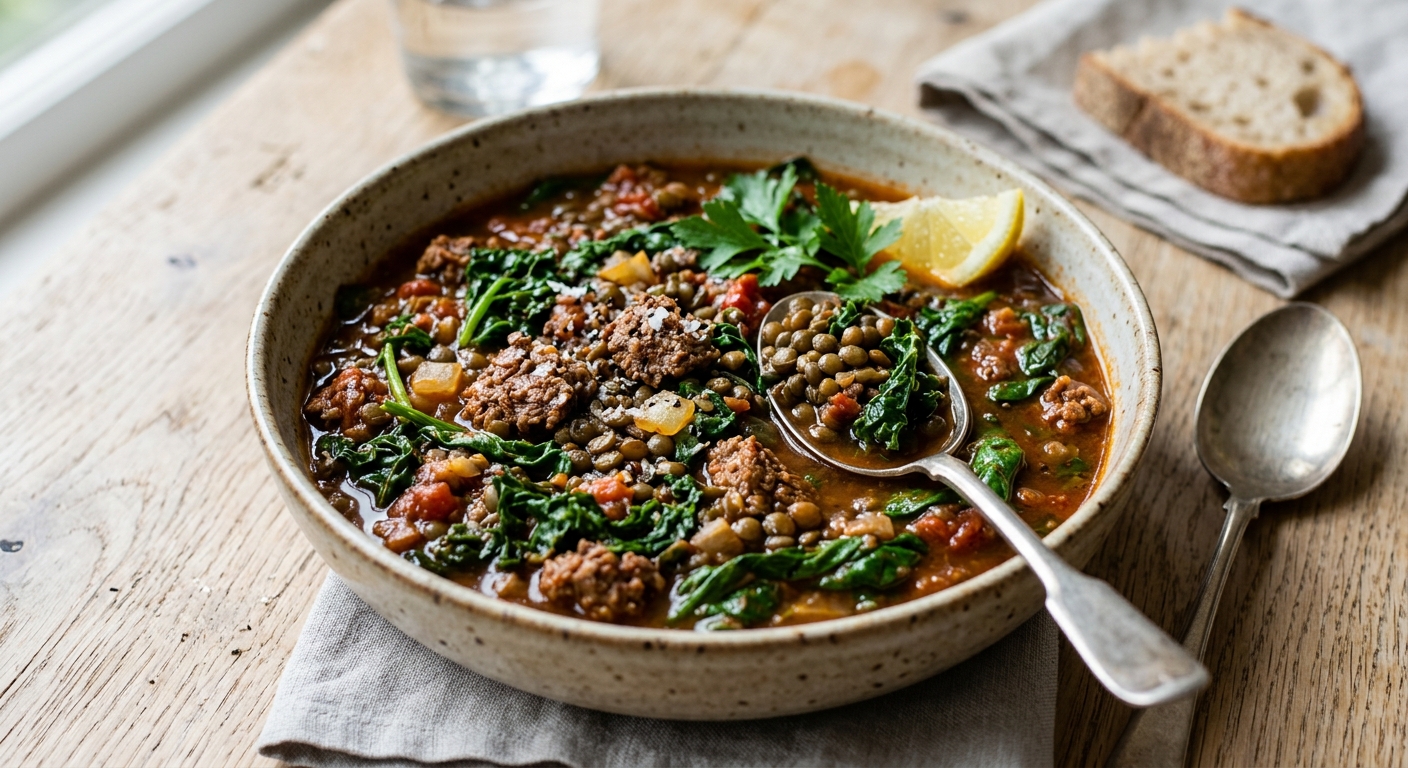
The formula here is deliberate. Grass-fed beef mince delivers heme iron, the highly bioavailable form that absorbs at 15 to 35 percent regardless of dietary context. Green lentils layer in non-heme iron alongside folate, fiber, and plant protein. Baby spinach and lacinato kale add a third wave of non-heme iron, plus the vitamin K, lutein, and magnesium that leafy greens uniquely provide. Crushed tomatoes and a squeeze of lemon finish each bowl, contributing ascorbic acid that chemically reduces ferric iron to the ferrous form your intestinal cells can actually transport, boosting non-heme absorption by up to three-fold. Every element has a scientific reason to be here.
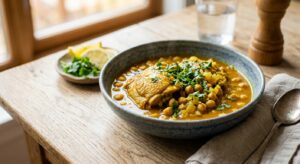
The batch produces four generous servings from a single cook session, portioned into airtight containers and refrigerated for up to five days. The base is intentionally versatile: eat it as a grain bowl over brown rice or freekeh, stuff it into warm flatbreads, ladle it over roasted sweet potato, or thin it with stock for a high-protein soup. Whichever method you choose below, the nutritional outcome is identical and the flavor is rich, warmly spiced with cumin, smoked paprika, and turmeric, with a savory depth that only gets better on day three.
4
servings
Ingredients
- 300 ggreen lentils, rinsed and picked over
- 450 ggrass-fed beef mince (85% lean)
- 150 gbaby spinach, roughly chopped
- 150 glacinato (Tuscan) kale, stems removed, leaves shredded
- 400 gcanned crushed tomatoes (one standard tin)
- 1 mediumyellow onion, finely diced
- 6 clovesgarlic, minced
- 2 tbsptomato paste
- 2 tbspextra-virgin olive oil
- 1 litrelow-sodium beef stock
- 2 tspground cumin
- 2 tspsmoked paprika
- 1 tspground turmeric
- 0.5 tspground coriander
- 0.5 tspcayenne pepper (adjust to taste)
- 1 tbspfresh lemon juice (plus wedges for serving)
- 1 tspapple cider vinegar
- —Colima Sea SaltMicroplastic Free Salt and freshly cracked black pepper to taste
- —Fresh flat-leaf parsley, roughly chopped, for garnish
Instructions
Click on an item below to shop for the recommended items for this recipe on Amazon.
As an Amazon Associate, we earn from qualifying purchases.
- Heat the olive oil in a large Dutch oven or heavy-bottomed pot over medium-high heat until shimmering. Add the diced onion with a pinch of salt and cook, stirring occasionally, for 6 to 8 minutes until softened and beginning to turn golden at the edges. Do not rush this step; caramelized onion is the flavor foundation of the whole batch.
- Push the onion to the edges of the pot and add the beef mince to the center in one even layer. Press it flat and resist stirring for 3 to 4 minutes so a proper brown crust forms on the underside. Break it up with a wooden spoon and continue cooking for another 3 minutes until no pink remains. The fond forming on the pot bottom is pure flavor.
- Reduce heat to medium. Add the garlic, tomato paste, cumin, smoked paprika, turmeric, ground coriander, and cayenne directly to the beef. Stir constantly for 90 seconds, pressing the paste and spices into the hot fat. This blooming step is critical: fat-soluble compounds in cumin and paprika release up to four times more aromatic molecules when toasted in oil than when added directly to liquid.
- Pour in the crushed tomatoes and use your spoon to scrape every bit of fond from the pot bottom. Add the rinsed green lentils and pour in the beef stock. Stir well to combine. Bring to a rolling boil over high heat, then immediately reduce to a low, steady simmer. Partially cover the pot with the lid tilted slightly to allow steam to escape.
- Simmer for 30 to 35 minutes, stirring every 10 minutes, until the lentils are completely tender but still holding their shape. If the mixture thickens too quickly, add hot water 60ml at a time. Taste for salt and adjust. The consistency should be thick and saucy, like a hearty ragu, not soupy.
- Remove from heat. Add the shredded kale to the hot pot and stir it through vigorously. The residual heat will wilt the kale within 2 minutes without overcooking it, which preserves its iron, vitamin C, and chlorophyll. Once the kale is wilted, fold in the baby spinach in two batches, stirring until just collapsed.
- Stir in the lemon juice and apple cider vinegar. Taste and adjust seasoning. Divide into four meal prep containers, allowing to cool uncovered for 20 minutes before sealing and refrigerating. Serve with a lemon wedge pressed over the top at the time of eating to restore the vitamin C boost that mild oxidation can diminish during storage.
- Before loading the slow cooker, complete an essential stovetop browning stage in a large skillet over medium-high heat. Add the olive oil and cook the diced onion for 6 to 8 minutes until softened and golden. Add the garlic, tomato paste, cumin, smoked paprika, turmeric, coriander, and cayenne and stir for 90 seconds until deeply fragrant. This step cannot happen inside the slow cooker and is what separates a rich, complex result from a flat, grey one.
- Push the aromatics to one side of the skillet and add the beef mince. Brown in a single layer without stirring for 3 minutes, then break up and cook through completely for another 2 minutes. Pour in the crushed tomatoes and stir vigorously to deglaze the skillet, scraping all the browned bits into the tomato mixture. This deglazing liquid carries all the Maillard flavor compounds into your slow cooker.
- Transfer the entire skillet contents into the slow cooker insert. Add the rinsed green lentils and pour in the beef stock. The liquid level should generously cover the lentils by at least 3cm; if not, add a splash of hot water. Stir once to distribute everything evenly. Do not add the leafy greens at this stage.
- Secure the lid and cook on Low for 7 to 8 hours or on High for 3.5 to 4 hours. Avoid lifting the lid during cooking; each peek releases enough steam to add 20 to 30 minutes of cooking time. The long, gentle heat gives lentils a supremely creamy texture that stovetop methods cannot fully replicate.
- In the final 20 minutes of cooking, remove the lid and check the lentil consistency. The mixture should be thick and saucy. If it appears too liquid, leave the lid off for the remaining cooking time to allow evaporation. Stir in the shredded kale, re-secure the lid, and cook for 15 minutes until wilted but still vibrant green.
- Turn off the heat and fold in the baby spinach, lemon juice, and apple cider vinegar. Stir until the spinach is just collapsed, about 2 minutes from residual heat. Taste and adjust salt and pepper. Allow the mixture to cool in the insert for 15 minutes before portioning into meal prep containers. Refrigerate once cooled. Add a fresh lemon wedge at serving time.
- Set the Instant Pot or electric pressure cooker to Saute on High (or Medium on models with that option). Add the olive oil and heat until shimmering. Cook the diced onion with a pinch of salt for 5 minutes, stirring frequently, until softened. The Saute function runs hot on most models, so watch carefully to avoid burning.
- Add the garlic, tomato paste, cumin, smoked paprika, turmeric, coriander, and cayenne directly to the onion. Stir and press constantly for 60 to 90 seconds to bloom the spices in the oil. You should see the paste darken slightly and the oil turn a vivid orange-red. Add the beef mince and break it up immediately, cooking for 4 minutes until browned throughout. Do not let the beef sit in one piece, as the Saute function concentrates heat in the center of the pot.
- Pour in the crushed tomatoes and use a wooden spoon or silicone spatula to deglaze the bottom of the insert thoroughly, scraping up any browned bits. This is essential in pressure cookers because any stuck fond that remains will trigger a Burn warning and halt the cook. Add the rinsed green lentils and pour in 750ml of the beef stock, reserving 250ml. The reduced liquid amount accounts for the sealed environment; adding the full litre would result in thin, watery output.
- Cancel the Saute function. Secure the pressure cooker lid, ensure the valve is set to Sealing (on Instant Pot models), and select Pressure Cook or Manual on High Pressure for 15 minutes. The pot will take approximately 10 minutes to pressurize before the countdown begins.
- When the cook time ends, allow the pressure to release naturally for 10 minutes, then carefully turn the valve to Venting to release any remaining steam. Remove the lid away from you. The lentils should be tender and the mixture thick. If it seems thinner than desired, switch back to Saute and cook uncovered for 3 to 5 minutes to reduce.
- With the heat off, stir in the shredded kale and fold it through the hot mixture for 2 minutes until wilted. The retained heat inside the insulated pot is sufficient. Add the baby spinach in two batches, stirring between each addition until just collapsed. Stir in the lemon juice and apple cider vinegar, taste for salt, and adjust seasoning. Portion into meal prep containers, cool uncovered for 15 minutes, then seal and refrigerate.
- Preheat your oven to 160C (325F) with a rack positioned in the lower third. This lower rack position surrounds the Dutch oven with the most even radiant heat, which is important for a 75-minute enclosed braise. While the oven preheats, complete all stovetop browning steps on the hob.
- Heat the olive oil in a large oven-safe Dutch oven over medium-high heat on the stovetop. Cook the onion for 6 to 8 minutes until golden. Add the garlic, tomato paste, and all dry spices, stirring vigorously for 90 seconds to bloom. Add the beef mince and brown it properly, breaking it into small pieces, for about 5 minutes. You want visible browning, not steaming, so work in high heat and do not cover.
- Deglaze the pot with the crushed tomatoes, scraping the bottom clean. Add the rinsed green lentils and pour in the full litre of beef stock. Unlike the pressure cooker method, the oven braise benefits from the full volume of liquid because the Dutch oven lid allows a tiny amount of evaporation over the long cook, concentrating the sauce gradually and naturally. Stir everything together and bring to a simmer on the stovetop.
- Once simmering, cover the Dutch oven with its lid and transfer carefully to the preheated oven. Braise undisturbed for 1 hour 15 minutes. Do not open the oven or lift the lid during this time. The sealed environment creates a gentle, 100-percent-humidity cooking atmosphere that makes lentils exceptionally creamy and allows the beef to break down into tender, well-integrated shreds throughout the mixture.
- Remove the Dutch oven from the oven using heavy-duty oven mitts and place it on a heat-safe surface. Remove the lid carefully away from you to avoid steam burns. Check the lentil texture; they should be fully soft and the sauce thick and glossy. If the mixture appears thin, place the uncovered pot back in the oven for 10 minutes.
- While the mixture is still very hot, add the shredded kale and stir it in firmly. The heat retained in the heavy pot and the dense mixture will wilt the kale completely within 3 minutes without returning to any heat source. Fold in the baby spinach in two batches until just collapsed. Finish with lemon juice and apple cider vinegar, taste and adjust salt and pepper generously. Cool for 20 minutes before portioning into meal prep containers and refrigerating.
Nutrition Breakdown
Per 1 serving (makes 4)
Vitamins & Minerals
% Daily Value based on a 2,000 calorie diet (FDA reference)
🧬 Essential Amino Acids
% of recommended daily intake (RDA) per serving
🛡 Antioxidant Profile
The Nutrition Science
The iron story in this recipe is built on a principle called the MFP factor, shorthand for meat, fish, and poultry factor, which describes the demonstrated ability of heme iron in animal muscle tissue to enhance the absorption of non-heme iron consumed in the same meal. When grass-fed beef mince and green lentils are cooked together, the heme iron from the beef creates an intestinal environment that effectively escorts the ferrous iron from the lentils through the enterocyte wall at a meaningfully higher rate than if the lentils were eaten alone. Grass-fed beef is specifically valuable here: it contains on average 30 percent more conjugated linoleic acid than grain-fed equivalents, and its iron is presented in myoglobin-bound heme form, which is absorbed independently of phytic acid inhibitors that limit plant iron uptake.
The vitamin C contribution from the crushed tomatoes, lemon juice, and leafy greens performs a separate but complementary chemical function. Ascorbic acid reduces ferric iron (Fe3+) to ferrous iron (Fe2+) directly in the gastrointestinal lumen before absorption. Only the ferrous form is recognized by the DMT-1 transporter on intestinal brush border cells. A single 25mg dose of vitamin C can increase non-heme iron absorption by 65 percent. This recipe delivers roughly 42mg of vitamin C per serving from tomatoes alone, with additional contributions from raw kale folded in at the end, making the vitamin C supplementation effectively built into the dish itself rather than requiring a separate supplement.
Turmeric and black pepper form their own synergistic pair in this recipe. Curcumin, the principal polyphenol in turmeric, has well-documented anti-inflammatory properties mediated through inhibition of NF-kB and COX-2 pathways, but its oral bioavailability in isolation is notoriously poor due to rapid hepatic metabolism. Piperine, the alkaloid responsible for black pepper’s heat, inhibits the glucuronidation enzymes that would otherwise degrade curcumin in the gut wall and liver, extending its plasma half-life by up to 2000 percent in some clinical models. Including both spices in every batch of this meal prep means the anti-inflammatory benefit compounds across five consecutive days of eating.
Pro Tips
- Do not salt the lentils until they are fully cooked: adding salt to the soaking or early cooking water hardens the seed coat and can add 15 to 20 minutes to cook time across all methods.
- For maximum iron absorption, avoid drinking tea or coffee within 60 minutes before or after eating this meal prep, as the tannins in both beverages bind non-heme iron in the gut and can reduce absorption by up to 60 percent.
- The batch freezes exceptionally well for up to 3 months in portioned freezer bags laid flat. Thaw overnight in the refrigerator, then reheat gently in a saucepan with a splash of stock, adding a fresh squeeze of lemon after reheating to restore the vitamin C that degrades during freezing.
- For a higher iron-per-calorie ratio, replace half the beef stock with the liquid from a tin of chickpeas (aquafaba): it adds trace iron, acts as a natural emulsifier that keeps the texture silky, and contributes an additional 1 to 2 grams of plant protein per serving.
- Cast iron cookware is a legitimate iron-supplementation strategy for this recipe: studies show that cooking acidic tomato-based dishes in seasoned cast iron can increase the iron content of food by 2 to 7mg per 100g serving through leaching of dietary iron from the pan surface.
this sounds amazing for iron density, but quick q – whats the net carb count on those green lentils per serving? i know theyre nutrient dense but theyve always spiked my blood sugar pretty hard, even though i know the fiber helps. curious if this meal prep would work for someone managing insulin sensitivity or if the lentil volume makes it tough. love the heme iron combo with beef though, thats smart thinking for absorption.
hey kurt totally get that concern, tbh i was worried about teh same thing after my heart attack when blood sugar management became critical. the green lentils do have carbs but theyre maybe 35-40g net per serving depending on portion, and honestly what changed everything for me was pairing them with the beef fat and leafy greens like this recipe does – that combo actually slows digestion enough that my glucose monitor stays way more stable than when i ate lentils alone. ngl you might want to start with a smaller lentil ratio and bump up the beef and spinach volume to test your response, thats what i did in my slow cooker adaptations. would love to hear if you
ngl this post is exactly what i needed right now, my ferritin came back at 32 last month after being dangerously low post heart attack and my cardiologist wants it higher before i can do any real exercise again. ive been doing something similar in my slow cooker on low for 8 hours with grass fed beef and spinach but i never thought to add the tomato factor for absorption, thats brilliant. curious tho, do you find the vitamin c really makes that much difference with the non heme iron from the lentils or is that more of a theoretical thing, and would adding citrus juice in the prep stage work as well as fresh?