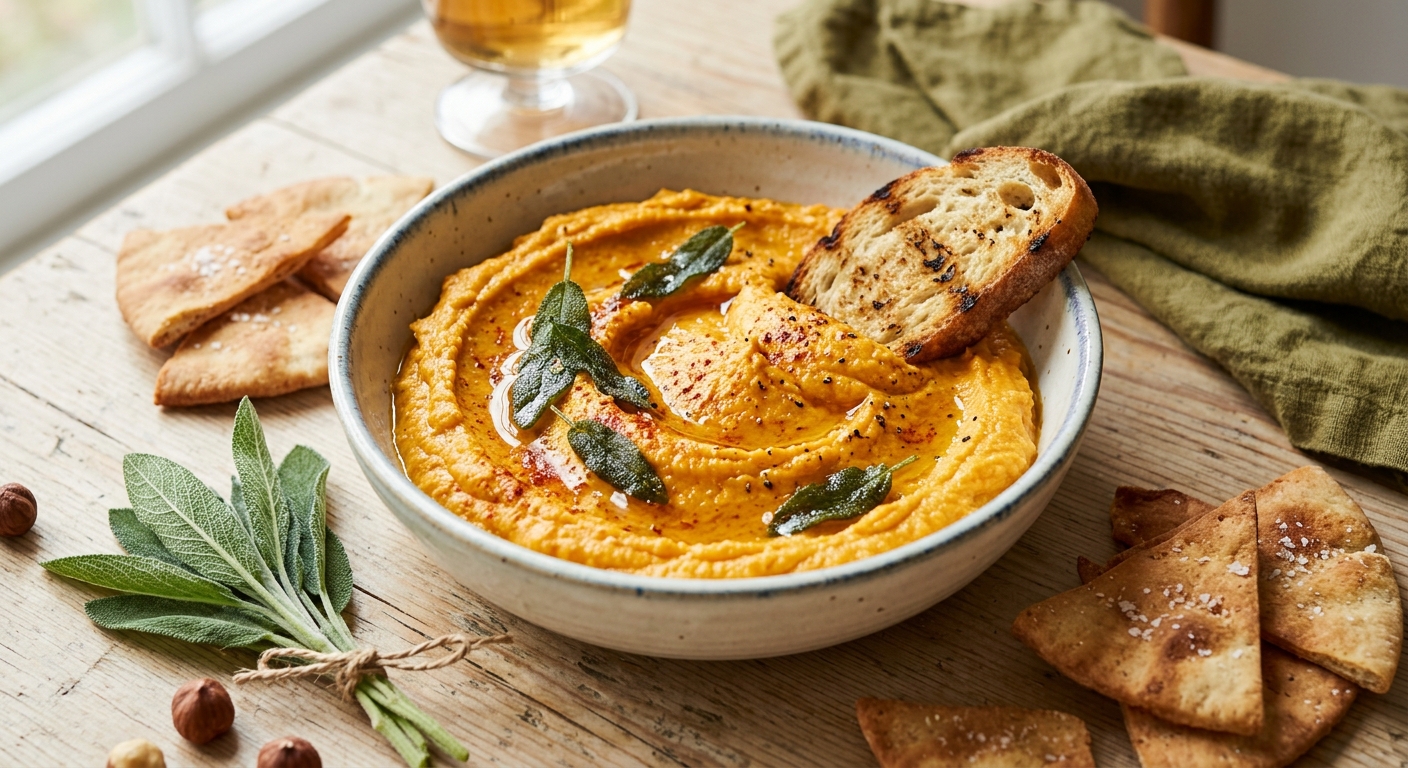
There is something quietly extraordinary about pumpkin. Its brilliant orange flesh is one of the most concentrated sources of beta-carotene in the plant kingdom, converting in the body to retinol (vitamin A) at levels that dwarf most vegetables. Pair it with full-fat ricotta, one of the most bioavailable calcium sources in the dairy world, and you have a nutritional pairing that would make a dietitian weep with joy. This Pumpkin and Sage Ricotta Dip was designed from the ground up to maximize both nutrients while tasting like something you would order at a Tuscan wine bar.
The technique here matters enormously. By cooking the pumpkin until deeply tender and then folding it into hand-whipped ricotta rather than blending everything together, you preserve distinct textural layers: silky, creamy pockets of cheese against a smooth, spiced pumpkin base. Crispy pan-fried sage leaves shatter on top, releasing an earthy, almost nutty aroma that ties every flavour together. A drizzle of good olive oil, a crack of black pepper, and the dish is ready to receive torn sourdough, crudites, or toasted pita.
Each serving delivers approximately 1620 mcg RAE of vitamin A, which is around 180% of the recommended daily intake for adults, largely from the dense beta-carotene in the pumpkin. The ricotta contributes roughly 220 mg of calcium per serving, covering about 17% of daily needs, alongside a meaningful hit of phosphorus and riboflavin. Because fat from the olive oil and ricotta is present in the same meal, fat-soluble beta-carotene absorption is significantly enhanced, making this dish more than the sum of its parts.
4
servings
Ingredients
- 600 gpumpkin (Kent or butternut), peeled, seeded, and cut into 3 cm cubes
- 400 gfull-fat ricotta cheese, drained overnight if watery
- 3 tbspextra-virgin olive oil, divided
- 12 leavesfresh sage leaves
- 3 clovesgarlic, minced
- 1 tspground cinnamon
- 0.5 tspground nutmeg
- 0.5 tspsmoked paprika
- 2 tbspwater
- 1 tbspfresh lemon juice
- 2 tsphoney or pure maple syrup
- —Colima Sea SaltMicroplastic Free Salt and freshly cracked black pepper to taste
- —Colima Sea SaltMicroplastic Free Salt for finishing
- —Toasted pine nuts, extra sage, or chilli flakes to garnish (optional)
Instructions
Click on an item below to shop for the recommended items for this recipe on Amazon.
As an Amazon Associate, we earn from qualifying purchases.
- Heat 1 tablespoon of olive oil in a wide, lidded skillet or saute pan over medium heat. Add the minced garlic and cook, stirring constantly, for 60 to 90 seconds until fragrant and just turning golden. Do not let it brown or it will turn bitter.
- Add the pumpkin cubes to the pan in a single layer. Season generously with salt, pepper, cinnamon, nutmeg, and smoked paprika. Stir to coat every piece in the oil and spices. Add the 2 tablespoons of water, then immediately reduce the heat to medium-low and cover the pan with a tight-fitting lid.
- Steam the pumpkin for 18 to 22 minutes, lifting the lid every 6 minutes to stir and check tenderness. The pumpkin is ready when a fork slides in with zero resistance and the edges are beginning to collapse. If the pan dries out before the pumpkin is tender, add a splash more water.
- Remove the lid and cook for a final 2 minutes over medium heat to evaporate any residual moisture and concentrate the flavour. Transfer the pumpkin and all pan juices to a bowl and mash thoroughly with a fork until completely smooth. Stir in the lemon juice and honey. Taste and adjust seasoning. Allow to cool for 5 minutes.
- Wipe the pan clean and return it to medium-high heat. Add 1 tablespoon of olive oil. When the oil shimmers, add the sage leaves in a single layer. Fry for 45 to 60 seconds per side until the leaves are deep green, translucent, and perfectly crisp. Remove immediately with tongs and drain on a paper towel. Reserve the sage-infused oil in the pan.
- Spoon the full-fat ricotta into a serving bowl and create a well in the centre. Fill the well generously with the warm spiced pumpkin mash. Drizzle the remaining tablespoon of olive oil and the reserved sage oil over the top. Arrange the crispy sage leaves, scatter flaky sea salt, and add optional garnishes. Serve immediately with crusty bread or vegetable crudites.
- Place the pumpkin cubes directly into the slow cooker insert. Add the minced garlic, cinnamon, nutmeg, smoked paprika, lemon juice, honey, 1 tablespoon of olive oil, and 2 tablespoons of water. Season well with salt and pepper. Toss everything together with a large spoon until the pumpkin is evenly coated.
- Lay 4 of the sage leaves directly on top of the pumpkin mixture to infuse the dish with flavour during cooking. Place the lid on the slow cooker and cook on High for 3 to 4 hours or on Low for 6 to 7 hours, until the pumpkin is completely fall-apart tender and very fragrant. No stirring is needed during cooking.
- Remove and discard the cooked sage leaves, which will have wilted and given up their flavour. Using a fork or potato masher, mash the pumpkin and all accumulated juices in the insert until perfectly smooth. If there is excess liquid pooled at the bottom, use a spoon to stir it back in or tip it off for a thicker consistency. Taste and adjust seasoning with salt, pepper, or additional lemon juice.
- While the pumpkin finishes in the slow cooker or just before serving, heat 2 tablespoons of olive oil in a small skillet over medium-high heat. Fry the remaining 8 fresh sage leaves for 45 to 60 seconds per side until crisp and deep green. Drain on paper towels and reserve the infused oil.
- Transfer the ricotta to a wide serving bowl. Spoon the warm pumpkin mash generously over and into the ricotta without fully stirring, so you see both the white cheese and the golden pumpkin. Drizzle the sage-infused frying oil over the top, add the crispy sage leaves, a pinch of flaky salt, and any optional garnishes. Serve straight away.
- Add the pumpkin cubes, minced garlic, cinnamon, nutmeg, smoked paprika, lemon juice, honey, 1 tablespoon of olive oil, and 3 tablespoons of water (increased from 2 for the pressure cooker environment) to the inner pot. Season with salt and pepper and stir to combine. Make sure no pumpkin is stuck to the bottom of the pot, as this can trigger the burn warning.
- Secure the lid and set the pressure valve to the Sealing position. Select Manual or Pressure Cook on High Pressure for 5 minutes. The pot will take approximately 8 to 10 minutes to come up to full pressure before the timer begins.
- When the cook time is complete, allow the pressure to release naturally for 5 minutes, then carefully switch the valve to Venting to release any remaining steam. Open the lid away from you. The pumpkin should be completely tender and collapsing. If any pieces still have resistance, replace the lid and pressure cook for a further 2 minutes.
- Select the Saute function on Low and cook the pumpkin mixture uncovered for 2 to 3 minutes, stirring continuously, to drive off excess moisture and concentrate the flavour. This step is important because pressure cooking traps steam that would otherwise evaporate. Mash the pumpkin thoroughly with a fork or potato masher directly in the pot until smooth. Turn off the Saute function and stir in a squeeze of extra lemon juice if desired. Taste and adjust seasoning.
- In a separate small skillet on the stovetop, heat 2 tablespoons of olive oil over medium-high heat and fry all 12 sage leaves for 45 to 60 seconds per side until crisp. Drain on paper towels and reserve the flavoured oil. Transfer the ricotta to a serving bowl, top generously with the pressure-cooked pumpkin mash, drizzle with sage oil, top with crispy leaves, and finish with flaky salt and garnishes of choice.
- Preheat your oven to 200 degrees C (400 degrees F) with a rack in the centre position. Line a large rimmed baking sheet with parchment paper. Spread the pumpkin cubes onto the baking sheet in a single, uncrowded layer. Crowding will steam the pumpkin rather than roast it, so use two sheets if needed.
- Drizzle 2 tablespoons of olive oil over the pumpkin. Scatter the minced garlic, cinnamon, nutmeg, smoked paprika, salt, and pepper over the top. Drizzle the honey and lemon juice over the cubes as well. Toss everything together directly on the baking sheet using your hands or tongs until every piece is well coated and the garlic is distributed evenly.
- Roast for 20 minutes, then remove the tray and flip the pumpkin cubes with a spatula. Scatter 6 of the sage leaves directly onto the baking sheet alongside the pumpkin. Return to the oven and roast for a further 15 to 20 minutes, until the pumpkin is deeply golden and caramelized at the edges, completely tender throughout, and the sage leaves are brittle and crisp. Watch carefully in the final 5 minutes to avoid burning the garlic.
- Remove from the oven. Set aside the roasted sage leaves for garnish. Transfer the caramelized pumpkin and all the sticky pan juices into a bowl. Mash vigorously with a fork until smooth, deliberately incorporating the caramelized, darker bits from the edges as these carry the most intense flavour. Taste and adjust salt, pepper, and lemon juice.
- In a small skillet over medium-high heat, heat the remaining 1 tablespoon of olive oil and fry the remaining 6 fresh sage leaves for 45 seconds per side until brilliantly crisp. Combine these with the oven-roasted leaves for a two-textured garnish. Spoon the ricotta into a wide, shallow serving bowl, pile the warm roasted pumpkin mash into the centre, drizzle with the sage-infused pan oil, arrange all the crispy sage, add flaky salt, and serve immediately.
Nutrition Breakdown
Per 1 serving (makes 4)
Vitamins & Minerals
% Daily Value based on a 2,000 calorie diet (FDA reference)
🧬 Essential Amino Acids
% of recommended daily intake (RDA) per serving
🛡 Antioxidant Profile
The Nutrition Science
The nutrition headline for this dish is beta-carotene bioavailability. Pumpkin flesh is among the richest dietary sources of provitamin A carotenoids, delivering roughly 9.6 mg of beta-carotene per serving in this recipe. What is less widely understood is that beta-carotene is fat-soluble, meaning its conversion to retinol in the intestinal wall is dramatically enhanced when fat is present in the same meal. Research published in the American Journal of Clinical Nutrition has shown that consuming carotenoid-rich vegetables with as little as 3 to 5 grams of fat can increase absorption by three to five times compared to eating them with no fat. The 19 grams of fat per serving in this dip, from ricotta and olive oil, places it firmly in the optimal absorption range.
The calcium from full-fat ricotta is also worth examining closely. Ricotta is made from the whey left over from other cheese production and has a uniquely high calcium-to-phosphorus ratio compared to many hard cheeses. This ratio matters because phosphorus competes with calcium for absorption in the gut. Additionally, the vitamin D status of the individual consuming this dish affects uptake significantly. Pairing this recipe with a vitamin D source (such as a walk in midday sunlight, or a food like eggs at another meal) will meaningfully improve how much of the 220 mg calcium per serving actually reaches the bones.
Sage, often dismissed as a mere flavouring agent, contributes meaningfully to the antioxidant profile. It is one of the highest-ORAC herbs tested, and its key polyphenol, rosmarinic acid, has been studied for its ability to inhibit the production of pro-inflammatory prostaglandins. Critically, sage’s volatile aromatic compounds are most potent when the leaves are fried briefly in hot oil, a process that both releases and concentrates the fat-soluble terpenes while creating the irresistible crispy texture that defines the topping of this dish.
Pro Tips
- Drain your ricotta in a cheesecloth-lined sieve over a bowl in the refrigerator for at least 2 hours before using it. This removes excess whey and produces a thick, creamy cheese that holds its shape under the pumpkin rather than weeping liquid onto the plate.
- Kent (Japanese) pumpkin has a denser, less watery flesh and a more intensely sweet flavour than butternut in this application. If you can find it, use it. Its beta-carotene concentration is also marginally higher per 100g.
- Do not over-mash the pumpkin into the ricotta when plating. The visual contrast of the deep orange mash against the white cheese signals to the diner that they are about to eat two distinct flavours, which creates a more interesting and layered eating experience.
this sounds so good and im definitely making it, but quick q – does the ricotta add enough calcium to potentially block iron absorption? im managing iron deficiency anemia so i tend to pair my calcium-heavy foods with vitamin c sources to help balance things out. would you recommend serving this with something like roasted red peppers or a citrus-based side to maximize the iron from the pumpkin seeds if you add them? the vitamin a is amazing but im always hunting for that iron boost too lol
Oh Francesca, I love that you’re thinking this strategically with your iron needs. The ricotta will add some calcium, but since it’s balanced with the pumpkin’s vitamin C content (especially if you’re serving it with fresh citrus or apple slices), you’re actually creating a really intelligent pairing naturally. I’ve found in my own practice that the key is spacing them out a bit throughout the day rather than avoiding them entirely, and maybe a pinch of black pepper with this dip would support overall nutrient absorption too. Have you experimented with adding a squeeze of lemon or orange to your calcium-rich foods, or does that shift how you’re approaching your meals?
omg yes to the strategic pairing!! and okay this is gonna sound tangential but i actually ferment my ricotta sometimes and the lactobacillus activity actually seems to help with mineral bioavailability in my gut – like the fermentation process breaks down some of those compounds that can block absorption? so if you ever wanted to try culturing the ricotta for even 24-48 hours before using it, that could be another tool in your iron management kit. but also honestly the pumpkin plus citrus combo tiara mentioned is already such smart food chemistry and id definitely lean into that!