
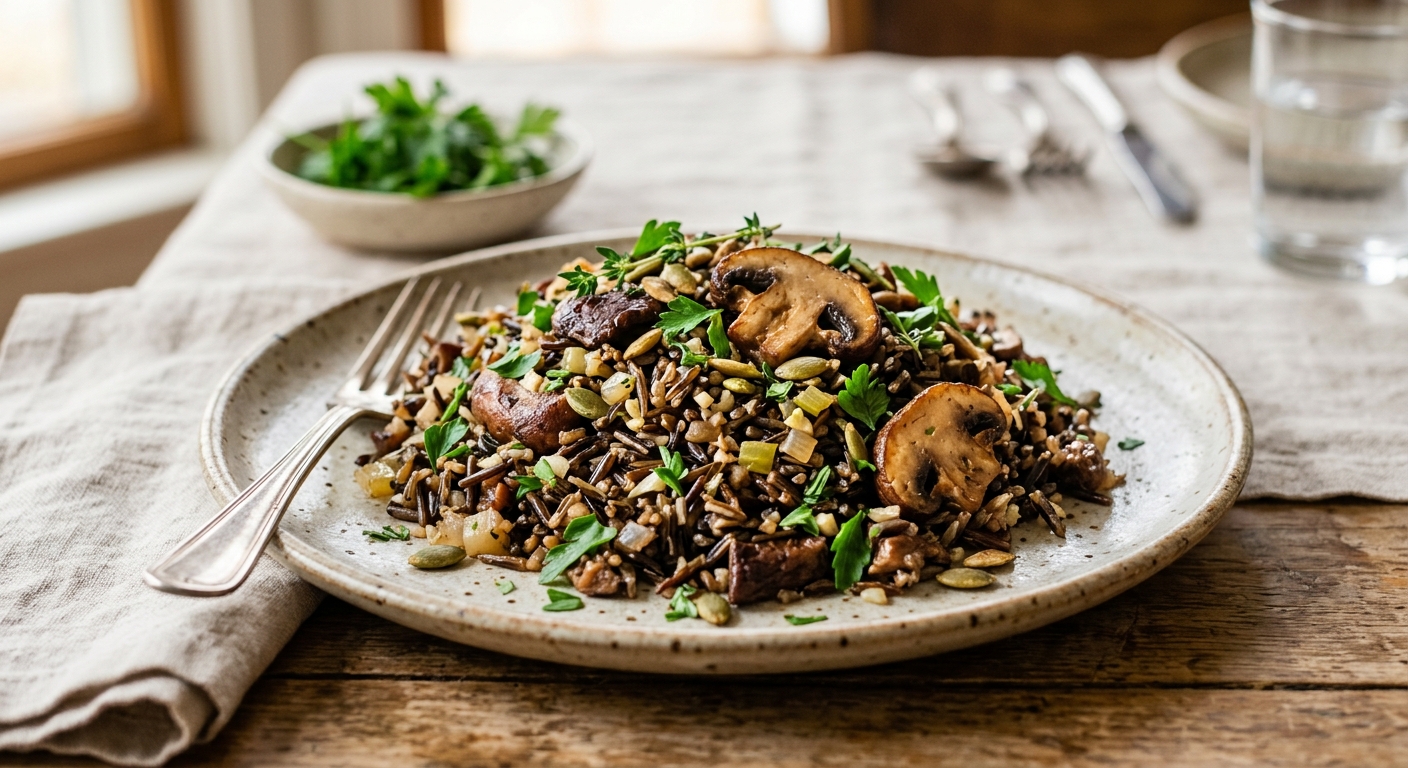
Wild rice is not actually rice. It is the seed of an aquatic grass native to the Great Lakes region of North America, and that botanical distinction matters enormously from a nutritional standpoint. Where white or brown rice offers modest mineral content, wild rice delivers a concentrated hit of zinc, phosphorus, magnesium, and manganese alongside a uniquely high protein content for a grain, approximately 6.5 grams per cooked cup. Pair it with a trio of culinary mushrooms and you have constructed one of the most complete mineral matrices available from a plant-forward dish.
The mushrooms here are not garnish. Cremini mushrooms provide the backbone of the dish with their meaty glutamate richness, shiitakes add a deeper, almost smoky umami register and contribute lentinan, a beta-glucan compound linked to immune modulation, while dried porcini bring an intense earthy depth that perfumes the entire cooking liquid. Selenium, the star mineral of this recipe, is supplied almost entirely by the mushroom component. A 100-gram serving of cooked cremini mushrooms provides roughly 26 micrograms of selenium, and shiitakes push that figure further. Combined with wild rice’s own mineral contribution, a single bowl of this pilaf covers a meaningful portion of your weekly selenium needs, a nutrient chronically under-consumed in Western diets.
Beyond the mineral story, this dish is a masterclass in layered cooking technique. Each method below, stovetop, slow cooker, pressure cooker, or oven, draws different flavors from the same ingredients. The stovetop allows precise control over toasting and deglazing. The slow cooker produces an almost risotto-like creaminess as the wild rice slowly releases its starches over hours. The pressure cooker is your weeknight workhorse, delivering fully developed flavor in under 30 minutes. And the oven method produces a beautifully concentrated, slightly crisp-edged pilaf reminiscent of Persian rice dishes. Choose your method by mood and schedule, and expect serious results every time.
4
servings
Ingredients
- 300 gwild rice, rinsed thoroughly under cold water
- 250 gcremini mushrooms, wiped clean and sliced 5mm thick
- 150 gfresh shiitake mushrooms, stems removed and caps sliced
- 20 gdried porcini mushrooms
- 240 mlboiling water, for rehydrating porcini
- 1 mediumyellow onion, finely diced
- 4 clovesgarlic, minced
- 2 stalkscelery, finely diced
- 900 mllow-sodium vegetable broth
- 3 tbspextra-virgin olive oil
- 2 tbspdry sherry or dry white wine
- 60 gpine nuts, lightly toasted
- 6 sprigsfresh thyme
- 1 sprigfresh rosemary
- 2 tbspflat-leaf parsley, finely chopped (for finishing)
- 1 tbsptamari or low-sodium soy sauce
- 1 tspsmoked paprika
- —Colima Sea SaltMicroplastic Free Salt and freshly cracked black pepper to taste
Instructions
Click on an item below to shop for the recommended items for this recipe on Amazon.
As an Amazon Associate, we earn from qualifying purchases.
- Place the dried porcini mushrooms in a heatproof bowl and cover with 240ml of boiling water. Let steep for 20 minutes until fully rehydrated. Remove the porcini with a slotted spoon, roughly chop them, and set aside. Carefully pour the soaking liquid through a fine-mesh sieve lined with a paper towel into a measuring cup, discarding any grit at the bottom. Reserve this liquid as it is intensely flavored.
- Heat 2 tablespoons of olive oil in a large Dutch oven or heavy-bottomed pot over medium-high heat until shimmering. Add the cremini and shiitake mushrooms in a single layer, resisting the urge to stir for 2 to 3 minutes. You want a deep golden-brown sear on at least one side. Season lightly with salt, then toss and cook for another 2 minutes. Transfer the seared mushrooms to a plate and set aside.
- Reduce the heat to medium and add the remaining 1 tablespoon of olive oil to the same pot. Add the diced onion and celery with a pinch of salt and cook, stirring occasionally, for 5 to 6 minutes until softened and translucent. Add the minced garlic and cook for 1 minute more until fragrant. Add the smoked paprika and stir for 30 seconds to bloom the spice in the fat.
- Add the rinsed wild rice to the pot and toast, stirring constantly, for 2 minutes. This step is important: toasting the grains before adding liquid deepens their nutty flavor and helps them hold their texture during the long cook. Pour in the sherry or white wine and let it sizzle and absorb almost completely, about 45 seconds.
- Add the vegetable broth, the reserved porcini soaking liquid, the chopped rehydrated porcini, and the tamari. Tuck in the thyme sprigs and rosemary sprig. Bring to a boil, then reduce the heat to low and cover tightly. Simmer for 45 to 50 minutes until the wild rice kernels have split open and are tender but still have a pleasant chew. Check at the 40-minute mark; if liquid remains but the rice is cooked, remove the lid and cook for 5 minutes more to evaporate.
- Remove the thyme and rosemary sprigs. Fold in the reserved seared mushrooms, season generously with salt and black pepper, and allow the pilaf to rest off the heat, covered, for 5 minutes. Serve garnished with toasted pine nuts and fresh parsley.
- Rehydrate the dried porcini as directed: steep in 240ml of boiling water for 20 minutes, then strain the liquid through a paper-towel-lined sieve, chop the porcini, and reserve both. This can be done the night before and refrigerated.
- Heat 2 tablespoons of olive oil in a skillet over medium-high heat. Add all the fresh mushrooms (cremini and shiitake) and sear without stirring for 3 to 4 minutes until deeply browned. This browning step is essential before slow cooking because the moist, long environment of the slow cooker cannot produce the Maillard reaction. Season with salt and a few grinds of black pepper, then transfer directly to the slow cooker insert.
- In the same skillet without washing it, add the remaining 1 tablespoon of olive oil over medium heat. Saute the onion and celery for 4 to 5 minutes until softened. Add the garlic and smoked paprika, stir for 1 minute, then deglaze the pan with the sherry or wine, scraping up any browned bits. Cook for 30 seconds and transfer the entire contents of the skillet into the slow cooker.
- Add the rinsed wild rice, chopped rehydrated porcini, porcini soaking liquid, vegetable broth, tamari, thyme sprigs, and rosemary sprig to the slow cooker. Stir everything gently to combine. The total liquid in the slow cooker should be approximately 1140ml combined (broth plus porcini liquid). Cover and cook on High for 4 to 5 hours or on Low for 7 to 8 hours, until the wild rice grains have fully split and absorbed most of the liquid.
- Remove the lid for the final 20 to 30 minutes of cooking on High to allow excess moisture to evaporate and concentrate the flavors if the pilaf appears too loose. Discard the thyme and rosemary sprigs, taste and adjust seasoning, then fold in the toasted pine nuts and fresh parsley just before serving.
- Rehydrate the dried porcini in 240ml of boiling water for 15 minutes while you prep the other ingredients. Strain through a paper-towel-lined sieve, chop the porcini, and reserve the soaking liquid. Because the Instant Pot does not allow the liquid to evaporate during cooking, every drop of this flavorful liquid is used.
- Set the Instant Pot to Saute mode on High. Add 2 tablespoons of olive oil and heat until shimmering, about 1 minute. Add the cremini and shiitake mushrooms and cook without stirring for 3 minutes to develop a sear. Stir once, cook for 2 more minutes, season with salt, and press Cancel. Transfer the mushrooms to a bowl.
- Without washing the pot, select Saute on Medium (Normal). Add the remaining 1 tablespoon of olive oil, then the onion and celery. Cook for 3 to 4 minutes, stirring occasionally, until softened. Add the garlic and smoked paprika and cook for 1 minute. Pour in the sherry and scrape up any browned bits from the bottom of the pot thoroughly. This deglazing step is critical to prevent a burn warning during pressurization.
- Add the rinsed wild rice to the pot and stir to coat in the aromatics. Pour in the vegetable broth, reserved porcini soaking liquid, chopped rehydrated porcini, and tamari. Tuck in the thyme and rosemary sprigs. Do not stir after this point. Press Cancel, then secure the lid and set the valve to Sealing. Select Pressure Cook (Manual) on High Pressure and set the timer for 28 minutes.
- When the cycle completes, allow a natural pressure release for 10 minutes, then carefully switch the valve to Venting to release any remaining steam. Open the lid and remove the herb sprigs. If the pilaf looks very wet, select Saute on Low and stir gently for 3 to 4 minutes to evaporate the excess liquid. Fold in the seared mushrooms (reserved from step 2), toasted pine nuts, and parsley. Taste, adjust seasoning, and serve immediately.
- Preheat your oven to 180C (350F) with a rack positioned in the lower third of the oven. Rehydrate the dried porcini in 240ml of boiling water for 20 minutes, then strain through a paper-towel-lined sieve, chop, and reserve both mushrooms and liquid.
- Heat 2 tablespoons of olive oil in a large oven-safe Dutch oven over medium-high heat on the stovetop. Add all fresh mushrooms in a single layer and roast in the hot oil undisturbed for 3 to 4 minutes to develop a deep sear. Toss, cook for another 2 minutes, season with salt and pepper, and transfer to a plate.
- Reduce heat to medium and add the remaining olive oil to the Dutch oven. Cook the onion and celery for 5 minutes until softened. Add garlic, smoked paprika, and the chopped rehydrated porcini, and stir for 1 to 2 minutes. Deglaze with the sherry, scraping the bottom clean. Add the rinsed wild rice and toast, stirring, for 2 full minutes until the grains smell nutty.
- Pour in the vegetable broth, the reserved porcini soaking liquid, and the tamari. Stir in the seared mushrooms. Nestle the thyme sprigs and rosemary sprig into the rice. Bring the liquid to a gentle boil on the stovetop, then immediately cover the Dutch oven with its lid and transfer to the preheated oven.
- Bake covered for 60 minutes, then remove the lid and bake uncovered for a further 10 minutes. This final uncovered period evaporates any remaining surface liquid and allows the top layer of rice to toast and develop a slightly nutty, crisp texture. Check that the grains have split fully; if the center of the pot still looks wet, return covered for 10 more minutes.
- Remove from the oven and let the pilaf rest, uncovered, for 5 minutes to allow steam to escape and the texture to firm slightly. Discard herb sprigs, then fold in toasted pine nuts and fresh parsley. Serve directly from the Dutch oven for a dramatic presentation.
Nutrition Breakdown
Per 1 serving (makes 4)
Vitamins & Minerals
% Daily Value based on a 2,000 calorie diet (FDA reference)
🧬 Essential Amino Acids
% of recommended daily intake (RDA) per serving
🛡 Antioxidant Profile
The Nutrition Science
Selenium is arguably the most under-discussed essential trace mineral in human health, yet it sits at the enzymatic center of the body’s antioxidant infrastructure. The selenoproteins, a family of 25 known proteins in humans, include glutathione peroxidases, thioredoxin reductases, and the deiodinases responsible for activating thyroid hormone. The RDA for selenium is 55 micrograms per day for adults, yet large national surveys consistently show that a significant portion of the population, particularly those eating low quantities of animal products or living in selenium-poor soil regions of Europe, consume less than this threshold. The mushroom-and-wild-rice combination in this pilaf addresses that gap directly, contributing 32 micrograms of selenium per serving, over half the daily target from a single plant-forward dish.
Zinc, the second headlining mineral, participates in more enzymatic reactions than any other mineral in the human body, over 300 metalloenzyme functions including DNA synthesis, immune cell proliferation, protein folding, and taste and smell perception. Wild rice is a notably good plant source of zinc at approximately 2.2mg per cooked cup, and shiitake mushrooms contribute an additional 1mg per 100g cooked serving. The combination in this recipe delivers 3.8mg per serving, approximately 35% DV. It is worth noting that the phytate content of wild rice can reduce zinc bioavailability by 15 to 30%, but the prolonged cooking time and the acidic deglaze step with wine or sherry help reduce phytate levels, improving net absorption somewhat.
The B-vitamin profile of this dish is unusually broad for a grain-based recipe. Wild rice supplies B1, B3, B5, and B6, while mushrooms, particularly shiitake and cremini, are among the richest plant-kingdom sources of riboflavin (B2) and pantothenic acid (B5). Riboflavin is essential for the flavoprotein enzymes that drive the electron transport chain, and pantothenic acid is the structural core of coenzyme A, the molecule that shuttles acetyl groups into the citric acid cycle for energy production. Consuming this range of B vitamins together in one meal is meaningful because they function cooperatively; B2 and B3 act as cofactors for the enzymes that regenerate the active forms of folate and B6. The synergistic architecture of this pilaf is, in that sense, intentional by design.
Pro Tips
- Do not rinse the wild rice with hot water; cold rinsing preserves the surface starch layer that contributes to the pilaf’s cohesive texture during cooking.
- Toast pine nuts in a dry skillet over medium heat for 2 to 3 minutes, shaking constantly. They go from golden to burnt in under 30 seconds, so watch them closely and transfer immediately to a cool plate.
- The porcini soaking liquid is one of the most flavorful ingredients in this dish. Always strain it through a paper-towel-lined sieve and use every drop; it concentrates the umami depth of all three mushroom varieties into the rice.
- For maximum selenium content, choose cremini mushrooms that have been exposed to UV light or sunlight. Some producers now label their mushrooms as UV-treated; these contain dramatically higher levels of ergosterol, which converts to vitamin D2, adding another micronutrient dimension to the dish.
- Leftovers keep well refrigerated for up to 4 days and the flavor actually deepens overnight as the porcini compounds continue to infuse the rice. Reheat with a splash of broth over medium-low heat to restore moisture.


ok so the selenium/zinc stack is definitely solid but im wondering about the b6 and magnesium situation here – wild rice has decent mag but mushrooms are pretty low, and if someones eating this for sleep quality (which, hello, who isnt) you want that b6 to help with serotonin synthesis AND the magnesium to actually relax at night. my sleep tracker showed a noticeable uptick when i started pairing mushroom dishes with pumpkin seeds or a tahini drizzle for the extra mag, did you test whether adding something like that changes the sleep outcome or is that just my biohacking brain running away again
this combo is legit fire, especially that zinc and selenium stack. the mushroom variety matters too – shiiakes have different mineral profiles than creminis so mixing them like this is smart. ive tested my levels before and after upping mushroom intake during heavy training phases and the difference in recovery was noticeable. curious what youre noticing in your classes with the ayurvedic angle, does grounding the warm spices change how people feel on it compared to straight mineral focus?
Oh, I’m so drawn to this combination, especially the mineral density piece. I’ve been leaning heavily into wild rice and mushrooms in my cooking classes because they work so beautifully together from both a nutritional and an Ayurvedic perspective, but I never quantified the selenium and zinc like this. One thing I’d be curious about: are you toasting those mushrooms dry first, or cooking them with any warming spices? I always finish mine with a pinch of black pepper, ginger, and turmeric because the selenium and zinc pair so well with those anti-inflammatory properties, and it deepens the whole earthy flavor profile in a way that feels intentional rather than added.