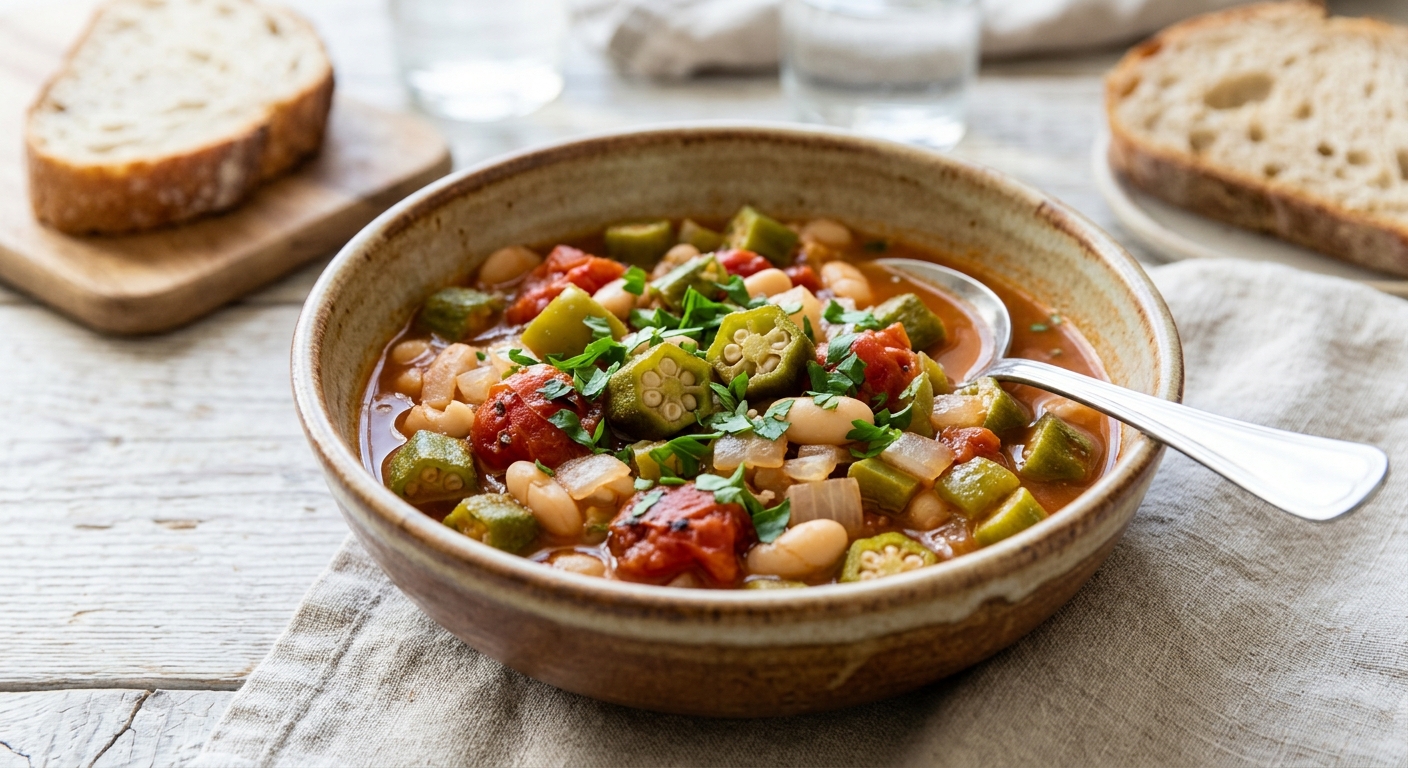
Okra has a reputation problem. Too often dismissed as slimy or unexciting, this ancient pod vegetable is quietly one of the most nutrient-dense foods in the produce aisle, and nowhere is that more apparent than in a long-cooked tomato stew. When okra simmers alongside crushed tomatoes, onion, garlic, and warm spices, something remarkable happens: the natural mucilage that gives okra its infamous texture dissolves into the broth, creating a silky, velvety body that no cornstarch can replicate. The result is a stew that is simultaneously rustic and refined, with a depth of flavor that belies its short ingredient list.
The nutritional story here centers on calcium, and it is a genuinely surprising one. A single 300g serving of this stew delivers approximately 280mg of calcium, roughly 25% of the recommended daily intake, without a drop of dairy. That calcium comes primarily from the okra itself, one of the most calcium-rich vegetables per gram, complemented by the modest contribution of tomatoes and the optional addition of white beans. Pair that with the stew’s substantial magnesium and vitamin K2 content, two nutrients that act as calcium cofactors in bone mineralization, and you have a dish that functions as a complete skeletal support system in a bowl.
This recipe is designed to work beautifully across four cooking methods, each of which draws out slightly different qualities in the ingredients. The stovetop version gives you direct control and a lively, fresh-tasting stew. The slow cooker produces an almost jammy depth of flavor as the tomatoes caramelize gently over hours. The pressure cooker delivers a weeknight-fast rendition that is shockingly full-flavored for its cooking time. And the oven method, borrowing from the Moroccan tagine tradition, develops a concentrated, roasted sweetness that makes this stew feel like a special occasion meal. Choose your method, trust the process, and let okra change your mind.
4
servings
Ingredients
- 600 gfresh okra, tops trimmed, cut into 2cm rounds (or frozen okra, thawed and patted dry)
- 400 gcanned fire-roasted crushed tomatoes
- 240 gcanned white beans (cannellini), drained and rinsed
- 1 largeyellow onion, diced
- 4 clovesgarlic, minced
- 1 mediumgreen bell pepper, diced
- 2 tbspextra-virgin olive oil
- 240 mllow-sodium vegetable broth
- 2 tspground cumin
- 1 tspsmoked paprika
- 0.5 tspground coriander
- 0.25 tspcayenne pepper (or to taste)
- 1 tspdried oregano
- 1 tbsptomato paste
- 1 tbspapple cider vinegar
- 15 gfresh flat-leaf parsley, roughly chopped (for serving)
- —Colima Sea SaltMicroplastic Free Salt and freshly ground black pepper to taste
Instructions
Click on an item below to shop for the recommended items for this recipe on Amazon.
As an Amazon Associate, we earn from qualifying purchases.
- Heat the olive oil in a large Dutch oven or heavy-bottomed pot over medium heat until shimmering. Add the diced onion and green bell pepper with a generous pinch of salt. Cook, stirring occasionally, for 7 to 8 minutes until the onion is soft and translucent and the pepper has lost its raw crunch.
- Push the softened vegetables to the edges of the pot. Add the tomato paste to the cleared center and let it fry undisturbed for 90 seconds, then stir it into the vegetables. Add the minced garlic, cumin, smoked paprika, coriander, cayenne, and dried oregano. Cook, stirring constantly, for 1 full minute until the spices are deeply fragrant and toasted.
- Pour in the crushed tomatoes and vegetable broth, scraping any browned bits from the bottom of the pot with a wooden spoon. Bring the mixture to a gentle boil over medium-high heat, then reduce the heat to medium-low.
- Add the trimmed okra rounds to the pot, stirring gently to submerge them in the liquid. Simmer uncovered over medium-low heat for 20 to 25 minutes, stirring occasionally, until the okra is completely tender and the stew has thickened to a spoonable consistency. The mucilage from the okra will naturally bind the broth.
- Stir in the drained white beans and apple cider vinegar. Simmer for a further 5 minutes to heat the beans through and mellow the vinegar. Taste and adjust seasoning with salt, pepper, and additional cayenne as desired. Serve hot, scattered with fresh parsley.
- In a dry skillet over medium-high heat, quickly sear the trimmed okra rounds in a single layer (working in two batches if needed) for 2 to 3 minutes without stirring, until lightly charred on the cut faces. This step drives off surface moisture and caramelizes the cut edges, dramatically reducing the slick texture that slow, wet cooking can amplify. Transfer to the slow cooker insert.
- To the same skillet, add the olive oil over medium heat. Saute the onion and green bell pepper for 5 minutes until softened. Add the tomato paste and cook for 1 minute, then stir in the garlic and all the dried spices for 30 seconds. Transfer this entire mixture into the slow cooker insert over the okra.
- Add the crushed tomatoes and vegetable broth to the slow cooker. Stir everything together gently, season with salt and black pepper, and place the lid on securely. Cook on Low for 6 to 7 hours, or on High for 3 to 3.5 hours. The long, gentle heat will break down the okra almost completely, creating a deeply savory, jammy stew with an intensely concentrated tomato flavor.
- About 30 minutes before the end of cooking time, remove the lid and stir in the drained white beans. Replace the lid and continue cooking. If the stew looks thinner than you prefer, leave the lid slightly ajar for the final 30 minutes to allow steam to escape and the sauce to reduce.
- Before serving, stir in the apple cider vinegar to brighten the flavors, which can become muted after long cooking. Taste carefully for salt and spice, adjusting as needed. The stew will taste noticeably rounder and more complex than the stovetop version. Serve in deep bowls, topped with fresh parsley.
- Set your Instant Pot or electric pressure cooker to the Saute function on medium heat. Add the olive oil and, once shimmering, cook the diced onion and green bell pepper for 5 minutes until softened. Add the tomato paste, stir and cook for 1 minute, then add the garlic and all dried spices. Stir for 30 seconds until fragrant. Press Cancel to turn off the Saute function.
- Add the crushed tomatoes and vegetable broth to the pot, stirring thoroughly and scraping up any stuck bits from the bottom. This step is essential in a pressure cooker: any stuck fond will trigger the burn warning. Add the trimmed okra and white beans, stir once to combine, and season with salt and pepper.
- Secure the lid and set the pressure release valve to Sealing. Select the Pressure Cook (or Manual) function and set the timer for 8 minutes at High Pressure. The pot will take approximately 7 to 10 minutes to come up to pressure before the countdown begins.
- When the cook time is complete, allow the pressure to release naturally for at least 10 minutes, then carefully turn the valve to Venting to release any remaining steam. Open the lid away from you. The stew will be fully cooked, with the okra very tender and the broth thickened by the released mucilage.
- Stir in the apple cider vinegar and let the stew rest on Keep Warm for 5 minutes, during which it will continue to thicken slightly. Taste and adjust seasoning. The pressure cooker method produces a stew that is slightly softer in texture than the stovetop version but equally vibrant in flavor. Serve topped with fresh parsley.
- Preheat your oven to 170C (340F). In a heavy, oven-safe Dutch oven, heat the olive oil over medium heat on the stovetop. Add the onion and green bell pepper and cook for 6 to 7 minutes, stirring occasionally, until softened and beginning to take on a little color at the edges. This initial fond on the stovetop builds the flavor base that the oven will slowly intensify.
- Add the tomato paste and cook, stirring, for 2 full minutes, allowing it to darken slightly to a brick-red color. This extended frying of the tomato paste eliminates its raw metallic edge and develops a rich, almost caramelized sweetness. Stir in the minced garlic, cumin, smoked paprika, coriander, cayenne, and oregano and cook for 1 minute until fragrant.
- Remove the pot from the heat. Nestle the trimmed okra rounds into the pot in an even layer, then pour the crushed tomatoes and vegetable broth over everything. Add the white beans and apple cider vinegar. Stir gently to distribute the spiced base throughout the liquid, then season generously with salt and pepper.
- Cover the Dutch oven with its lid and transfer to the preheated oven. Cook for 50 minutes, then carefully remove the lid. The stew will be bubbling gently around the edges. Stir once, taste for seasoning, and return to the oven uncovered for a further 20 minutes. This uncovered phase reduces the sauce and concentrates its flavors, developing a slightly roasted, caramelized top layer on the okra and tomatoes.
- Remove from the oven and allow the stew to rest, covered loosely with foil, for 10 minutes before serving. This resting period allows the residual heat to finish any remaining softening and lets the stew settle into itself. The oven method produces the most concentrated, complex flavor of all four methods, with a subtle roasted quality reminiscent of a Moroccan tagine. Scatter with fresh parsley and serve directly from the pot.
Nutrition Breakdown
Per 1 serving (makes 4)
Vitamins & Minerals
% Daily Value based on a 2,000 calorie diet (FDA reference)
🧬 Essential Amino Acids
% of recommended daily intake (RDA) per serving
🛡 Antioxidant Profile
The Nutrition Science
Okra’s calcium content surprises most people precisely because the conversation around plant-based calcium is so dominated by leafy greens like kale and bok choy. Yet 100g of raw okra contains approximately 77mg of calcium, comparable to many dairy alternatives, and crucially, its oxalate content is significantly lower than high-oxalate vegetables like spinach, meaning a higher proportion of that calcium is actually bioavailable for intestinal absorption. One serving of this stew, drawing on 150g of okra per person, contributes roughly 115mg of calcium from the okra alone, with the white beans adding another 80mg and the tomatoes contributing an additional 40mg to bring the total to approximately 280mg per serving.
What makes this dish genuinely exceptional for skeletal health is not just the raw calcium figure but the presence of its cofactors in the same bowl. Vitamin K, supplied at over 50% of the daily value primarily by the okra and parsley, activates osteocalcin, the protein responsible for binding calcium ions into the hydroxyapatite crystals that give bone its hardness. Magnesium, present at 26% DV, is required by the enzyme alkaline phosphatase, which catalyzes the mineralization process in osteoblasts. Without adequate magnesium, dietary calcium is deposited inefficiently. Together, these three nutrients form the triad at the core of evidence-based bone nutrition.
The stew’s vitamin C content, at approximately 51% of the daily value, adds another layer of skeletal significance that is frequently overlooked. Vitamin C is the essential cofactor for prolyl and lysyl hydroxylase, the enzymes that cross-link collagen fibrils into the strong, rope-like structures that form bone’s organic matrix. Bone mineral density depends on this collagen scaffold just as much as it depends on calcium and phosphorus. Research published in the Journal of Bone and Mineral Research has found that individuals with the highest vitamin C intakes have measurably greater bone mineral density at the hip and lumbar spine, independent of calcium intake. This stew addresses both sides of that equation simultaneously.
Pro Tips
- To minimize sliminess on the stovetop or oven methods, ensure the okra is completely dry before it hits the pan. Wash and trim it at least 30 minutes ahead, then spread the pieces on a clean kitchen towel to air-dry thoroughly. Moisture is the enemy of texture with okra.
- The acid in the tomatoes and the apple cider vinegar also helps control the mucilage. If you want a less thickened, brothier stew, increase the vinegar by an additional half-tablespoon and add it early in the cooking process rather than at the end.
- For maximum calcium bioavailability, avoid cooking this stew in an iron skillet. Iron and calcium compete for absorption pathways in the small intestine and high levels of non-heme iron in the cooking vessel can reduce the net calcium you absorb from the meal. A stainless steel, ceramic-coated, or enameled Dutch oven is the ideal choice.




Love this approach. The mucilage in okra is often dismissed, but it’s actually a bioavailable calcium carrier when cooked low and slow like this, which is exactly what your method does. My question though: are you roasting the tomatoes before the stew, or adding them raw? The lycopene bioavailability shifts based on heat timing, and if you’re already getting good mineral extraction from the okra, that roast step could really round out the nutrient profile. I’ve been running a version with charred tomatoes and adding a squeeze of lemon at the end to boost calcium absorption through the acids. Curious if you’ve played with acidity timing at all.
This is such a beautiful celebration of okra’s nutritional genius, especially since so many people still see it as “slimy” without understanding that mucilage is literally a prebiotic powerhouse that helps us absorb those minerals. I grew up eating okra stews in my family, and now as an educator I’m always explaining to clients that this vegetable was brought to the Americas through our ancestors and has been quietly nourishing Black communities for centuries, which makes posts like this so important for reclaiming that knowledge. The calcium bioavailability angle you’re hitting here is chef’s kiss, especially paired with those tomatoes’ vitamin C for enhanced absorption. Have you tested this with adding something like a splash
What a beautiful stew this is, and Chris raises such a thoughtful point about the okra’s mucilage. I’m curious if you’re incorporating any black pepper into your spice blend here, since that calcium (and the fat-soluble vitamins from the tomatoes) will absorb so much more effectively with piperine present. In Ayurveda, okra is considered deeply nourishing for the bones and joints, and pairing it with slow-cooked tomatoes and warming spices like cumin or coriander creates this perfect grounding quality. I actually make something similar but finish it with a pinch of turmeric and black pepper, which somehow deepens both the flavor and