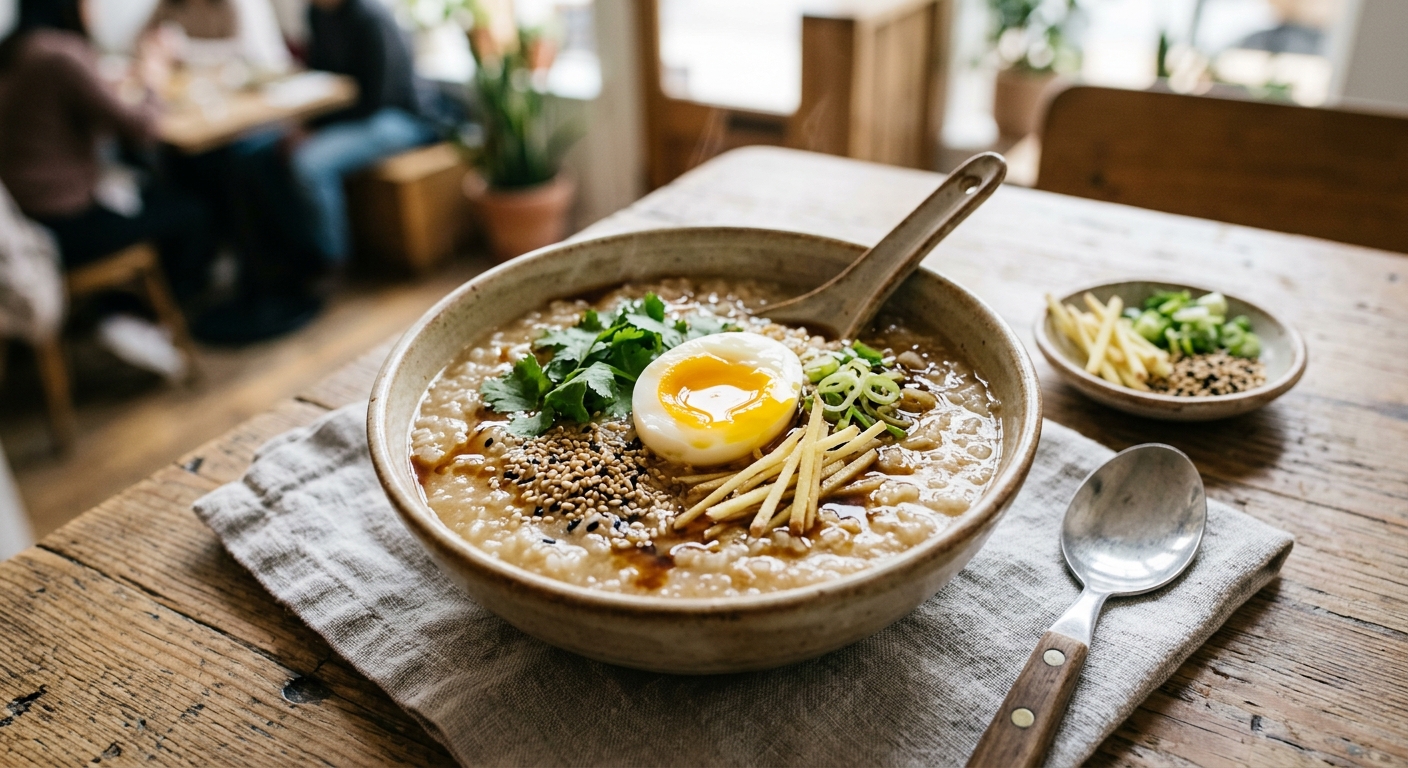
Congee is one of the oldest healing foods on earth, eaten across China, Japan, Korea, Vietnam, and the Philippines for centuries as both everyday sustenance and restorative medicine. At its core it is simply rice cooked low and slow in an abundance of liquid until each grain surrenders its starch entirely, creating a porridge with a texture that is somewhere between velvet and silk. What makes this particular version special is the deliberate layering of mineral-dense ingredients: bone broth adds calcium and phosphorus, sesame seeds contribute zinc and copper, eggs bring selenium and choline, and ginger provides trace manganese alongside its celebrated anti-inflammatory gingerols. The result is a bowl that tastes like pure comfort while quietly doing serious nutritional work.
At Calibrated Cuisine, we treat congee as a mineral delivery vehicle disguised as breakfast, lunch, or dinner. The long cooking time is not inefficiency; it is chemistry. Extended heat and water break down the phytic acid in rice, improving mineral bioavailability significantly compared to a quick steam. Adding a small amount of rice vinegar to the soaking water (a trick from traditional Chinese kitchens) further reduces phytate content, ensuring more of the iron, zinc, and manganese you consume actually reaches your cells. Every element of this recipe has been chosen with that bioavailability story in mind.
The toppings are not garnish. Soft-set eggs poached directly in the congee add roughly 28 mcg of selenium per serving, pushing you close to the 55 mcg daily recommendation. Toasted sesame seeds scattered over the top contribute copper and zinc, while a drizzle of toasted sesame oil brings vitamin E and additional manganese. Thinly sliced scallions and a few drops of chili oil round out the flavor profile with brightness and heat, making this as satisfying to eat as it is rewarding to your body.
4
servings
Ingredients
- 200 gjasmine or medium-grain white rice, rinsed thoroughly
- 1.5 literschicken or pork bone broth (low-sodium)
- 500 mlwater
- 30 gfresh ginger, peeled and cut into thin matchsticks (about a 5cm knob)
- 4 largeeggs
- 20 gtoasted sesame seeds
- 15 mltoasted sesame oil
- 20 mlsoy sauce (tamari for gluten-free)
- 4 stalksscallions (spring onions), thinly sliced, whites and greens separated
- 4 clovesgarlic, minced
- 10 mlrice vinegar
- 5 mlchili oil or chili crisp, for serving
- 4 gdried wakame seaweed, rehydrated in cold water for 10 minutes
- —Colima Sea SaltMicroplastic Free Salt and white pepper to taste
Instructions
Click on an item below to shop for the recommended items for this recipe on Amazon.
As an Amazon Associate, we earn from qualifying purchases.
- Rinse the rice in several changes of cold water until the water runs mostly clear. Place the rinsed rice in a bowl, cover with cold water, add the rice vinegar, and soak for 30 minutes while you prepare the aromatics. Drain and set aside.
- In a large Dutch oven or heavy-bottomed pot, heat 1 teaspoon of neutral oil over medium heat. Add the scallion whites and half the ginger matchsticks and cook, stirring frequently, for 2 to 3 minutes until softened and fragrant. Add the minced garlic and cook for 1 further minute, taking care not to let it brown.
- Add the drained rice to the pot and stir to coat it in the aromatic base for about 1 minute. Pour in all the bone broth and water. Increase the heat to high and bring to a vigorous boil, stirring occasionally to ensure nothing is sticking to the bottom.
- Once boiling, reduce the heat to medium-low so the congee maintains an active but gentle simmer. Cook uncovered, stirring every 10 to 15 minutes with a wooden spoon, for 45 to 55 minutes, until the rice has completely broken down and the porridge has reached a thick, pourable consistency. If it thickens too much, add water in 100ml increments.
- Season the congee with the soy sauce, a pinch of white pepper, and salt to taste. Use the back of a spoon to create four shallow wells in the surface of the congee. Crack one egg into each well, replace the lid, and cook on the lowest heat setting for 4 to 6 minutes until the whites are just set but the yolks remain jammy and slightly runny.
- Drain the rehydrated wakame and divide it among four bowls. Ladle the congee and eggs carefully into each bowl. Finish each serving with a drizzle of toasted sesame oil, a scattering of toasted sesame seeds, the remaining raw ginger matchsticks, scallion greens, and a few drops of chili oil. Serve immediately.
- Rinse the rice thoroughly until the water runs clear. There is no need to soak the rice for this method as the extended cook time achieves the same starch-release effect. Place the rinsed, unsoaked rice directly into the slow cooker insert.
- Add the bone broth, water, scallion whites, all of the ginger matchsticks, minced garlic, soy sauce, and rice vinegar directly to the slow cooker. Stir once to distribute everything evenly. Do not add the eggs, sesame oil, or sesame seeds at this stage.
- Place the lid on the slow cooker and cook on Low for 7 to 8 hours or on High for 4 hours. Resist lifting the lid during cooking as this releases heat and steam, extending the required cook time. The congee is ready when the rice has completely disintegrated and the porridge is thick and creamy.
- About 15 minutes before you want to serve, switch the slow cooker to High if it was on Low. Stir the congee well and taste, adjusting salt and white pepper as needed. The congee may be thicker than expected; stir in up to 200ml of hot water or broth until you reach your preferred consistency.
- To set the eggs, crack each egg gently into a small cup first, then slide each egg onto the surface of the hot congee in the slow cooker. Replace the lid and cook on High for 8 to 12 minutes until the whites are just set. This indirect, steam-gentle method is slower than stovetop but produces very tender, evenly cooked whites.
- Divide the rehydrated wakame among serving bowls. Ladle the congee and eggs into each bowl and finish each with toasted sesame oil, sesame seeds, fresh scallion greens, the remaining ginger if any, and chili oil. Because the slow cooker method already incorporates all the ginger into the base, consider adding a few extra fresh raw matchsticks on top for a bright, spicy contrast.
- Rinse the rice until the water runs clear and drain well. Add the rinsed rice to the Instant Pot or pressure cooker insert. Add 1.2 liters of bone broth (reducing from the stovetop amount, as pressure cooking retains more liquid), 400ml of water, the scallion whites, all of the ginger matchsticks, minced garlic, soy sauce, and rice vinegar. Stir to combine.
- Secure the lid and ensure the pressure valve is set to Sealing. Cook on Manual High Pressure for 20 minutes. The porridge will not look done when you first open it, so it is important to let the pressure release naturally rather than using a quick release, which can cause sputtering starchy liquid.
- Allow the pressure to release naturally for 15 minutes, then carefully switch the valve to Venting to release any remaining pressure. Open the lid away from you. The congee will look thin at first but will thicken rapidly as you stir. Use a large spoon or silicone whisk to stir vigorously for 2 to 3 minutes, breaking up any remaining intact grains and encouraging the starches to fully hydrate and thicken the broth.
- Switch the Instant Pot to Saute mode on Low. Taste the congee and season with salt, white pepper, and any additional soy sauce needed. If the congee is thicker than you like, stir in hot water in 100ml increments. If it is thinner than expected, let it simmer on Saute for 5 to 8 minutes, stirring continuously.
- Create four shallow wells in the surface using the back of a spoon and crack one egg into each well. Cancel the Saute function, replace the lid (but do not seal it; just rest it on top), and allow the residual heat to gently set the eggs for 5 to 8 minutes. Check at the 5-minute mark; the whites should be opaque and just firm while the yolks remain soft.
- Divide the rehydrated wakame among bowls. Ladle congee and eggs into each bowl and finish with toasted sesame oil, sesame seeds, scallion greens, remaining raw ginger, and chili oil. The pressure cooker version tends to produce a slightly more neutral, pure flavor since the aromatics are cooked under pressure rather than sauteed first; compensate by being more generous with the sesame oil and fresh toppings.
Nutrition Breakdown
Per 1 serving (makes 4)
Vitamins & Minerals
% Daily Value based on a 2,000 calorie diet (FDA reference)
🧬 Essential Amino Acids
% of recommended daily intake (RDA) per serving
🛡 Antioxidant Profile
The Nutrition Science
The mineral richness of this congee is not accidental; it is the result of ingredient synergies that work at a biochemical level. Sesame seeds are among the most concentrated plant sources of copper and manganese on earth, providing more of both minerals per gram than most nuts or legumes. Copper is essential for the enzyme ceruloplasmin, which loads iron onto transferrin for transport in the blood, meaning the copper from sesame seeds directly supports the iron your body absorbs from the broth and wakame. This copper-iron partnership is one of the most important and most overlooked synergies in nutritional biochemistry.
Eggs contribute selenium in the form of selenomethionine, the organic form with approximately 90% bioavailability compared to roughly 50% for inorganic selenite supplements. Selenium is the catalytic core of the glutathione peroxidase family of enzymes, which are your body’s primary defense against oxidative stress at the cellular membrane level. One egg provides around 15 to 20 mcg of selenium; combined with the trace selenium in bone broth and rice, each serving of this congee delivers approximately 28 mcg, over half the 55 mcg adult RDA. Zinc from sesame and bone broth further complements selenium’s role by anchoring the antioxidant enzyme superoxide dismutase.
The long, wet cooking of rice in acidic liquid (the rice vinegar serves this purpose, even in the small amount used) significantly degrades phytic acid, the main antinutrient that binds iron, zinc, and calcium in whole grains. Studies have shown that soaking rice in mildly acidic water for 30 minutes before cooking can reduce phytate content by 20 to 30%, and the extended high-moisture cooking further continues phytase activity in the early stages of heating. This is why the mineral bioavailability from congee is meaningfully higher than from the same quantity of rice prepared as standard steamed or pilaf-style dishes. Slow cooking amplifies this effect further, which is one important reason the slow cooker method is nutritionally excellent even if it requires more patience.
Pro Tips
- For an even creamier texture and deeper umami, replace 200ml of the water with an equal volume of unsweetened oat milk or full-fat coconut milk in the last 10 minutes of cooking on the stovetop; this also slightly increases the caloric density, making it a more suitable post-workout recovery meal.
- If you prefer a fully set egg yolk rather than a jammy one, cook the eggs for an additional 2 to 3 minutes in all methods; conversely, for an ultra-runny yolk, crack the egg into the congee just 2 to 3 minutes before serving and cover tightly, as the rising steam alone is often enough to set the white.
- Wakame seaweed is the secret iodine source in this recipe, providing roughly 28 mcg per serving; if you cannot source wakame, substitute with a small strip of kombu simmered in the broth for the first 20 minutes and then removed, which transfers iodine to the liquid without adding strong seaweed flavor to the finished dish.




oh this is speaking to me right now, the whole mineral profile combined with that warming ginger makes so much sense for joint lubrication and keeping inflammation at bay, especially on mornings after deep practice when my body’s asking for something that feels like medicine but tastes like comfort. ive been layering ginger with turmeric in my broths lately and noticing my hip flexors feel less creaky, plus the manganese piece for mood is so real, that nervous system support through food changes everything. definitely trying this with a soft egg because the phosphorus from the yolk is just *chefs kiss* for fascia hydration.
This sounds like such a grounded approach to those 2am moments, Miranda. I’m curious whether you’re sourcing your ginger specifically for its gingerol content, or if you’ve experimented with adding reishi or cordyceps powder to the broth itself? I’ve found that ginger alone is fantastic for inflammation and digestion, but when I layer in an adaptogen that actually addresses HPA axis signaling during those stress-spike moments, the whole experience shifts. The manganese point is spot on too, it’s criminally underrated for nervous system resilience.
This is exactly what my perimenopausal brain needs at 2am when a hot flash won’t quit and my nervous system is in shambles. The manganese alone is such a sleeper micronutrient for mood stability, and honestly the combination of ginger for inflammation plus that soft egg for choline feels like you built this specifically for women in transition (even if you didn’t!). I’ve been tracking how much my joint aches improve when I actually prioritize mineral density, and slow cooked broths like this hit different than just throwing supplements at the problem. Adding this to my weekly rotation immediately.