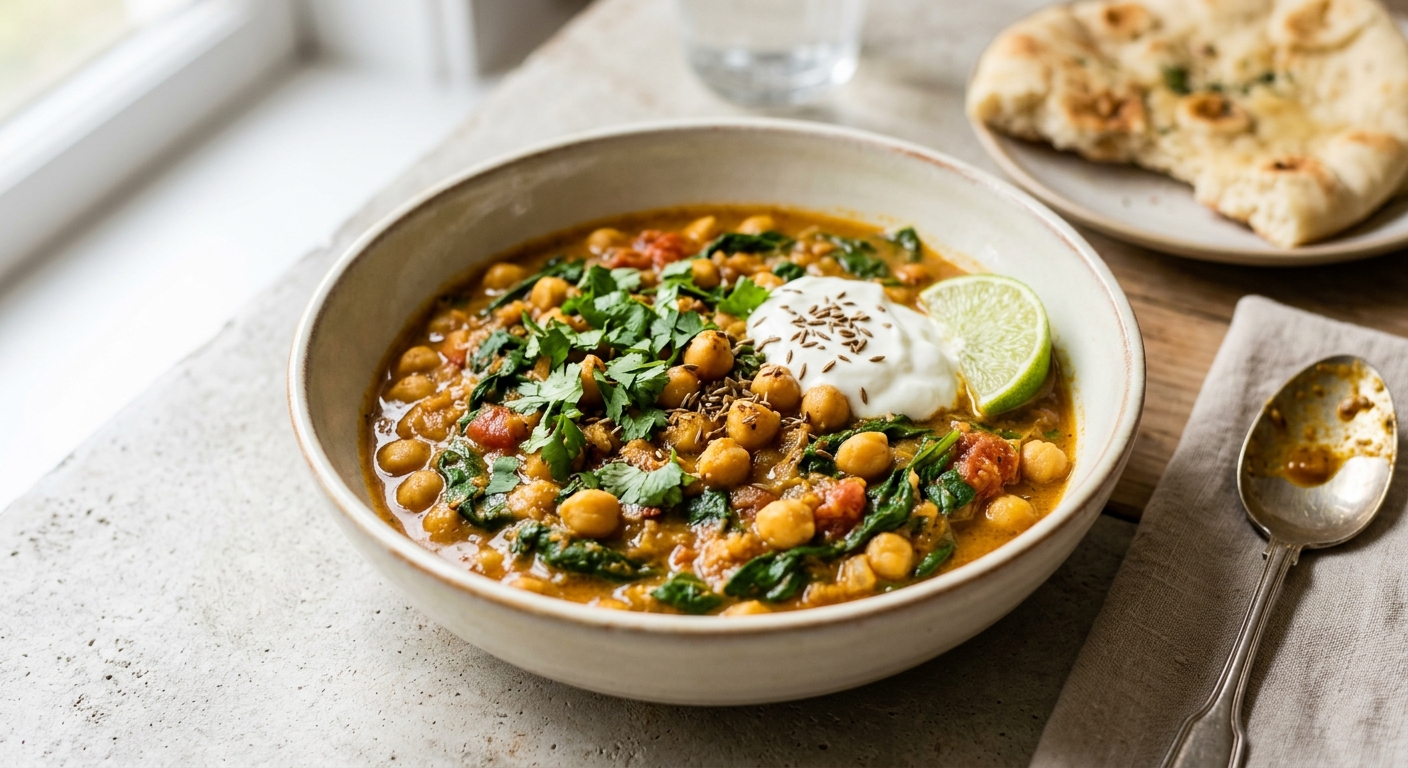
This chickpea and spinach curry was built from the ground up with one goal in mind: making plant-based iron work harder for you. Chickpeas are one of the most iron-dense legumes available, delivering roughly 4.7mg of non-heme iron per cooked cup. Spinach layers in additional iron alongside a remarkable folate payload. But here is the nutritional masterstroke: the generous quantity of tomatoes and the optional squeeze of lemon at the end flood the dish with vitamin C, which research consistently shows can increase non-heme iron absorption by two to three times by reducing ferric iron to its more absorbable ferrous form. Every ingredient was chosen with that synergy in mind.
Beyond iron absorption, this curry delivers a broad mineral matrix that is rare in a single dish. You will find meaningful amounts of magnesium, manganese, zinc, and potassium alongside B-vitamins including folate, B6, and thiamine. The coconut milk base contributes medium-chain triglycerides (MCTs) that add creaminess and help absorb fat-soluble compounds like beta-carotene from the spinach. The spice blend of cumin, turmeric, coriander, and garam masala is not merely decorative: curcumin from turmeric has well-documented anti-inflammatory properties, and black pepper is included deliberately to enhance curcumin bioavailability by up to 2000% via the piperine pathway.
This is also an exceptionally practical recipe. All three cooking methods, stovetop, slow cooker, and pressure cooker, produce a finished curry that is vibrant, complex, and deeply savory. The stovetop version gives you maximum control over texture and allows the sauce to develop a rich, slightly caramelized depth. The slow cooker produces a more mellow, stew-like result with beautifully melded flavors ideal for meal prep. The pressure cooker method is weeknight-fast and locks in nutrients that might otherwise be lost to prolonged heat exposure. Choose your method based on your schedule, not compromise.
4
servings
Ingredients
- 800 gcanned chickpeas (two 400g cans), drained and rinsed
- 250 gfresh baby spinach, roughly chopped
- 400 gcanned crushed tomatoes
- 200 mlfull-fat coconut milk
- 1 largeyellow onion, finely diced
- 5 clovesgarlic, minced
- 20 gfresh ginger, peeled and grated (about 2-inch piece)
- 2 tbspextra-virgin olive oil or coconut oil
- 2 tspground cumin
- 2 tspground coriander
- 1.5 tspground turmeric
- 1 tspgaram masala
- 1 tspsmoked paprika
- 0.5 tspcayenne pepper (adjust to taste)
- 0.5 tspfreshly ground black pepper
- 240 mlvegetable broth, low-sodium
- 2 tbsptomato paste
- 1 wholelemon, juiced (about 3 tbsp)
- 15 gfresh cilantro leaves, chopped, for garnish
- —Colima Sea SaltMicroplastic Free Salt to taste
Instructions
Click on an item below to shop for the recommended items for this recipe on Amazon.
As an Amazon Associate, we earn from qualifying purchases.
- Heat the olive oil in a large Dutch oven or heavy-bottomed pot over medium-high heat until shimmering. Add the diced onion and a pinch of salt. Cook, stirring occasionally, for 7 to 9 minutes until the onion is deeply golden and beginning to catch on the edges. This caramelization is critical for building a complex base flavor, so resist the urge to rush it.
- Reduce the heat to medium. Add the minced garlic and grated ginger, stirring constantly for 90 seconds until fragrant and the raw bite has mellowed. Add the tomato paste and stir it into the aromatics, letting it cook and slightly darken for another 2 minutes. This step concentrates umami and deepens the sauce color.
- Add all the dry spices: cumin, coriander, turmeric, garam masala, smoked paprika, cayenne, and black pepper. Stir continuously for 60 seconds, toasting the spices in the oil until they are deeply fragrant. You should notice the mixture beginning to stick very slightly to the pot, which is a sign the spices are bloomed, not burned.
- Pour in the crushed tomatoes and vegetable broth, scraping up any fond from the bottom of the pot with a wooden spoon. Stir to fully incorporate the spice paste into the sauce. Bring to a vigorous simmer and cook uncovered for 8 minutes until the sauce reduces slightly and the raw tomato smell gives way to a richer, rounder aroma.
- Add the drained chickpeas and coconut milk. Stir well to coat the chickpeas in the sauce. Return to a gentle simmer and cook uncovered for 12 to 15 minutes, stirring occasionally, until the sauce has thickened to a creamy, coating consistency and the chickpeas have absorbed the surrounding flavors.
- Remove from heat. Add the chopped spinach in two or three batches, stirring each batch until just wilted before adding the next. Adding spinach off the direct heat preserves more of its vitamin C and folate content, which degrade rapidly under prolonged boiling. The residual heat of the curry is sufficient to wilt the spinach completely within 2 minutes.
- Stir in the lemon juice, taste for salt, and adjust seasoning. Serve immediately garnished with fresh cilantro. The lemon juice added at the end maximizes vitamin C potency in the final dish.
- In a skillet over medium-high heat, warm the olive oil and cook the diced onion for 7 minutes until golden. Add the garlic, ginger, and tomato paste, stirring for 2 minutes. Add all the dry spices and stir for 60 seconds to bloom them in the oil. This step cannot be replicated by the slow cooker and is essential for flavor depth. Transfer this aromatic base to the slow cooker insert.
- Add the drained chickpeas, crushed tomatoes, and vegetable broth to the slow cooker. Stir everything together until the spice base is fully dissolved into the liquid. Do not add the coconut milk, spinach, or lemon juice at this stage. These additions are made at the end to preserve their texture, fat stability, and nutrient content.
- Place the lid on the slow cooker and cook on Low for 6 to 8 hours or on High for 3 to 4 hours. The chickpeas will become exceptionally tender and creamy as they slowly absorb the spiced tomato broth. The longer Low setting produces a more deeply integrated flavor, while the High setting is suitable when time is limited.
- During the final 20 minutes of cooking, stir in the coconut milk and replace the lid. The gentle heat will warm the coconut milk through without causing it to split, which can happen if it is exposed to high heat for extended periods. After 15 minutes, add the chopped spinach directly to the slow cooker, stir, and replace the lid for a final 5 minutes until the spinach is just wilted.
- Turn off the slow cooker. Stir in the lemon juice and taste for salt. The curry will be slightly soupier than the stovetop version due to the condensation that accumulates during slow cooking. If you prefer a thicker consistency, use the back of a spoon to mash roughly 20% of the chickpeas against the side of the insert and stir them in to naturally thicken the sauce. Garnish with cilantro and serve.
- Set the Instant Pot or electric pressure cooker to Saute mode on High. Add the olive oil and heat until shimmering. Add the diced onion and cook for 5 to 6 minutes, stirring frequently, until softened and lightly golden. The slightly shorter saute time compared to stovetop is acceptable here because the pressure cooking step will further deepen the flavors.
- Add the garlic, ginger, and tomato paste to the insert. Stir and cook for 90 seconds. Add all the dry spices and stir constantly for 60 seconds to bloom them in the residual oil. Immediately add a splash (about 60ml) of the vegetable broth and scrape the bottom of the insert thoroughly with a wooden spoon or silicone spatula. This deglazing step is critical for pressure cookers: any food stuck to the bottom can trigger a Burn warning during pressurization.
- Add the drained chickpeas, crushed tomatoes, and remaining vegetable broth. Stir well. Do not add the coconut milk or spinach yet, as high-pressure heat can cause coconut milk to separate and spinach will overcook to a dull, nutrient-depleted mush. Press Cancel to exit Saute mode, secure the lid, and set the steam release valve to Sealing.
- Select Pressure Cook (or Manual) on High Pressure and set the timer for 12 minutes. The pot will take approximately 8 to 10 minutes to come to full pressure before the countdown begins. Once the 12 minutes are complete, allow the pressure to release naturally for at least 15 minutes before carefully turning the steam release valve to Venting to release any remaining pressure.
- Open the lid and stir in the coconut milk. Switch the pot back to Saute mode on Low and simmer for 3 to 4 minutes, stirring, until the coconut milk is fully incorporated and the sauce reaches your desired consistency. Press Cancel, add the chopped spinach, and fold it into the hot curry. The residual heat will wilt the spinach in about 2 minutes without the need for additional cooking. Stir in the lemon juice, adjust salt, and serve topped with fresh cilantro.
Nutrition Breakdown
Per 1 serving (makes 4)
Vitamins & Minerals
% Daily Value based on a 2,000 calorie diet (FDA reference)
🧬 Essential Amino Acids
% of recommended daily intake (RDA) per serving
🛡 Antioxidant Profile
The Nutrition Science
The central nutritional engineering of this recipe is the iron-vitamin C pairing. Non-heme iron, the form found in plants like chickpeas and spinach, is absorbed at a baseline rate of roughly 2 to 20% depending on your body’s iron status. Ascorbic acid (vitamin C) intervenes directly in the duodenum by chelating ferric iron (Fe3+) and chemically reducing it to ferrous iron (Fe2+), the only form the DMT1 transporter in gut enterocytes can actively absorb. The tomatoes in the sauce contribute approximately 15mg of vitamin C per serving during cooking, while the lemon juice added off-heat preserves an additional 20 to 23mg in a more intact form. Together, they create an absorption-enhancing environment that can realistically double or triple the iron uptake compared to eating these same foods without a vitamin C source present.
Folate bioavailability in this dish is unusually high due to the combination of sources and the moderate cooking approach. Spinach provides approximately 58mcg of folate per 100g raw, but folate is notoriously heat-sensitive, degrading by 50 to 90% with prolonged boiling. By adding the spinach off direct heat in the stovetop and slow cooker methods, and using residual heat in the pressure cooker method, this recipe preserves a significantly greater fraction of the naturally occurring 5-methyltetrahydrofolate (5-MTHF), the biologically active form. Chickpeas contribute an additional stable folate payload of roughly 172mcg per 240g cooked, for a combined folate total that approaches 70% of the 400mcg daily value per serving.
Turmeric’s curcumin content deserves specific attention in the context of iron metabolism. Some studies have explored the potential for curcumin to chelate iron and theoretically reduce absorption, but at the concentrations present in a culinary dose (approximately 1.5 teaspoons of ground turmeric yielding roughly 80 to 95mg of curcumin across four servings), this effect is considered nutritionally negligible. The concurrent black pepper in the recipe serves a different and important purpose: piperine, the alkaloid responsible for black pepper’s pungency, inhibits phase II metabolism enzymes in the intestinal epithelium and liver, extending curcumin’s plasma half-life and increasing its systemic bioavailability by approximately 2000% compared to curcumin consumed without piperine. This is a well-replicated finding from human pharmacokinetic studies and is why the two spices appear together deliberately in this formulation.
Pro Tips
- If using dried chickpeas instead of canned, soak 400g overnight in cold water, drain, and simmer for 60 to 75 minutes until just tender before using. Dried and fully cooked chickpeas will hold their shape better under prolonged slow cooker cooking and absorb the spiced sauce more deeply than canned.
- To maximize iron absorption, avoid drinking tea or coffee within one hour before or after eating this curry. Tannins in tea and polyphenols in coffee bind non-heme iron in the gut and can reduce absorption by up to 60%, directly counteracting the vitamin C enhancement this recipe is engineered to provide.
- Frozen spinach is a nutritionally valid substitute for fresh: use 200g of thawed and squeezed-dry frozen spinach. Blanching and freezing actually pre-breaks down the oxalic acid in spinach, which can slightly improve the bioavailability of the calcium and iron already present in the leaves.



Oh yes, Diane! The vitamin C from those tomatoes is absolutely crucial here, and I love that you’re thinking about bioavailability. So the iron in spinach is non-heme iron (plant-based), which our bodies absorb way better when there’s vitamin C present to reduce it, and tomatoes are packed with ascorbic acid, so this recipe is literally designed for optimal absorption. Honestly, I’m actually researching iron-phytonutrient interactions for my thesis right now, and the spinach here is also giving you magnesium-bound chlorophyll which supports the whole nutrient uptake cascade. Your kids getting those greens in the curry sauce is such a win
OMG yes, this is EXACTLY the kind of meal i’m always looking for!! my kids actually eat spinach when its hidden in curry sauce lol. quick question though, does the vitamin c from the tomatoes really help with the iron absorption that much? im always trying to figure out the best combos for my picky eaters to actually get what they need. also wondering if you tested this with canned chickpeas or dried, because my family goes through SO many canned ones and id love to know if theres a nutrition difference. definitely adding this to next weeks rotation!
This is such a beautiful example of how spices do the heavy lifting here too, Charlotte. I’d add that if you’re making this curry, turmeric and ginger bring their own anti-inflammatory magic to support nutrient absorption, and black pepper with the turmeric really enhances curcumin bioavailability, which helps your body actually use those minerals. In Ayurveda, we’ve known for centuries that these warming spices with iron-rich foods like chickpeas and spinach create the ideal digestive environment, and it’s lovely seeing the nutritional science catch up to that wisdom. Diane, your instinct about hiding spinach in sauce is spot on, the fat from coconut